


Every Warhammer game has the thankless task of introducing potential first-timers to the setting, a role Warhammer 40k Dark Heresy seems especially excited to play.
Dark Heresy offers a more grounded perspective than most 40K games, placing players in the role of an Inquisitorial Acolyte.
Stepping into the shoes of a Witchhunter’s assistant is a perfect way to sell to newcomers just how wild the world of Warhammer truly is. Burdening them with all the responsibilities of Inquisitorial work and the webs of clashing goals from their supposed ‘allies’, players are thrown through a loop right out of the gate.
Despite the pitch’s promise, Dark Heresy’s Alpha has a lot of work to do before it releases, but we relished the opportunity to give in to this slice of 40K nonetheless. Time to take a closer look at everything Owlcat Games will need to polish up before it hits shelves sometime next year.
Mountains of Promise
It’s hard to sell just how much Dark Heresy’s setup had me hyped. Warhammer’s massive scale allows it to offer unique experiences with plenty of scope to get lost in the minutia. The best games under the Warhammer moniker benefit from this zoomed-in and specific approach, such as Adeptus Mechanicus and Shootas, Blood and Teef.
Letting devs get creative with the weirder parts of Warhammer’s setting is always a great time, and the Inquisition is almost totally untouched at the time of writing. Playing detective on some backwater planet feels downright inspired, and all the core concepts and mechanics are there to make it a truly engrossing experience.

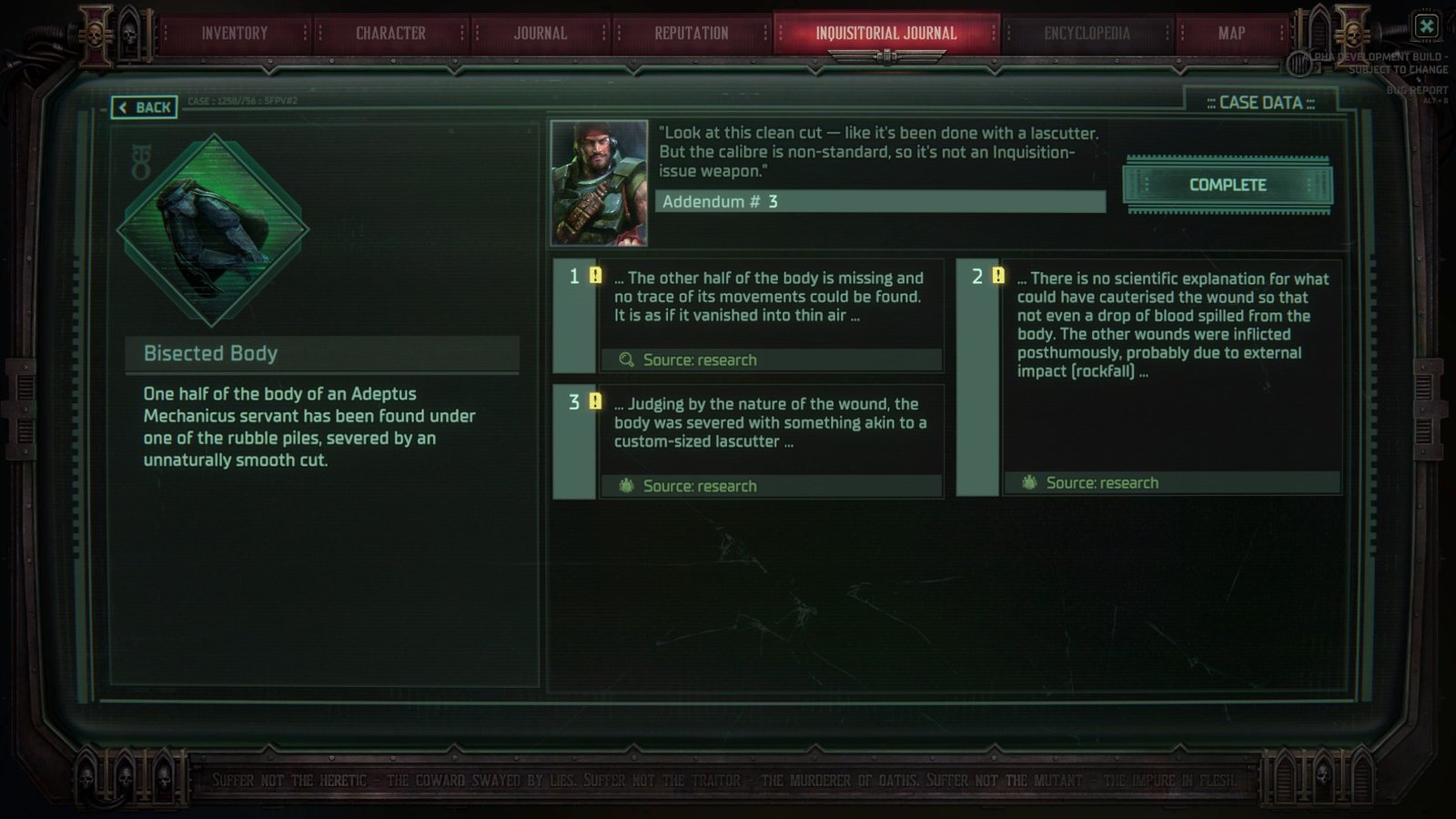
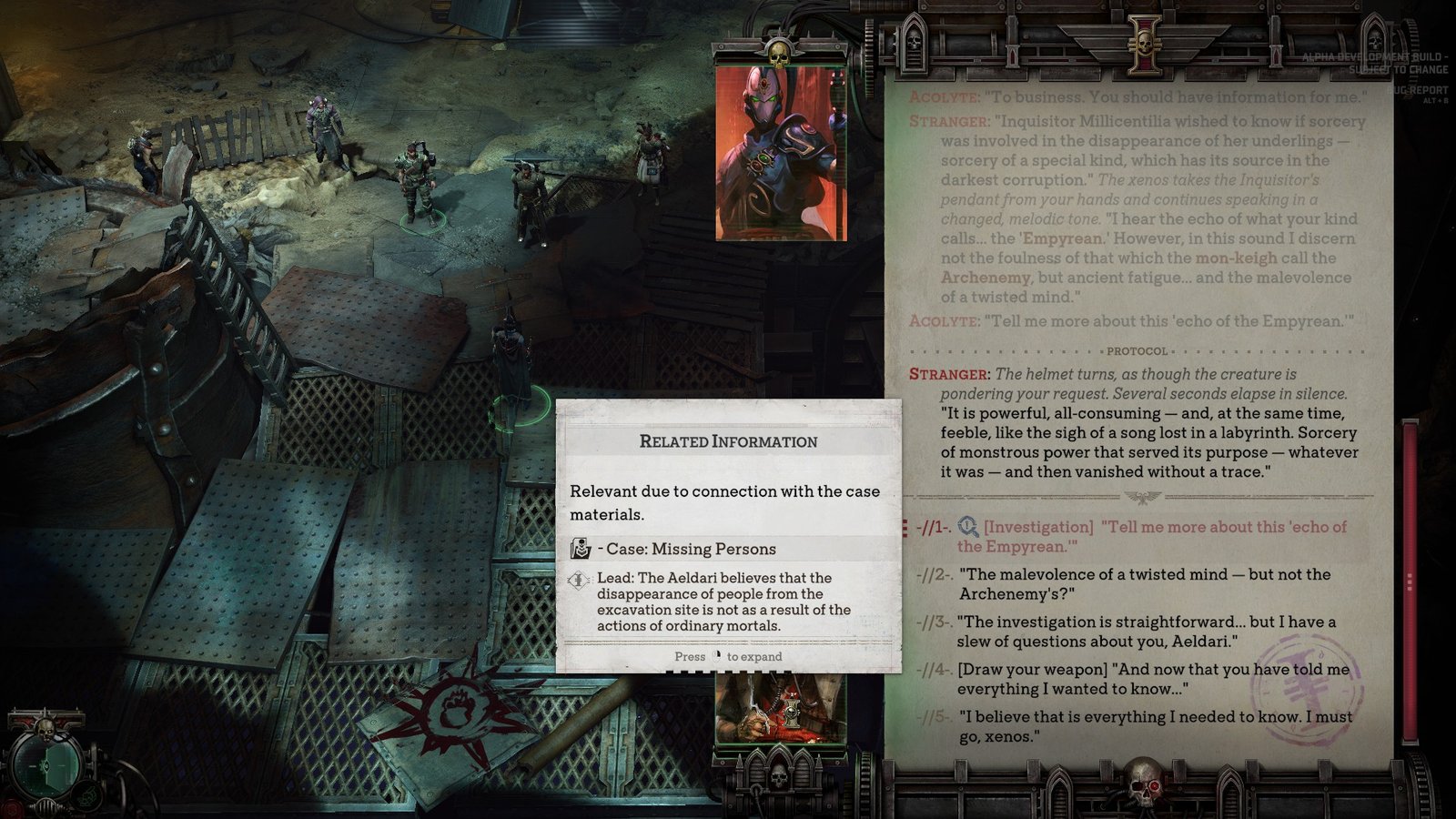
The gameplay is divided into two major ‘modes’, investigation and combat. Most gameplay is focused on investigations, exploring shantytowns and battlefields for clues on the number of active cases in your journal.
You can realistically build and play your Inquisitor however you’d like, whether that’s swinging your weight around or skulking in the shadows.
You can then connect clues to different cases, developing and ruling out hypotheses based on the information as it comes in. Once you have enough information, you can develop a full report, pinning the crime on whoever you’ve got the evidence to point at. So, basically Paradise Killer, but with more Imperium influence.
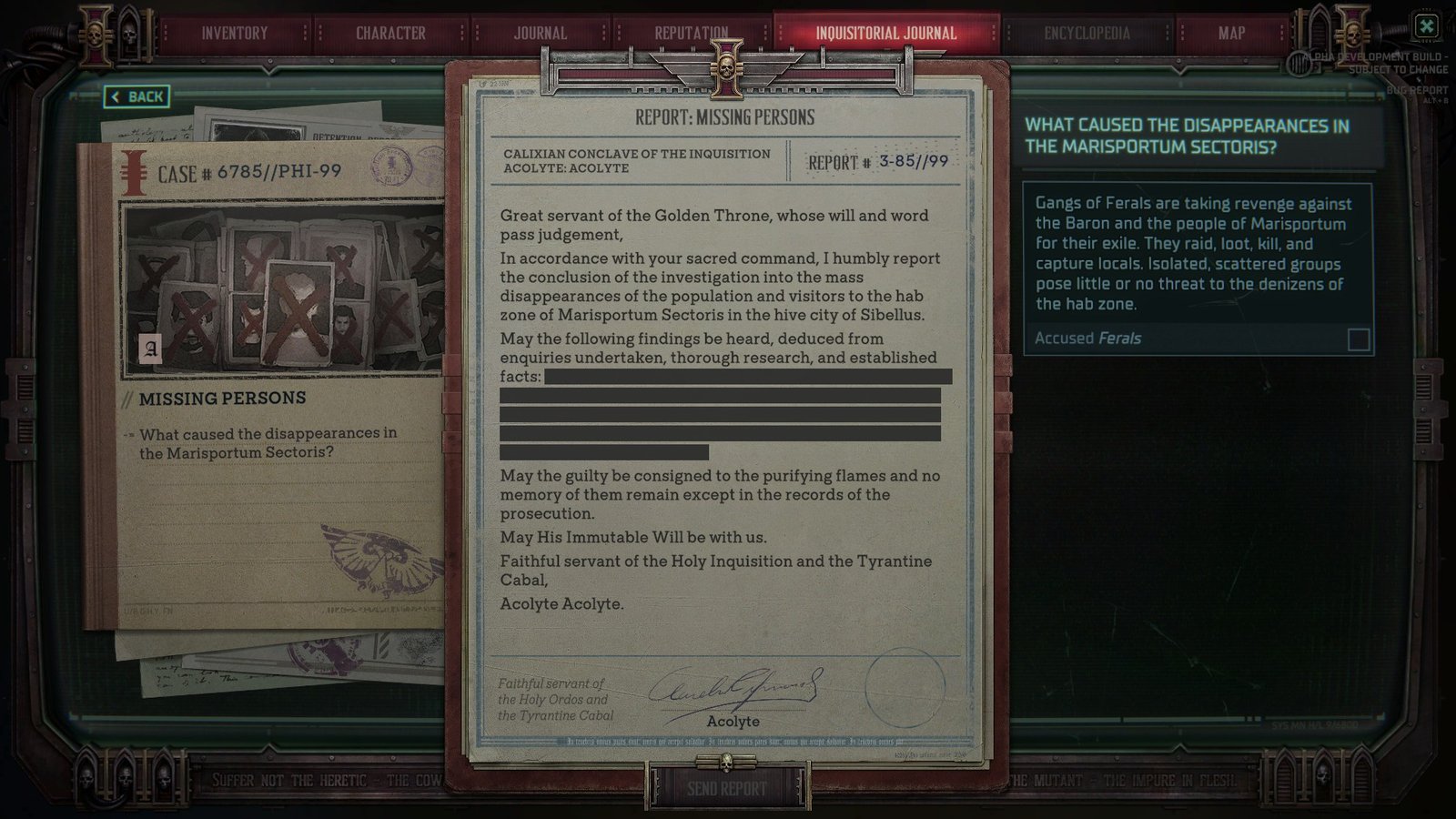
As an Inquisitor, your conclusions are backed by the full force of the Imperium, but that doesn’t mean you’re always right. It’s very easy to pin the opening case’s disappearances on civil unrest among local gangs, as long as you ignore the strange Warp burns and whispers of demonic interference.
The game does a great job reacting to your decisions, holding you accountable for choices early, and offering multiple solutions to most cases. You can realistically build and play your Inquisitor however you’d like, whether that’s swinging your weight around or skulking in the shadows.
The world design is also solid, visually pulling a lot from the tabletop’s blend of smart color use and scaled-up gear. Areas are well put together and fun to explore, even if it can sometimes be a little hard to tell where play spaces end and backgrounds begin.
Also Read: Preview: Codex Mortis Turns Vibe Coding from Meme to Method
Much Needed Touching Up
A reminder that Dark Heresy is currently in Alpha, so almost everything is subject to change. Despite that, I’d be remiss to not comment on the issues that plagued my playtime.
To start, the pre-created character on offer leaves plenty of questions about how character building will look. Some character traits were unselectable, implying a system based on the party’s personal beliefs in addition to their skills. This isn’t so much a complaint about quality as it is a gripe that I can’t mess around with it right now.
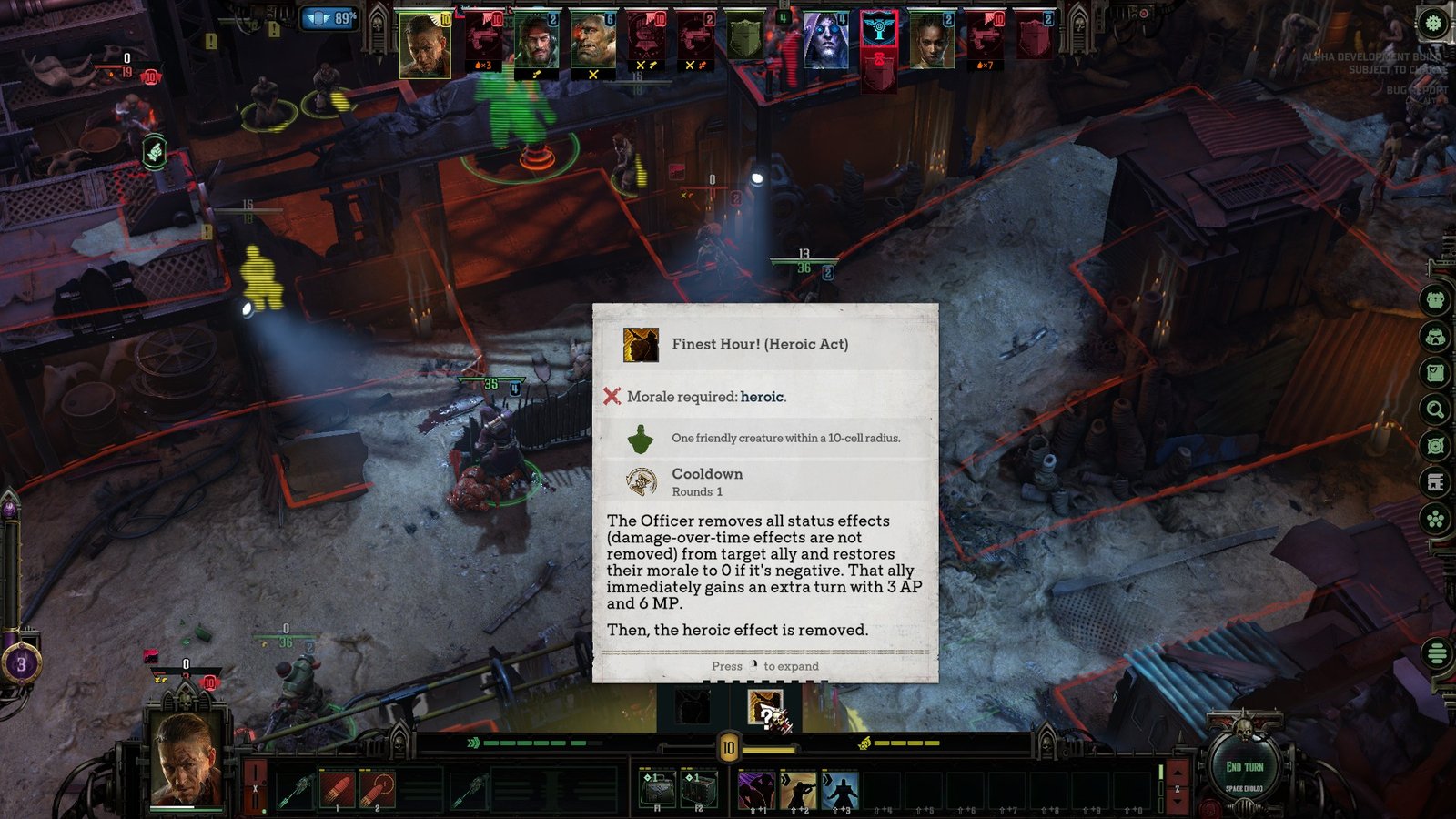
However, the combat generally felt flat, adapting the tabletop’s cover rules while drawing inspiration from titles like XCOM. The larger enemy numbers mean AOE attacks are king, and while each party member brings unique tools to the table, some feel outclassed.
The current lack of dialogue hurts the presentation a lot, making it easy to glaze over the bland writing most NPCs spout. Certain characters are fun to follow, almost exclusively the party members, but the focus on staying open to newcomers means common knowledge is reiterated time and time again.
That’s the dangerous place Dark Heresy finds itself: an awkward balance of a lack of presentation and unfinished systems that desperately need a hook.
The various locales on offer during the majority of the Alpha also left plenty to be desired; even if they were serviceable to house this experience, they felt rather shallow in spots. I found myself constantly holding the ‘highlight interactables’ hotkey after a point, simply out of boredom.
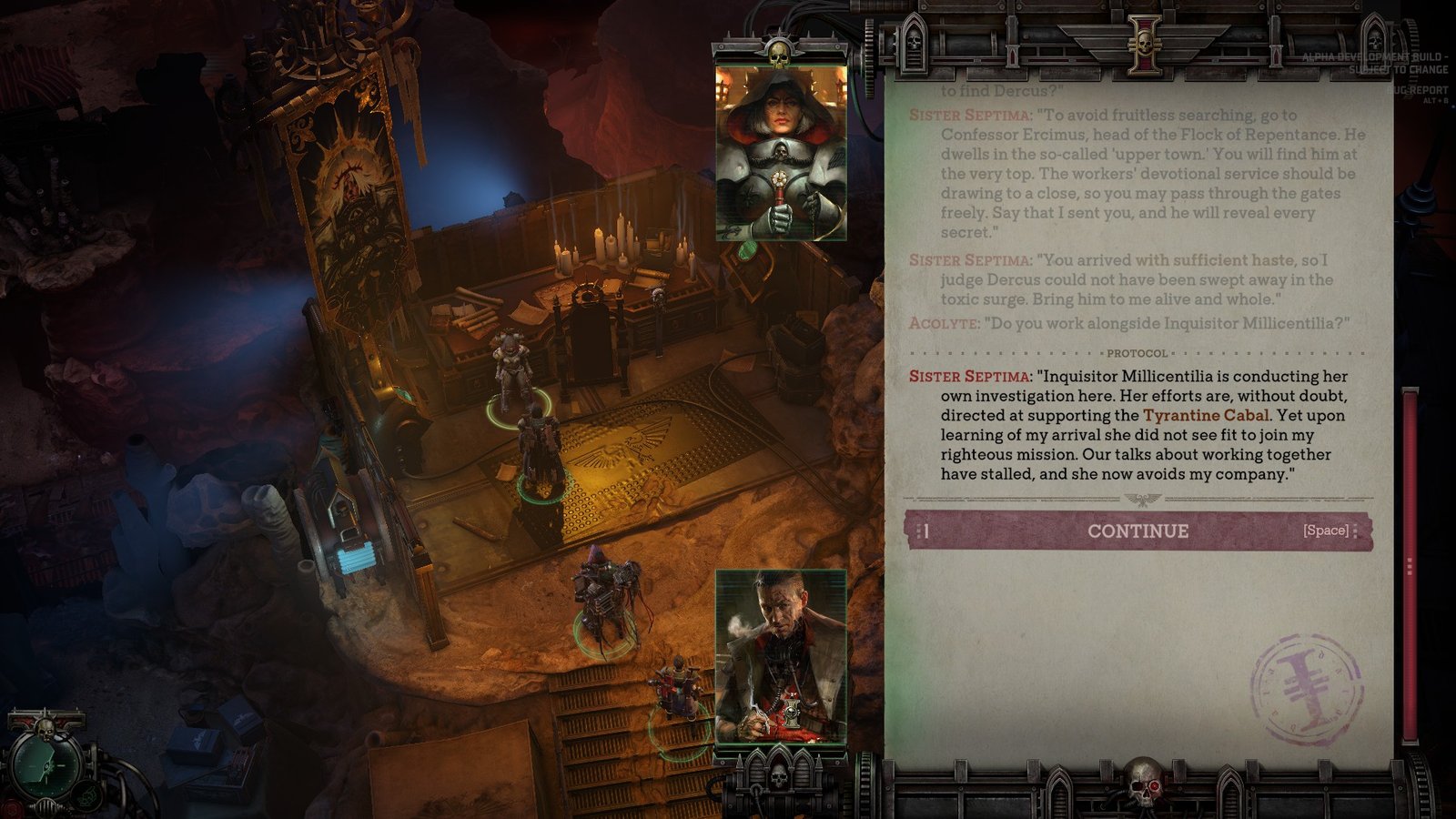
That’s the dangerous place Dark Heresy finds itself: an awkward balance of a lack of presentation and unfinished systems that desperately need a hook. The current investigation mechanics are fun, and the morale system for combat is an interesting idea, but the game feels like a slog at points, especially if you’re familiar with the world of Warhammer 40k.
Closing Comments
“Warhammer 40K Dark Heresy is on the cusp of becoming a very fun addition to the wider Warhammer gaming catalog. Currently, its subpar systems had my mind constantly drifting and comparing to other CRPGs, leaving the Warhammer hook as the only real sticking point. However, comparison is the thief of joy, and Dark Heresy is definitely worth keeping an eye on. With no release date set, Owlcat Games has all the time in the world to work off of tester feedback and polish Warhammer 40k Dark Heresy’s dusty surface into a real gem.”
