


I have a lot of time for any game that makes food the star of the show. I’ve salivated over gorgeously rendered meals in Monster Hunter. I have endured the culture shock that comes with playing Venba, and while it’s hardly the main attraction, I have collected a whole bunch of Wompa Fruit down the years.
Which is why, when the chance came to chat with Chandana Ekanayake about Thirsty Suitors’ spiritual successor, Dosa Divas, I jumped at it.
Dosa Divas promises an equal parts goofy and emotional tale of family ties, mech madness, and corporate dystopia. All tied up with the neat little bow that is fried food. It sounds like the kind of thing that would hit the spot for any indie fan. But, if you want all the details from the makers themselves, then stick around for this brilliant conversation between Eke and I.
What’s On The Menu?
Q: I think we should open things up by addressing the elephant in the room. Anyone who has played your previous game, Thirty Suitors, will immediately pick out a lot of similarities here in terms of tone, themes, and art style. So, in your own words, how does Dosa Divas set itself apart?
Chandana Ekanayake: I think just on a sort of mechanical RPG level, I feel like this is closer to a more cohesive experience that we were trying to aim for Thirsty. We didn’t quite get there.
I feel like we did that with DOSA because it’s a party-based approach versus a single character in Thirsty. The themes of sort of family drama and relationships and reconciliation, all that stuff we like exploring for story. We feel like those are higher stakes than trying-to-save-the-world kind of things.
I know our feedback from some of the Ex and boss battles showed that people really liked that back-and-forth, and we wanted to maintain much of it. The skateboarding part, I think, we just ran out of time. It wasn’t quite where we wanted to go, and we wanted to create a sort of “traversing the world” experience.
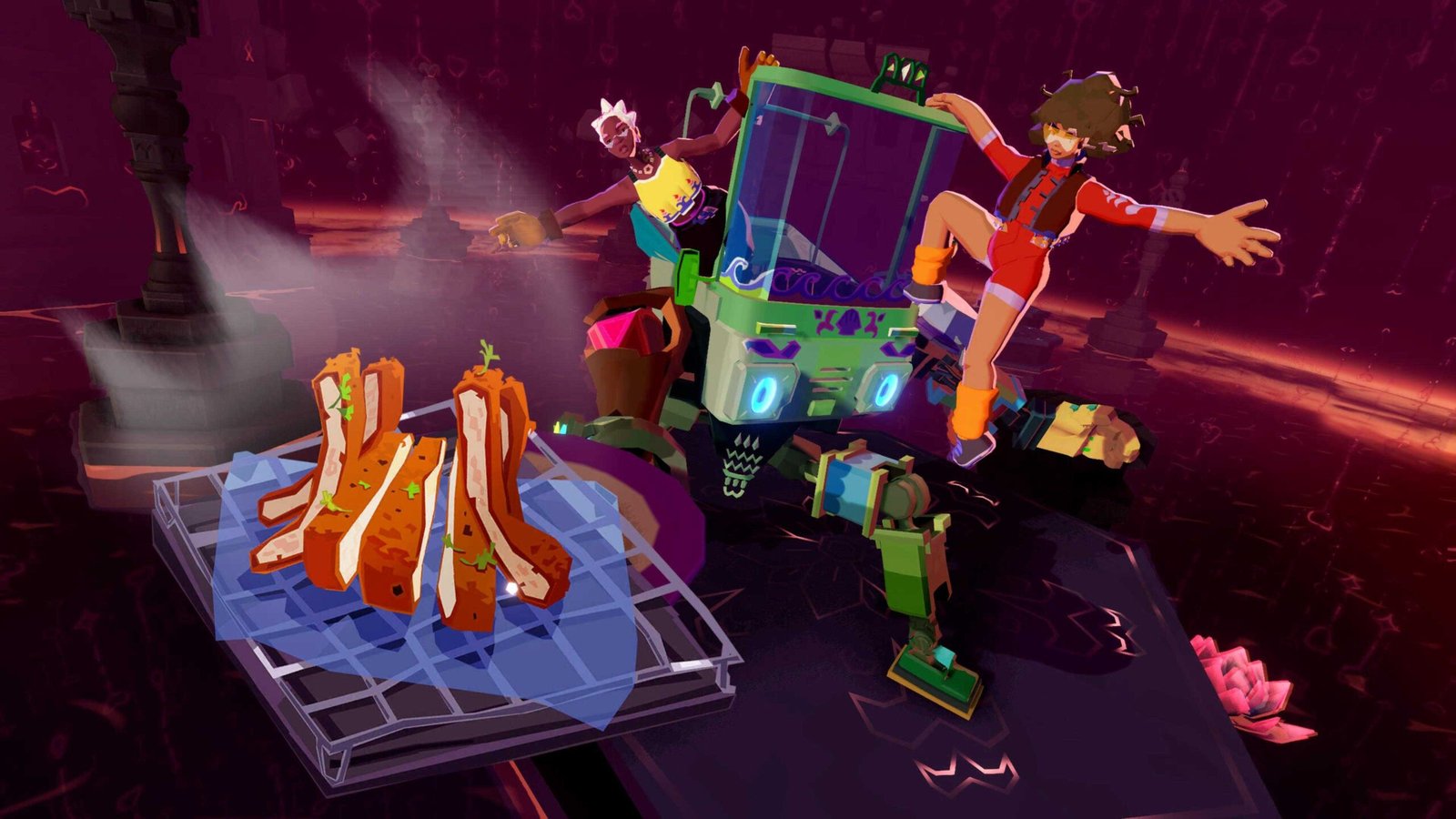
So running around in mech with the two sisters and exploring these villages. There’s jumping and double jumping, and I don’t know how far you’re in the game, but there are other sorts of upgrades and things that happen that let you traverse the environment a little differently. And so that’s also very different from Thirsty, because we had the skate park, the downtown, and the sort of interiors.
The level design came from the skate park and how we set it up, but these fantastical villages are very vertical, and because you’re running on a mech, we pulled the camera back, and that really shaped the art style because pulling the camera back meant we weren’t really tight on human scale. So, everything had to feel chunkier and a little more stylized for it to read from that distance because the scale of Goddess the mech. and then that spoke to the level design, the cameras, and how it felt to move around.
I think the writing, hopefully, you think was good. And, all that stuff I think we do well, the art and, of course, the animation work. The battle system, we wanted a little more player expression in general for all the systems. So there’s not a lot of QTE we had in Thirsty. There are more timing elements. So the comparison we got when we were showing it off was Expedition 33, in terms of active blocking, active attacks, and things. And there’s kind of a boost and shield system from Octopath. And then some of the skills have active timing elements in Sea of Stars.
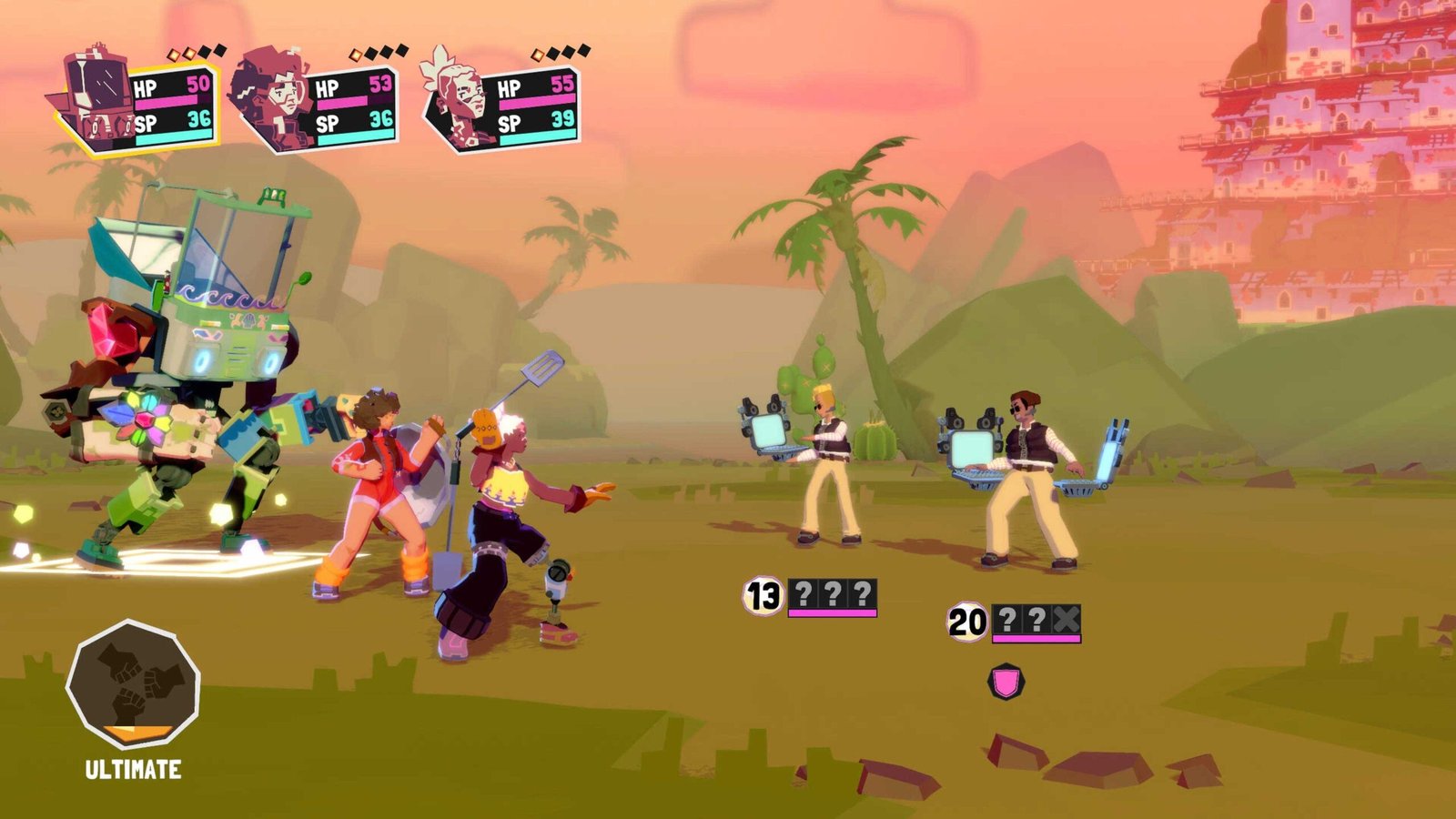
It’s a more flexible battle system, with different ways to approach battles and more expressive options, with each character having different abilities. And it’s all food-themed. I think we did a better job of melding the theme of cooking and flavors across all those different parts of gameplay. So hopefully feels more cohesive. So, running around picking up ingredients and taking orders and going to cooking and cooking, mixing those ingredients for different things people want, different flavors, feeding them, and then going into battles to get other ingredients. And then using those food items to buff yourself or to heal yourself. That was sort of the exploration, trying to meld those systems together.
Q: On the subject of this shared theme, of Asian cuisine and family dynamics. We have seen games such as yours and, indeed, Venba find great success by using food and family as core themes. Why do you think so many people resonate with this, and what has led you to go back to this theme?
Chandana Ekanayake: We want to kind of explore immigrant stories, and Thirsty was similar. And for me, I love to cook, but food is usually the first way you are introduced to a new culture. I feel like that’s a really good gateway to talk about a culture and learn about a culture. And working on Thirsty and Dosa, and actually even in Falcon Age, we had cooking in there too. But it’s sort of like a cultural experience that we haven’t seen explored much in games. And we’re good friends with Abby and you, the Venba team. So we talk a lot about our personal experiences coming in as a way to connect with people.
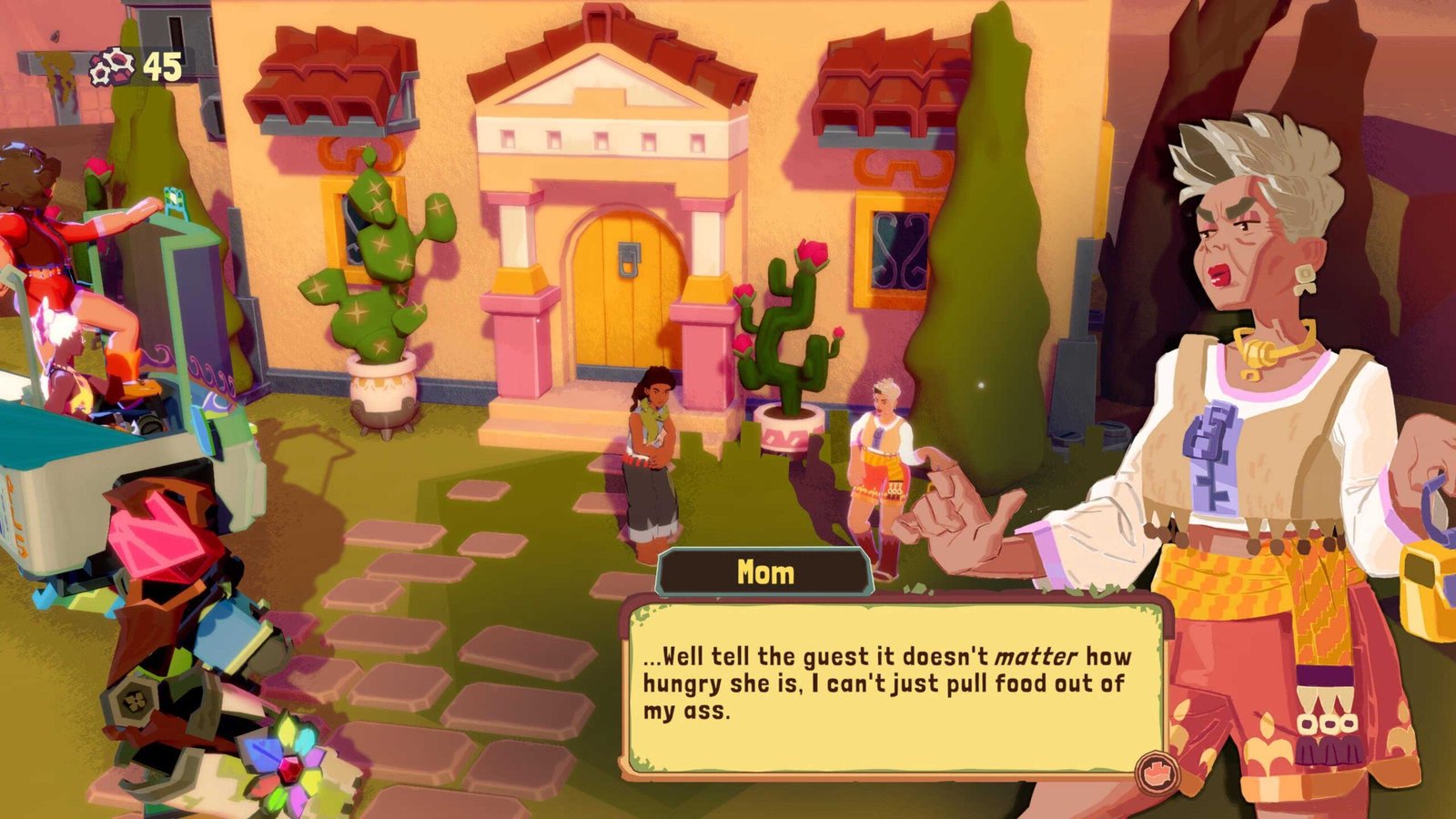
And that’s what Dosa and thirsty were trying to do, using food as a vehicle, as a way to make for interesting stories, and that’s sort of like, as we think about games, there are so many options for people, can we make something interesting and say something interesting and stand out, and obviously make it entertaining as well. But that’s really our approach: how do we stand out, what do we do well, what do we like to do, and what we’d want to share with people. So that’s been the approach.
Q: Dosa Divas, much like Thirsty Suitors, is a game that also represents different cultures and demographics that are perhaps underrepresented in the gaming industry. How much of a focus has it been to tell their stories and offer positive reputation for these individuals in the space?
Yeah. I think for us it’s not like we have a checkbox of we have to make sure we represent all the things. That’s impossible. I think for us, we kind of come from a place of storytelling where, hey, this speaks to us, or this is someone we know, or this is something we can talk about. Thirsty started out as a concept about arranged marriage.
But no one on the team had gone through it, and we don’t want to speak to something that we can’t speak to directly. Not that we have our own mechs or anything, but the human parts of the story, we want to be kind of true to, for us, the specificity is the way we connect. Specificity is universal, which is what we definitely believe. And if we are trying to kind of talk about somebody from a certain culture and we can’t speak to it directly, or we don’t have any sort of experience with it, or have secondhand experience with it or know somebody close, I think we can’t really get to sort of the heart of why that’s important or what their story is. So that’s been our approach, being very specific to things we understand.
We can explore themes of family dynamics and generational pressure as an immigrant kid, and those are probably things that can reappear, along with the cultural foods our parents brought with them and things like that. So I didn’t grow up where Dosas are popular. Dosas are specifically from South India, but there are versions in Sri Lanka and Malaysia. So that’s fascinating for me, sort of as a history fan, and also how food travels across regions and finds its own versions. And that’s also what we wanted to explore with Dosa: that each town has its own types of food it likes and its own ingredients.
In terms of cultural exploration, it’s like people on the team want specific things. It’s not necessarily autobiographical anyway. It’s just like things we understand. Our concept artist and art director does all the designs of the characters in the world and we work together and there’s certain things like he grew up in Chennai in South India so there’s a certain perspective that he brings when he designs things and a certain perspective I bring and then folks on the team are animators from Burma and there are certain styles of things he grew up with that he likes to explore in his animation work so that’s a cool thing about having a small team of 14 on Dosa, two years three months of development, the hope is everybody gets to see their work on screen.
Also Read: We Were Here Tomorrow Hands-On Preview: A Meaningful Enhancement to the Puzzle Formula
Q: Dosa also seems to have that same narrative balance of goofiness and sincerity that Thirsty had. Serious themes in a game that doesn’t take itself too seriously. Is that what you were shooting for?
Chandana Ekanayake: So tonally, we hope we find that balance, as it does get more serious. But we’re like, once we kind of figure out what the characters are and we develop them, it would make sense for this character to say this in the scene, at some point, the characters kind of take a life of their own, and they kind of determine this makes sense, for example, the merchant always speaks with a lot of innuendos and that’s his personality and he has a history with the sisters and pretty much everybody he comes across with.
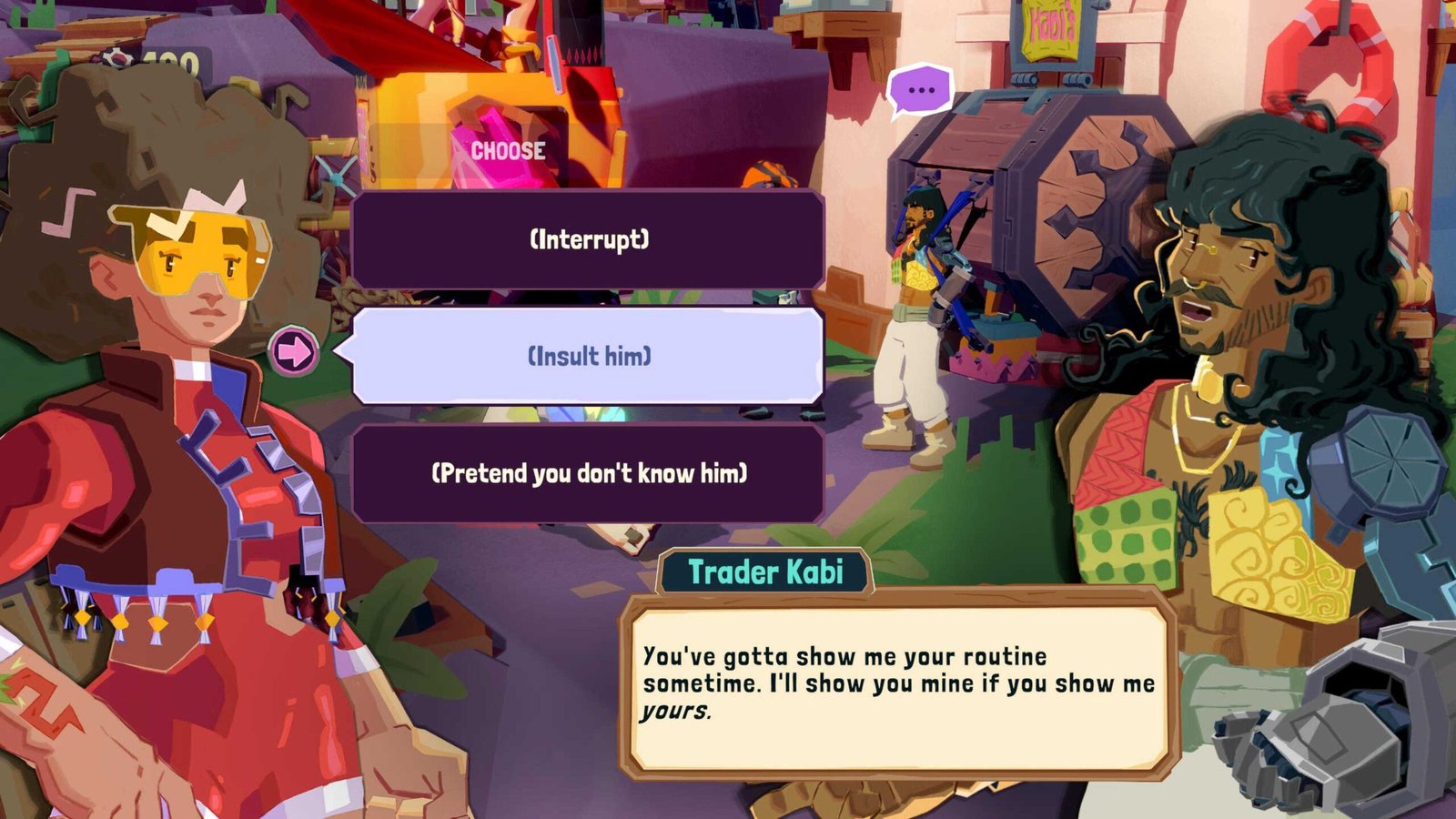
I think there are definitely funny bits in Dosa, and there are more serious things, and hopefully we set up the scene and earn those tone changes as they happen. But it’s a different writer on the Dosa team. Hassan, who did the majority of the writing for the characters. We kind of knew where we wanted to go with the story, and then we didn’t do any real writing till later in the project. Even though we make narrative games, they mechanically have to work for the player before we kind of write a story around it.
Obviously, we know sort of big beat things, and then we kind of adjust, but the tonality of it comes from spending enough time with these characters developing them, and then we’re like, okay, it makes sense for them to say this here or this there. So yeah, it gets goofy, but it also, like our other games, deals with some heavy themes. But also, we want to make it entertaining and make the pacing feel good, so there’s a need for certain moments.
Q: Dosa Divas does set itself apart from previous games through the unique setting and the dystopian, anti-corporate stance you push as you work through the story. What led to this decision to go for a less grounded and more punchy fantasy setup?
Chandana Ekanayake: It’s like the concept started using something called Miro? It’s like a whiteboard that we use. We’re all remote across the world. So, we use this sort of collaborative whiteboard thing called Miro, where I put ideas, and all our design work is done on it. I have sort of an idea board that I’ll just throw stuff into as it comes to play. And the concept for this game was two aunties in a mech. Just seemed like a neat idea to explore, and then we’re like, okay, what does that mean in the context of the world? What is the world? So then, references for what people are familiar with in terms of mechs in media, such as Pacific Rim, Evangelion, or other anime.
So we kind of explore from that, and then what are mechs in this world, and then in our world, there are these spirit mechs, all these ancient machines that have different writers. So how does that work? So it starts with a small kernel idea, then it grows as we figure out how to explain it, and then we start writing the game.
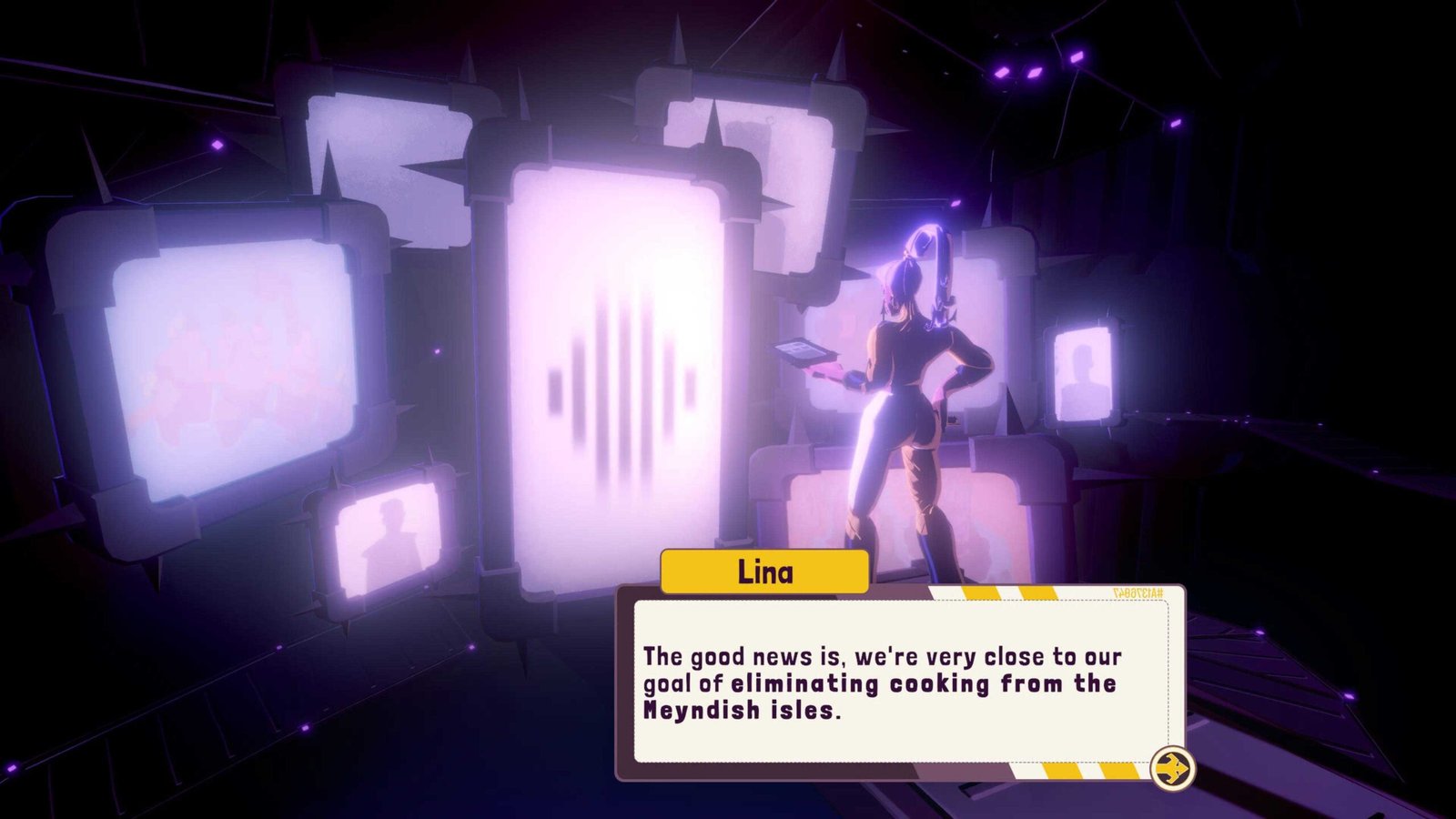
But it just starts with the initial thought of, okay, if they’re mechs what were they used for and what do they do now and how many are there and they’re going to be talking in certain ways in the real world versus we have the spirit realm think concept what are their relationships and then we come back to themes in this game is sisterhood right so we have the Sam and Amani who’ve been away for 10 years to come back together and you have Lina their younger sister who is head of this corporation What happened there? How did the falling out happen? And it’s a story about them, exploring that and trying to reconcile.
That theme of sisterhood also continues to the mechs, too. There’s a whole history there. And there’s a connected tissue between them. And so we kind of explore there’s these two parallel stories around the same theme. So for us, it’s figure out the theme. how do we show that off through the gameplay mechanics? and then try to explore those themes as much as possible.
Q: This time around, food takes center stage more than ever, and that’s clear through the foraging and cooking mechanics that make up a considerable chunk of the gameplay. How was building these systems for the team?
That took some revision to get to. Originally, there was a camp scene where you cook, but then, as we’re play testing. We all sit around as a team, and we were kind of like, ” Hey, is this working? We’re constantly having to run him back to the camp to cook. What if he could cook anywhere?
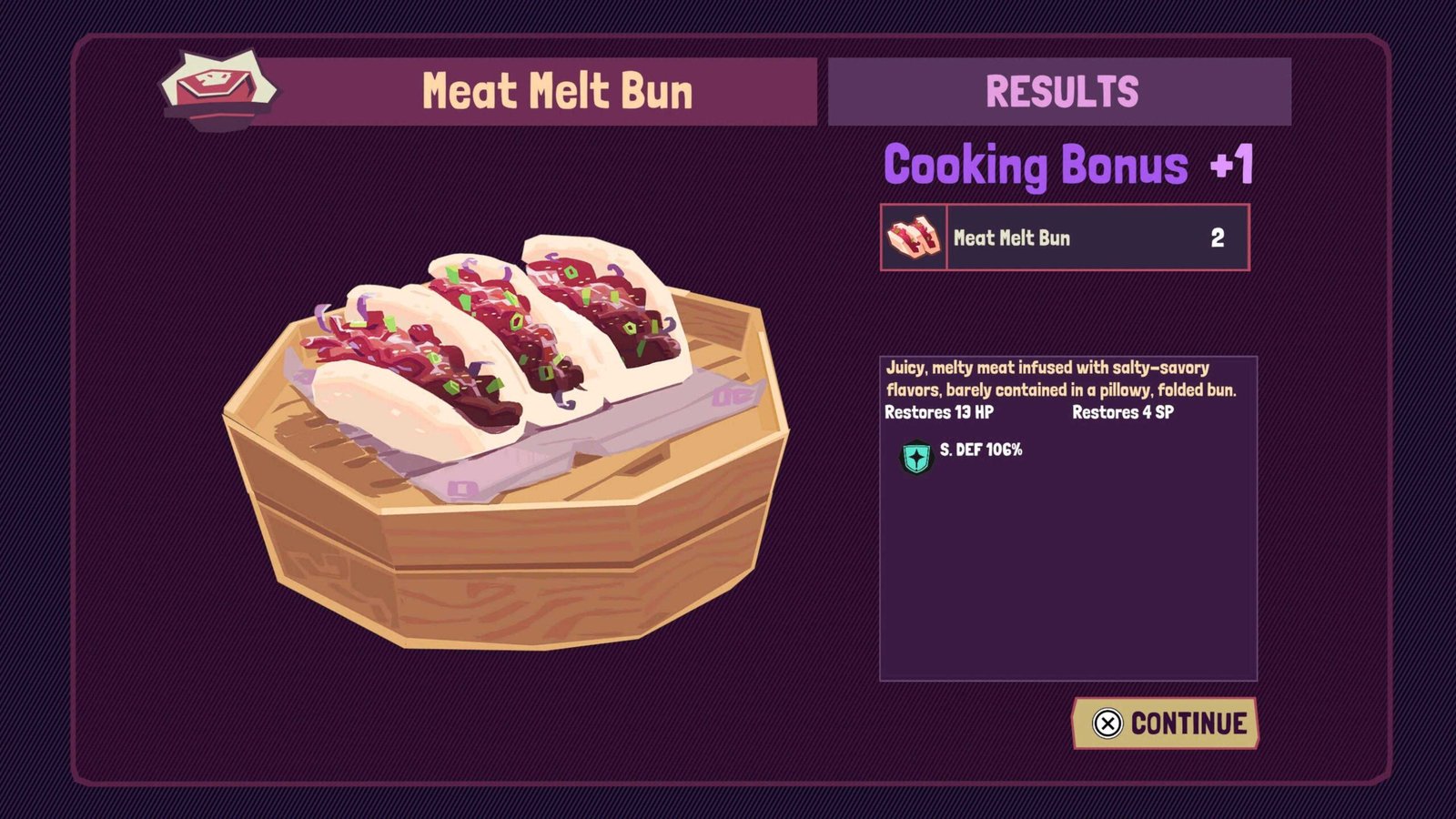
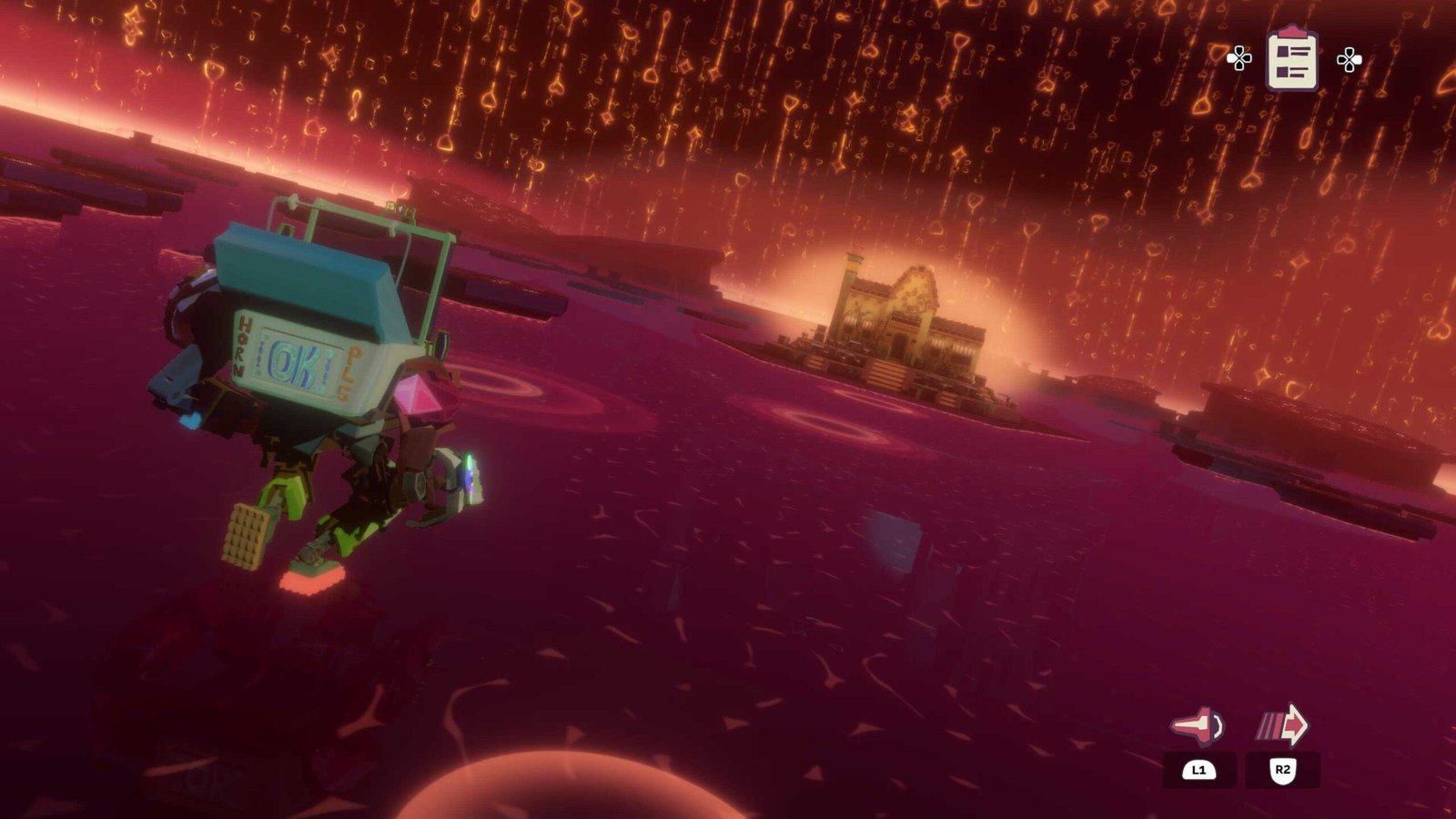
So the idea of the spirit realm that Goddess goes into came about. Initially, it was like, okay, we know we want to run around the world, explore it in a mech. So, we thought, let’s just make that whole process feel smooth. Honk to get the orders, go find the ingredients, then tie in the battles because certain ingredients are being hoarded by Lina’s goons, and then folks are sometimes hungry for different things.
So trying to combine those systems again was the goal of this game, more so than in Thirsty, which we didn’t quite get right, but I think I feel like we took that and made it work better. So it’s always trying to optimize that experience for the player, give the player flexible systems, and let them figure out how they want to do. We watch play tests, and we have people test early on, or some people like to get all the orders and then cook. Some people want to get an order and cook in front of them, so it’s given that flexibility. I think it makes it more interesting for the player.
