


Those who fail to learn from history are doomed to repeat it. A famous sentiment that would be all too perfect to frame the events of Zero Parades, if you weren’t already standing on the edge of history, where all that happens, has already happened.
Rather poetic, really, as Za/Um aim to repeat history in a lot of ways. A spiritual successor to what many would tout as the best CRPG ever made. Yet another political powder-keg of expletives, drug-fuelled escapades, and mysteries to solve. The only thing missing last time, you ask? Espionage.
Zero Parades is its own beast entirely. A depraved, snarling beast that aims to satirize the very idea of culture. Aims to gracefully weave a tale of intrigue and stagecraft. A beast that sets out to be more than the amnesiac drunk that gave it license to exist.
So naturally, cover established and tram ticket acquired. I made my way to Portofiro to see what CRPG delights were in store. The question is not whether this new title is Disco. It’s whether or not it is Moonglow.
Spy More, Spy Harder
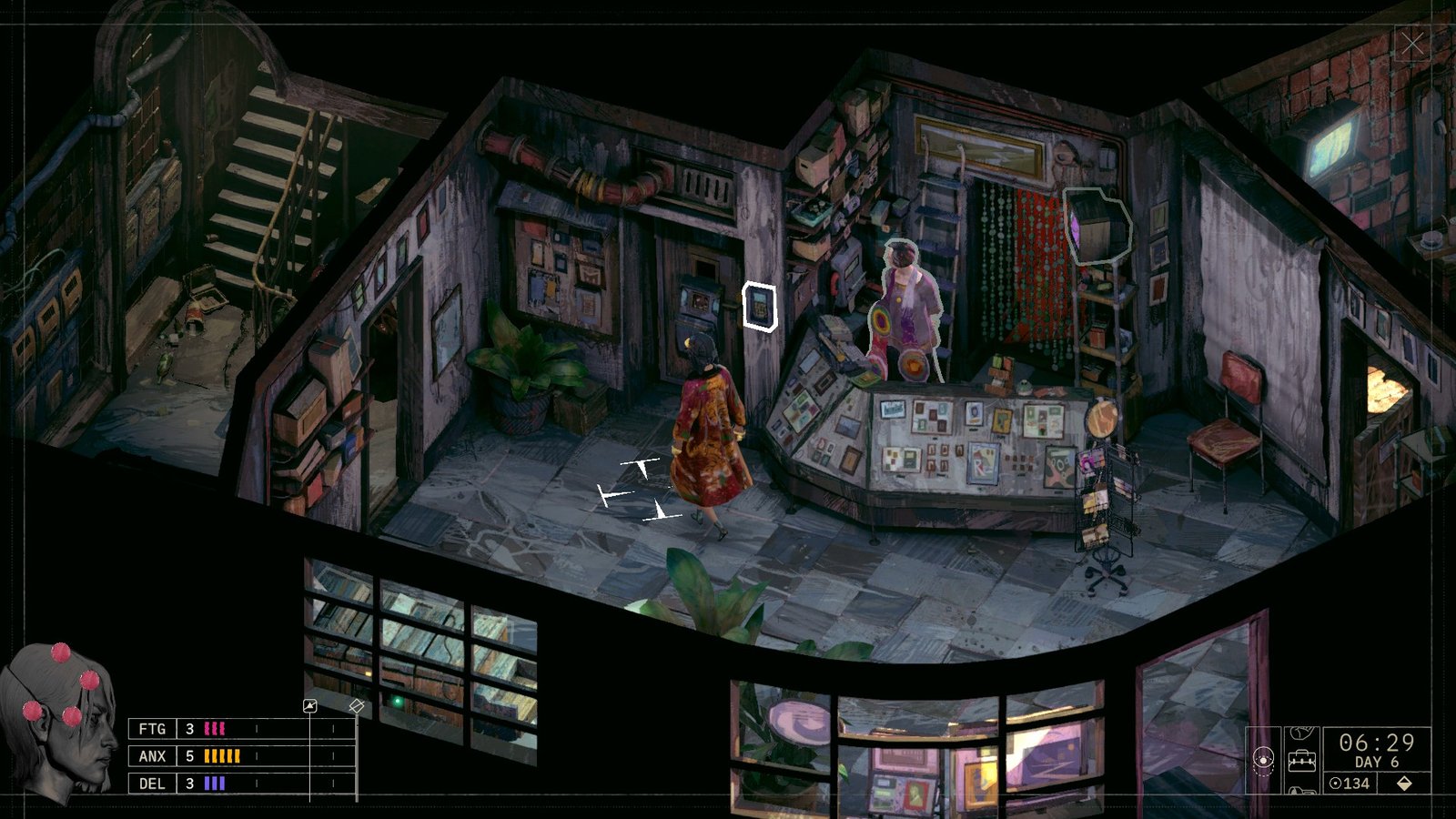
I’ll concede that I’ve never been much of a Bond fan, and The Bourne Identity has never been part of my identity. But from the moment I was dropped in-thearte in Portofiro, I knew that this was something far removed from the usual suave sleuth affair where we’re told to root for the action movie spy hero. Something self-deprecating, something raw, something gäng.
Every piece of this elaborate jigsaw is glorious, aesthetically, narratively, and thematically.
Your role is a cryptic one, to the point you even have your own cryptonym. You, playing as CASCADE, a shelved member of The Opera, have inexplicably been given a chance of redemption. Returning to your old haunt for a mysterious assignment. One that would be a lot easier to decipher if your partner hadn’t been iced out before you even got there.
It’s this rather perplexing starting point that sets you off following a trail of breadcrumbs around the city, in an attempt to make sense of your role in all this, establish what has changed about this place since the Whole Sick Crew called it home, and what these ghosts have in store for you this time around.
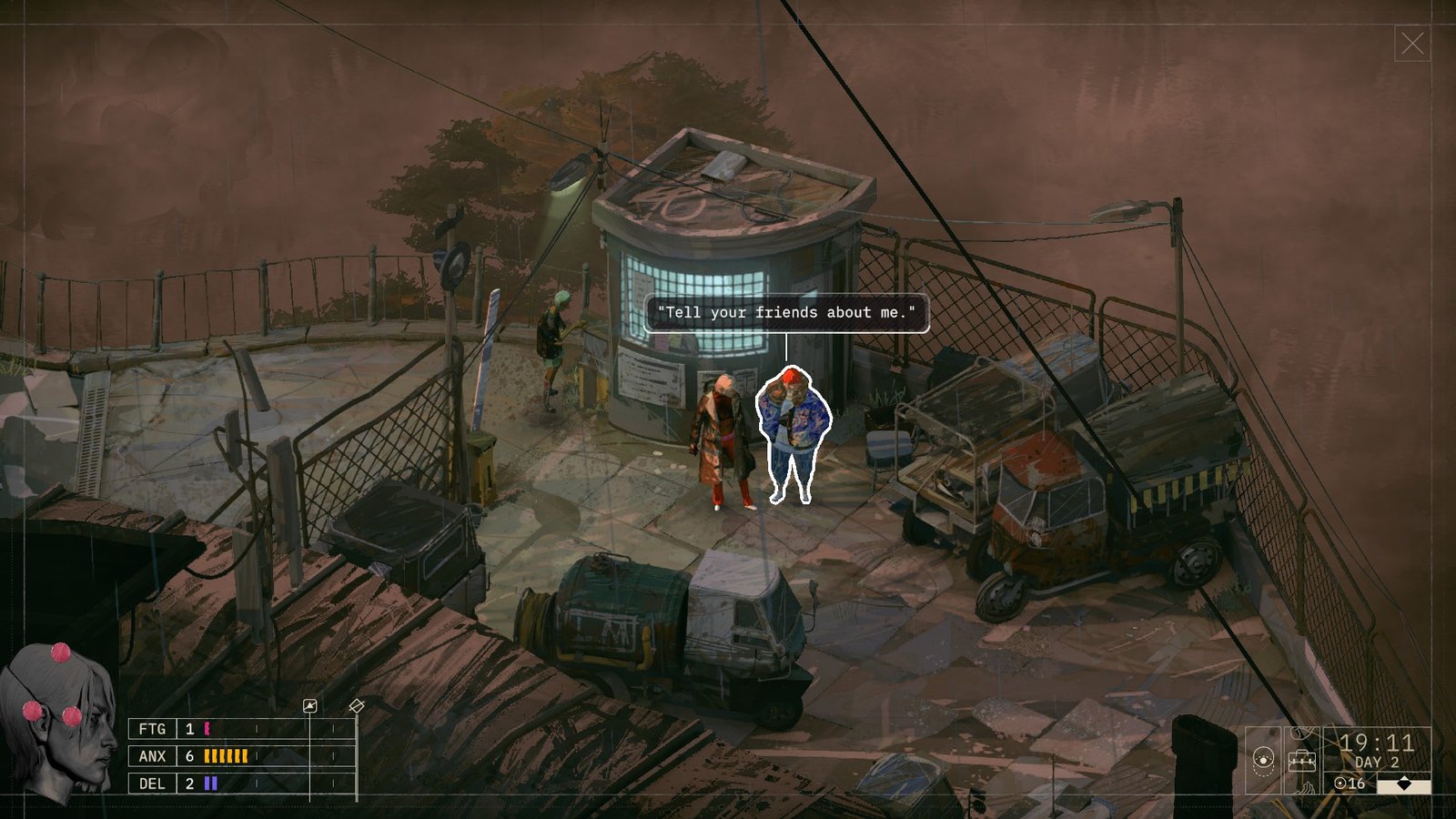
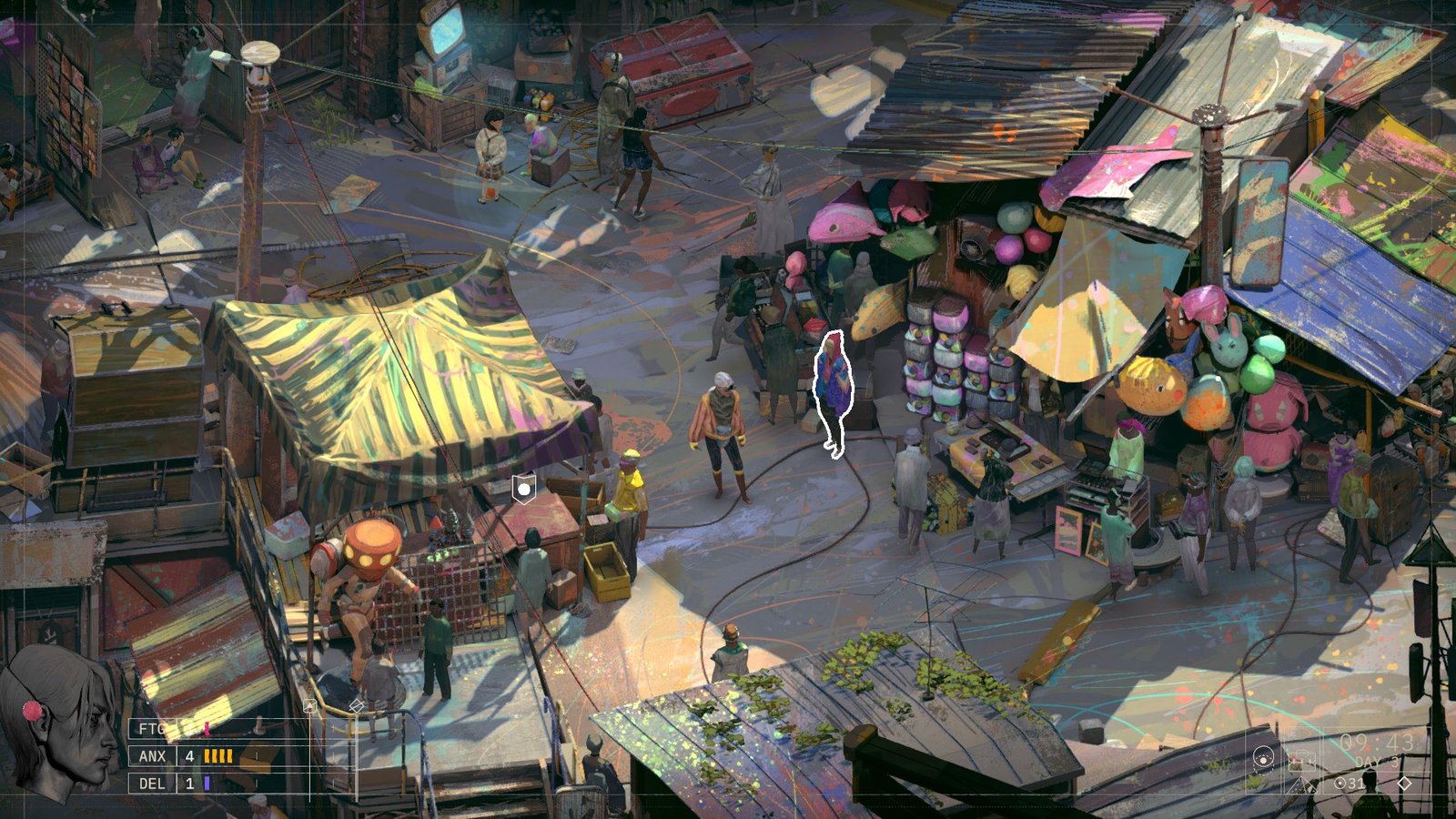
It’s a bit of a given to say that a CRPG is loaded with detail, mainly because the game’s success almost entirely hinges on the quality of the writing. But even with that in mind, Zero Parades puts on a narrative and worldbuilding clinic. Very rarely can a game immediately create a firm sense of place, but in Portofiro, I felt like a small part of something grander. A foot soldier in the larger societal and cultural war at play.
Much like it’s predecessor, the world you find yourself exploring is a finely woven spider’s web, with seemingly infinite threads to follow. Each often leading to a lore-dense conversation, a welcome revelation, or a touch of dark humour to provide some levity to break up the pain that comes with reminiscing.
Zero Parades puts on a narrative and worldbuilding clinic.
Each character is fleshed out and has a role to play in your assignment, should you want them to. Every minor inquiry or discovery can prove to be a boon later down the line, and despite what I said in my preview about your protagonist, Hershel. I can now attest to the fact that she is a phenomenally broken individual who is fascinating to get to know, bit by bit.
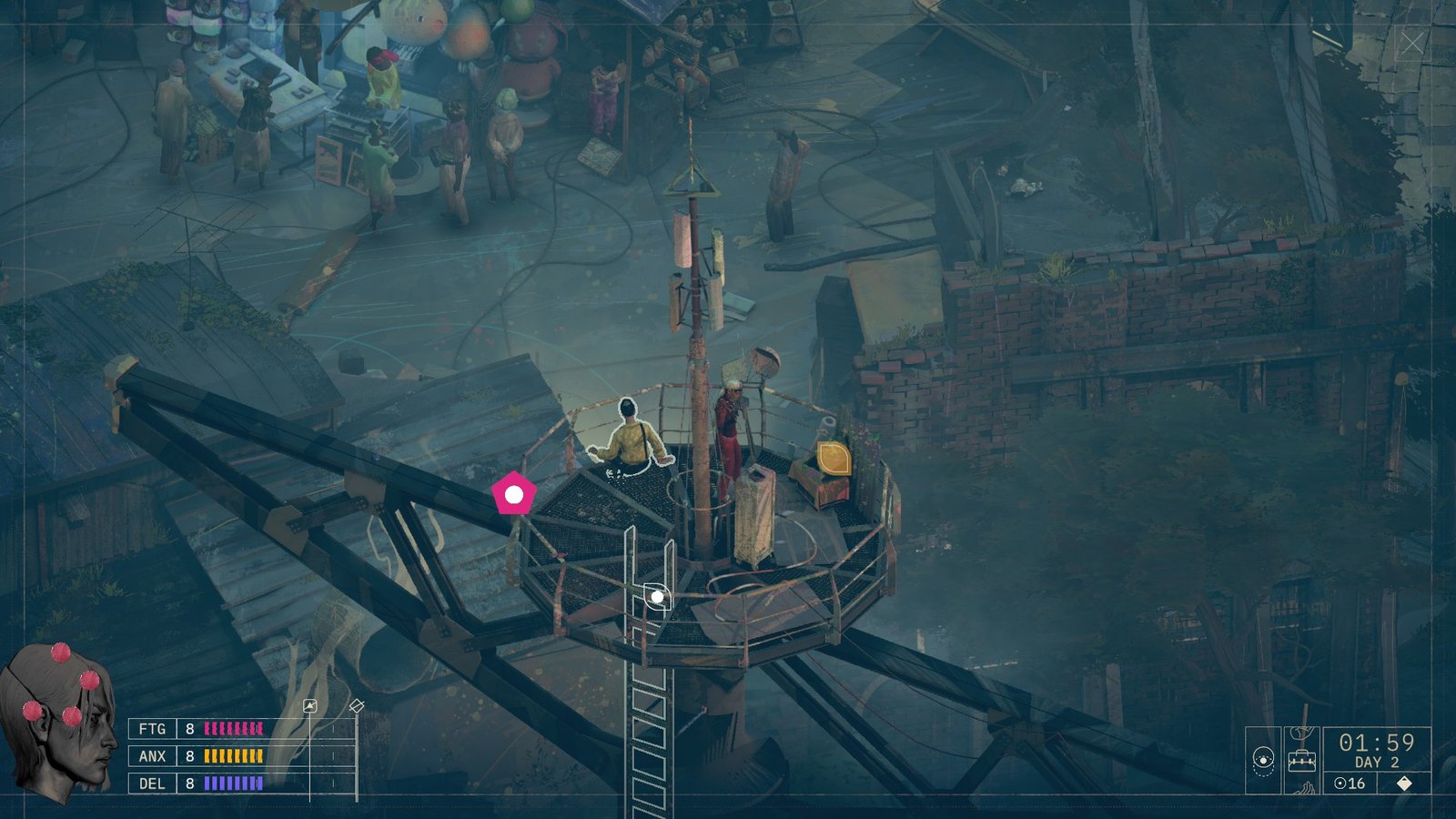
Every piece of this elaborate jigsaw is glorious, aesthetically, narratively, and thematically. Painting a picture as vivid and eye-catching as the signature oil painting art style this game boasts throughout.
But above all, I feel like this game presents spycraft in a way that few if any forms of media have ever done. Showcasing the fallible, vulnerable nature of top level operatives. Showcasing the cold and clinical effects of beuraucracy rubbing against the fabric of the art of espionage. But above all, allowing you to roleplay as a spy that doesn’t have it all together. Allowing you to play out a scenario of a desperate spy with their back against the wall.
As I said, I’ve never been a huge fan of spycraft. But Zero Parades has me waving a foam finger for the genre all of a sudden. But, subtly and discreetly, of course.
Gathering Intel Takes Time
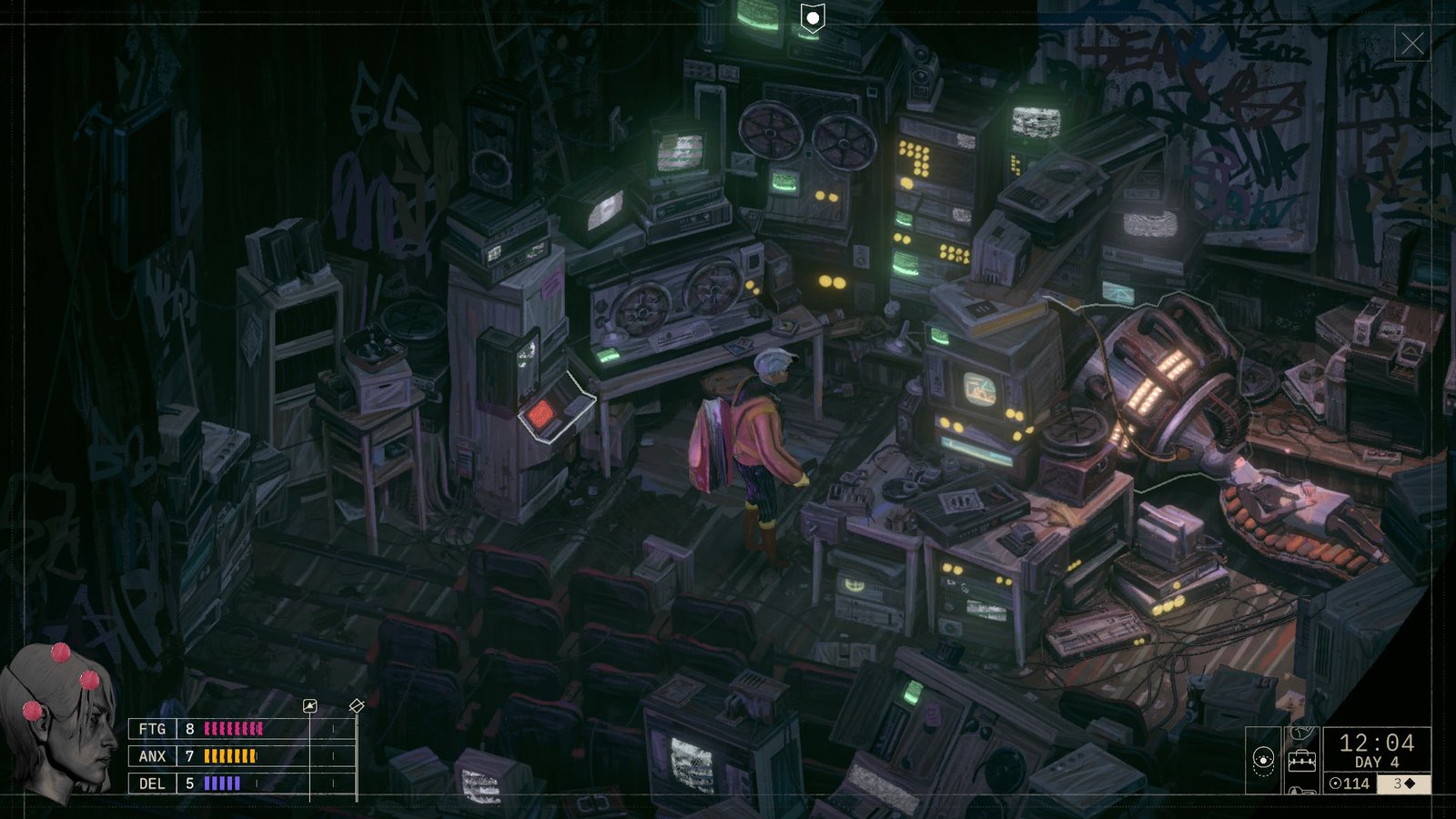
One thing that was apparent from the snippet present in the demo was that this game was going to be a slow burn. Even in comparison to Disco Elysium, Zero Parades feels very verbose, with admittedly less focus on political ideology, but a cavalcade of other complex tangents to follow.
It takes a while for Zero Parades to truly blossom into the spy thriller that it promises to be. So much so that it could take you anywhere from 10-15 hours to figure out what your actual assignment is, depending on how thorough you are when exploring and absorbing the generous amount of lore in every pocket of Portofiro.
But, while there isn’t a man hanging from a tree right from the offset, and there’s no comically tragic repercussions of a drunken night to dissect. I found myself actually preferring this slow, methodical build. Mainly because of a welcome change that Zero Parades dared to make, altering the winning CRPG formula.
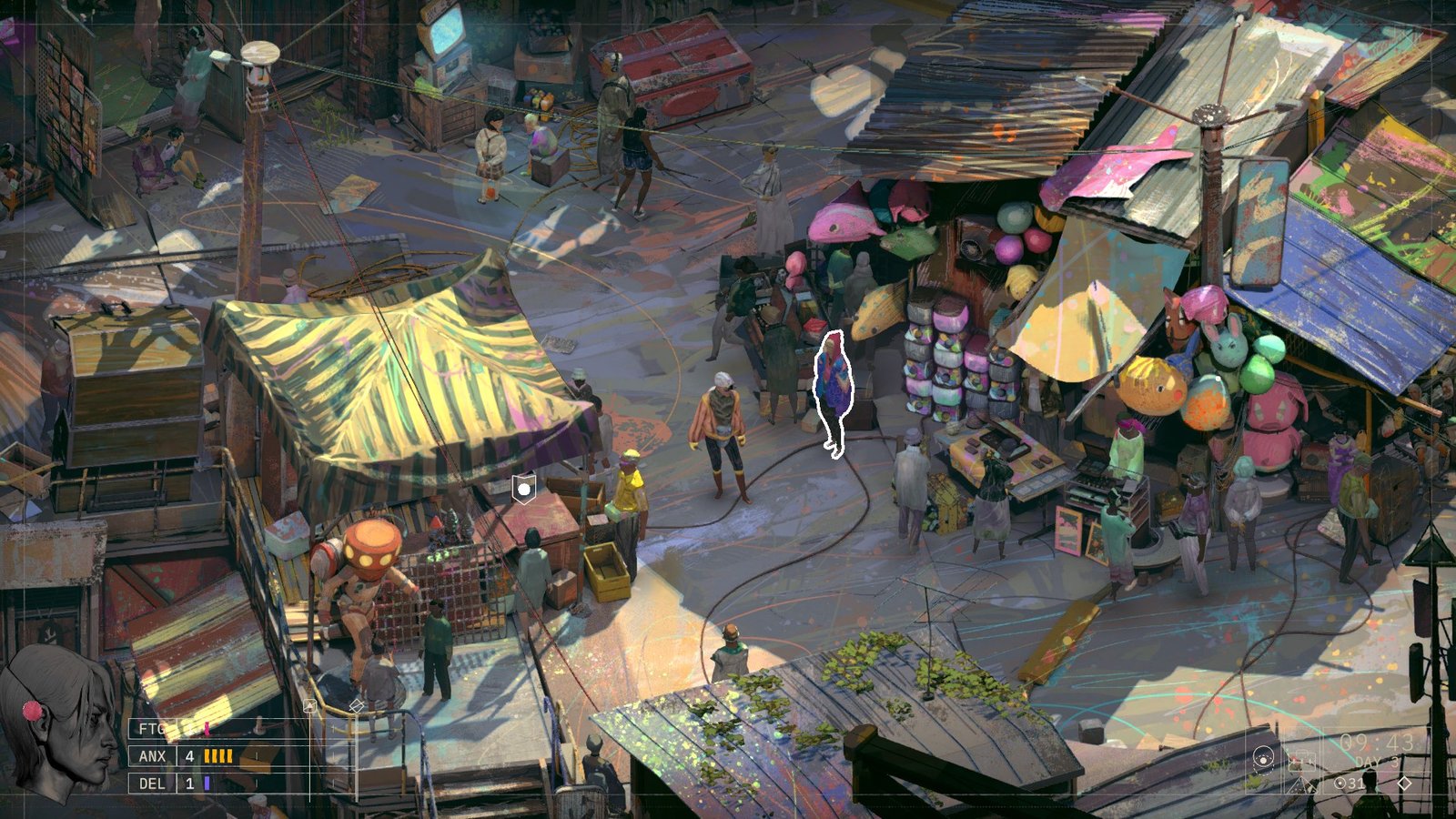
This game isn’t following a strict timeline. Meaning that you are free to labor over conversations that serve as nothing more than color, without worrying about missing out on key details. You won’t be in danger of missing the boat on time-critical events. Nor will you be harassed or harangued into actions you don’t want to commit to. Your time is your own, and this change makes for a more comfortable, engaging format.
It gives the complex worldbuilding ample room to breathe. It gives you, the player, the freedom to bounce around, exploring all the ‘what if’ scenarios without the fear of wasting precious time. I could try a risky white check, knowing I would have the time to unlock it again through further investigation. I could backtrack and retry old conversations to gain further understanding. All the while, still feeling the stakes and the pressure that come with being a spy. Leave the spreadsheets and the itineraries to the nerds on the other side of the phone. That’s what I say.
Role-playing? You Mean Stagecraft
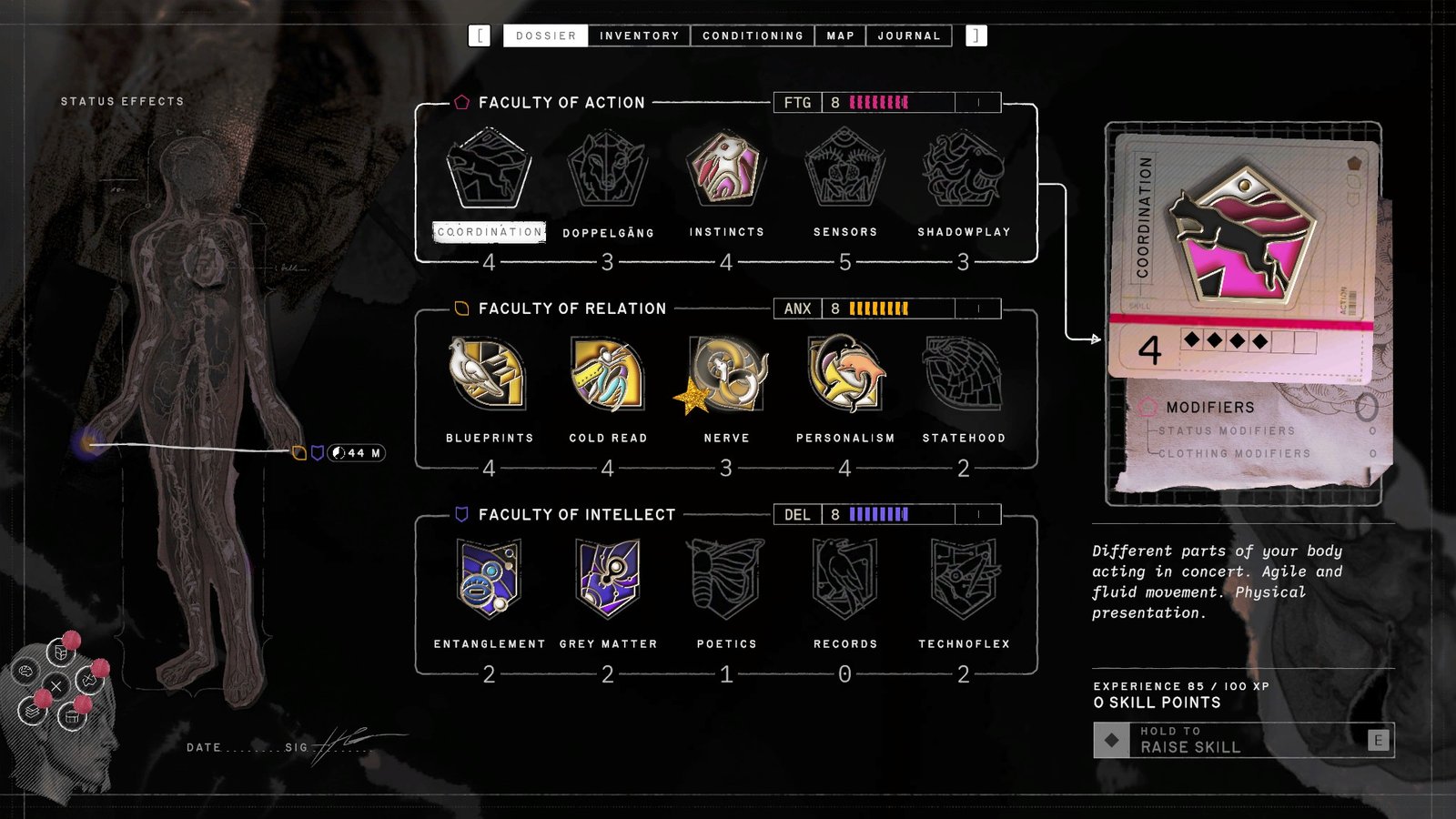
Speaking of stakes and meaningful decisions, I had a real fear that the changes to gameplay would become a chore that would make roleplaying a slog. Mainly because the game has altered Disco’s Physical and Morale in favor of Fatigue, Anxiety, and Delirium. But, beyond that, the removal of fail states in favor of the loss of skill points for overloading your various statuses.
However, with the added scope that comes with the expanded map beyond the demos’ parameters, I got to see that everything is beautifully balanced to offer a slew of ways to circumnavigate a potential stat loss.
Zero Parades feels like a natural evolution of Disco’s admittedly bare bones RPG systems.
Firstly, the game has a much more active economy, where consumables and clothing play a much more vital role right from the outset. There is a walk-in wardrobe’s worth of garments to give you the buff you need, and oodles of narcotic nibblets to get you up, or bring you down accordingly.
It feels like a much more robust and involved RPG system. One that admittedly does detract somewhat from rigid roleplaying, but does allow you to wear many masks to play the role you need to in-theatre. Something that any operant should be doing as standard. Hershel is a character that is established, not putty to be molded, as her persona is very much set in stone. But, how she conducts herself professionally is very malleable, making for a very flexible and rewarding RPG experience.
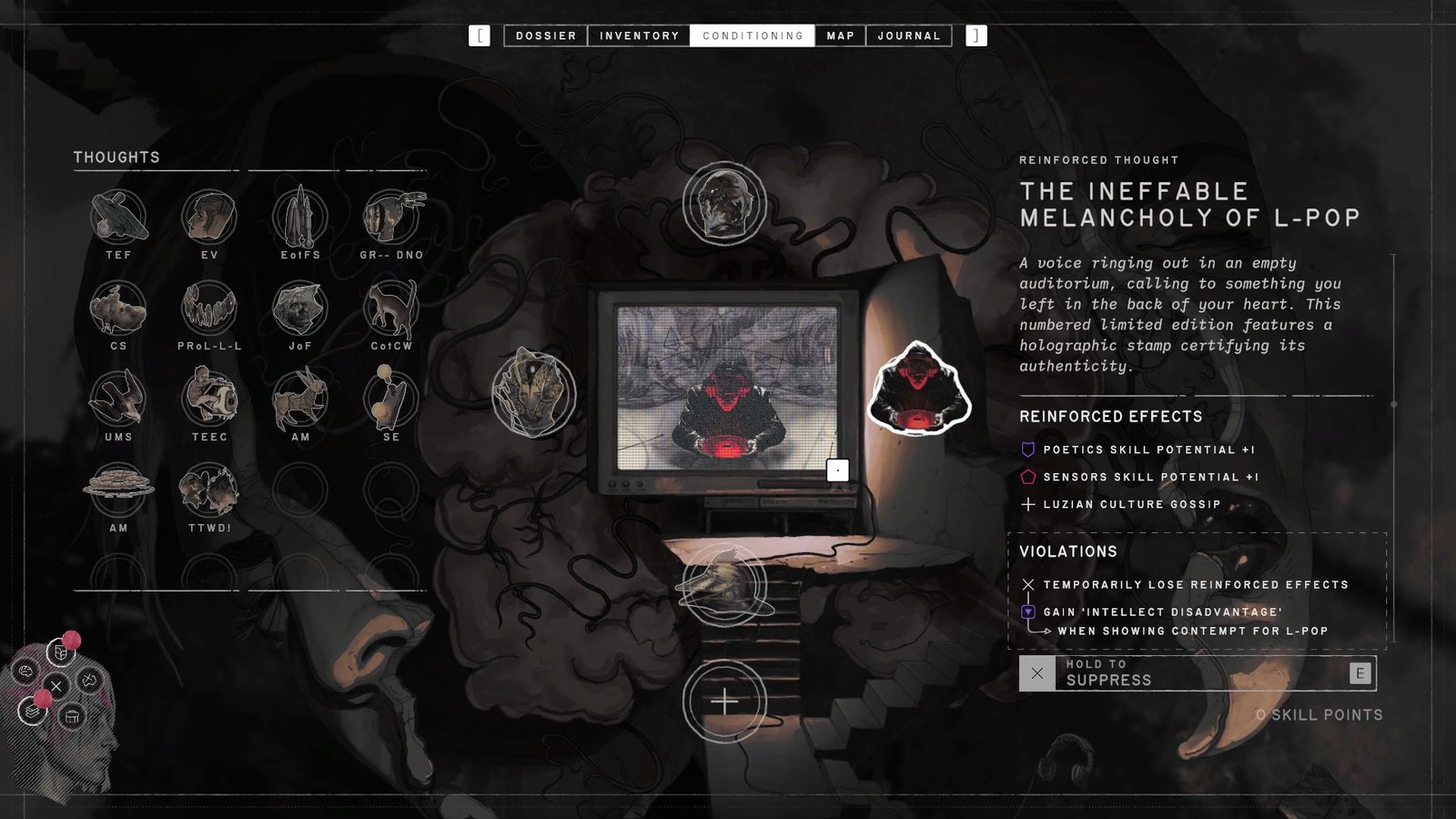
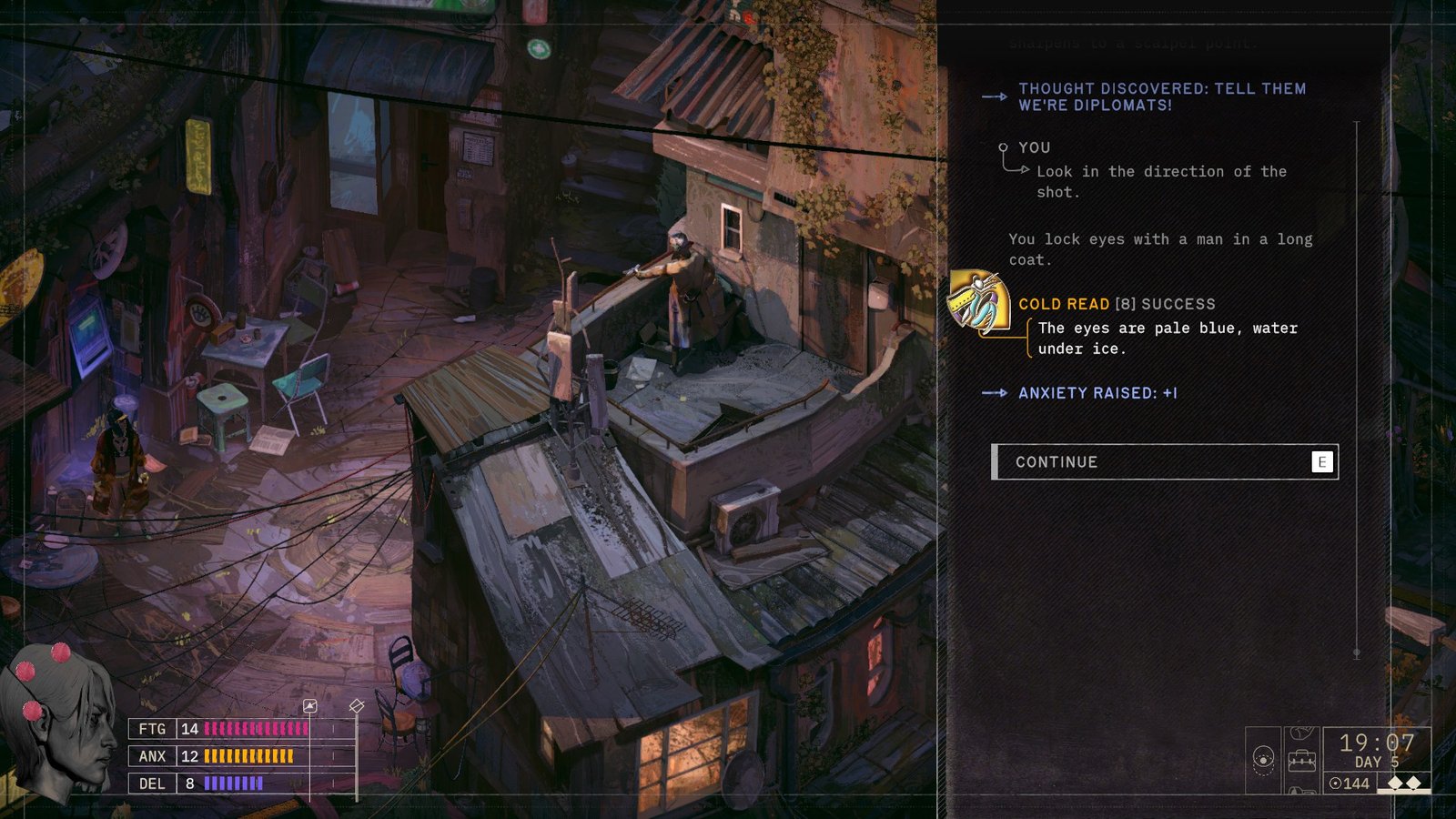
This does mean that, thanks to the many ways to get around checks and buff your character, it can feel a little easier to get the exact outcome you want. Something that time restraints and red checks negated in Disco Elysium. But Zero Parades instead ups the ante in select moments through its ‘dynamic encounters’ mechanic.
A mechanic that plays similarly to that seen in Citizen Sleeper, where a series of events will happen in quick succession, playing out in a matter of seconds through a handful of red checks, usually requiring a very solid build or a very lucky player to get through unscathed. It’s these moments that truly frame Zero Parades as a spy thriller and showcase the potential excellence and fallible nature of Hershel for all to see.
All in all, Zero Parades feels like a natural evolution of Disco’s admittedly bare bones RPG systems. Offering nunace to dice rolls, the power to plan and optimize, and licence to express your passion for fashion. See you on the scene.
But Is It Disco?
We can’t avoid the question entirely, because at the end of the day, there will be quite a few of you simply wondering if this game is the second coming of Disco Elysium. If this game is as good as Disco Elysium, and if Za/Um still have ‘it’, after the departure and messy discourse of the last few years.
Bookmark:
I found myself, a huge Disco fan, asking that question throughout my entire playthrough. So much so, that I even carved out a little time to return to Revachol to compare and contrast.
I expected to roll my eyes at the mere suggestion that entered my mind. Zero Parades could be just as good as Disco Elysium. But the longer I played through Disco Elysium, the more it became clear that, while these two games are very much sisters rather than twins. They both share a similar quality about them. A certain mastery of the genre that makes both untouchable in their own right.
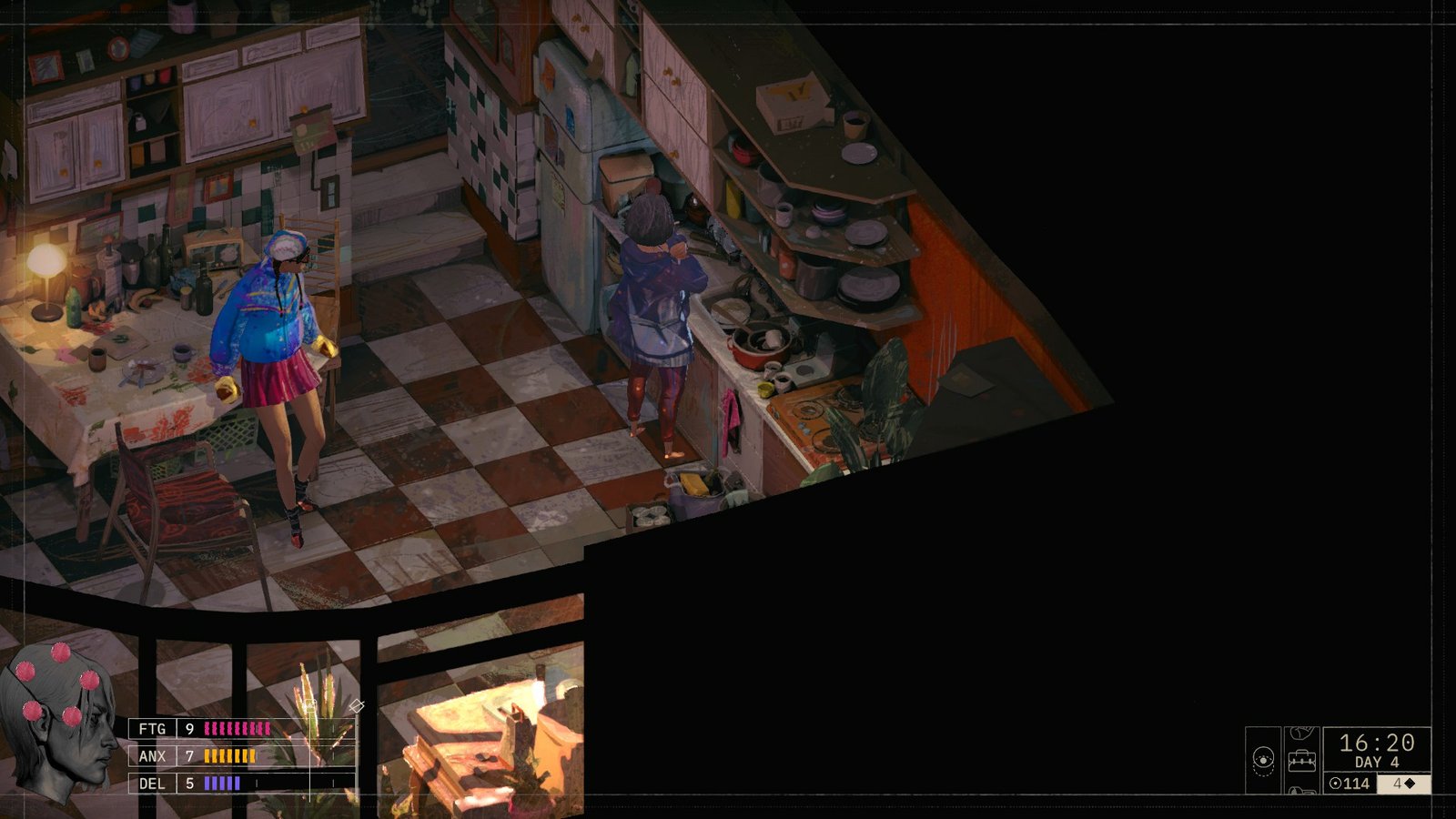
It’s not a matter of which is better. It’s a matter of what flavor you like best, as every minor criticism I formed for Zero Parades, under scrutiny, ended up being nothing more than a matter of personal preference, or something I would refer to as the ‘final Cut’ factor.
Disco Elysium was an unfinished game for quite some time. Unvoiced, rough around the edges, lacking animations in places, and in need of some fine tuning to sort to dialogue-mapping. Zero Parades is in a somewhat similar state, albeit far more polished.
Almost all characters are fully voiced, a lot of key scenarios already have animations to add immersion and flair to situations, and while some dialogue issues, duplicated items, and Steam Deck compatibility issues persist. It’s still a phenomenally polished product right this moment.
Beyond that, Disco is a more grounded experience, minus the Insulindian Phasmid. Whereas Zero Parades is a more surreal experience that demands that you suspend disbelief. Disco is a more taxing endeavor, whereas Zero Parades is more forgiving, and Disco is built around your relationship with a partner, whereas Zero Parades is a solo affair. All things that don’t make one better than the other. Just different.
It’s a bold thing to say, but I’ll say it anyway. If Disco Elysium didn’t exist, and Zero Parades came along, without all the drama that has surrounded it. The bad blood, and the need among the community to uphold the legacy of Disco. I firmly believe that Zero Parades would receive the same fanfare, and cult status.
I fear it may not, due to all those factors mentioned. But I will stand firm and say, on quality alone, it should. As it’s another CRPG masterpiece.
"Lightning rarely strikes twice, but against all odds, Zero Parades is a spiritual successor worthy of taking the torch from Disco Elysium and running with it. This spy thriller is a slow burn, but one that slowly blossoms over time. It's rich in detail, abundant with memorable moments, and elevates the rudimentary RPG systems of old. It may have some minor tweaks to make for the inevitable 'final cut'. But, no matter how you feel about this new iteration of Za/Um, their new IP is every bit as captivating as that which came before."
The Good
- Masterful worldbuilding
- Elevated RPG Systems
- Nails the espionage theme
The Bad
- Slow burn
- Needs minor polish in spots
- Lacks a killer soundtrack
