


These days, the option of using stealth mechanics in an action-adventure game is almost a given. Titles like Uncharted, Batman: Arkham, and pretty much any of Ubisoft’s open-world games all offer players the chance to take the quieter approach rather than attacking enemies head-on, no matter how much of a good idea the latter may seem. For the Styx franchise, though, stealth is not just an option. Stealth is the core foundation on which the series has been built. Styx: Blades of Greed, the third entry in the series, takes the core principles of its predecessors and drops them into a much larger game, both in terms of scale and ambition.
Styx: Blades of Greed sees the titular goblin return once again, this time as he and his crew seek out a valuable, mysterious resource known as Quartz. The world is on the brink of war between humans, orcs and elves, and if harnessed correctly, Quartz could hold the key to untold power for Styx himself. Armed with new tools and abilities, Styx must use all his cunning to ensure he remains in the shadows while going about his deadly business.
Although I’d heard of the Styx games previously, I was a newcomer to the series prior to Blades of Greed. I grew up with games like Metal Gear Solid and Tenchu: Stealth Assassins, but it had been a while since I’d gotten stuck into a predominantly stealth-focused title. Enter Styx: Blades of Greed, a game that doesn’t shy away from what its trying to be. This ultimately makes it a stronger offering for that very reason.
Styx and Stones May Break My Bones
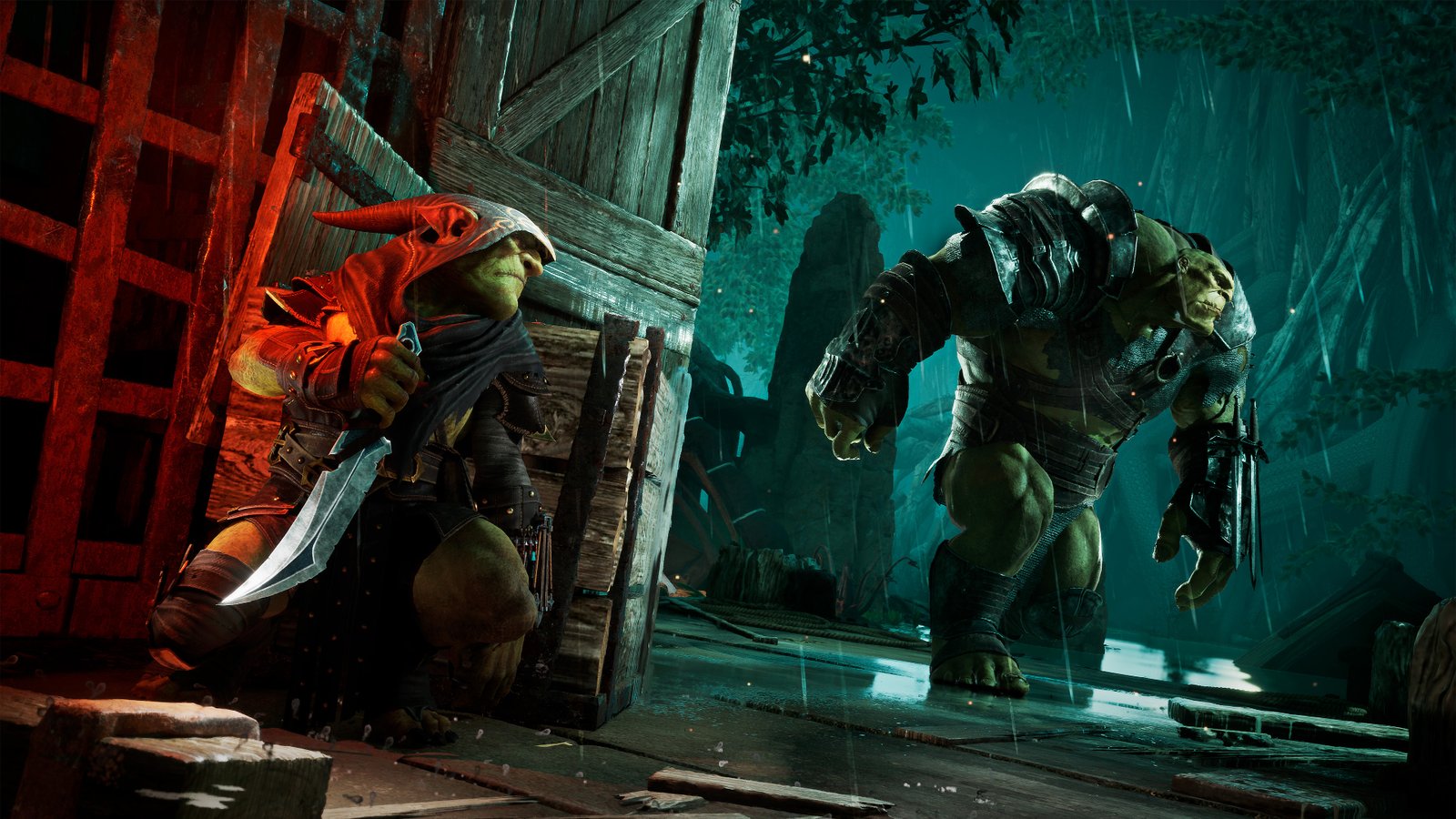
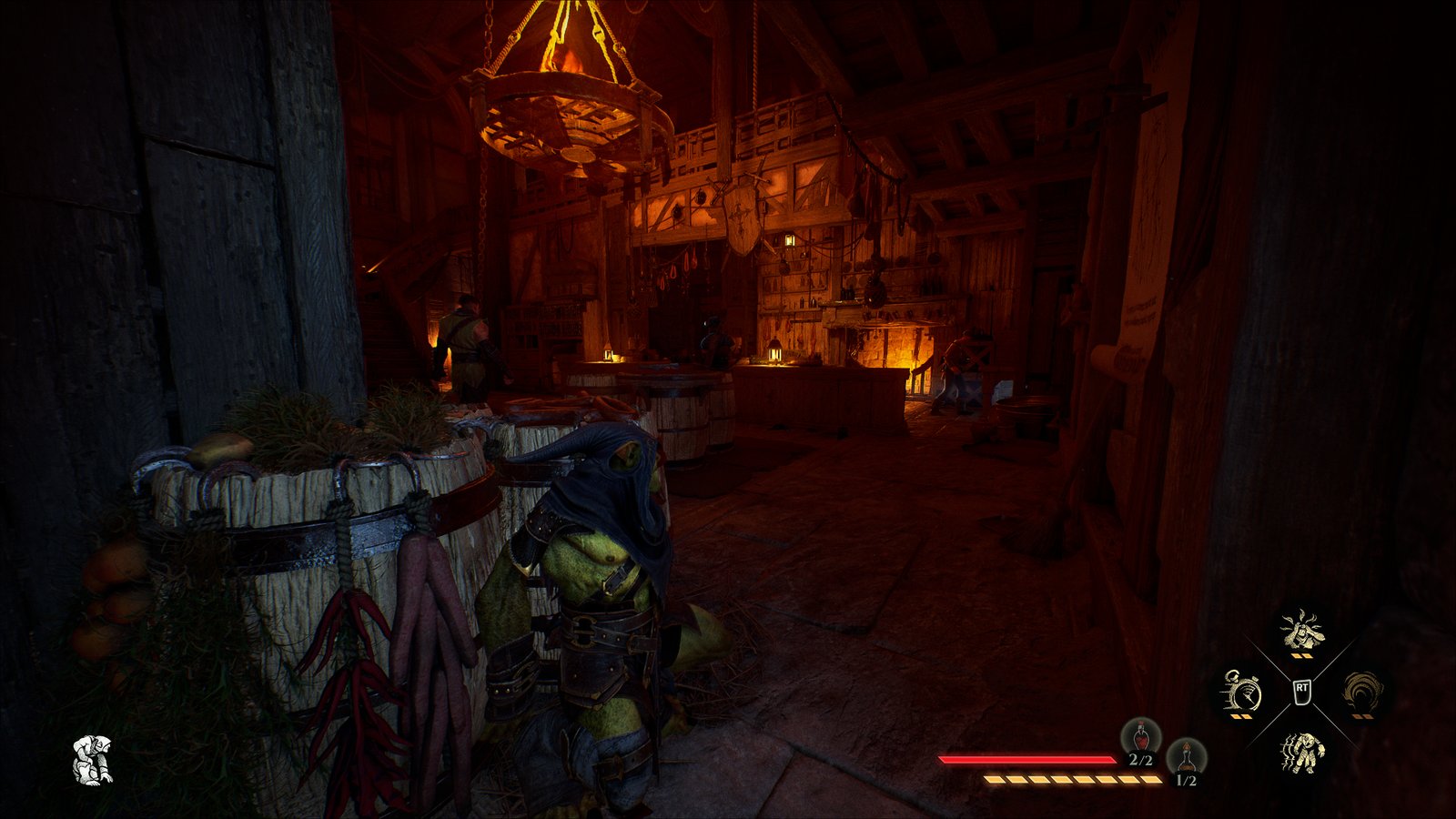
Styx: Blades of Greed opens with an optional tutorial in which series newcomers and returning players can quickly get to grips with the sprightly goblin’s nifty moveset. Traditionally, goblins aren’t exactly the stealthiest of creatures, but it seems Styx himself didn’t get that memo. He is incredibly adept at making sure his enemies can’t see him. He can hide in shadows, snuffing out candles and other forms of light wherever possible, as well as crawl into barrels, cupboards or under tables.
Once the tutorial is out the way, the game opens up proper. Unlocking the airship shortly after allows players to traverse between numerous huge maps, each with various segments of Quartz to find. Usually these are hidden in densely populated areas, and you are completely free to plan out your own route to each one. There’s a huge sense of freedom that can be a little overwhelming to begin with.
Story Isn’t the Main Focus Here
Narratively, Blades of Greed tells a decent story that serves as a good backdrop for the action. The biggest battle for Styx to fight is inside his own head, as the Quartz tries to corrupt his mind each time he absorbs more of it. His small group of wisecracking allies each bring something unique to the setup, but their personalities are never really anything more than surface-level. This doesn’t necessarily hurt the experience though, as Styx is clearly the star of the show, and it shows.
One of Styx: Blades of Greed’s core strengths is the tightness of the controls. Movement feels fast, fluid, and responsive. In a game where a split second can be the difference between being seen and escaping, the importance of this can’t be understated. Styx himself is easy to control, and the mechanics are simple enough, even when factoring in upgrades as you progress.
The Level of Choice in Styx: Blades of Greed is Impressive
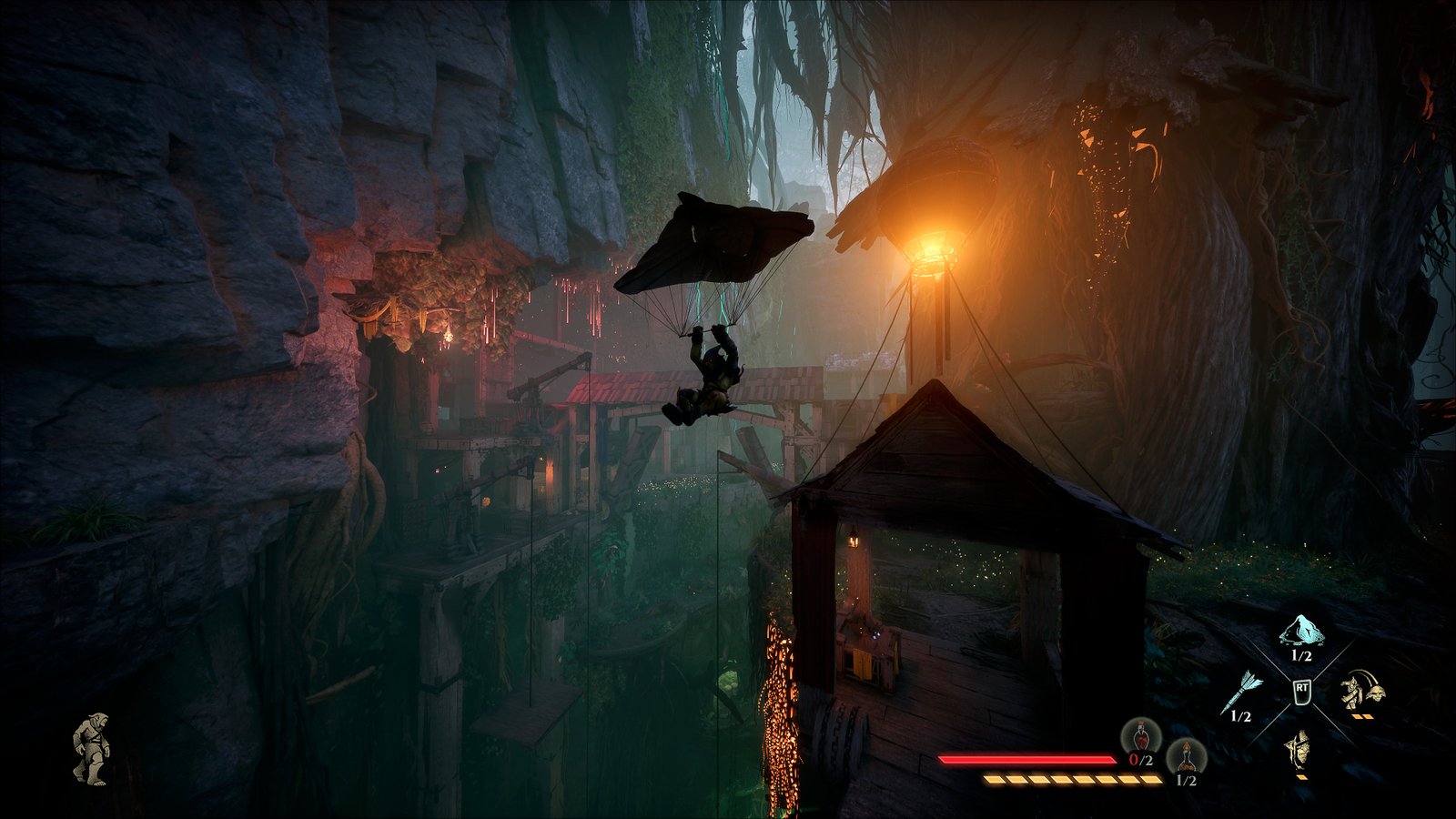
Choice and freedom are two core concepts in Styx: Blades of Greed. With the areas being so large, there are often a large number of ways in which you can reach your objective. For the most part, this is a good thing. You can quietly distract guards while killing others, or other times you can slip past without ever laying a finger on them. You can poison food and throw sand at guards to temporarily blind them. As you progress, absorbing more Quartz, you gain access to more substantial powers, including invisibility and the ability to create a clone in order to distract and confuse.
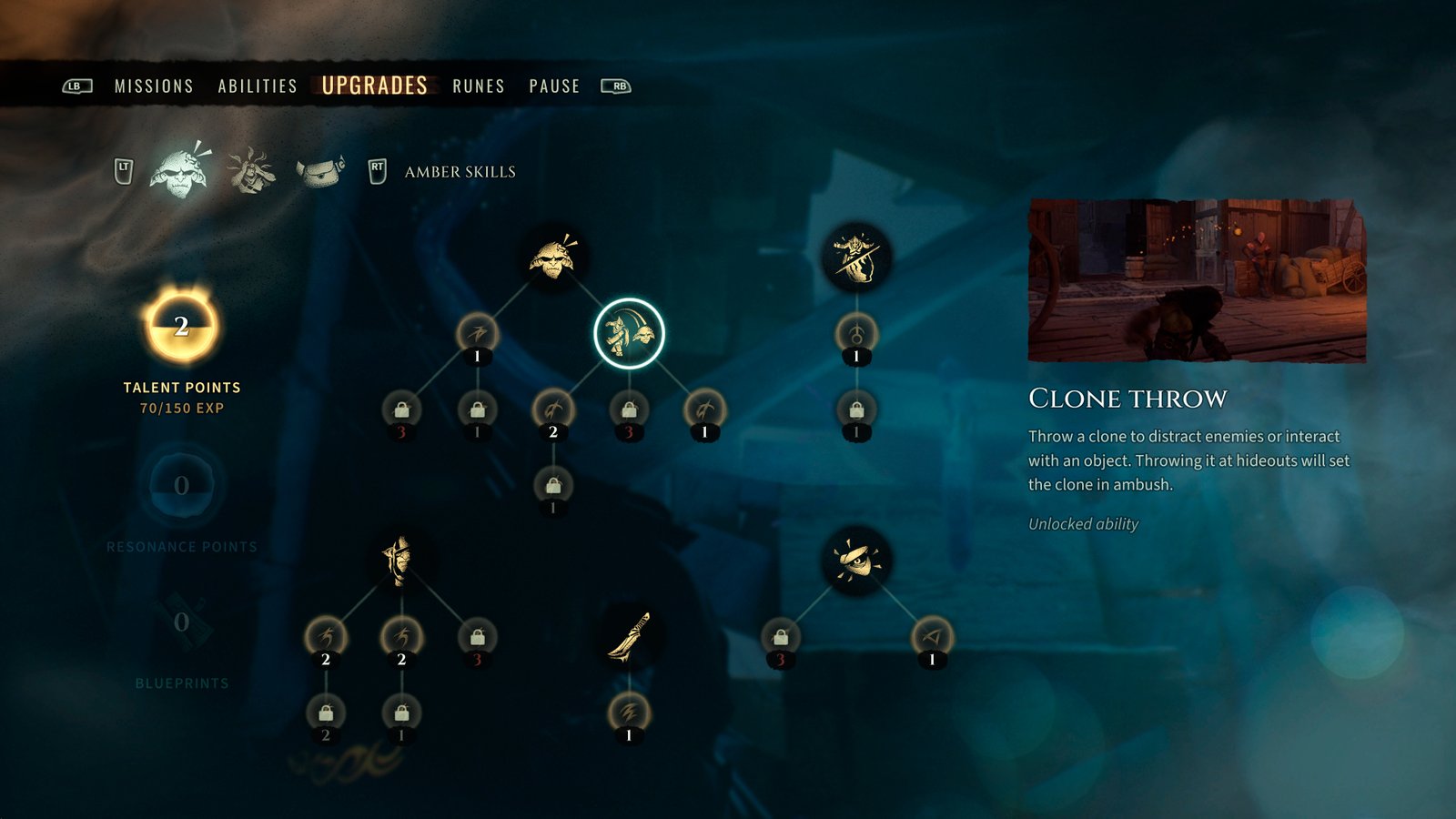
The game’s skill trees, much like its mechanics, are nice and simple. They offer a variety of abilities and ways to customize your loadout, but they never overcomplicate. Each tree offers no more than 20 or so unlocks, ensuring you won’t get overwhelmed. Too many games bloat their skill trees unnecessarily to create the illusion of choice, but Styx: Blades of Greed certainly isn’t one of them.
If (or more like, when) Styx is seen, then you do have the option of standard melee combat. This is so incredibly basic, though, that its not really an option, its more of a ‘one last chance before I die’, only to be used as an absolute last resort. The hitboxes are a little wonky, which is jarring considering how tight the standard controls are, and the dodging just feels a little off. Styx: Blades of Greed is clearly a stealth experience, and the standard melee combat adds so little here, you do wonder if it could’ve just been left out entirely.
Styx is One Agile Little Goblin
Likewise, traversal mechanics start out simply enough, with little more than a crouch and double jump to begin with. Styx is an extremely competent climber, able to scale heights with ease, and as the adventure progresses, you’ll also unlock things like a grapple hook and a glider, both of which give Styx access to areas of the maps that were previously inaccessible. This gives Styx: Blades of Greed an almost Metroidvania-like feel at times.
Occasionally, though, the freedom the game gives you proves to be problematic. The areas have a huge amount of verticality. With the areas as large as they are, and no minimap for you to keep track of where you are, its pretty easy to get lost. You do have a compass that points you in the general direction you need to go, but trying to find your way to the next objective is more painful than it probably should be. It feels like a completely unnecessary frustration which could’ve been easily avoided with the inclusion of some kind of map.
Styx: Blades of Greed’s Quirky Aesthetic Works Perfectly
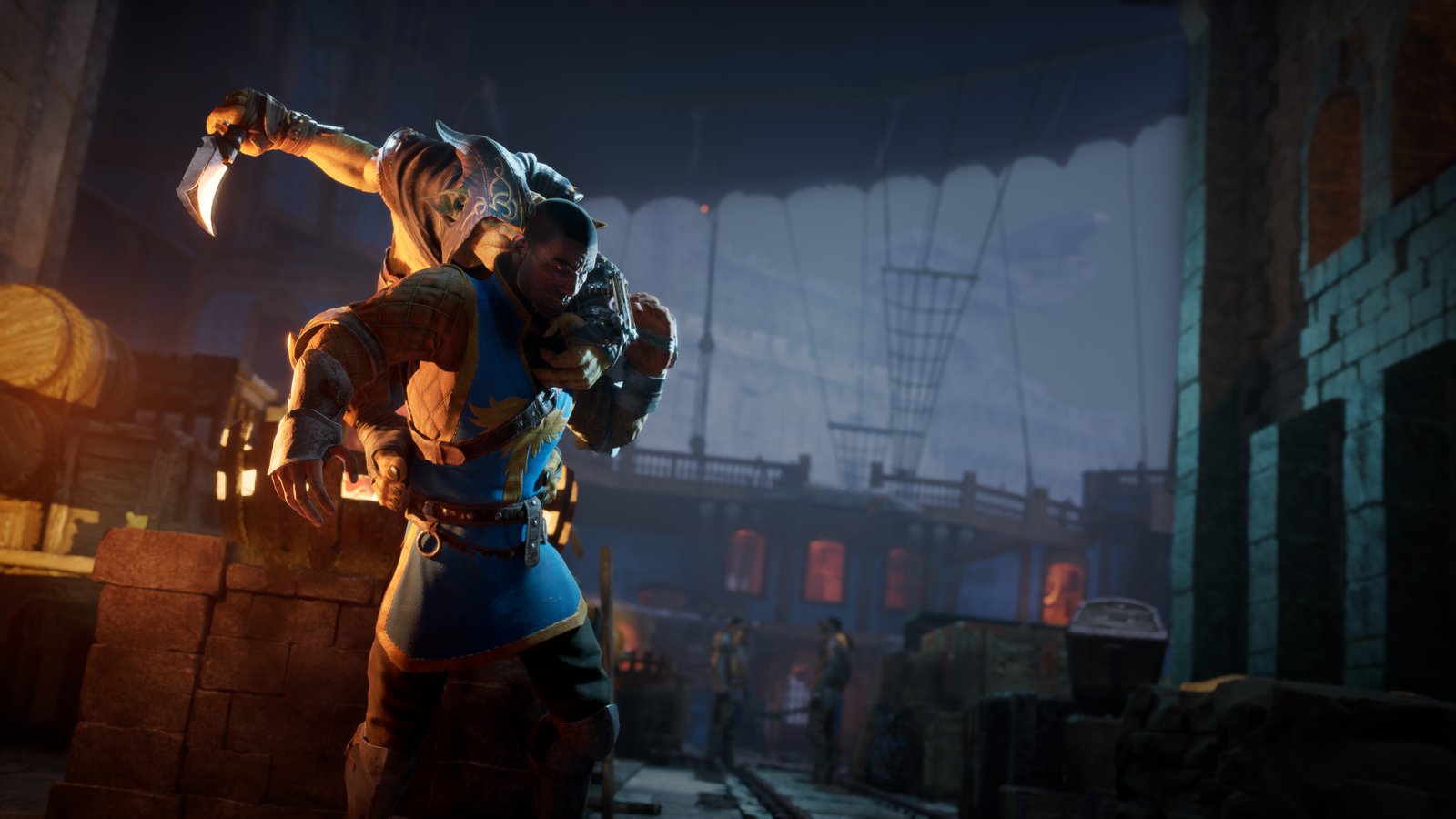
Visually, Styx: Blades of Greed doesn’t pull up any trees. Characters are fairly blocky, and some of the environments seem like they’d have been more at home in the PS3 era. That being said, you could argue that the visuals strangely suit the game’s quirky high-fantasy setting, and they give the whole thing a little extra charm. Coupled with the solid voice acting (Styx in particular walks the perfect line between menacing and hilarious), the game’s look and feel just seems to fit like a glove, despite it undeniably looking a little dated. It all depends on how important modern visuals are to the overall experience for you personally.
Performance Issues and Bugs in Styx: Blades of Greed
Unfortunately, playing on an Xbox ROG Ally, I ran into a couple of notable performance issues. The shading on cutscenes was wildly unpredictable, even on the lowest settings, and I experienced regular framerate drops when things got a little hectic on screen. Perhaps more concerning though was the number of bugs I experienced in my playthrough. Some were minor and insignificant, like enemy bodies disappearing into walls, but others were far more serious.
During a relatively early-game quest, I experienced a game-breaking bug where one of the guards I was supposed to stalk completely glitched out at the same spot on his path, being alerted by nothing and trapped in endless dialogue with himself. Multiple reloads didn’t rectify this, and even worse, even though I could still complete the quest, I could no longer save my game at all, it completely bugged out. Fortunately, the amount of choice Styx: Blades of Greed gives you meant I could take another route to my objective, forgoing the need to stalk the men entirely, and allowing me to progress.
Final Thoughts on Styx: Blades of Greed
Overall, I enjoyed my time with Styx: Blades of Greed. It presents a simple premise, easy mechanics, and tight controls which give you numerous ways to play the game. For fans of stealth games, there is a lot to love about Blades of Greed. Its simplicity is its strength, and you are likely to have a good time even if you aren’t usually particularly drawn to stealth-focused games.
However, a couple of issues keep Styx: Blades of Greed from being truly great. Dated visuals, performance issues and bugs, and the lack of a minimap all contribute to this throughout the game. While one of these issues alone may be easy to overlook, when you combine them all it definitely detracts from the experience, and ensures Styx: Blades of Greed stops just short of greatness.
Reviewed on Xbox ROG Ally. Game code provided by the publisher.
Styx provides solid stealth gameplay in a world rich with choice and freedom. The simplicity of its mechanics and tightness of its controls help to make the experience fun from the get-go, but its held back slightly by some technical issues, dated visuals and the lack of a minimap.
The Good
- Fun stealth gameplay
- Plenty of options on how to complete objectives
- Tight, responsive controls and traversal mechanics
The Bad
- Dated visuals
- No minimap means finding your way can sometimes be tough
- Performance issues and some notable bugs
