


Crimson Capes is a Souls-like 2D experience with dynamic swordplay that’s set to be released on February 12. I’m thrilled to say that I had the opportunity to ask the developers at Poor Locke a few questions about their upcoming game and its creation.
The game has taken heavy inspiration from Dark Souls and Bloodborne, and it tells the story of Milon, a witch-hunter who’s been tasked with handling a conspiracy of wizards. Naturally, this job doesn’t go as planned for Milon. I was excited to learn more about how Poor Locke applied this exploration-heavy style to a 2D world for the sake of doing Milon’s story justice.
Creating a 2D Games with Pillars of the Souls Formula
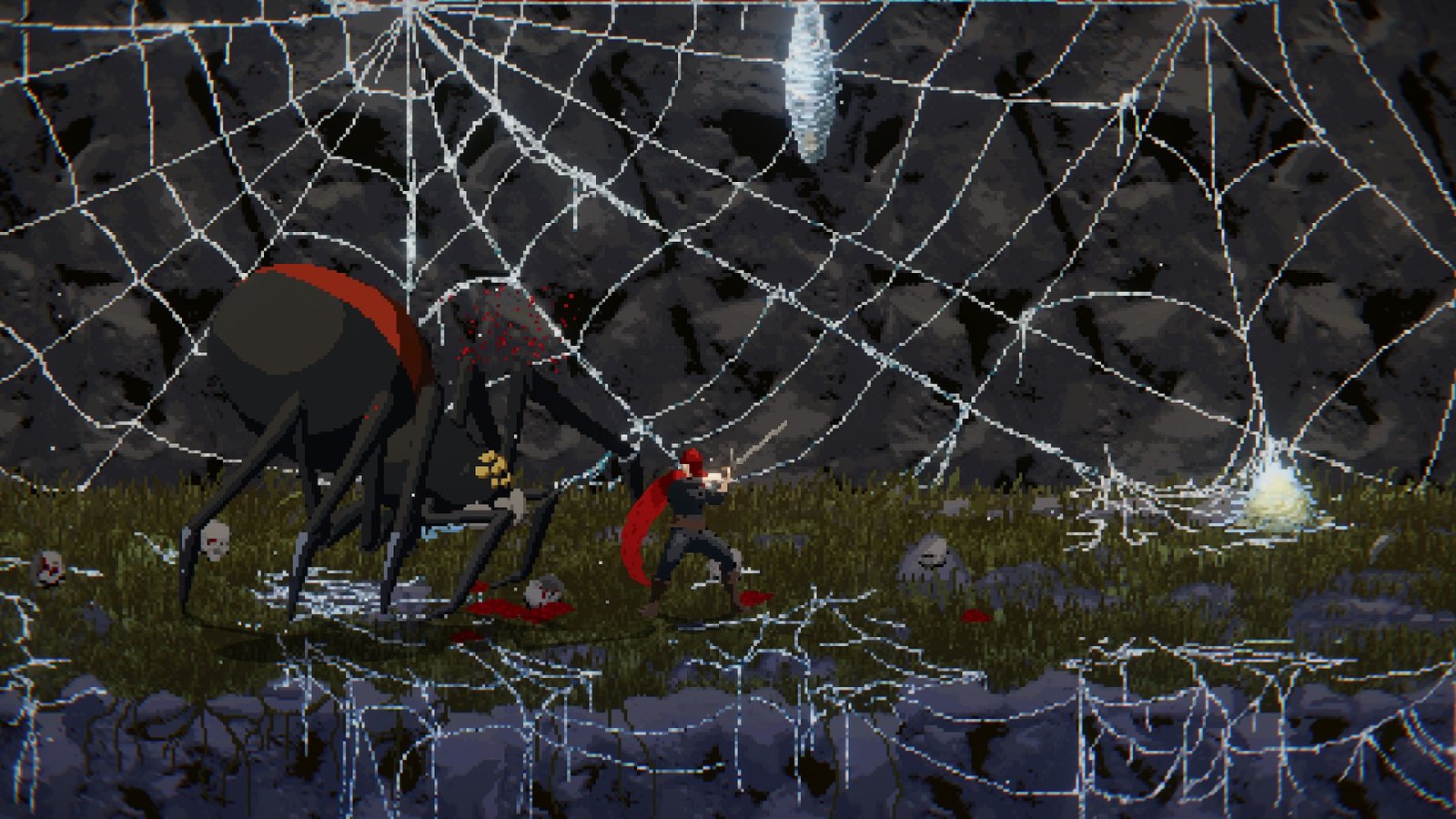
Crimson Capes brings the Souls formula to a 2D world with its deliberate combat system, ability to explore the world in a non-linear fashion, tackle dungeons and bosses in any order, and the ability to invade other players’ games. Additionally, you can choose to play alone or with friends.
TGS: Crimson Capes is described as a love letter to Souls games, but can you tell me
about any other games that you might’ve drawn inspiration from? Particularly
side-scollers that may have had an impact on level design and gameplay
mechanics.
Poor Locke: While the games that inspired us the most were Dark Souls, Bloodborne, and
Sekiro, we would be lying if we didn’t mention our stylistic inspirations: Barbarian and Moonstone. We wanted to evoke the feeling of those games into the minds of modern players and make Crimson Capes play and present like we imagined those two games when we were kids.
TGS: It seems like there are a lot of Souls-like and Metroidvania games since these
are popular genres. What do you feel sets Crimson Capes apart?
Poor Locke: We believe that our game’s combat and atmosphere will help us stand apart.
Being a small team, literally one programmer, one artist and one music producer, we had to invest -or rather gamble- early during development, in our differentiating factors. There are not many animation-commit side-scrollers and furthermore, the use of feints, taunts and all kinds of swordplay techniques that affect enemy behavior, are not something you see in this genre.
Also Read: 2XKO Interview – Talking Knockout Tunes with Jesse Zuretti
TGS: Are there any levels or sections that you’re excited to have players go through
that you can tell me about?
Poor Locke: There are two areas that took us a lot of time to nail their atmosphere and I
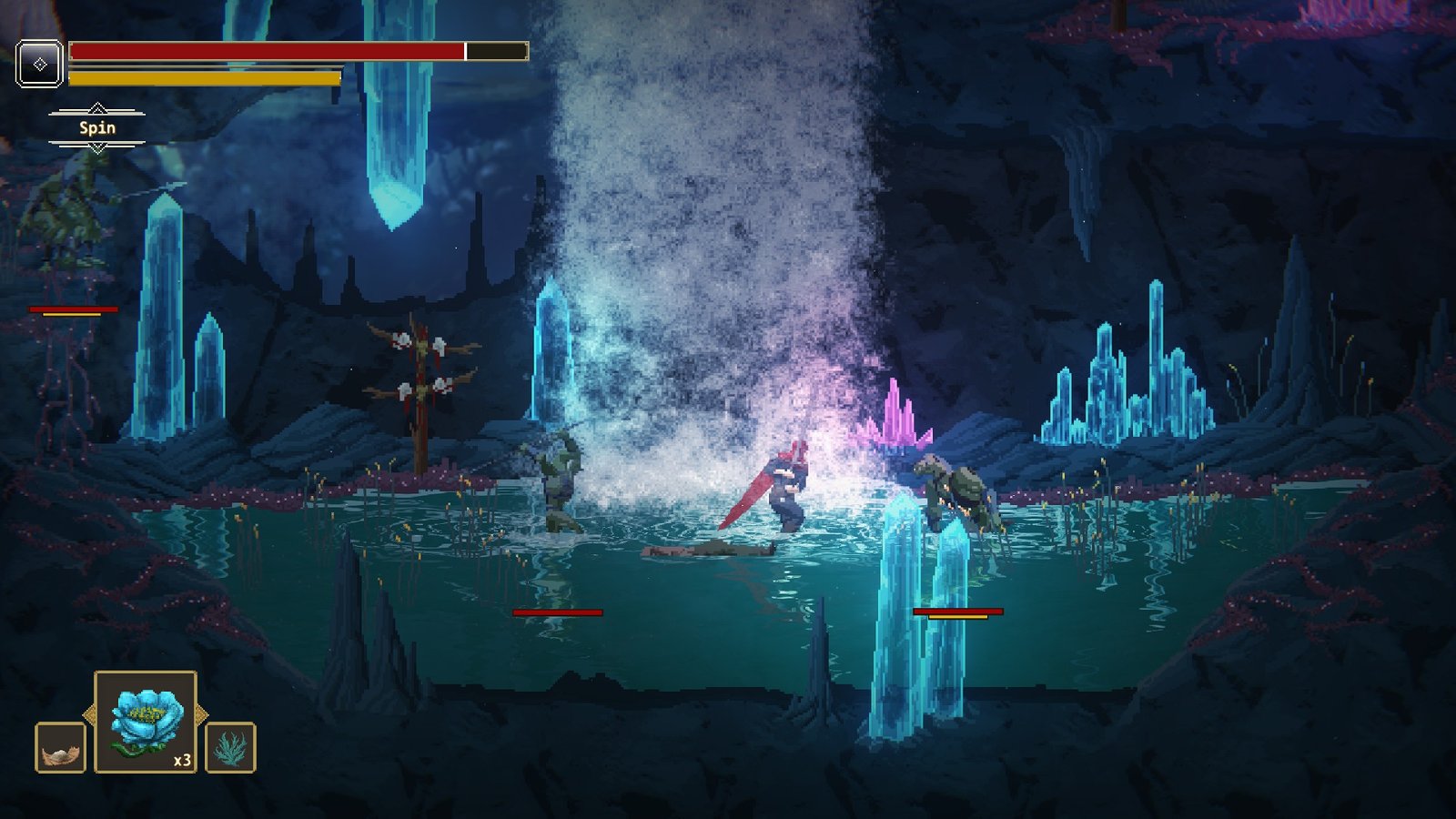
believe Kostas MacFarlane -our team’s artist- did a great job depicting them. One is Swallower’s Retreat, a closed ecosystem of caves filled with glowing crystals and mystical ponds. The other is the Flying Tower, as depicted at the end of the Release Date Trailer, which has a lot of moving parts and is filled with illusions.
The Release Date Trailer is included below if you want to see the Flying Tower portion mentioned in the developers’ answer.
The Challenges and Impact of Crimson Cape’s Combat System
Every game faces challenges in development, and the ambitious combat system that Poor Locke decided on for Crimson Capes certainly brought with it specific difficulties. I wanted to ask about the experience of tailoring a unique combat system for a 2D game, and how that can result in development challenges that may have been unexpected.
TGS: What kinds of challenges did you face during development while working to
make a world that rewards exploration and choices in a 2D style?
Poor Locke: We had to find a way to fit exploration within our system’s limits. Because there
isn’t a dedicated jump button and no abilities that affect player movement, we had to improvise. What actually ended up happening, was a literal translation of the Dark Souls exploration into the two dimensions: illusory walls, obstacles that can be brought down by unique hero abilities, cryptic riddles and many hidden paths.
TGS: What challenges came with the decision to make the swordplay deliberate and
dynamic?
Poor Locke: We soon realized that in order to make the animations readable, we either had
to make the actors 3D models with a pixel filter, or 2D image sprites with A TON of animation frames. Of course, we went with the sprites. We had to rotoscope each animation of every actor in the game and export it as images. Thankfully, we designed a pipeline that allowed us to add actors quickly and efficiently.
We literally only worked on the combat system for one year straight!
TGS: How did the combat system shape the designs for enemies, especially bosses?
Poor Locke: The first year of development was solely spent on making the combat feel both
fair and satisfying. Yes, we literally only worked on the combat system for one year straight! But just because each hero has a unique combat style that changes combat rhythm and enemy behavior, we had to constantly add parameters to the enemy AI.
When it finally took form, we had a system where enemies could taunt and feint the player – just as the player could, they will look for a way to put pressure on the player if they sense hesitation, they will try to set the pace of combat if the player leaves an opening. Each boss is like an exam: they will test the player on what they have learned and try to teach them a new trick by the end of the fight.
TGS: Looking back, would you have done anything differently in terms of the
swordplay system?
Poor Locke: It was my intention from the game’s conception, to make the player feel like a
master swordsman. Milon, the game’s protagonist, is what drove me to create Crimson Capes. In a sense, I felt the need to tell his story and put the player in the shoes of someone who holds and understands what true strength is. I wouldn’t change a thing.
Using the Lessons of the Past to Build Crimson Capes
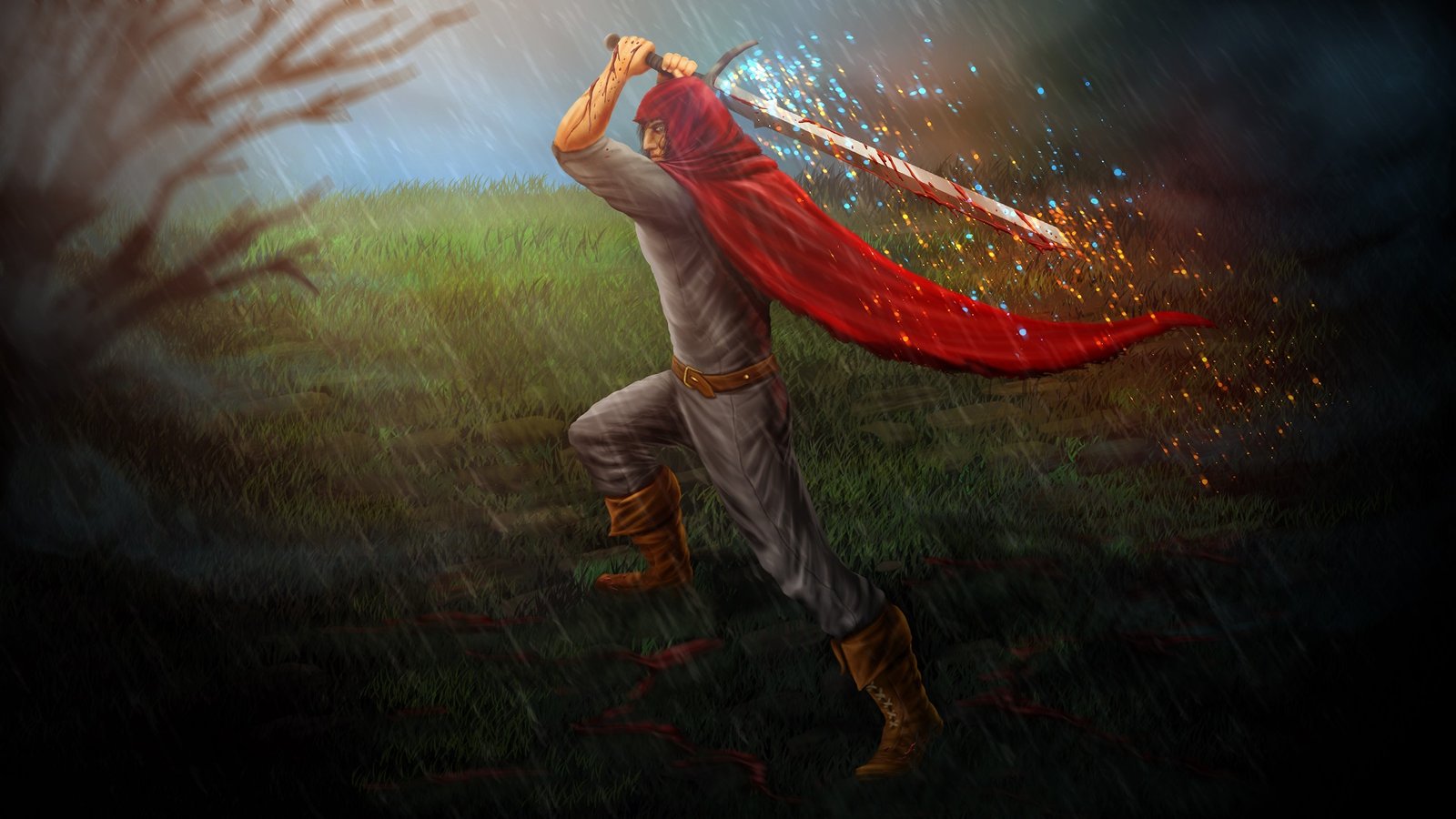
Poor Locke’s previous games include Windmills and Unbeliever, both of which are also 2D. However, Crimson Capes is clearly a more ambitious project in comparison, and it’s only natural for developers to learn and grow from their previous projects, using that experience for future projects.
TGS: How has your experience making Windmills and Unbeliever prepared you to
tackle the creation of Crimson Capes? What do you feel was the most important
lesson you learned?
Poor Locke: Looking back on past games, I always developed within my capabilities. But
with Kostas joining the project, we both pushed past our limits and helped each other bring forth our best. What I gathered from all my years developing games is that you can literally just do stuff. As long as you have the will to create and a clear vision, simply work towards it and no matter what obstacles may appear, you will overcome them.
TGS: Perhaps most importantly with the philosophy that inspired Crimson Capes,
what is the team’s favorite Souls game?
Poor Locke: Mine is Bloodborne, but I am a Lovecraft fan so I may be biased! Kostas’
favorite is Elden Ring, as he likes the atmosphere better. David, being absent at the moment, will lend his vote to me and let’s just say that Bloodborne wins!
Bloodborne also gets my vote. Thank you to the team at Poor Locke for taking the time to talk with me, and if you want to try out Crimson Capes—and possibly invade my game—you can pick up Crimson Capes on February 12 for PC via Steam. The game will be priced at $15, but with a 10% launch discount applied for the first nine days post-released.
