


Slay the Spire 2 finally officially introduces Multiplayer to the climb, and it’s some of the most fun you can have in the sequel.
Enemies are tougher, events are more challenging, but you’ve got the power of up to four climbers at once. Of course, with any character-based game, there’s going to be a sliding scale of power.
Between their base kits and multiplayer unique cards, we’ll go over each climber, their strengths, and how powerful they are when put side by side! If you want to make sure you’re a boon to the team, just keep on reading!
| Tier | Characters |
| B | The Regent, The Defect |
| A | The Ironclad, The Necrobinder |
| S | The Silent |
B Tier
The Regent
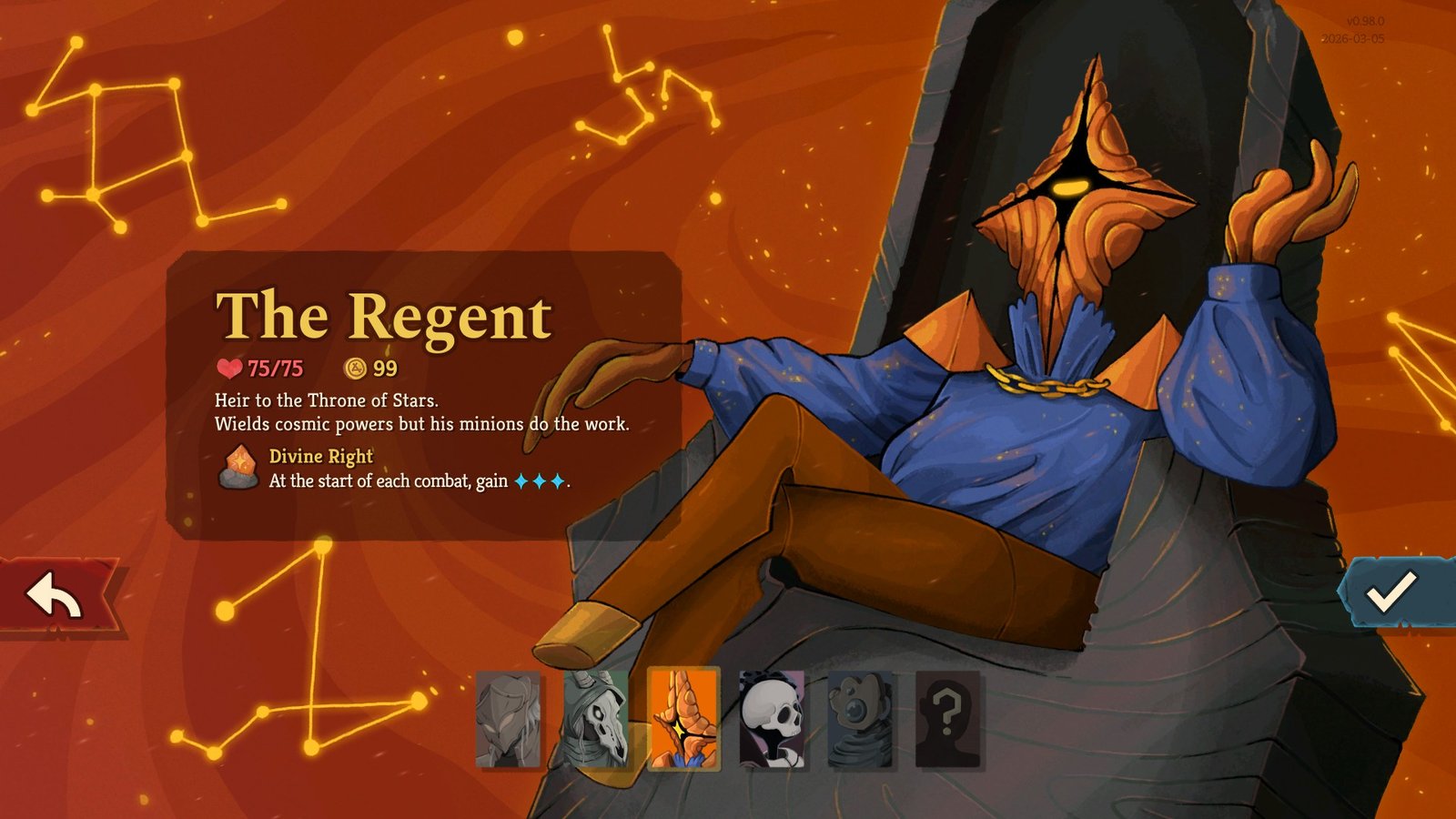
A very fun but deeply flawed character, the Regent is easily the weakest choice largely thanks to his inconsistency and slow speed.
Unlike the rest of the cast, the Regent needs to constantly spend time and energy to prepare for his game plans. Whether it’s Stars, Forge, or deck manipulation, the Regent is all about delayed gratification.
He needs to put more effort than the other climbers for everything, slowly the team’s damage and leading to longer fights.
Longer fights mean more damage taken, and the sluggish pace can really add up. Certain multiplayer unique cards, like Mimic, can do wonders in helping keep the Regent safe while he scales, but you can’t guarantee those cards.
Overall, the Regent, both in single and multiplayer, constantly feels like he has to put in more effort than everyone else, an ironic problem for such a haughty heir. Still absolutely playable with competent friends, but you’ll need to accept you’re sandbagging a bit.
The Defect
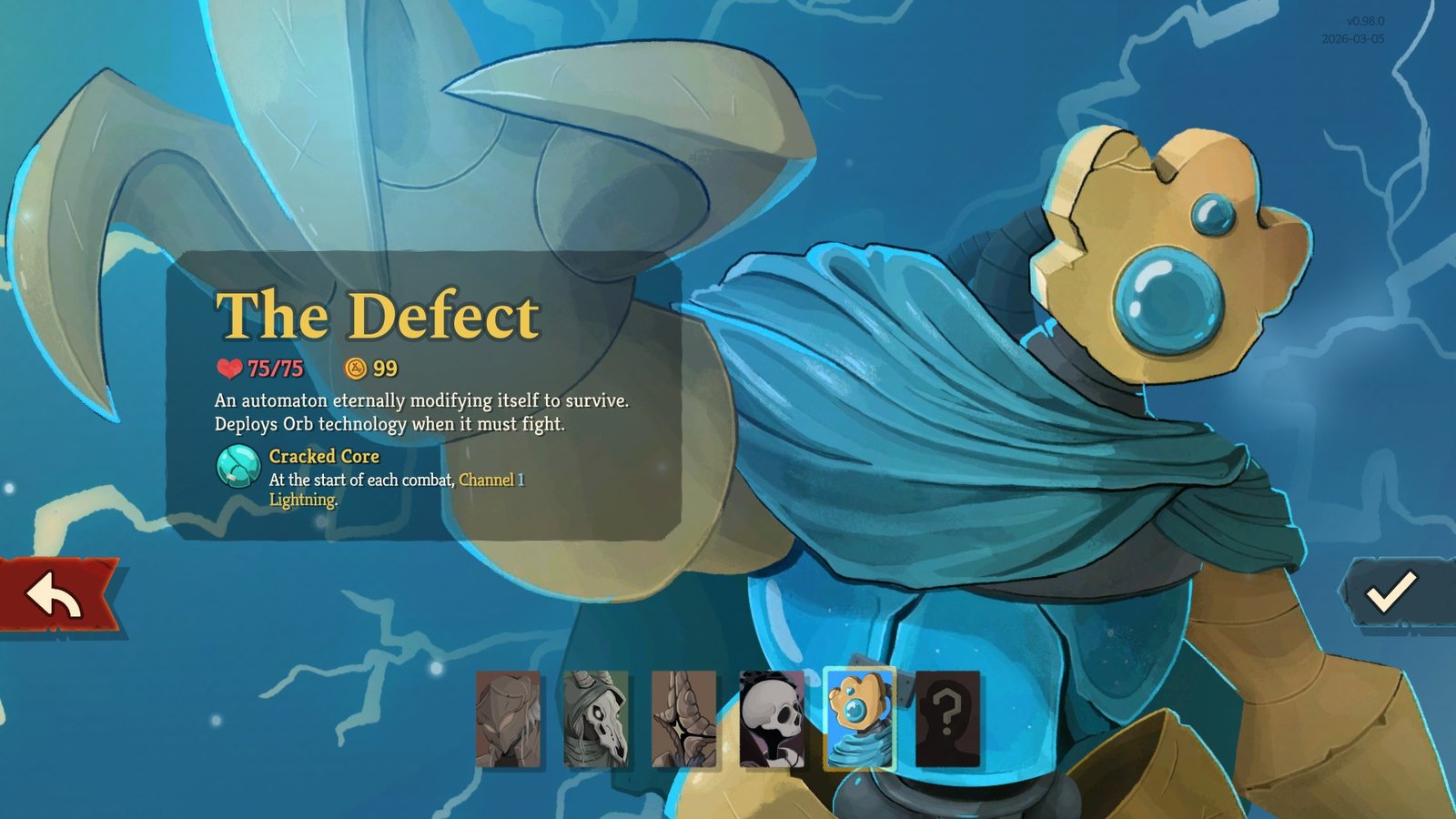
Mr slow-burn, the Defect relies on granting himself passives and building himself up over the course of a fight.
Defect can easily stack damage, defend himself, and spend turns making himself stronger in ways other characters can’t. His breakpoints are perfect for single player, but the increased stat values and health totals in multiplayer make it hard for him to keep up.
Defect is fine in these deeper round fights, but the rest of the party can really suffer. You’ll be forced to clutch and clean up fights that other characters may have been able to blitz in the time you’re stacking Claw or cycling Orbs.
Running multiple Defects can actually be very effective, as each can cover themself, but we’re talking about general utility and consistency.
In most runs, Defect can work, just a bit slower than average.
A Tier
The Ironclad
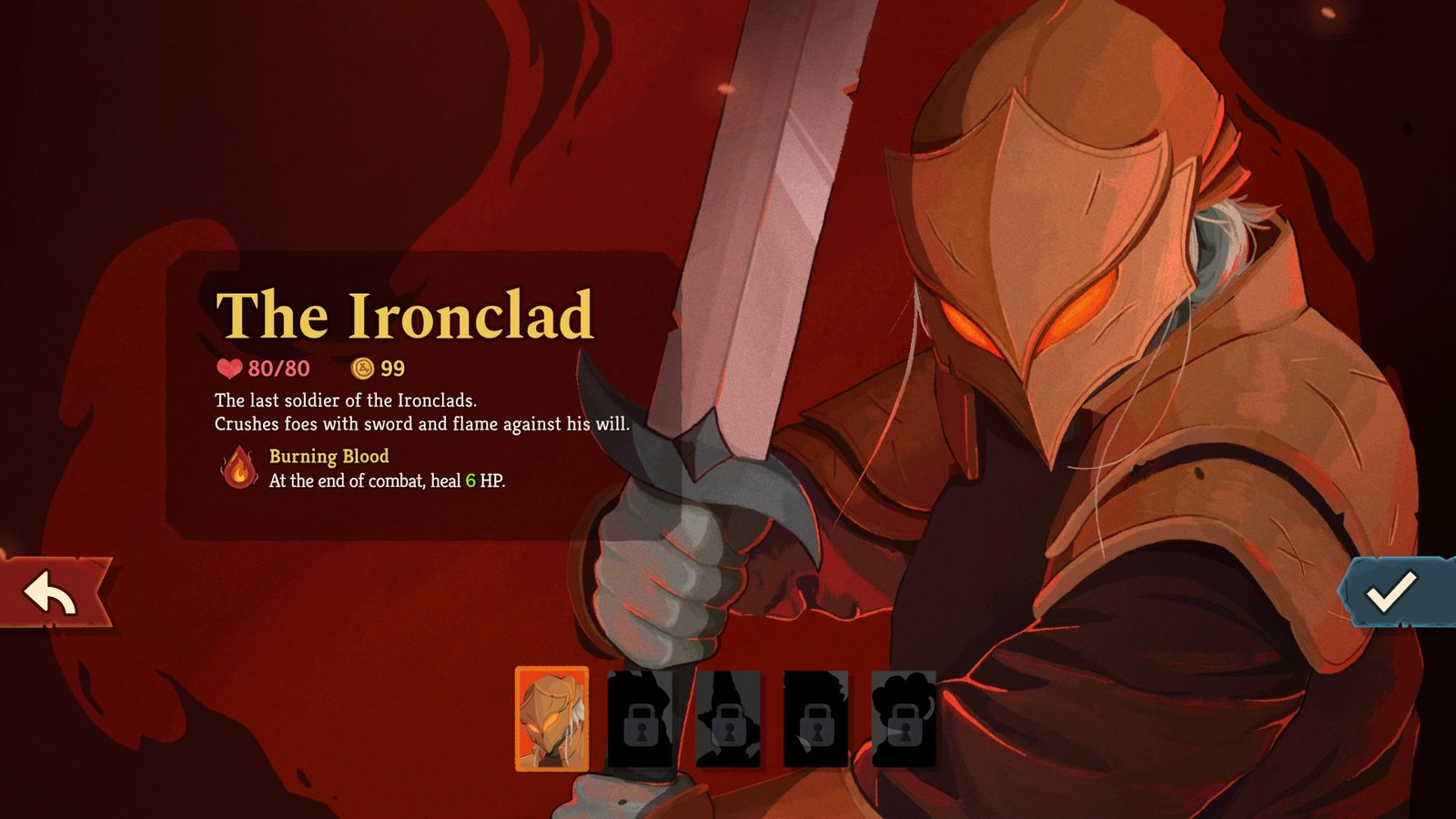
The OG climber, the Ironclad is great at minimizing mistakes, trading resources for damage, and hunkering down.
As such, he’s a stellar pick for players first stepping into multiplayer, as his heavy scaling and consistent damage make him easy to pilot.
His self-damaging archetype can struggle a bit in the often longer fights of multiplayer runs, but his unique multiplayer cards make him a fantastic utility.
His card Tank is the standout, allowing the Ironclad to soak extra damage to minimize the hurt coming his ally’s way. This does wonders, enabling slower turns for other climbers and covering more aggressive game plans.
Ironclad feels perfectly middle of the road, just as he does in singleplayer runs of Slay the Spire 2. Blocking archetypes is king, and with lucky drops, you can be the vanguard that keeps your entire team alive.
The Necrobinder
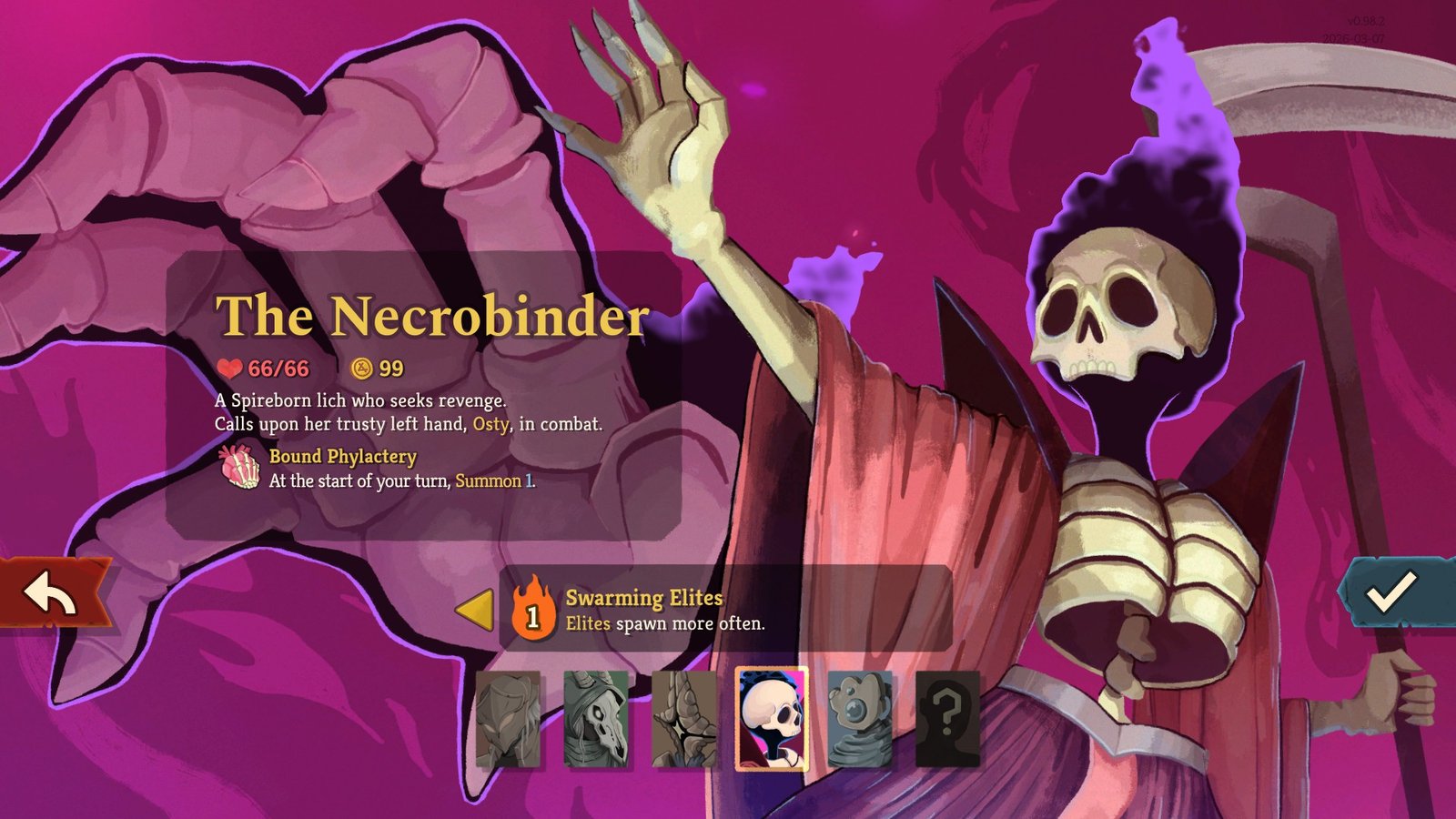
Our second new addition to the cast, the Necrobinder is an absolute powerhouse is every gamemode.
Summon allows for massive damage and block values, Souls can provide incredibly easy deck cycling with cards like Hang, and Doom acts as an easy alt win con if other climbers need to take hits or maintain their own debuffs.
A lot of the Necrobinder’s effects are a bit delayed, stopping her from taking the top spot, but her flexibility, reliability, and multiplayer cards sharing the love with mini Ostys and Souls is hard to pass up.
She carries all her strengths from standard runs, enabling passive power without slugging the team down like Defect or leaving herself open like the Regent. In a fraction of the time, the Necrobinder can become an all but unstoppable powerhouse.
She’s easily able to provide mountains of damage, weakening debuffs through cards like Enfeebling Touch, and bonuses that make everyone else’s lives easier.
Even in the number two spot, the Necrobinder’s an absolute powerhouse.
S Tier
The Silent
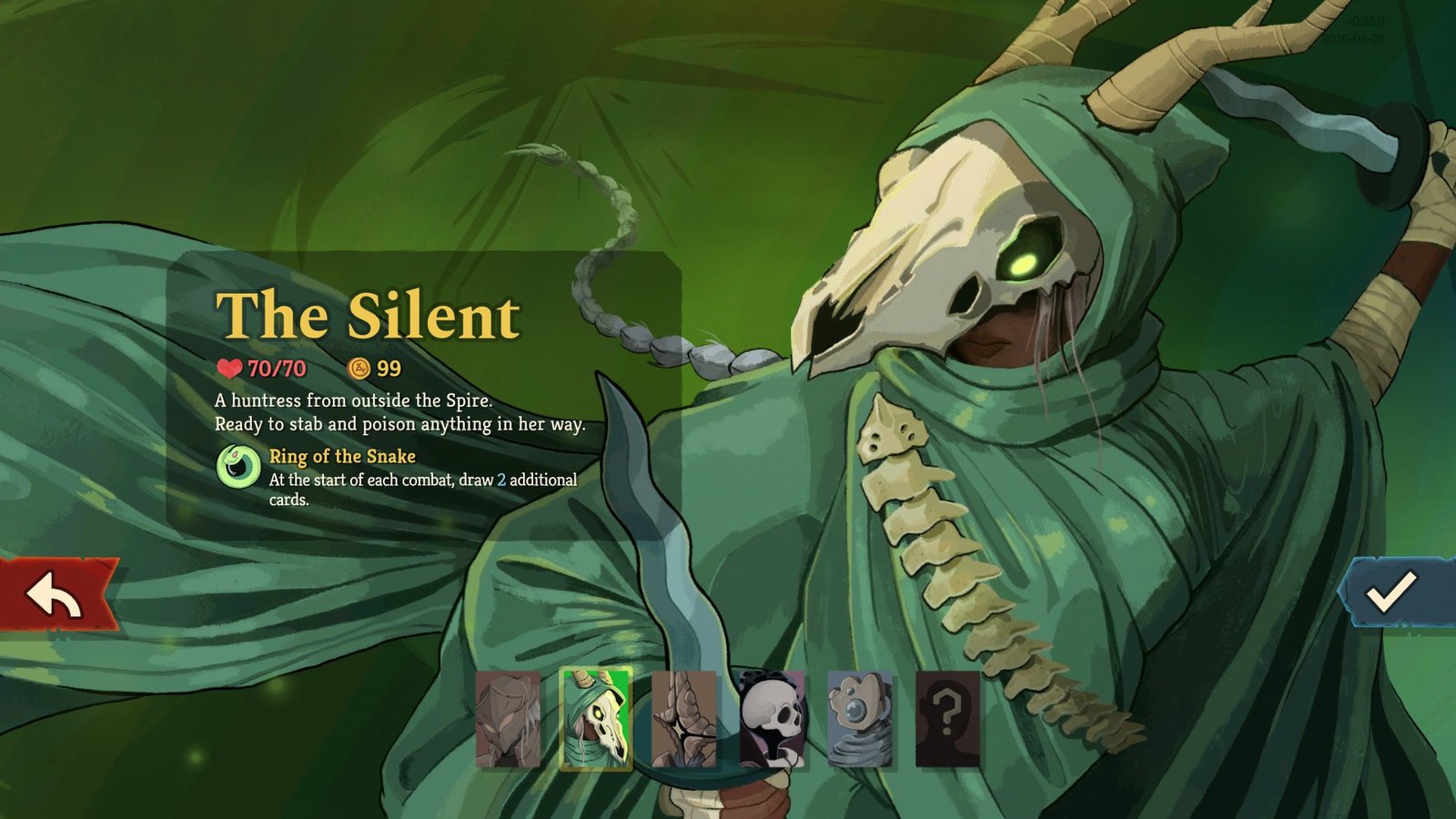
Slay the Spire 1’s queen of consistency is back with a vengeance, ready to carry a full party if need be. The Silent is nigh unstoppable if played properly, even in multiplayer, and her unique offerings make the climb even simpler.
The Silent’s discard support has always been a massive strength, providing card draw, damage, Energy, and anything else you could want. With the introduction of Sly cards, the Silent is even more consistent, with playable cards that go off for free if discarded.
This alone would be a great buff to an already powerful character, but all her other archetypes are back in full force. The loss of Catalyst for Poison does slow it down, but the ability to run multiple Silent largely curbs the issue.
The biggest win comes from her multiplayer cards, namely Flanking. For two Energy, the Silent grants all allies DOUBLE DAMAGE for the rest of the turn. This is as wild as it sounds, and with the Silent’s easy access to Retain and card draw, she can hold onto it for the perfect burst turn.
With her impeccable defense, fantastically scaling offense, and plethora of utility, the Silent is easily the strongest character in Slay the Spire 2’s Co-Op mode, arguably in the game in general.
She’s definitely been the easiest to break in my experience. After all, nothing tears through the opposition like 3 double damage Storm of Steels.
