


The first of the new playable characters added to Slay the Spire 2, the Regent is a cosmic prince intrigued by the mysteries of the titular tower. Boasting incredible power and an even greater ego, the Regent manipulates cataclysmic power and his own servants in his attempt to best the Spire.
Just like every playable class, the Regent has multiple different ways to play him. We’ll be going over the notable mechanics the Regent brings to the Spire, his strengths, and whether or not the Regent is the right character for you.
Stars
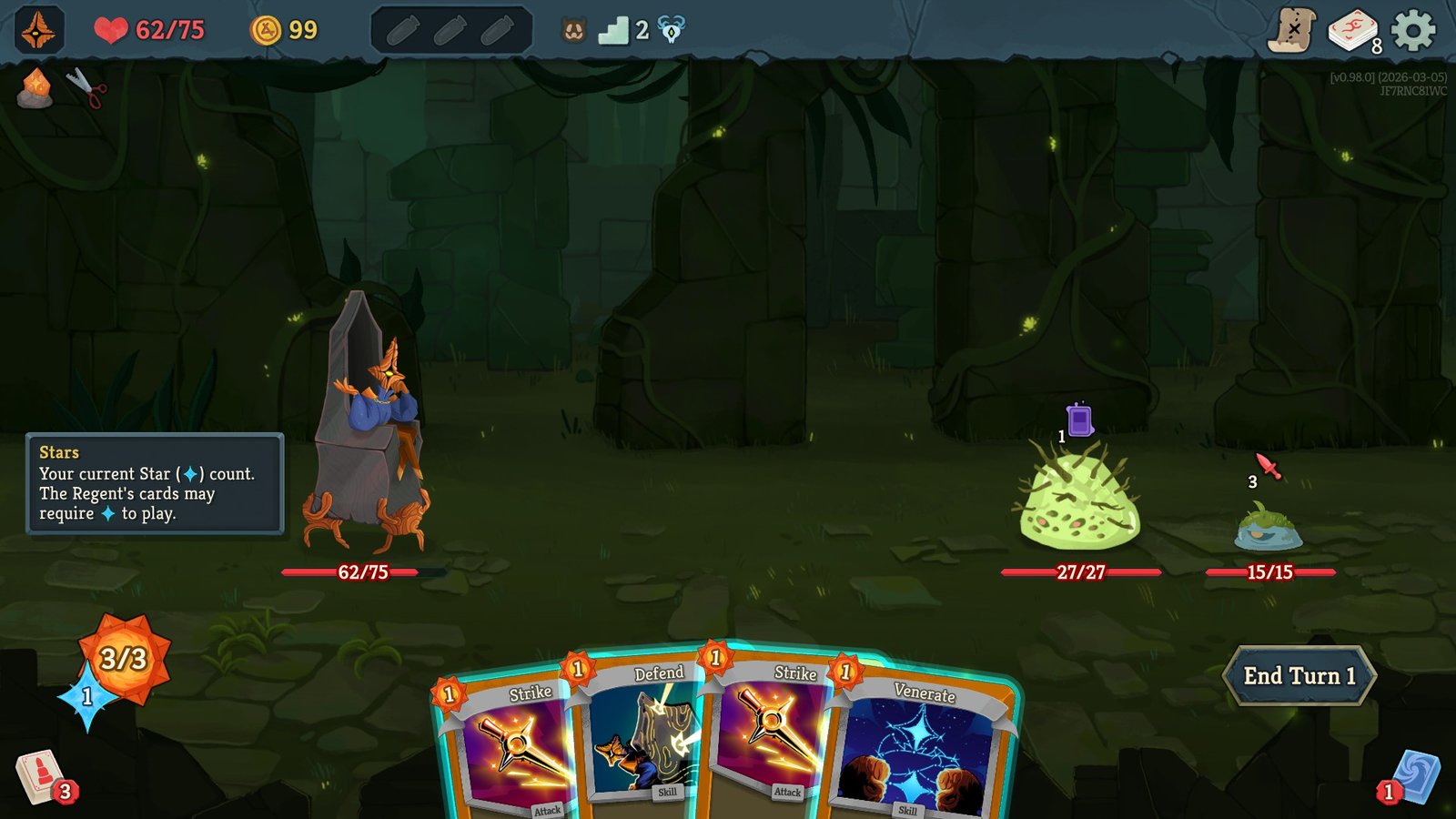
The most immediately apparent and most flexible mechanic the Regent boasts is Stars, an alternative energy cost for certain cards and effects.
Thanks to his starting relic, Divine Right, the Regent begins every combat with 3 Stars, energy retained between turns. Stars can only be spent by cards with a Star cost alongside their energy, like Falling Star, a card in his starting deck.
Stars also don’t regenerate after turns like Energy, and are only generated by certain cards and relics. In exchange for the extra hassle, Star effects are powerful, and higher rarity cards reward the Regent for spending and generating Stars in a loop.

Star cards are generally powerful on their own, offering solid effects for low Energy. Multiple other archetypes for the Regent utilize cards with Star costs, but the Regent class can really lean into the Stars themselves thanks to Powers that grant bonus effects for making and spending Stars.
Shining Strike is a stellar option for this: it deals damage, generates 2 Stars, and loops itself back onto the top of your Draw Pile. With enough Stars, you can even let loose devastating attacks like Comet, dealing massive burst for only Star cost.
Easily the simplest of the Regent’s gameplans, understanding Stars will allow you to bounce between other options, while keeping the Regent strong and safe.
Important Cards
While you can’t exactly pick what card you’ll get in every run, there are certainly cards you can aim for once you know what gameplan you’re leaning towards. Stars need constant support and output to feel useful, so let’s go over some really core cards.
Also Read: Slay the Spire 2 – Insatiable Boss Guide
Crescent Spear
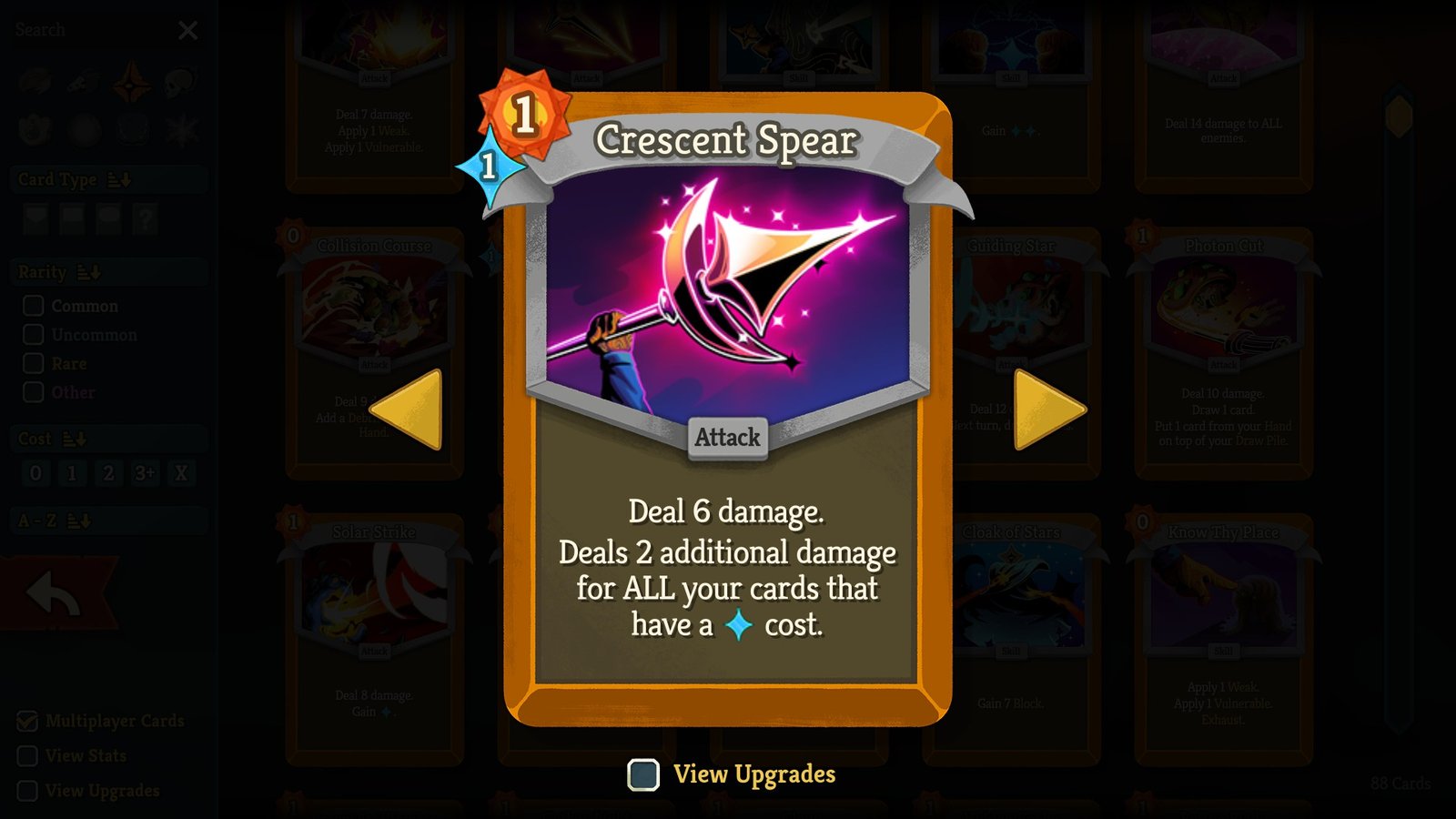
Crescent Spear is a cheap attack in the vein of the Ironclad’s Perfected Strike, dealing extra damage based on other cards in your deck.
Unlike Perfected Strike, which requires you to keep around Strikes that are better replaced with stronger attacks, Crescent Spear only asks you to have cards with Star costs. Plenty of very important cards for the Regent require some kind of Star cost, enabling Crescent Spear to deal wild damage in the right circumstances.
Shining Strike
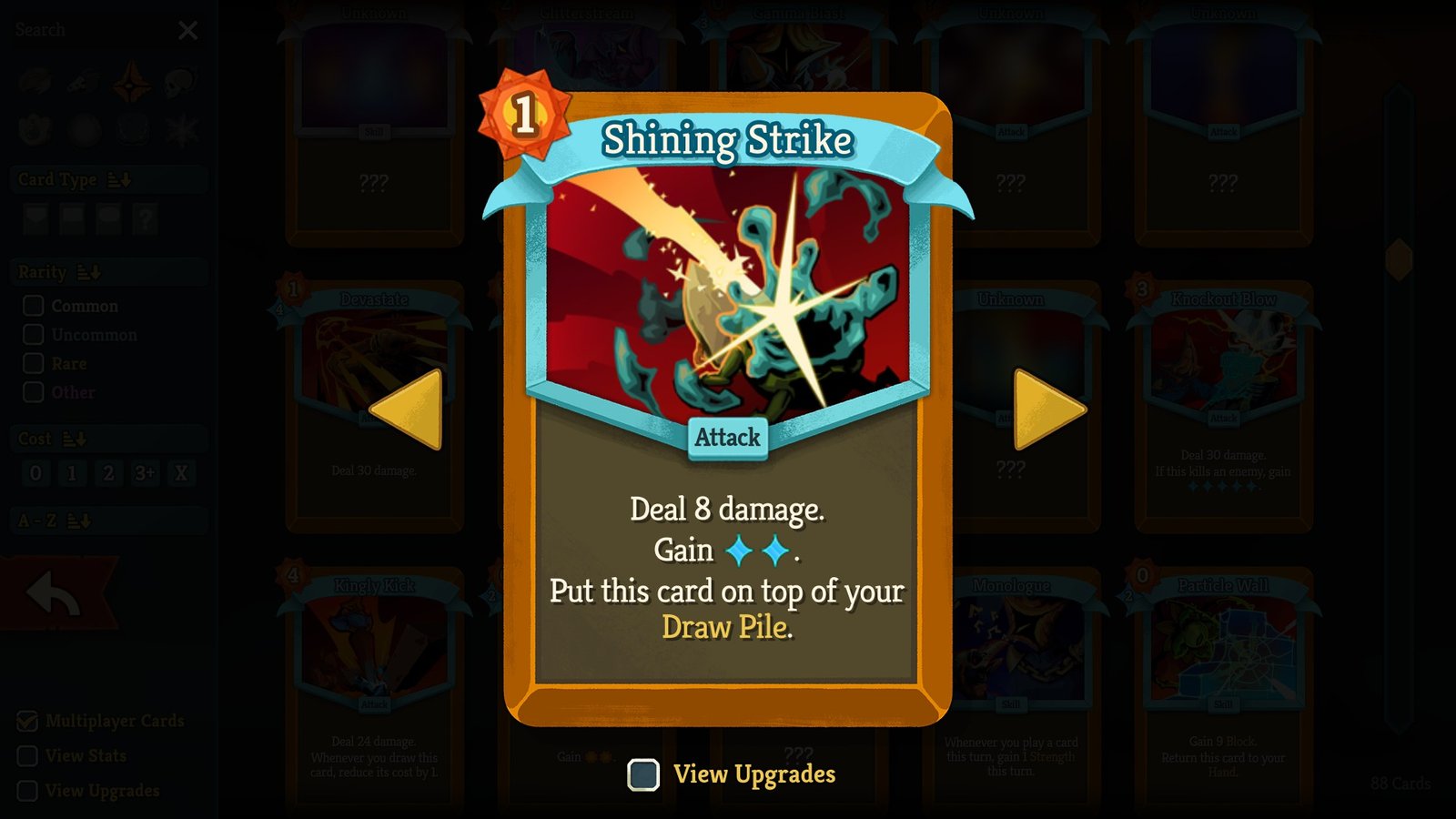
A straight upgrade to your default Strikes, Shining Strike deals better damage, generates two Stars every cast, and allows itself to be looped every turn with staggering ease.
The only asterisk with this card ironically comes from it’s ability to place itself back on top of the Draw Pile. If it isn’t what you need next turn, the relatively low 8 damage can feel like a waste of a draw, so be diligent when playing it over and over. The worst kind of misplay is one that’s completely your fault.
Black Hole
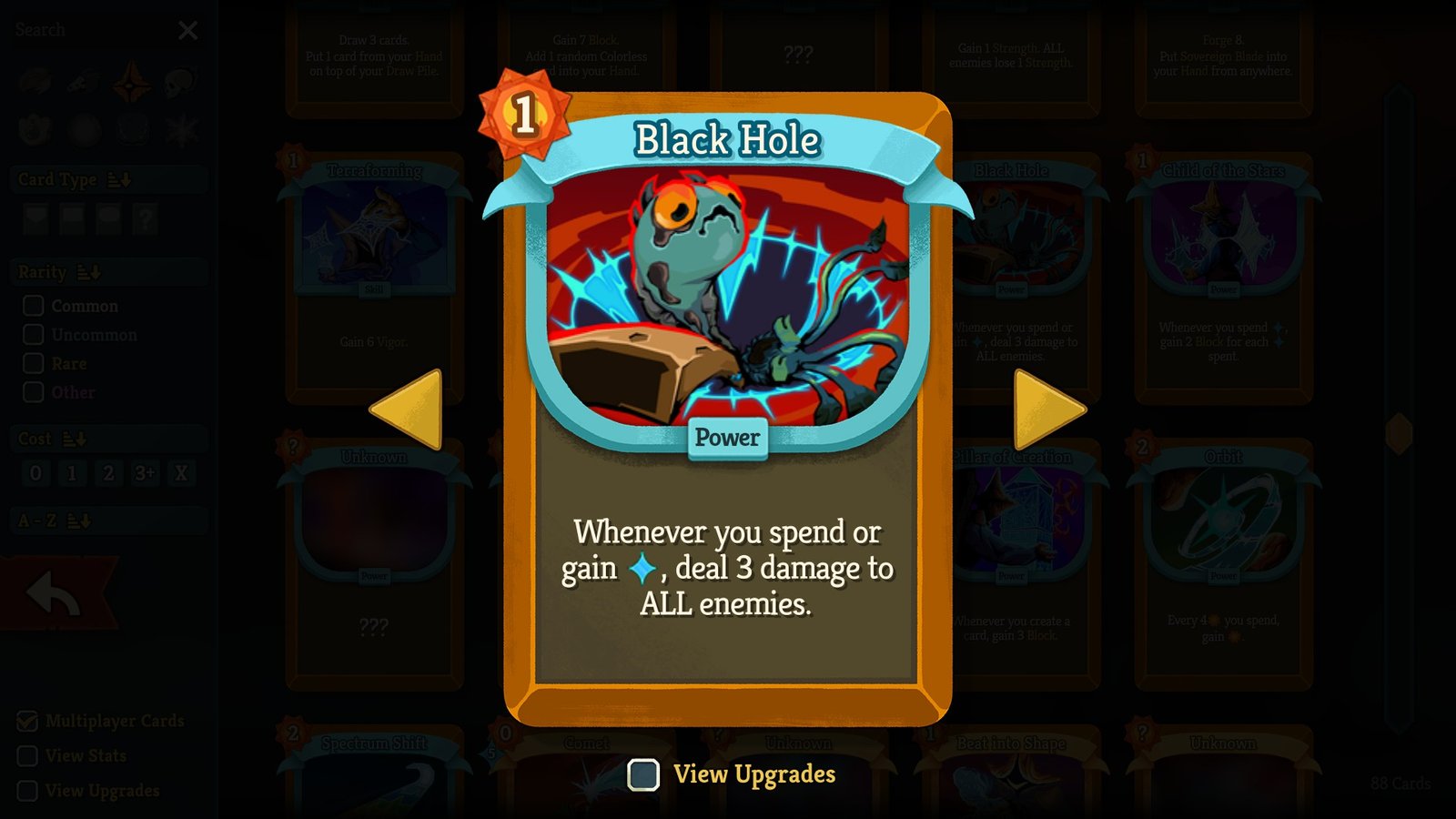
For a single Energy, Black Hole’s constant uptime is a blessing. Even if three damage isn’t a lot, you’ll be constantly gaining and spending Stars to proc it, really letting you pour on the damage even on turns you need to play defensively.
Keep an eye out for the Bottled Tornado relic to get Black Hole in your starting hand every turn. Cheap, consistent Powers like Black Hole are stronger the earlier you can play them, so guaranteeing a first-turn play is a massive increase in uptime.
Seven Stars
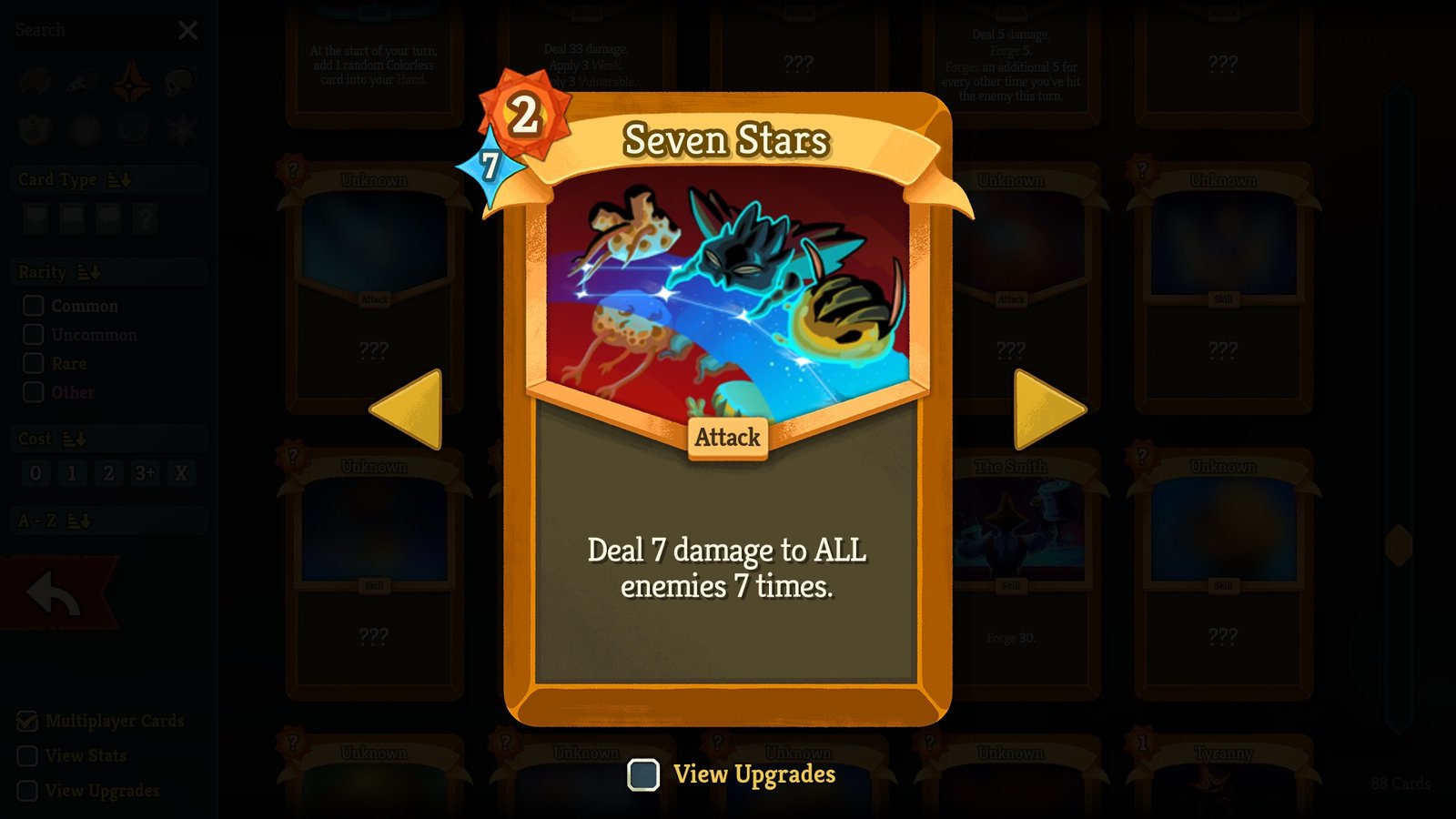
One of your major payoff cards, Seven Stars’ insane damage output is something other classes could only dream of. Any source of Strength, of which the Regent has plenty, is exponentially storonger when paired with Seven Stars as well, buffing each individual hit.
This kind of damage on an AOE skill is the perfect closer, only shackled by its steep price of two Energy and seven Stars. Upgrading lowers the Energy cost by one, but it remains an expensive finisher once you’ve got your Star generation planned out.
Forge

My personal favorite so far, Forge is a keyword on certain Regent cards that both create and buff an attack card called Sovereign Blade. Sovereign Blade itself is a 2 Energy attack that starts weak, but each Forge card will buff its damage by the total Forge on the card.
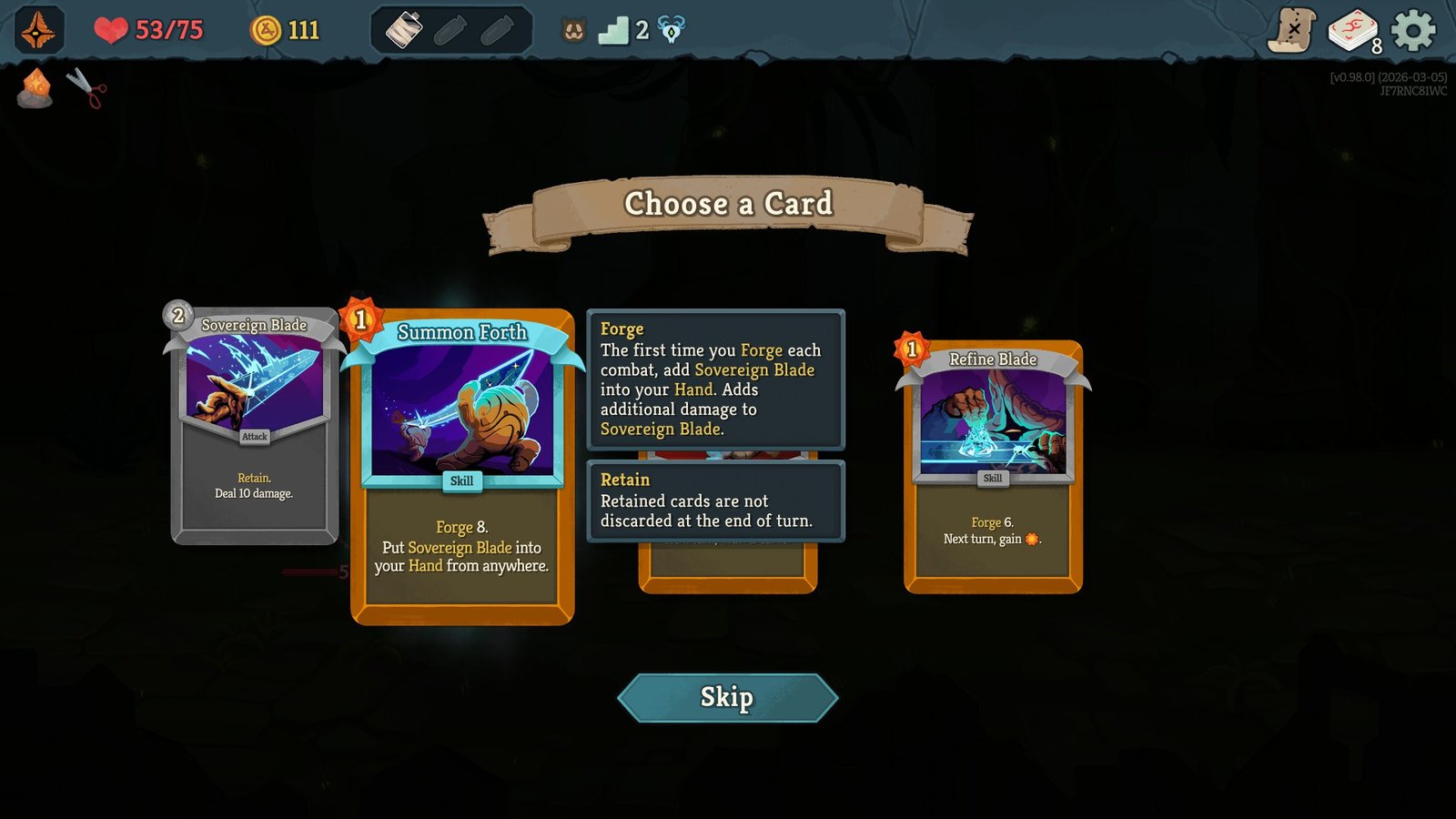
Forge cards come in plenty of shapes and sizes, with defensive options like Bulwark to safely stack Froge in the background, to cards like Summon Forth, which both add a bit of Forge and put your Sovereign Blade into your hand from wherever it currently is.
Therein lies the issue with Forge though; it’s all based around one card that, once generated, you still need to draw. Luckily, Sovereign Blade does retain, so you won’t discard it at the end of the turn. This way, you always get at least one swing off whenever you need.
Running Forge means keeping your deck lean, a decent plan anyway, but the deck can feel a little between necessary Forge cards and general quality of life options.
All the best archetypes need a silly card to obsess over as well, and Forge brings The Smith. The Smith is a 1 Energy, 4 Star cost card that Forges a whopping 30, adding Bludgeon-level damage to your Sovereign Blade.
Sadly, that’s all The Smith does, making it a bit of a ‘win-more’ card in the same vein as Demon Form. When you can get them off early, awesome, but there are few fights you can do so without careful planning or face-tanking a lot of unnecessary damage.
Important Cards
Sovereign Blade requires constant support to remain relevant, luckily Regent has plenty of options to keep it strong and supplied.
Wrought in War
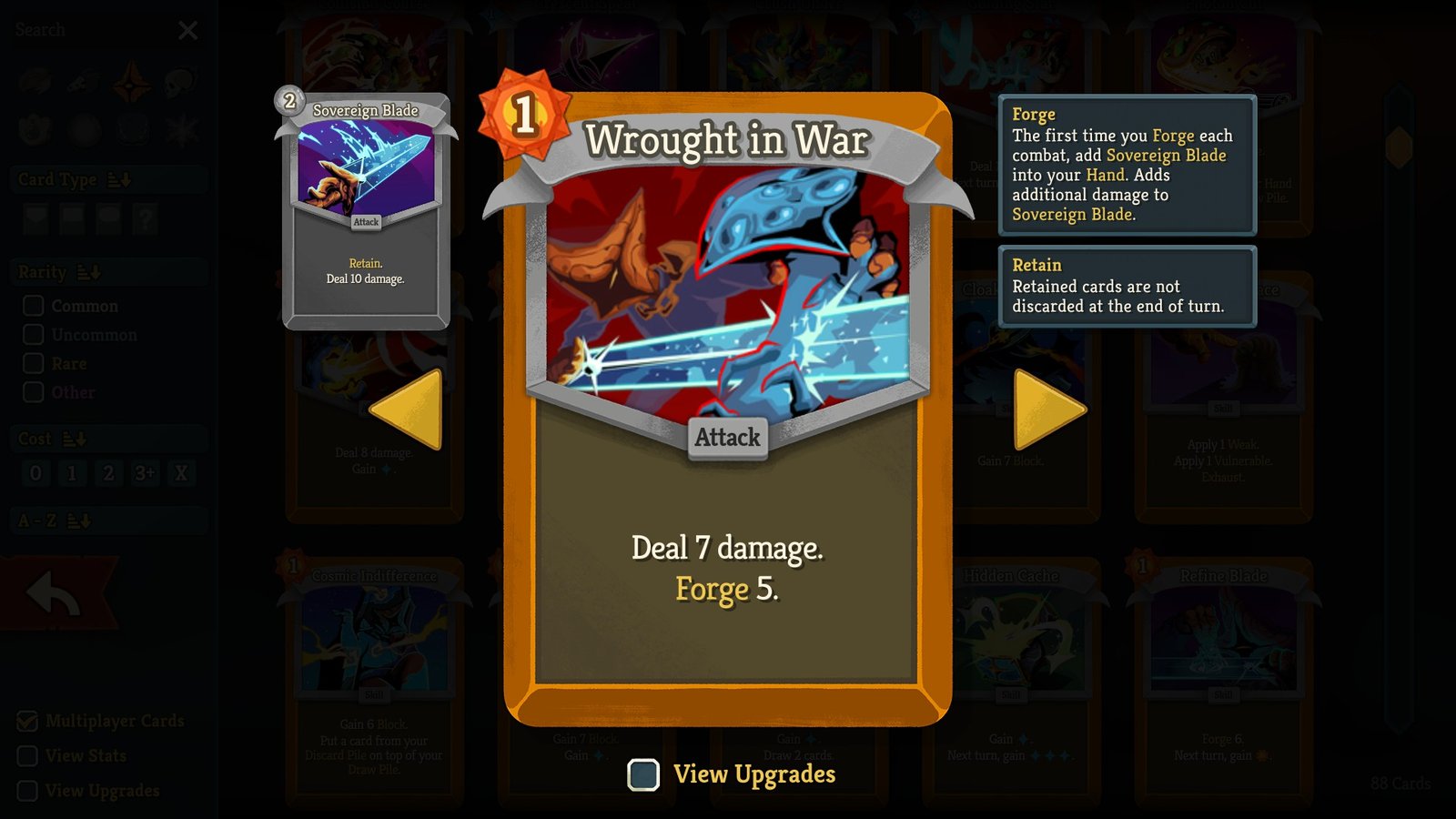
Wrought in War is another common card that acts as a straight upgrade to your basic attacks, dealing a point of extra damage and Forging 5. This lets Wrought in War act as a basic way to get the Forge train rolling, generating Sovereign Blade without slowing you down.
Replacing your Strikes with copies of Wrought in War lets you stack Sovereign Blade’s damage basically whenever you attack, leading to swift spikes on your burst turns.
Conqueror
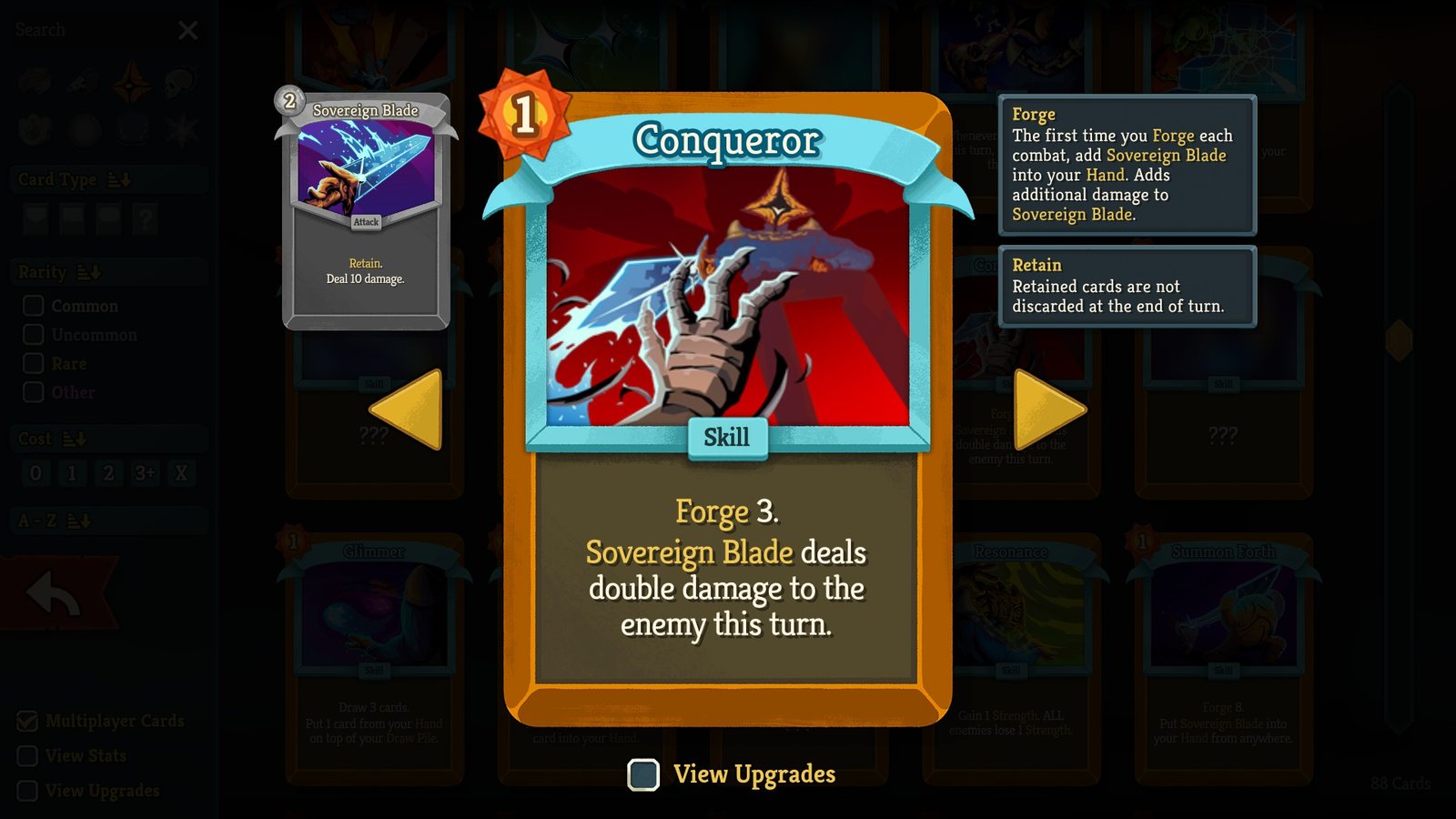
A rare rarity card with some serious payoff potential, Conqueror grants a minimal amount of Forge in exchange for doubling the damage of Sovereign Blade on the turn it’s played.
Two-card combos like this are usually a little awkward without other setup in Slay the Spire 2, but since Sovereign Blade is retained, it’s far easier to wait for Conqueror to be drawn while Forging the Blade itself. Wait to snag Conqueror until you already have some proper Forge cards ready to maintain your Blade, and you’ll be able to absolutely pop some fights.
Summon Forth
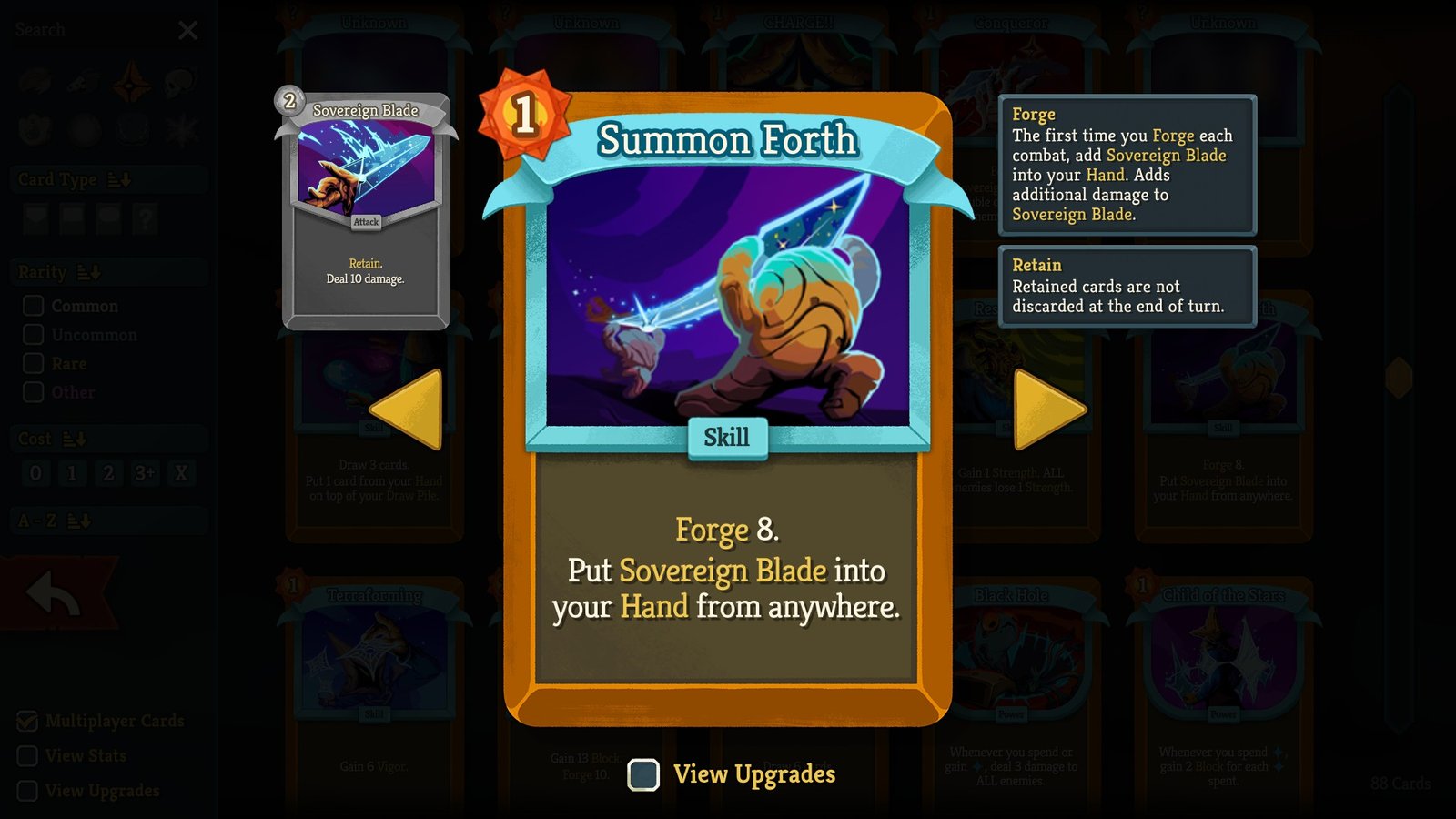
For the fights where you can’t just stack a single Sovereign Blade up to high heaven, Summon Forth is here to help you get it back.
Boasting some decent Forge on its own, the real benefit comes from the ability to place your Sovereign Blade back into your hand from wherever it is. Just played it? Just shuffled your discard pile back into your deck? Doesn’t matter! This spikes your uptime considerably, letting you swing your newly buffed sword time and time again.
Parry
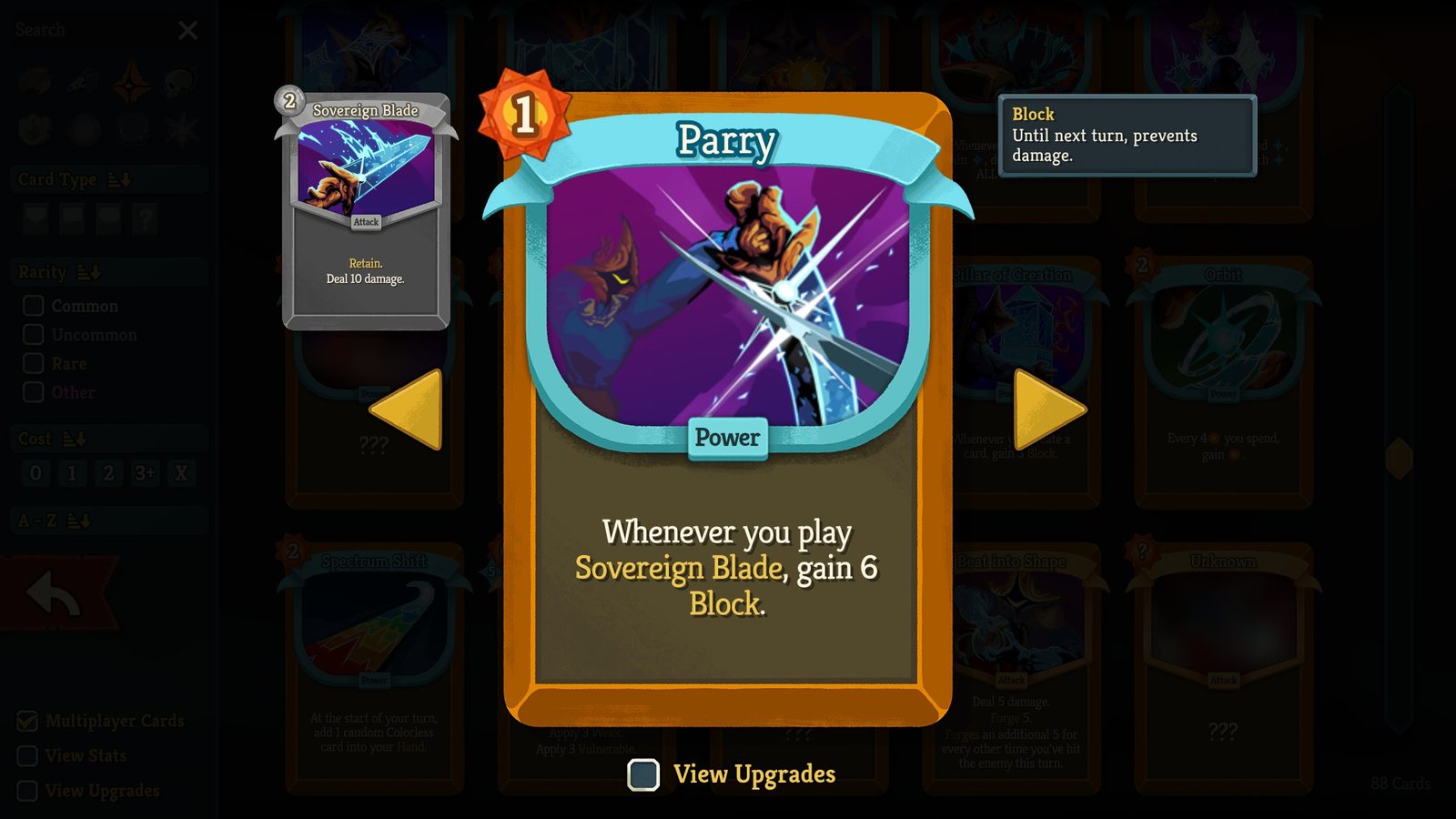
Sovereign Blade’s two-Energy cost makes it difficult to swing without leaving yourself open for counterattack. Luckily, the Regent has Parry, a single Energy Power granting a bit of block every time you play Sovereign Blade.
Upgrading Parry helps a bit, but it’s more of a band-aid on a bullet wound. You’ll need to ensure you have strong defensive options like Bulwark to stem the flow as you bring the hammer down.
Beat Into Shape
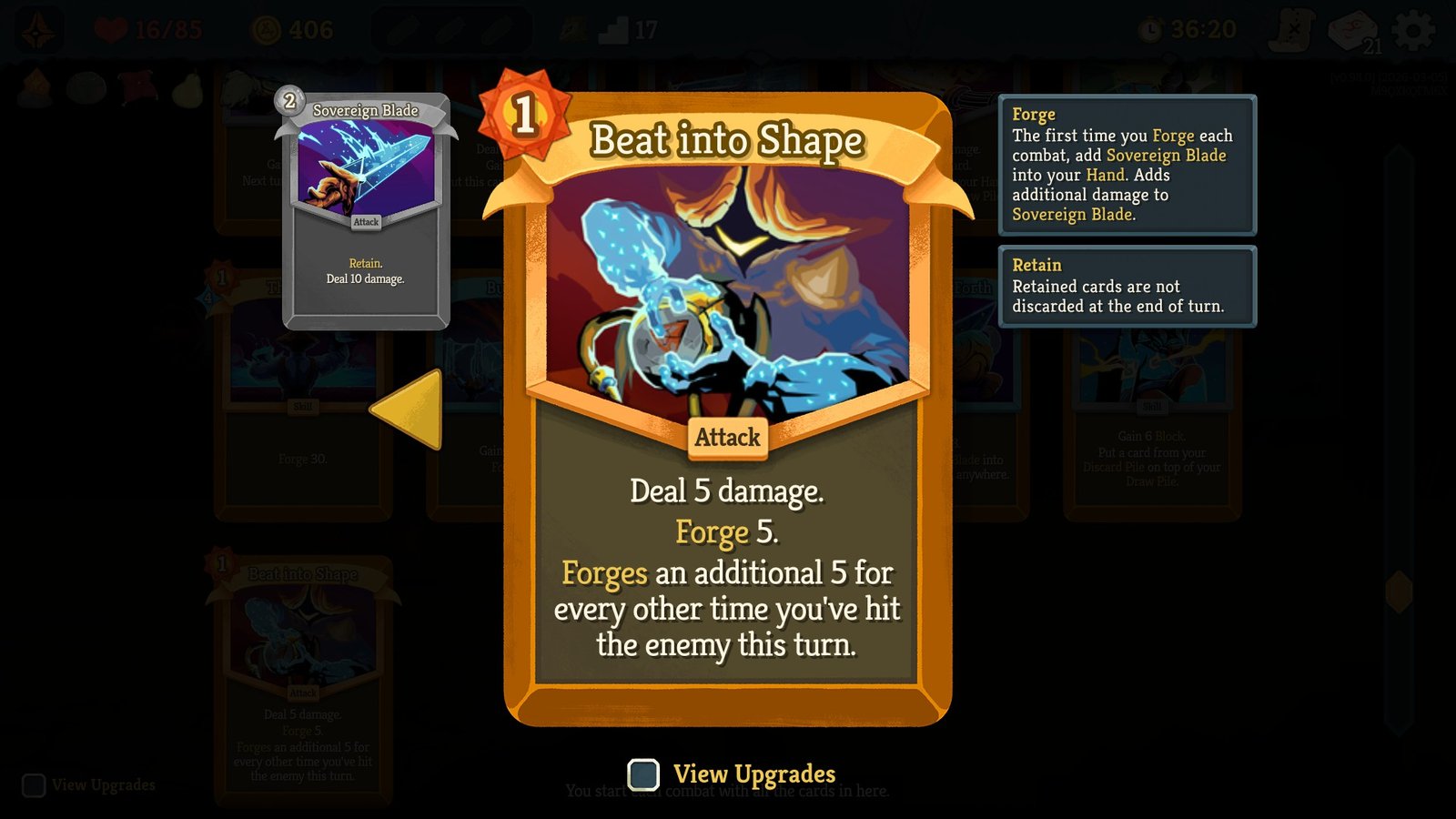
Beat Into Shape is a great, cheap option to blitz the Forge process off of the back of a few solid hits. This can easily stack between 15-20 Forge off of a proper burst combo, letting your Sovereign Blade start strong if you draw it early.
Use it to follow up a couple of strikes, an AOE, or even a multihit like Seven Stars (if the enemy isn’t already dead). It serves as a great closer to turn damage into Forge momentum, so snag it if it appears after a boss.
Draw Manipulation

Less of a full archetype and more of a general strength, the Regent is stellar at manipulating what he draws and when he draws it. Plenty of Regent cards either put themselves or another target card on the top of the deck after play rather than the discard pile. This allows for some truly wild combos, looping the same powerful attacks with cards like Sovereign Blade, or ensuring massive quantities of Stars.
Playing around either major gimmick of the Regent can feel overwhelming at first, but a proper understanding of just how much control you have over your draws can enable greater damage than other characters could ever dream of.
Important Cards
Draw Manipulation cards are great to slot into any other game plan, and some stick out as cheap, easy ways to guarantee big draws or avoid nasty curses. The Regent is all about winning more, and the best thing in every card game, no matter the genre, is card draw. It makes sense he’d have so much!
Cosmic Indifference
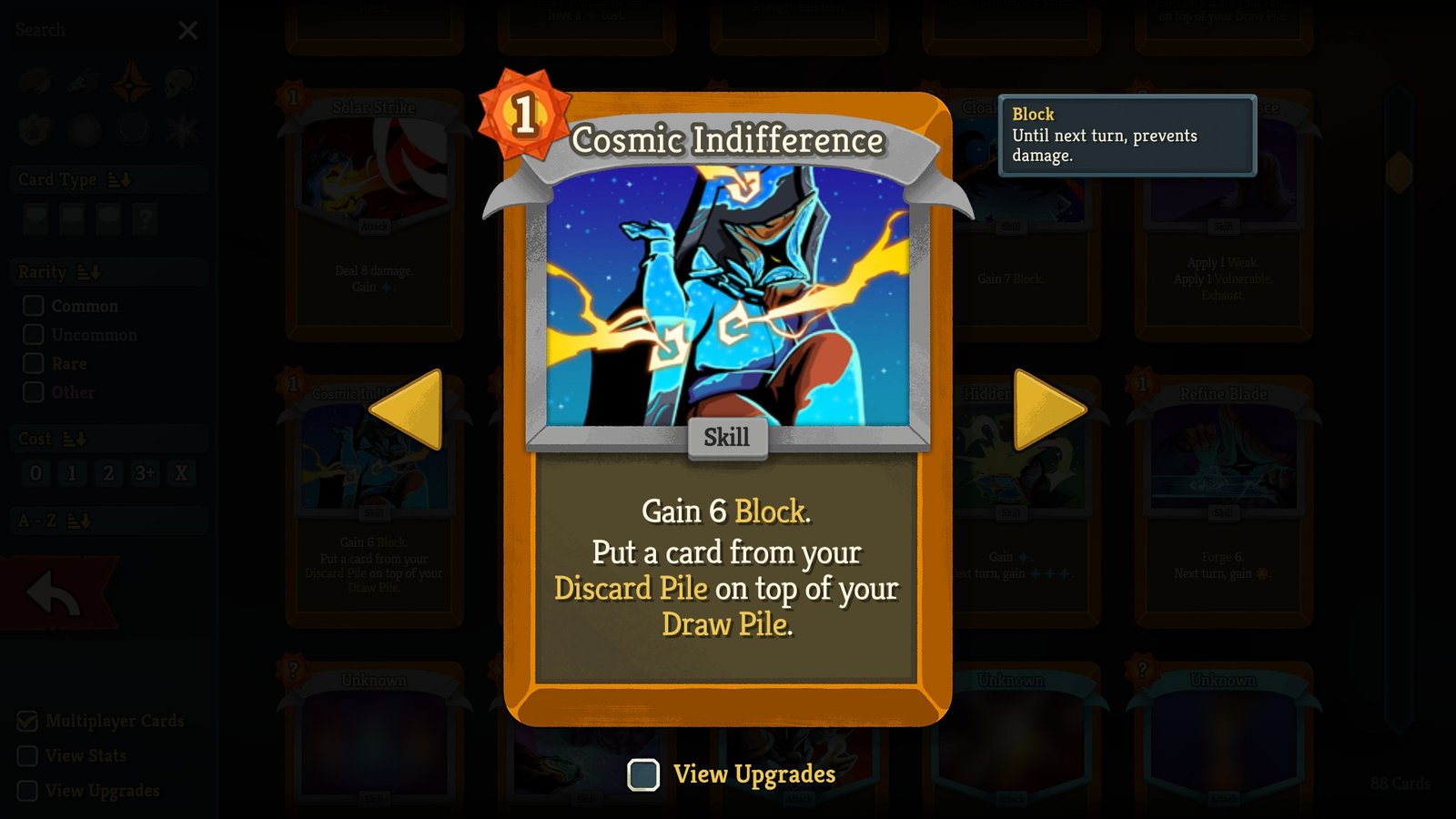
Yet another ‘Block with upside’ style card, Cosmic Indifference lets you ready a card you’ve recently played for reuse. Want to keep your Star loop going? How about your Sovereign Blade that you just swung? If there’s a card worth using multiple times a deck shuffle, it’s worth running a copy or two of Cosmic Indifference.
Photon Cut
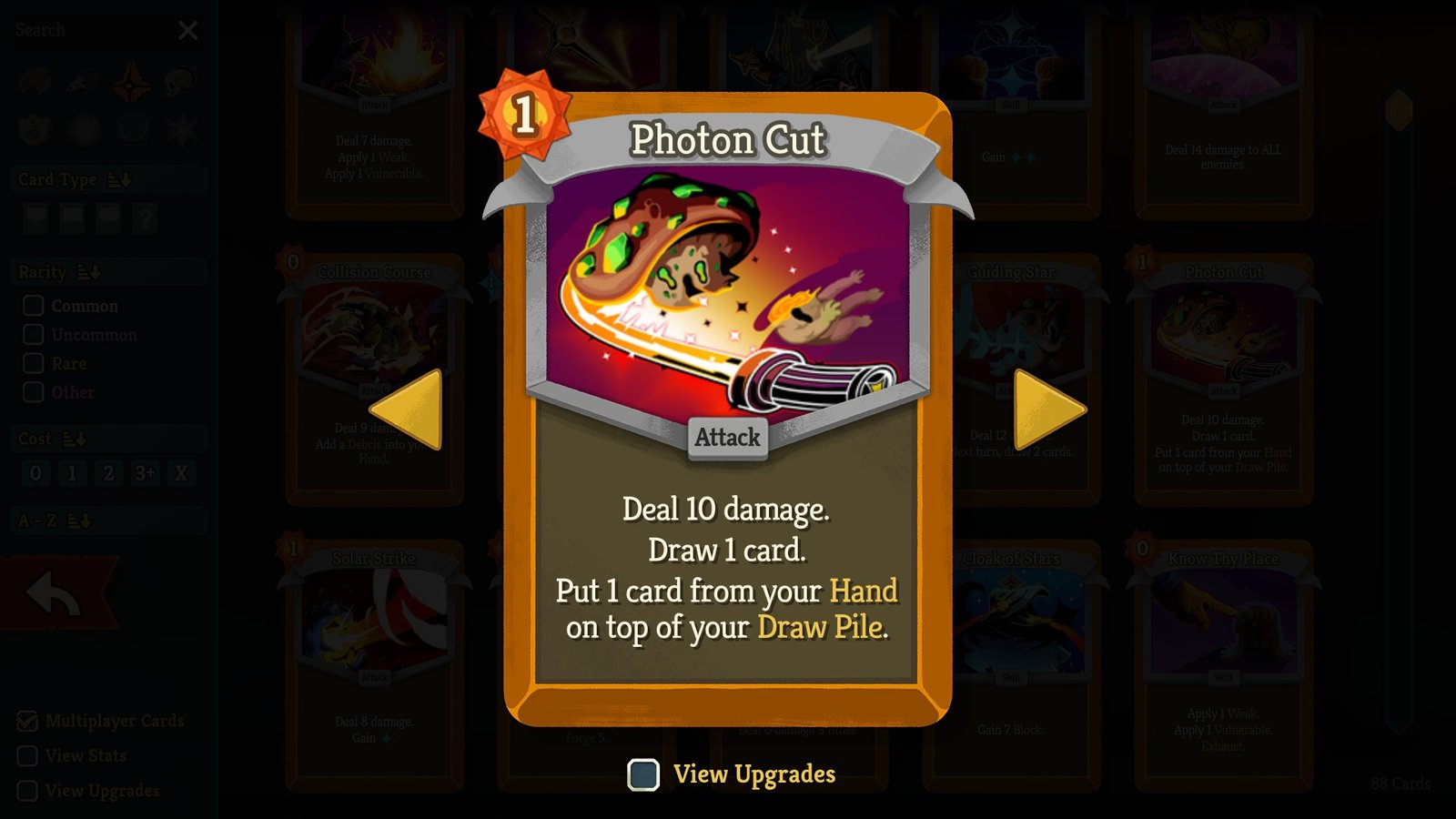
Double a Strike’s damage AND card draw for one Energy? What’s not to love? While the ‘hand to draw pile’ effect can read like a negative, it actually allows you to hold onto a card you know will be useful next turn, or a good one you can’t make the most of on this turn. The Regent rewards planning for the future, and Photon Cut is a cheap way to do exactly that, while dealing very nice damage on the side.
Kingly Kick
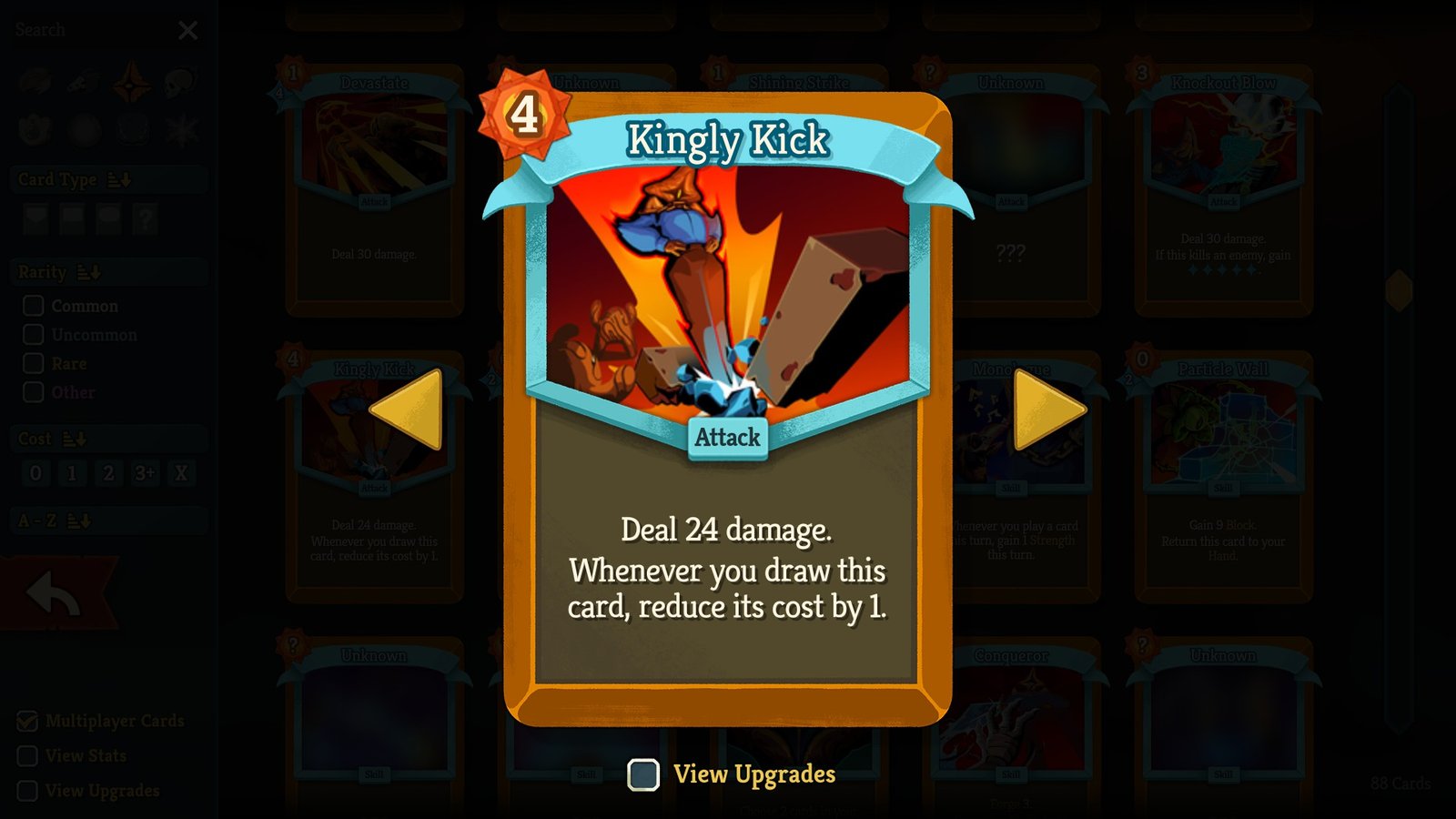
At first sight, Kingly Kick seems like a bit of a dead draw. Starting at 4 Energy and lowering by 1 every time it’s drawn, the damage is hardly enough to justify the price. Luckily, the Regent’s ability to move cards back to the draw pile means Kingly Kick can quickly become a very cheap way to do solid damage. In longer fights, you might even be swinging for free.
Glimmer

Acting as a great way to both dig for answers and manipulate cards you can’t or don’t want to play yet, Glimmer is an easy snag on the level of Battle Trance.
Getting this level of card draw with no downside this cheap is exactly what you want basically every run. It’s only Uncommon, so you’re sure to see it throughout shops and drops as you make your ascent, so keep an eye out!
You Stay Rich, They Stay Poor
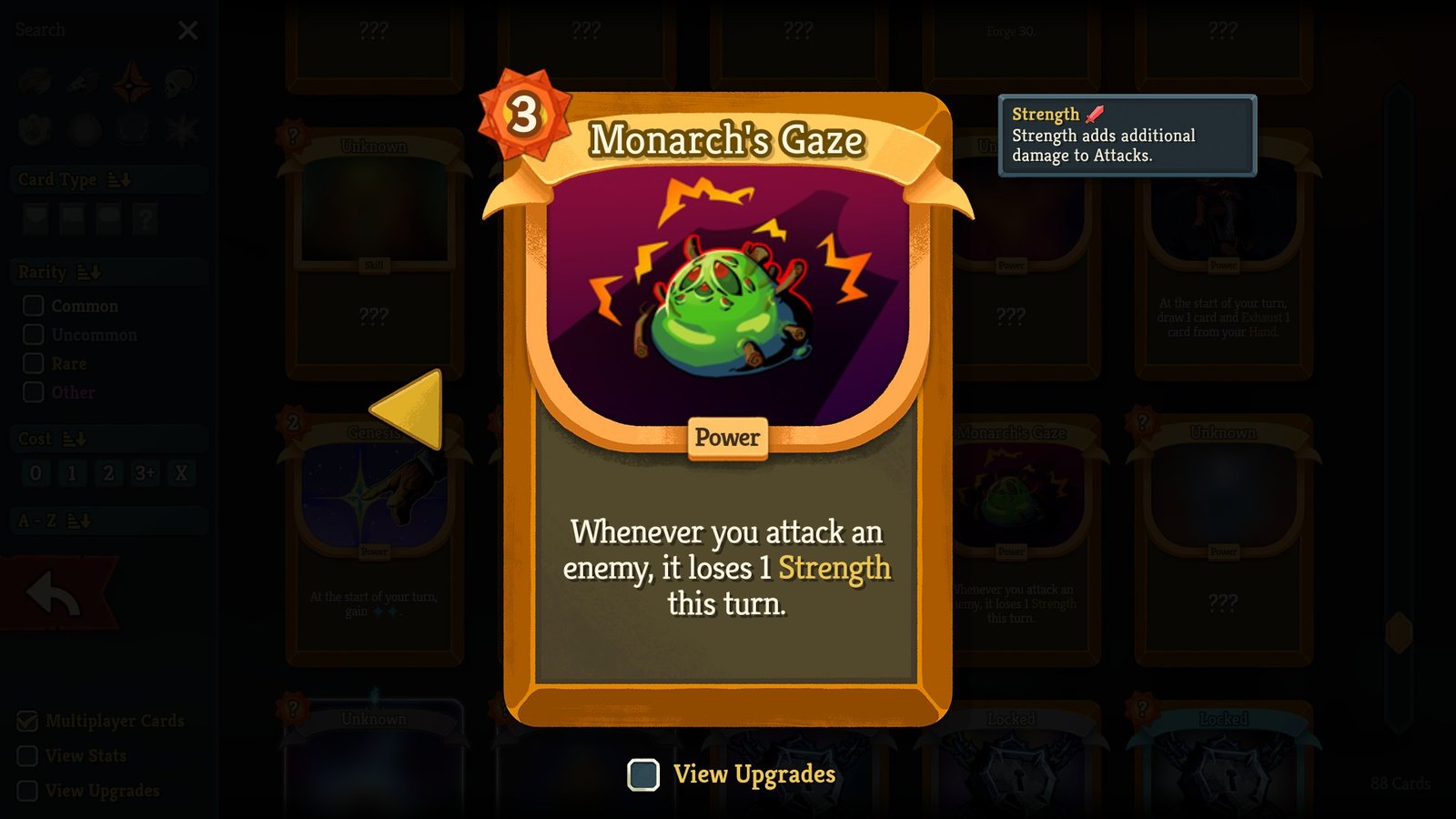
Overall, the Regent is all about enhancing his own strength while keeping enemies low. Card generation, free debuffs, and the constantly rising damage Forge offers will keep confident Regents at the top of their team’s damage charts.
Slay the Spire 2, even more than its predecessor, rewards fast, aggressive play. With just a few runs under your belt on the Regent, you’ll be able to keep the enemy reeling as you blitz your way through the Spire.
