

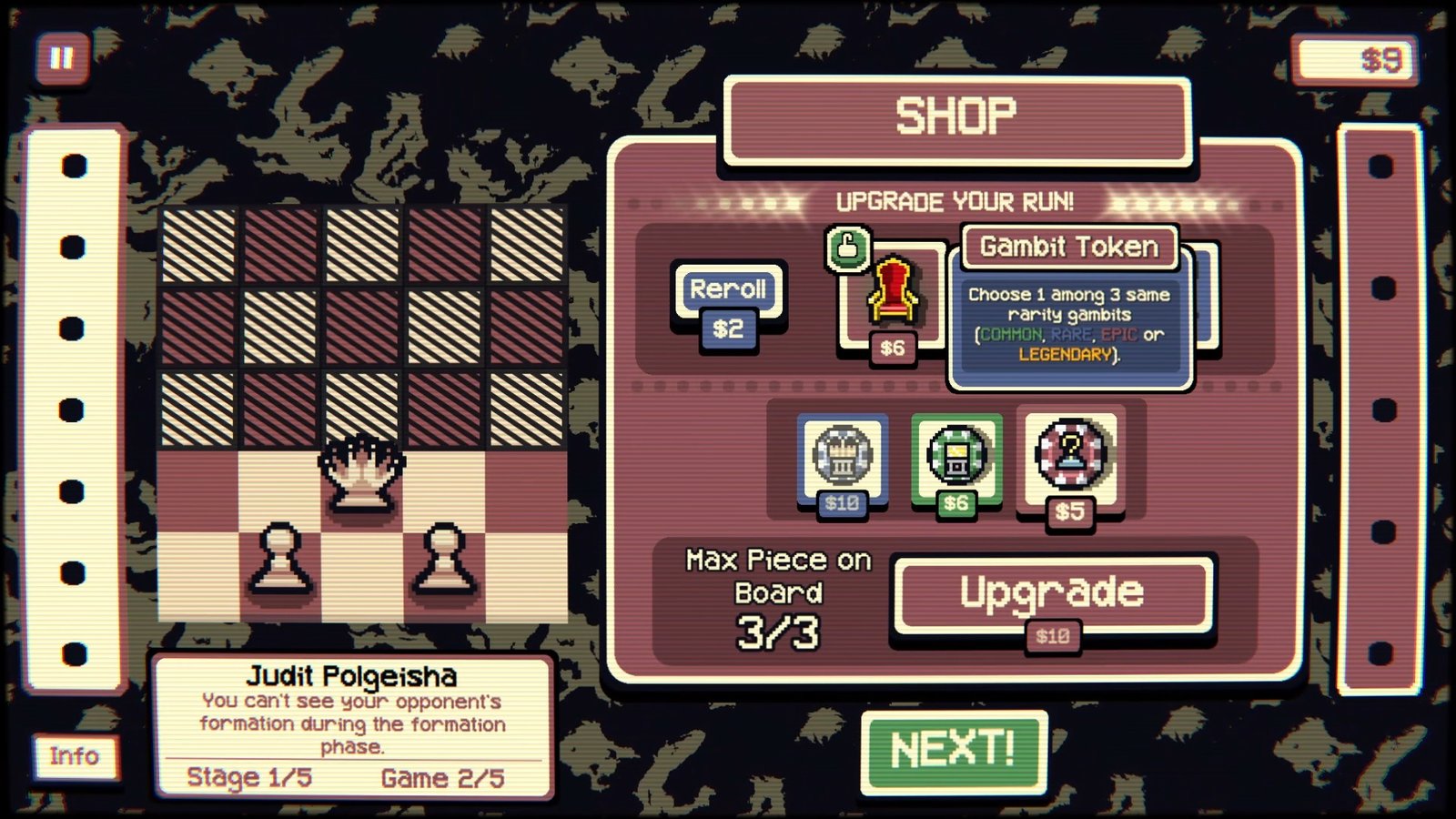
If you’ve played Balatro, you’re probably interested in Gambonanza as well. In this game, the rules are based around chess instead of poker, but you’re able to pick up Gambits to give yourself advantages. While there are over 100 Gambits you can find in-game, you won’t start with all of them unlocked. I find that the best way to start unlocking them is with the random Gambit tokens you can purchase in the shop, which lets you pick between three Gambits at a time.
Gambits let you break the rules, and you can use up to five of them at one time, so you’ll be able to collect them and experiment with various combinations. When you’re learning the game, then you’ll find more use in certain traits than others, which makes these Gambits solid options for new players.
Thunder’s Gambit
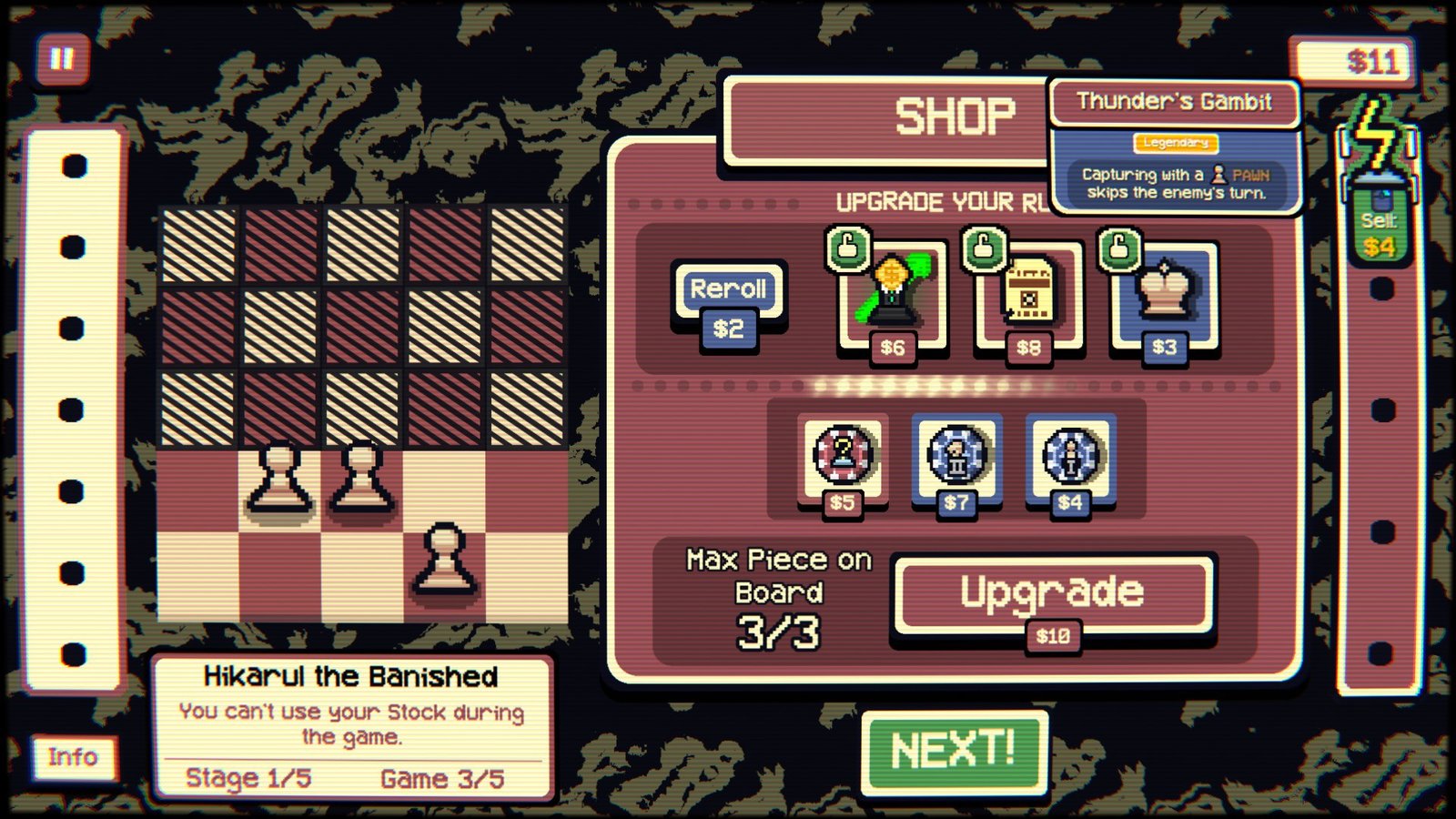
When you have Thunder’s Gambit active, the enemy’s turn is skipped every time you capture a piece using a pawn. Pawns are easy to get, but capturing a piece with one can only be done if the pawn can move one square diagonally to capture it. However, with certain enemy board setups, you can use this Gambit to prevent the enemy from taking any turns.
If you don’t get Thunder’s Gambit to pop up, then you can use other Gambits with abilities to force the enemy to skip turns in order to give yourself an advantage, such as Crown’s Gambit, which skips the enemy’s turn after you promote a piece.
This style of Gambit is my personal favorite, because the ability to skip your opponent’s turn if you meet certain criteria lets me use risky strategies that would otherwise result in my pieces being captured. However, the forced turn skip means I can put my piece in a risky spot, and then move it away before it can be captured.
Excalibur’s Gambit
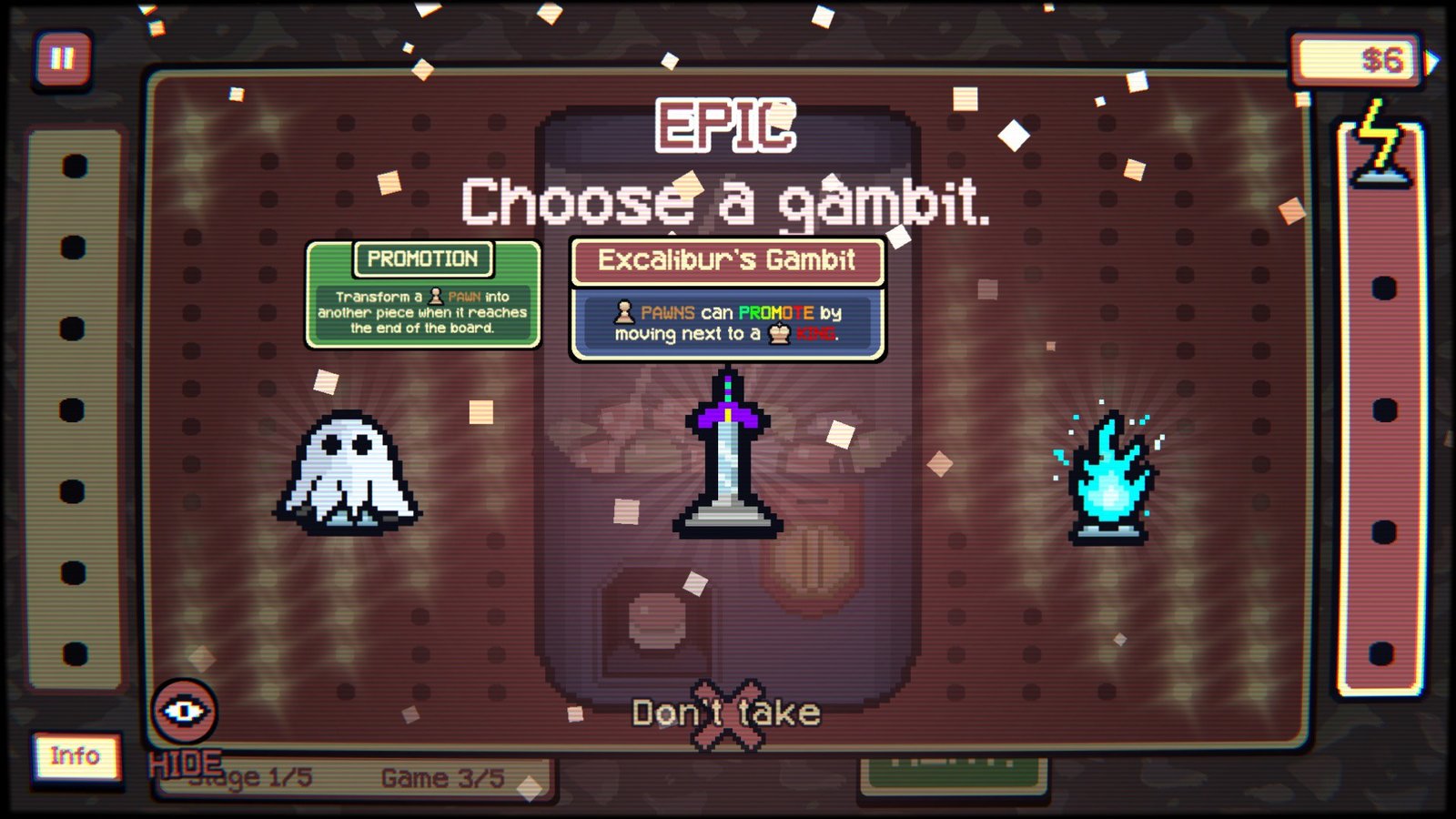
In chess, a pawn can be promoted to a queen by reaching the other side of the board, and that’s also true for Gambonanza. Excalibur’s Gambit makes it easier to promote your pawns for the power of another piece by letting pawns be promoted for simply moving next to a king.
In general, promotion-related gambits are helpful as you learn the game, as they often give you more powerful pieces that can move in ways that pawns can’t. Additionally, you start the game with only three pieces that you can place on the board, so you want to make them as strong as you can until you upgrade your team.
Chicken’s Gambit
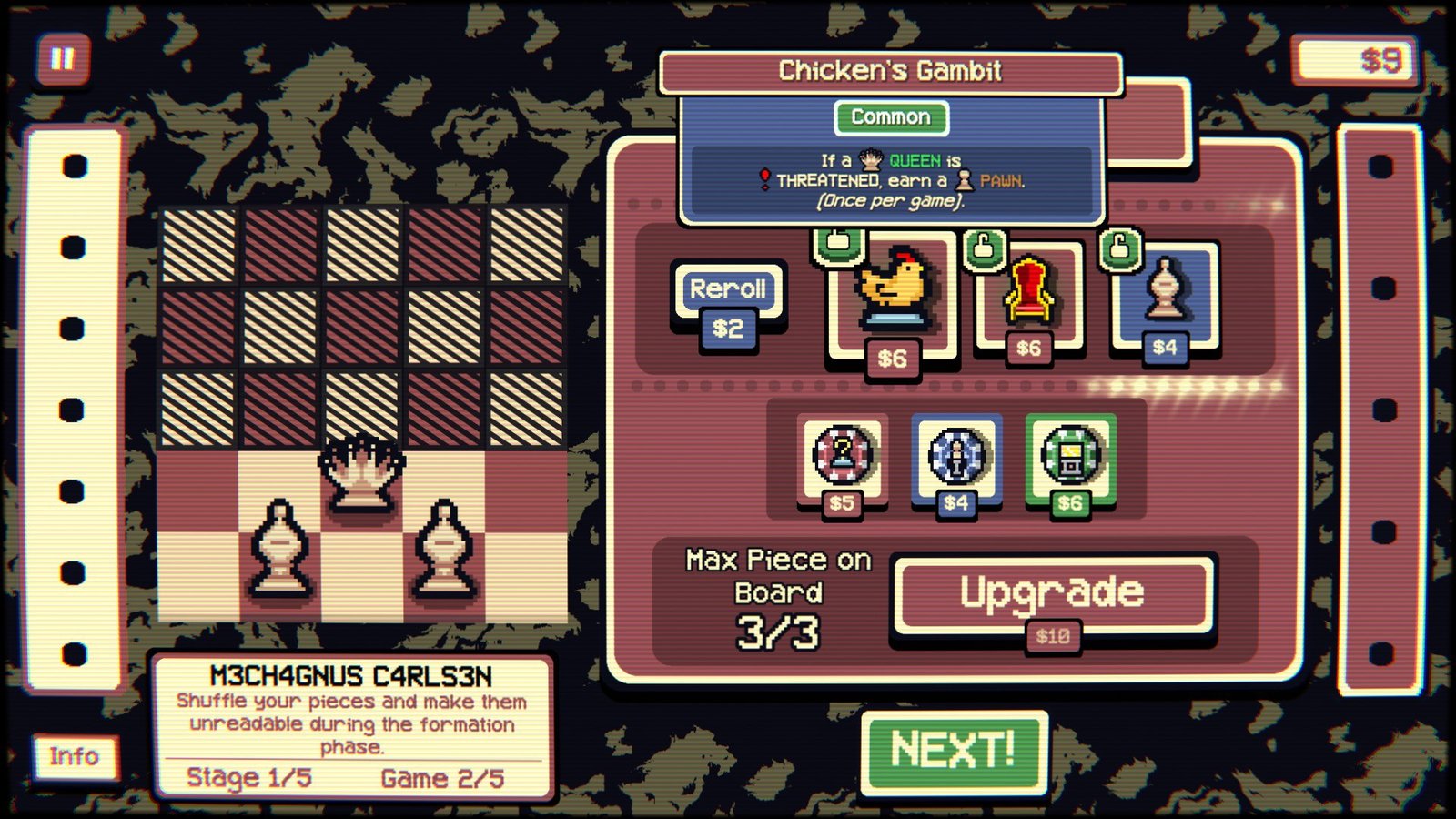
If a piece is captured, you don’t get it back at the end of that round. It’s simply lost. That’s why an option like Chicken’s Gambit is useful, because it gives you three pawns anytime your queen is threatened. Extra pieces are stored on the left side of your screen, and you can use them to refill your board when a piece is captured.
Usually, you’ll have to buy extra chess pieces between rounds through the shop, but that’s what makes this kind of Gambit useful when you’re learning the game. You get to save you cash for better items instead of replenishing your board.
CEO’s Gambit

At the end of each round, promoted pieces turn back into their original form. That is, unless you’re using the CEO’s Gambit or another option with a similar property, as the CEO’s Gambit makes promotions permanent. This is particularly great if you have mostly pawns on your team, as pawns are simply the weakest pieces.
When you’re able to keep promotions permanently, you’re able to stack your team with powerful chess pieces without having to buy better ones and swap them out. As a result, you’ll have more movement that makes it easier to capture pieces.
Queen Ant’s Gambit
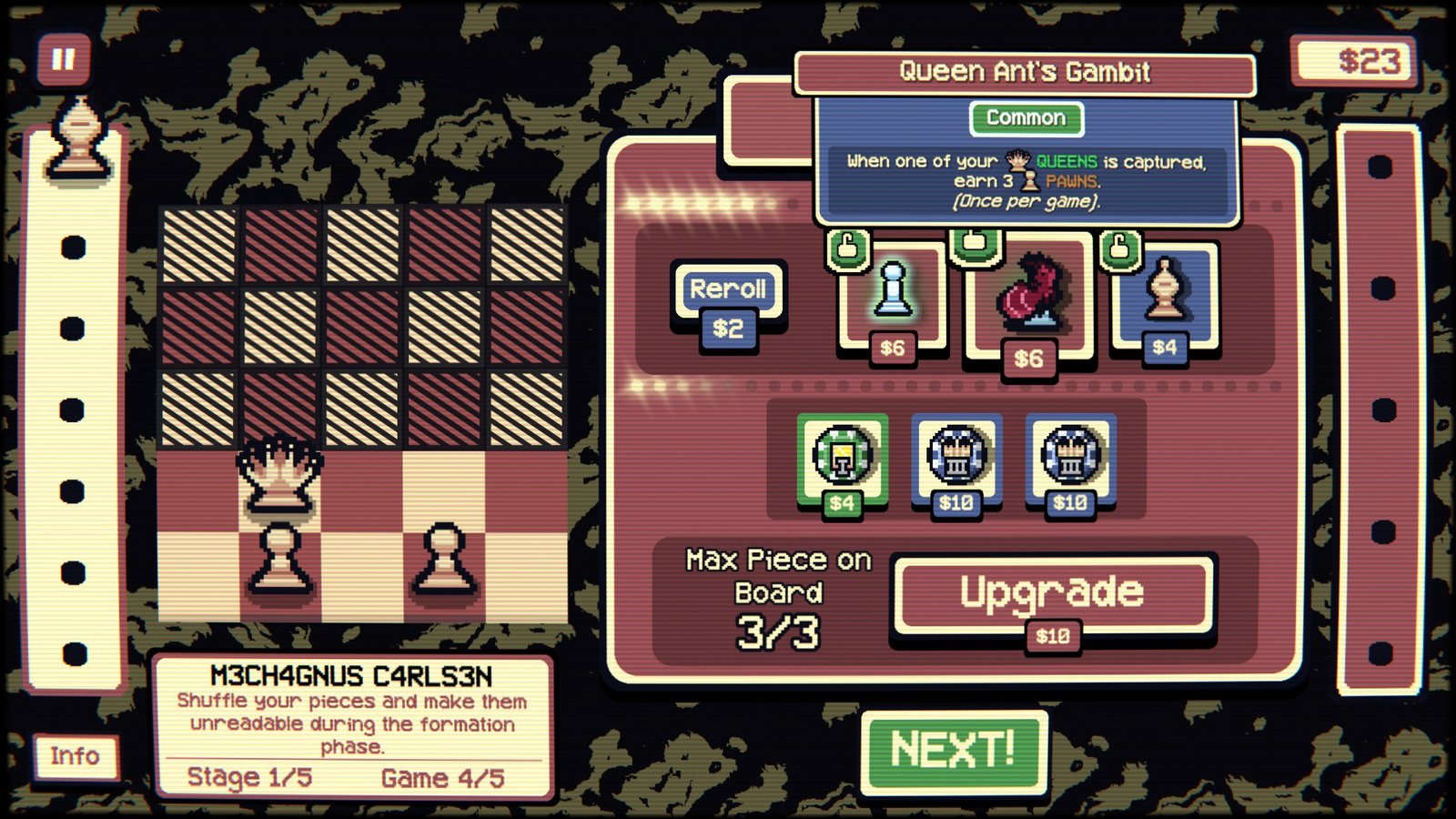
As a common Gambit, this one seems to appear quite often, which makes it easy to pick up in your run. The Queen Ant’s Gambit gives you three pawns if you have a queen captured. While pawns are far from being as strong as a queen, you can get them promoted by getting them to the other side of the board, or through the use of Gambits like Excalibur’s Gambit.
The biggest benefit with this is that you can refill your board so you aren’t down a piece, and you have two spare pieces for the same purpose. Even if pawns aren’t the best, using one is still better than being down a piece entirely. I try to have two pieces on standby just in case, because I end up getting a game over once I start going into rounds with fewer than my max available pieces on the board, which makes this Gambit perfect for me.
Once you learn the game and get comfortable with it, you can start getting creative with your Gambit choices and play style. Until then, especially if you aren’t familiar with chess, you might one to consider these Gambits, or those with similar traits, as they essentially act like safety nets and easy power boosts in Gambonanza.
