


Look, I understand that we’re less than a month into 2026. But what if I told you that it’s entirely possible that the best Metroidvania of the year has already arrived?
Coming off the heels of a year where the genre was ultimately (rightfully) dominated by Hollow Knight: Silksong, MIO: Memories In Orbit really has the chops to be a worthy addition to the genre that I’m nearly positive will be well-loved by any players that have ever had an interest in this type of game.
To put it right out there, MIO: Memories In Orbit feels like a special game. It’s the type where you’ll hit a certain point in your playthrough and realize you’re not sure you’ve blinked in hours. You’ve become one with your gamepad and monitor as the game has simply woven itself into your DNA, as the game’s mechanics now feel like part of your autonomic nervous system.
As a package, it’s nearly perfect for those that are up to the task of another exploration, combat, and platforming-heavy Metroidvania title. I can’t wait to tell you more about it.
A Hand-Drawn, Lore-Filled World
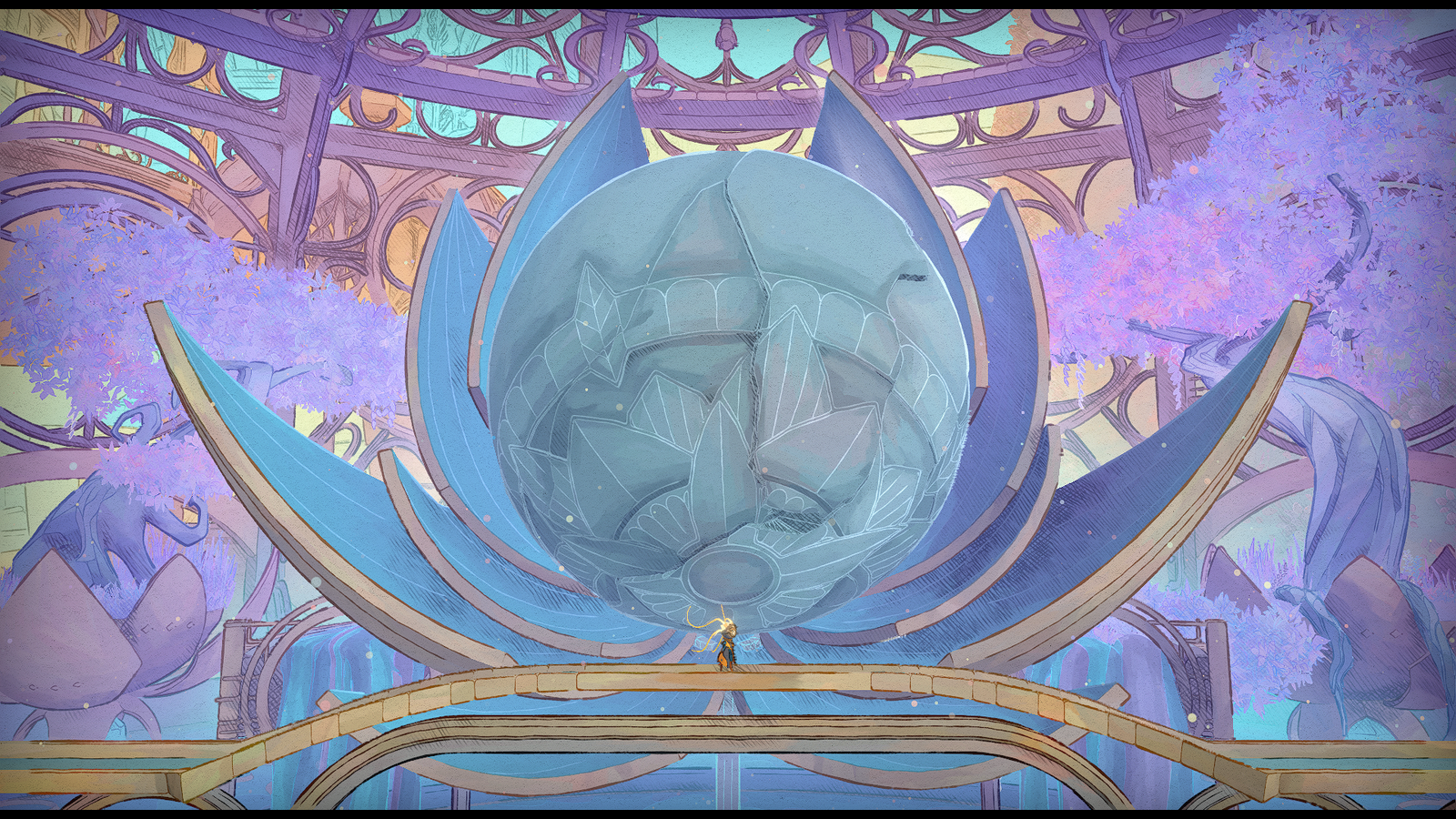
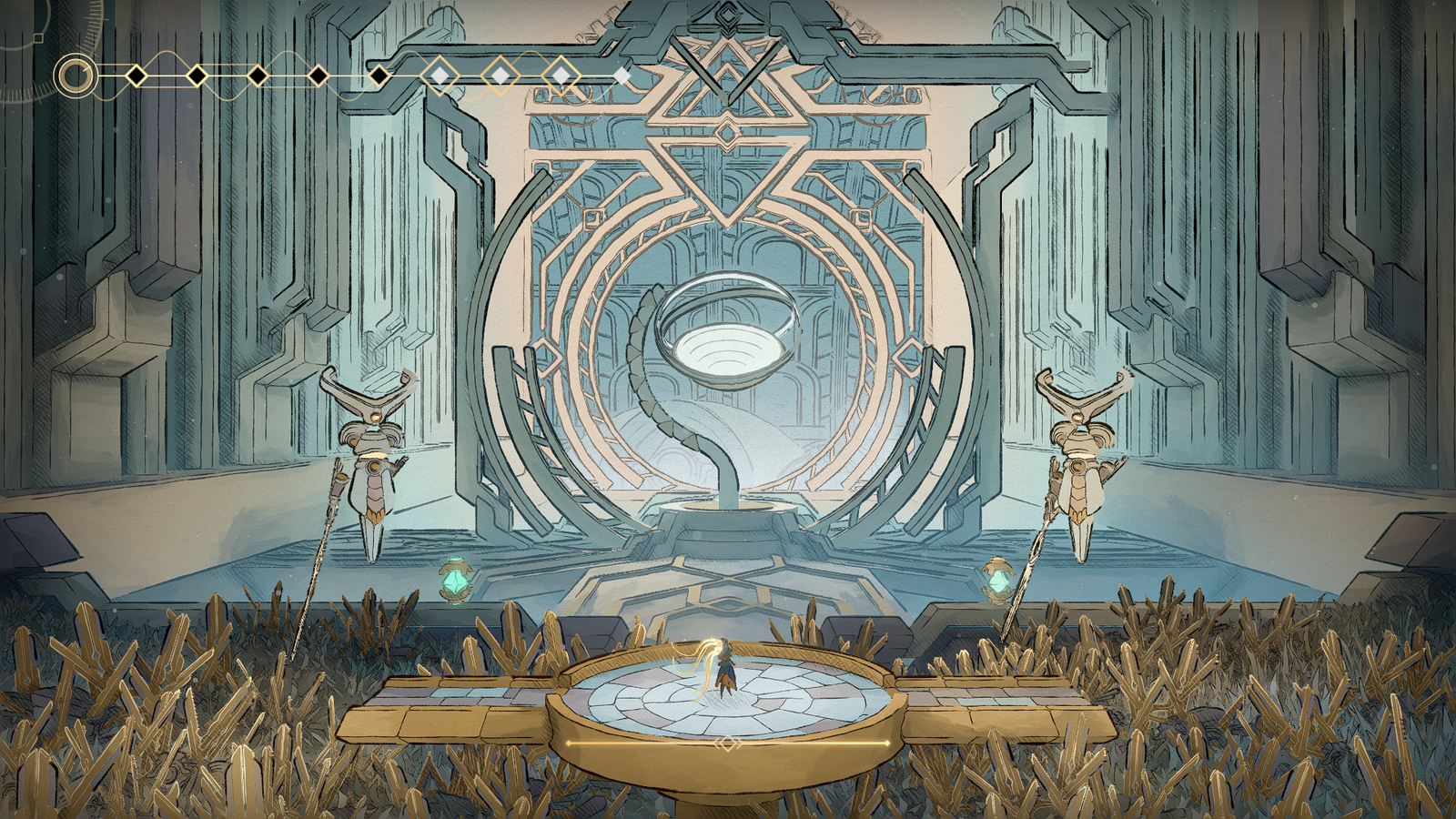
From the moment MIO: Memories In Orbit kicks in, you’ll be grabbed by two things immediately – the visual style and the soundtrack. MIO has a sort of cel-shaded-ish vibe that also looks like it was drawn entirely by pen specifically, then colored-in using a sort of watercolor palette.
MIO: Memories In Orbit feels like a special game.
MIO is breathtaking to look at, full stop. The game has a sort of sketch book quality, but never in a way that ever feels unfinished, either. It’s a work of art, and I never stopped being amazed by the visuals from start to finish of the 20-or-so-hour journey. And that’s racing to the finish as there’s lots of post-game content.
The music is also a huge standout, despite not ultimately having a ton of tracks throughout the game. What’s here is a mix of haunting choral arrangements, post-rock, ’80s synth, and what I described to my group chat as “Peak Daft Punk-sounding music.” This entire vibe also fits in perfectly with the world and theming of MIO itself.
Pearls, Vessels & Voices
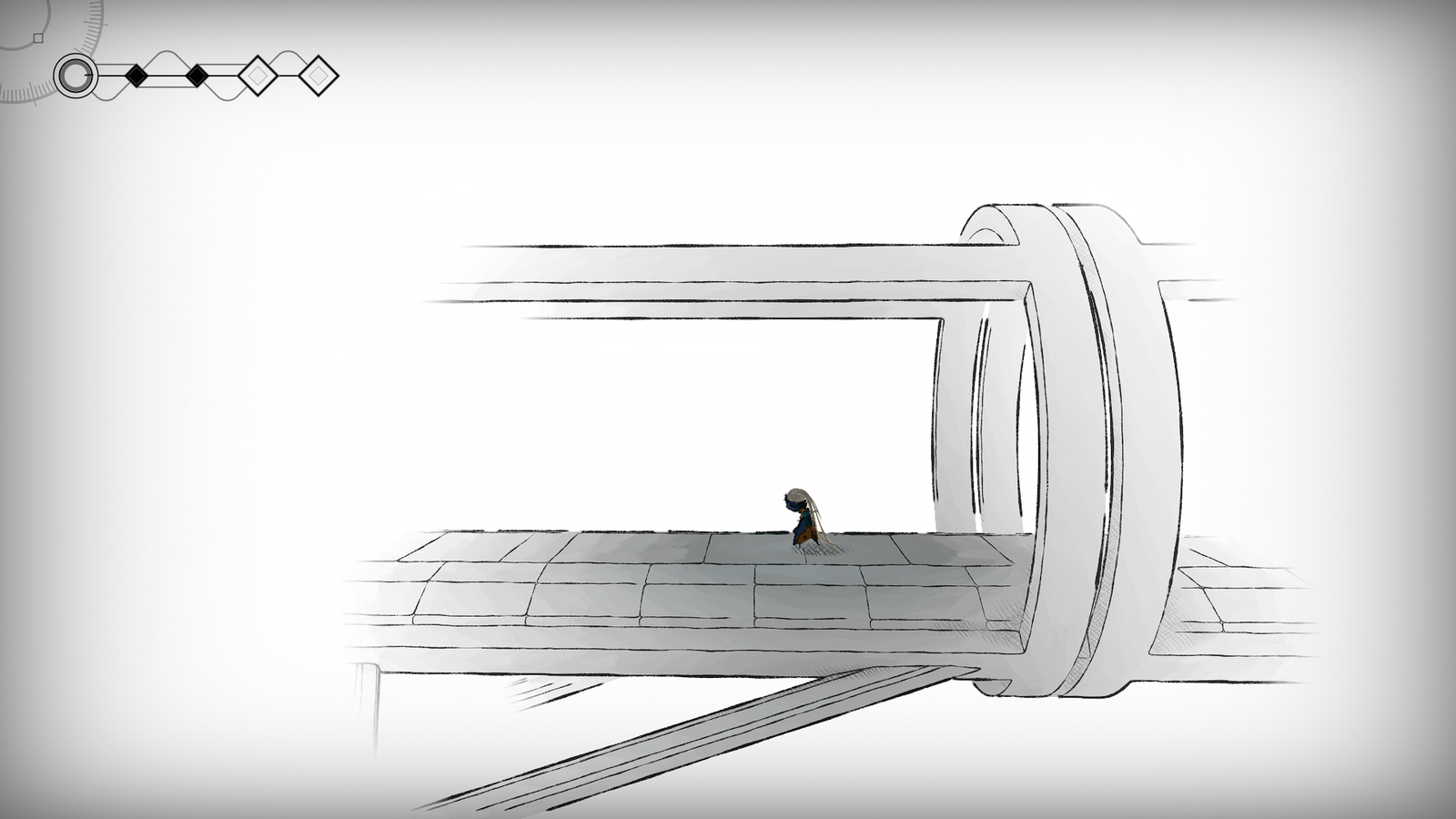
It’s all a bit abstract to describe in a few short paragraphs, but MIO kind of boils down narratively to being about a colony of space-traveling robotic creatures looking for a new place in the universe to call home. They live inside of The Vessel, a “living” structure that’s now seemingly failing.
After being awoken (powered-on?), you control MIO, a tiny robot that’s lost her memories, and also seems to be stricken by some sort of sporadically appearing affliction which renders her temporarily visionless and powerless. With the help of Overseers connecting The Vessel together, MIO must track down the sentient sources of power throughout The Vessel to attempt to save the day.
MIO is breathtaking to look at, full stop.
It all gets more layered from there, and there are many charming, endearing, and interesting characters she’ll meet along the way that all add their lovely mark on the title. Items are filled with lore/intriguing journal entries, and the environment often times tells bits and pieces of the story to you as well.
Some will think there’s not quite enough overall in the story department, and I understand. For me, the ending of the game still hit emotionally, and I loved learning every new piece of information MIO would feed me. There are some strong themes and moments, especially when considering they’re all coming from robots/androids as well, raising cool questions about AI/computer sentience. It just never goes crazy with the story, either.
A Fine-Tuned Level Of Difficulty
Of course, Metroidvanias are typically known for a fairly high-level of difficulty, and many will be happy to learn that MIO offers that to you. It’s also, however, much more accessible in several ways compared to competitors, and I personally think that’s a great decision.
Runbacks to bosses from your last checkpoint are never bad, which is a welcome change coming off of losing my mind over some of the necessary repeated sections in a game like Silksong. The bosses themselves run the gamut from some pretty breezy early-to-mid-game bosses, as well as some truly punishing skirmishes in some of the later areas.
Thankfully and crucially, however, bosses are always fair, and genuinely enjoyable to learn. MIO nails the feeling of putting something in front of you that might seem like a bit too much at first, but then trusts you to put in the investment to learn, improve, internalize, and eventually come out on top. It worked every time for me, and it felt great.
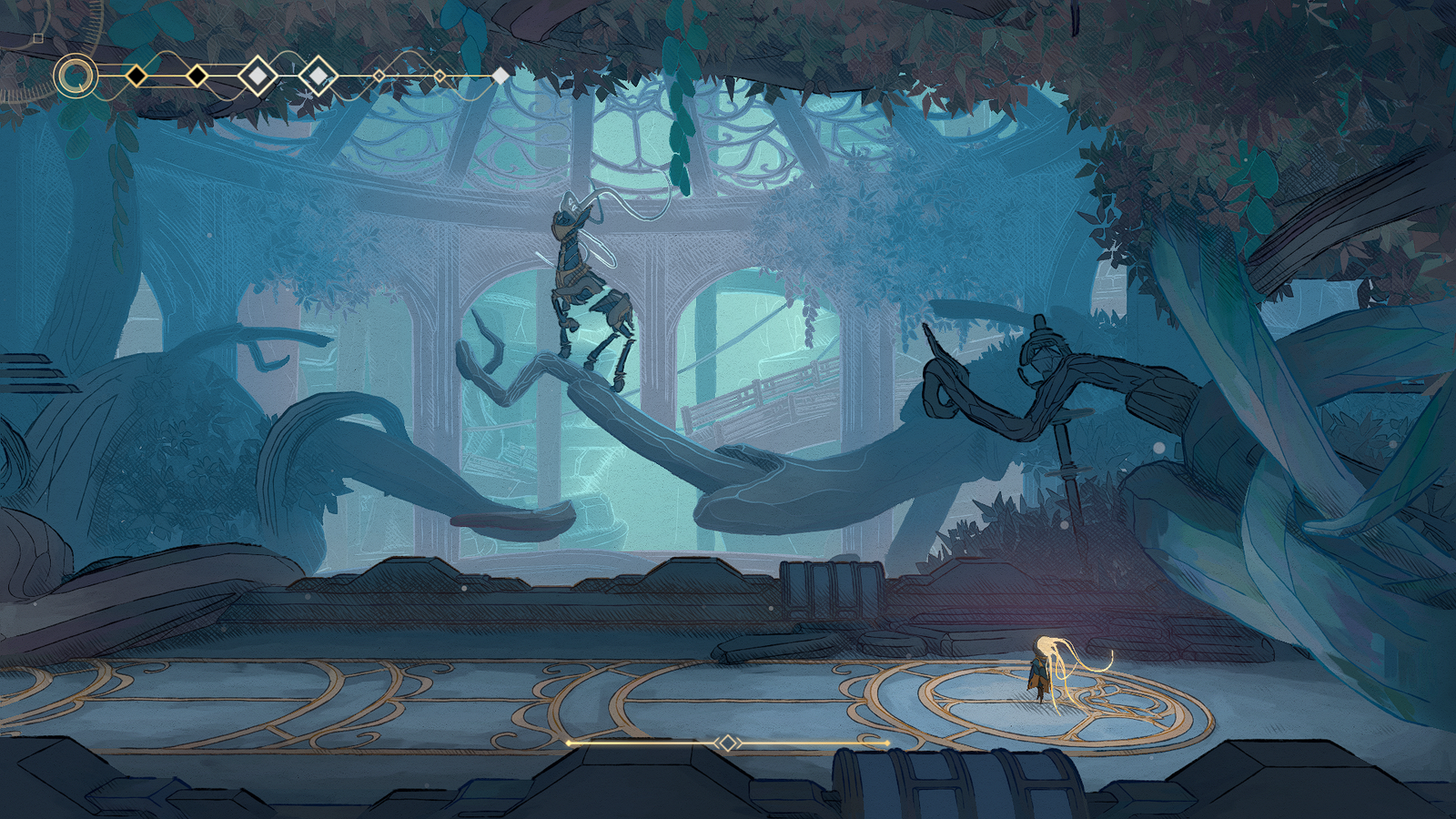
There are also a few assists included in the options, which I am a huge fan of as well. Yes, this is a notoriously difficult genre, and MIO itself seems to be pulling most from the Hollow Knights in more ways than just the hand-drawn style and perspective. But for me, Silksong was too much. I absolutely love that MIO wants to challenge you, but also doesn’t want you to bang your head against a wall, either.
Combat-wise, the most useful assist causes bosses to weaken with each attempt. It’s slight, so you still will need to actually perform and learn movesets. The assist is just there if you need it or want to tune the game to be a bit more manageable, which I’m all for.
Bosses are always fair, and genuinely enjoyable to learn.
Between bosses, areas are peppered with the types of regular enemies you’d expect, and while they aren’t insanely varied, they’re all typically fun to fight, each also granting you with Nacre, MIO’s currency to spend on upgrades like modifiers you have a certain number of slots to deploy (kind of like plug-in chips in NieR: Automata), or other useful items like material needed to improve Hit Points, more modifier slot space, and so on.
MIO is tough, and you’re going to have to “get good” to a certain extent. But you’re also always given the tools to master your melee-only moveset to get right in enemies’ faces and figure out what you need to do to succeed.
A Map Full Of Secrets And Rewards
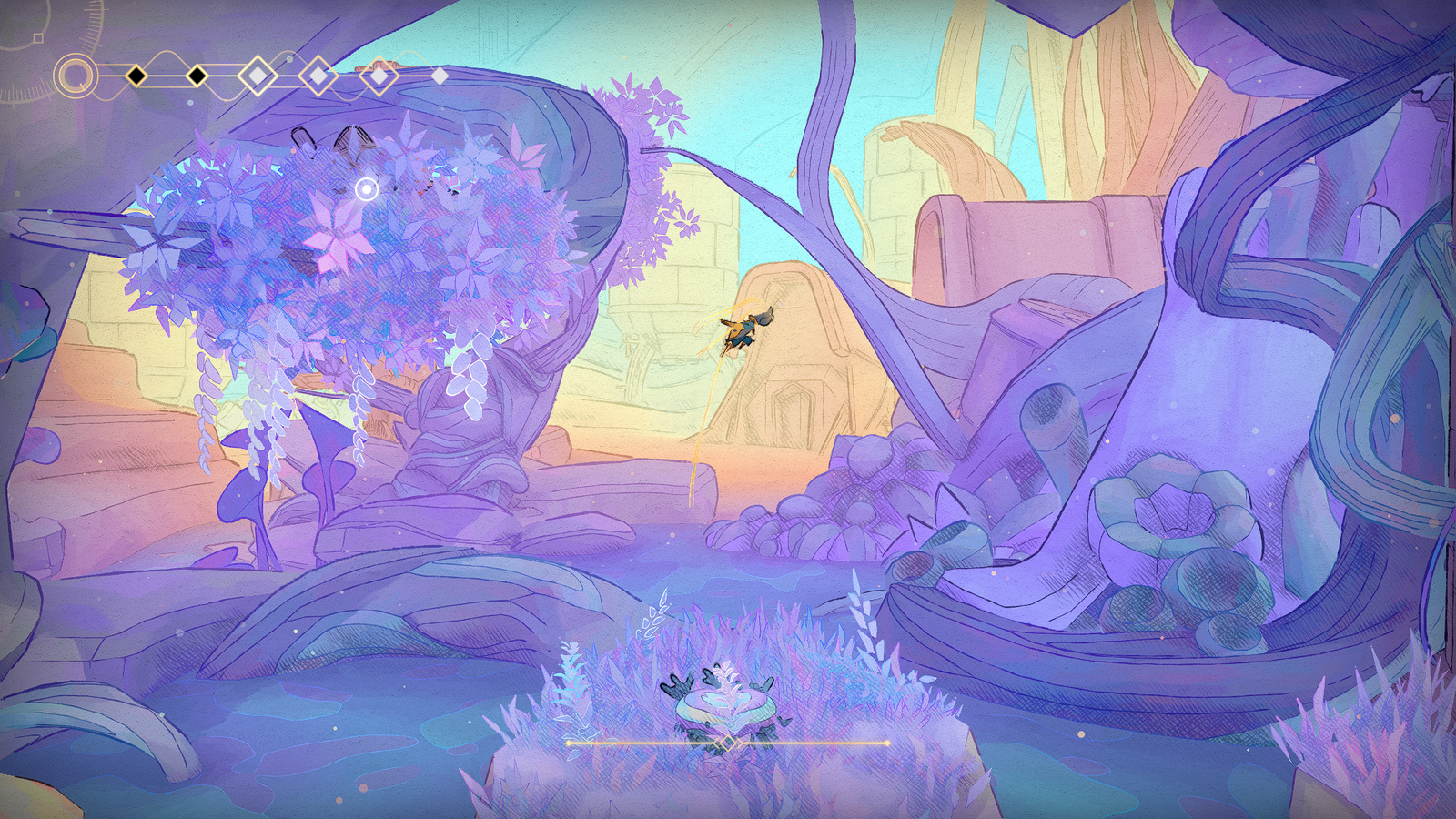
A Metroidvania is also only as good as its map and exploration, and these are additional areas where MIO: Memories In Orbit absolutely shines. The game is layered with awesome-looking biomes that are connected by elevators, unlockable doors, and many secret paths.
Initially, I had the vibe that MIO’s map was going to be fairly contained. By the end, it’s a sprawling, complex affair that is a joy to traverse much more often than not, and you’ll learn it like the back of your hand. From start to finish, filling out the map of MIO and investigating every nook and cranny feels great.
You’ll have the classic Metroidvania staple where you notice a path on the map you haven’t followed, got to check it out, then be rewarded with yet another massive chunk of the game that you’ve sunk hours into before you know it. For map completionists, you’ll have a ton to keep yourself busy with here. Heck, I’m close to 100%-ing the map, but simply keep finding new secrets to look into that turn into full-on excursions.
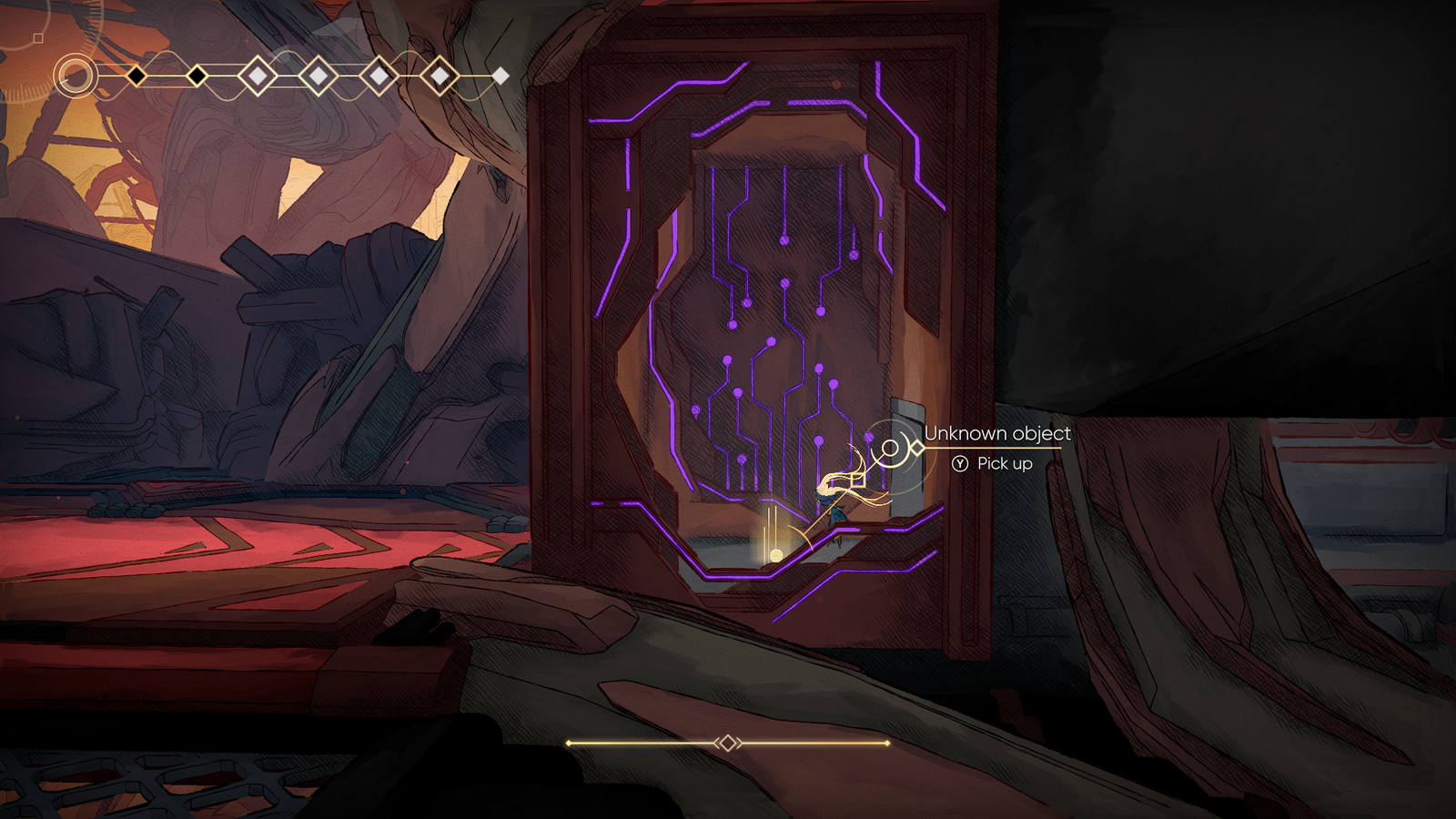
There are also a large number of items, modifiers, and other trinkets you’ll be rewarded with depending on your level of curiosity. Sometimes, these are useful items or things you need to spend at the shop for upgrades, keys to unlock doors, or other mandatory items for actual game progression.
Other times, you’ll find journals and notes that are only there for lore-building purposes, which is a reward in its own right since I did find the setting of MIO so compelling. These items have well-written and interesting descriptions in your inventory, so if you’re down for some light reading, there’s a lot to dig into.
A Metroidvania is also only as good as its map and exploration, and these are additional areas where MIO: Memories In Orbit absolutely shines.
I did have a minor gripe with the game’s fast travel system, which requires you not only find the checkpoint, but then also an Overseer character hidden in a nearby spot of the map that will then return to said checkpoint and open fast travel. It’s a cool feature, and at least half of the Overseer’s are easy enough to find, but it’s not always the case. This led to me having to backtrack many areas of the map often, which didn’t always feel like the best use of my time.
There’s also a quirk where the map ultimately splits into upper and lower sections, and the fast travel points don’t connect between the two. This means whenever you need to change levels, you’ll have to ride the universe’s longest elevator to do so. This was never the end of the world, but did keep me out of the action a bit too long at times.
Fluid Movement That Becomes Ridiculously Precise
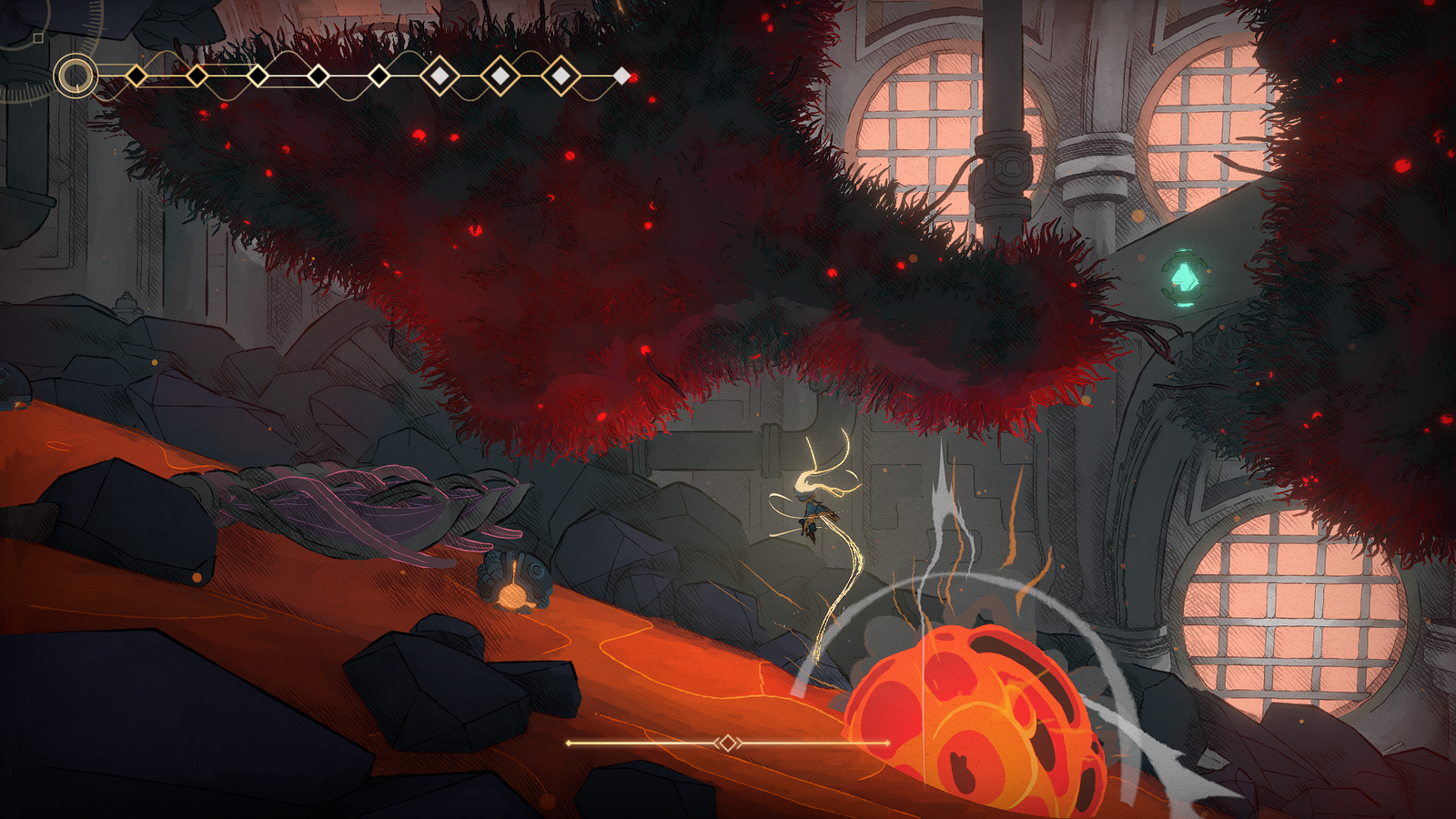
Regardless of how often you’ll need to visit an area, it will at least consistently feel awesome every minute. Movement in MIO is excellent. The hallmark here is how airborne-oriented the game becomes, and your powers are based around this. You have a single-use double-jump, but attacking an enemy refreshes it. This leads to some insane platforming sections where you’ll not touch the ground for ages, leveraging perfectly placed slashes to keep the movement going.
As you progress, you’ll keep earning new movement abilities as well, including a sort of grappling hook, glide, and wall-climb, which as you’d expect in a Metroidvania, all grant you access to previously unreachable spots on the map as well.
Where MIO feels different is how the game ultimately chains all of your abilities together, which turns the tougher platforming sections into genuine puzzles to sort out in order to complete. I truly mean it when I say that MIO features some of the most intense platforming of my life, but it also does such an incredible job of making sure you have all the tools you need as well.
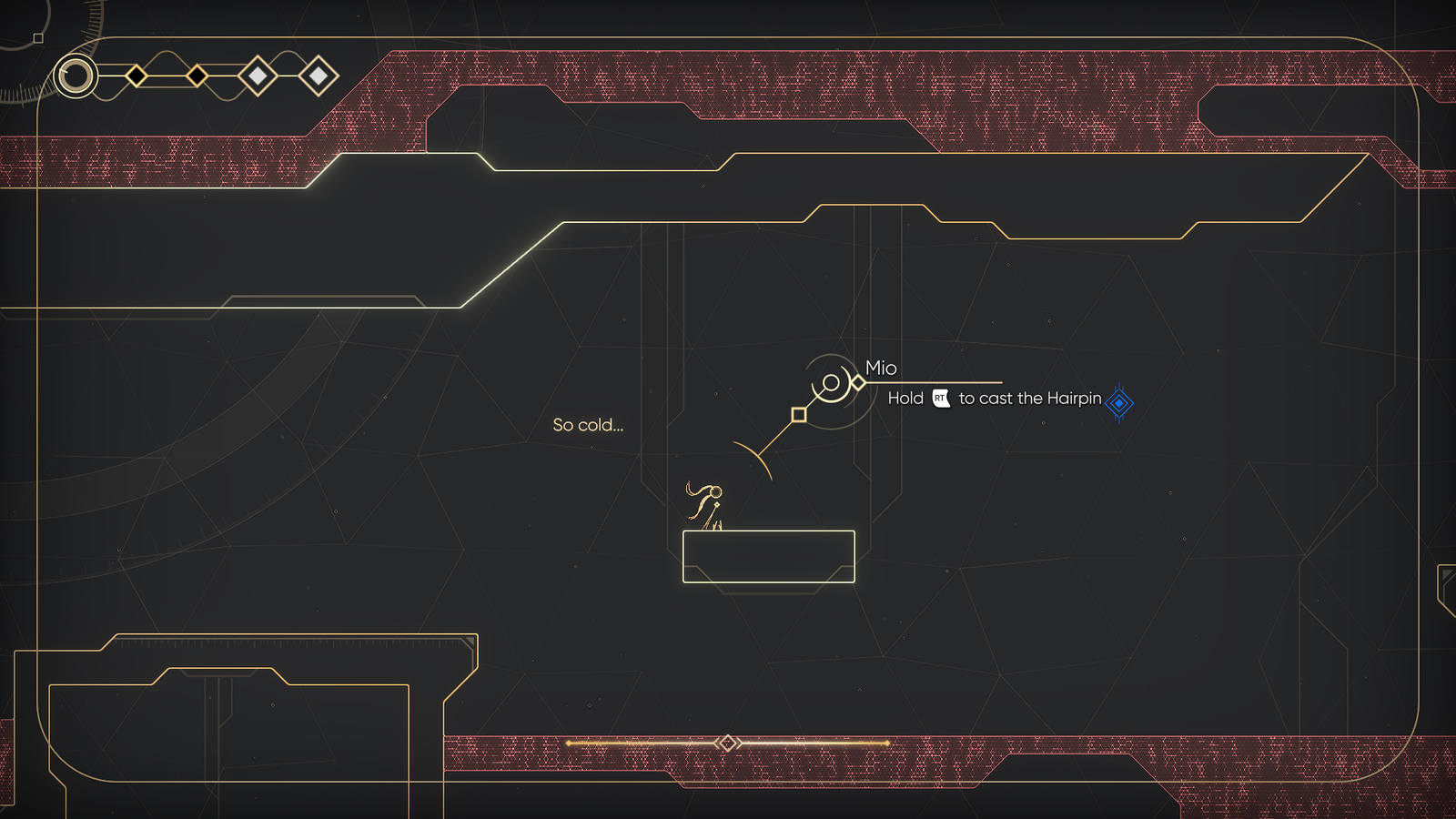
Despite how admittedly near-tilted I got at some of these sections (particularly The Crucible, a sort of Challenge Run you can access after the credits), it was also thrilling to know that I could figure an area out if I stuck with it long enough.
Here’s where another assist comes into play as well, which allows one Hit Point to be replenished if you stay on the ground long enough. For some of the more intense platforming sections, I’d argue this assist is nearly mandatory, since many took me dozens upon dozens of attempts to finally conquer. Once again, I was so grateful that the devs considered my actual sanity over difficulty simply for the sake of difficulty.
Where MIO feels different is how the game ultimately chains all of your abilities together, which turns the tougher platforming sections into genuine puzzles to sort out in order to complete.
MIO is second to none in requiring you to try out a new platforming challenge, fail repeatedly, learn from your mistakes, apply your knowledge, and then make you execute it all in one, ridiculous chain of movement abilities. There were moments when I didn’t think I could complete a particular spot, until I did. This felt incredible, and like I genuinely was becoming a master of the game itself.
This is where MIO: Memories In Orbit thrives at the end of the day. It will ask a lot of you, and you’ll occasionally feel like it’s too much. But lock-in long enough, and you’ll complete constantly rewarding sections of gameplay. If you’re like me, this will all result in one of the best Metroidvanias you’ve ever had the pleasure to experience.
Review code provided by the publisher. Reviewed on PC.
MIO: Memories In Orbit will surely go down as one of the best Metroidvanias of 2026, despite the year being so young. The movement and platforming are top-tier, the vibe immaculate, the map complex, and the combat/boss fights fine-tuned. I wish the story was a little more fleshed out, but this is still a world and journey 100% worth experiencing for any fans of the genre.
The Good
- Perfected movement and platforming
- A great map with tons to discover and rewarding exploration
- Strong boss fights that don't punish you with insane runbacks
- Gorgeous presentation on all fronts
- High challenge level at times, but still entirely accessible
The Bad
- A story full of cool lore and world-building, but that doesn't quite get there in the end
- Some minor frustrations with fast travel/back-tracking
