

It was all the way back at E3 2021 when I first saw the reveal trailer for REPLACED. As Todd Howard stepped up and showcased its big titles like Starfield, Psychonauts 2, Far Cry 6, and STALKER 2, REPLACED stood out among all those titles and caught my eye.
Every shot in that trailer felt deliberate. It felt like watching an upcoming movie with a heavy focus on cinematography, and I was half-expecting Denis Villeneuve’s name to show up as the creative director working alongside a game studio. The cinematic camera work highlighted a dystopian world where every shot captured a specific vision. It was a short trailer, yet it revealed so much through environmental storytelling alone.
However, after roughly ten hours playing REPLACED, which is how long I spent with the main campaign, side stories, and chasing collectibles, I kept waiting for those moments from the 2021 trailer to appear. Instead, what I got felt like a fragmented echo of that reveal, or more appropriately, like it clinically gutted the vision and harvested the best parts while leaving all the meaty sinew that holds it together.
That disconnect becomes what I ultimately take away from my time with REPLACED. It is a game that constantly gestures towards greatness, but rarely commits to it in a way that truly lands.
All bark and no bite
REPLACED follows R.E.A.C.H., a hyper-intelligent AI co-created by Dr. Warren Marsh to sort and match organ compatibility. Created with the purest, altruistic intentions, designed to maximize survival, it was gradually repurposed by the Phoenix Corporation to serve its elite and enforcement arm, turning a system meant to save lives into a vital piece that sustains its power, eventually becoming the government itself.
Set in an alternate 1980s where nuclear explosions have rendered large parts of the United States uninhabitable, leaving the remnants of society attempting to rebuild under corporate control. The division between the powerful and marginalized has become normalized, as the means to survive are dictated by the very system that aims to oppress in the first place.
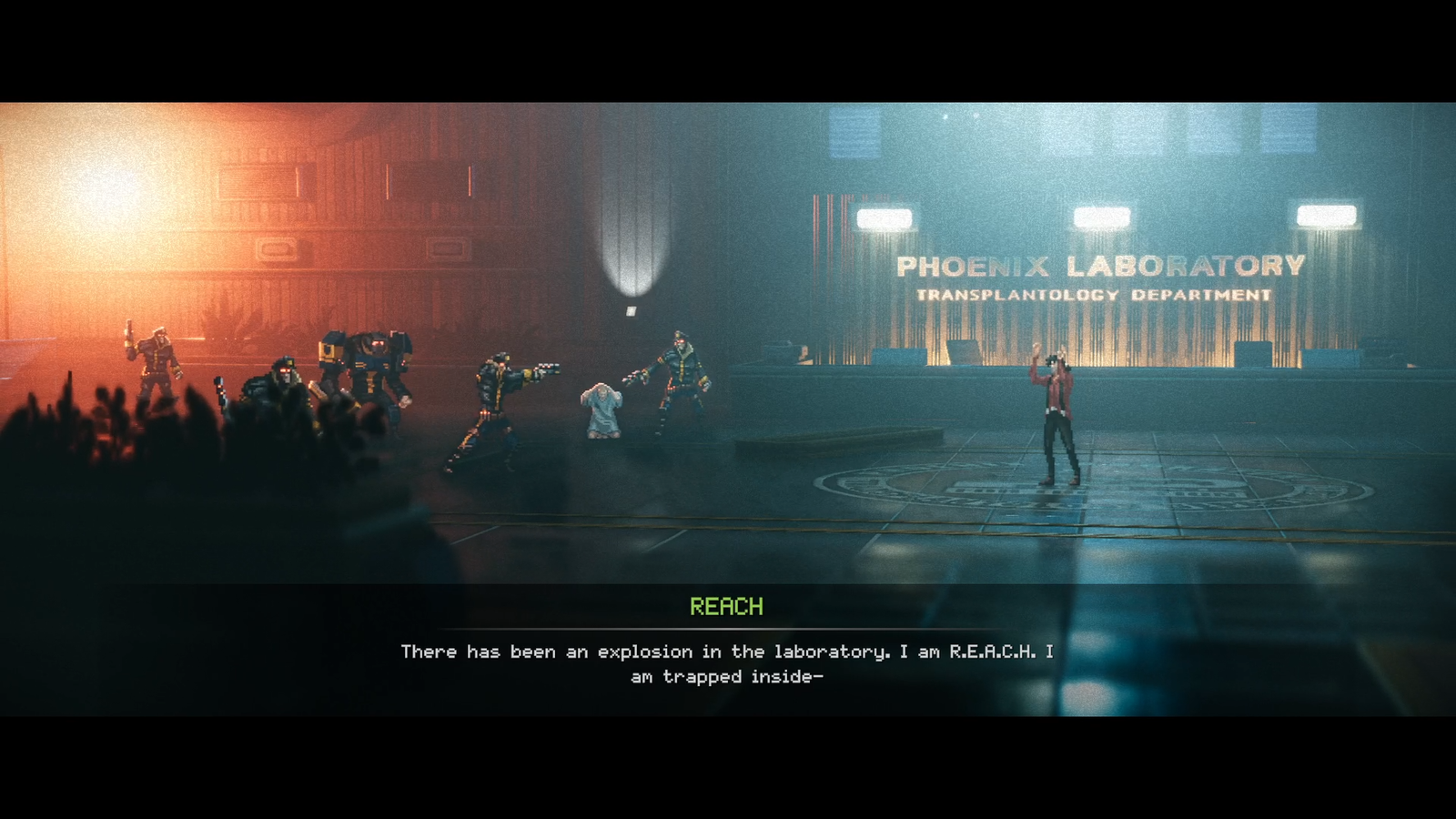
After a freak accident, Reach is forced into the body of its creator. No longer an observer operation through unfettered access to the database of its constituents, Reach was immediately betrayed by the very police force meant to keep it safe. Stripped of its immunity, Reach is thrust headfirst into the same world it had a direct hand in exploiting.
Reach’s journey of self-discovery and learning what it means to be human has all the ingredients of a compelling cyberpunk story. Unfortunately, REPLACED never quite trusts its own ingredients to let them cook, nor trusts that the consumer will enjoy the dish without heavy guidance on how to eat it.
The game heavily leans into telling the player how to feel the narrative. The environmental storytelling does much of the heavy lifting, but the dialogue so often undermines it by spelling things out too directly. Characters explain what you already understand, and moments that should feel reflective are immediately summarized with the lesson. The world feels nuanced, as the optional lore told through data entries paints a bleak world where the common man is only as good as the organs they can provide. There’s a jarring disconnect between how REPLACED sets up its lore versus how it executes its narrative.
Instead of trusting the player to arrive at those conclusions organically, the game constantly steps in to interpret its own themes. Reach’s gradual exposure to human suffering should have been the emotional backbone of the story, but key developments come and go without enough buildup.
REPLACED starts strong, meanders for most of the game, and finally remembers to have a narrative to tell by the end of it. Despite that, it never actually tries to tell its story and heavily relies on tropes to cyberpunk tropes to carry the emotional weight. Corrupt corporations, disposable underclasses, and an AI are all present, yet they’re rarely explored with the depth or nuance needed to justify their character developments. Rarely will the narrative challenge the beliefs of the characters. We do see the cold, calculating Reach become more empathetic, and we do see how the once altruistic Dr. Warren Marsh becomes a desensitized centerpiece of the Phoenix Corporation, but those shifts are implied rather than earned.
What I found especially frustrating is how often the game gestures toward something more meaningful, only to pull back its punches. REPLACED is constantly threatening to get good, throws in combat or platforming sections to make you forget, then does it all over again until it finally ends. Threads, storylines, and ethical questions are introduced with weight, but they’re rarely followed through with the same conviction. At the end, the story feels like it’s setting up a sequel, but then it just concludes.
The concepts in REPLACED are far more compelling in concept rather than in how it’s told. Humanity, exploitation, how resilience is both necessary for survival, while also becoming the mechanism that normalizes complacency and sustain oppression. These are ideas that could have anchored a thoughtful, introspective cyberpunk narrative, but ultimately retreat into a safer, more familiar territory. For a story that attempts to explore something as complex and nuanced as what it means to be human, it reduces its characters and conflicts into caricature, leaning on familiar tropes instead of embracing the ambiguity and depth its premise demands.
A dystopia too beautiful for its own good
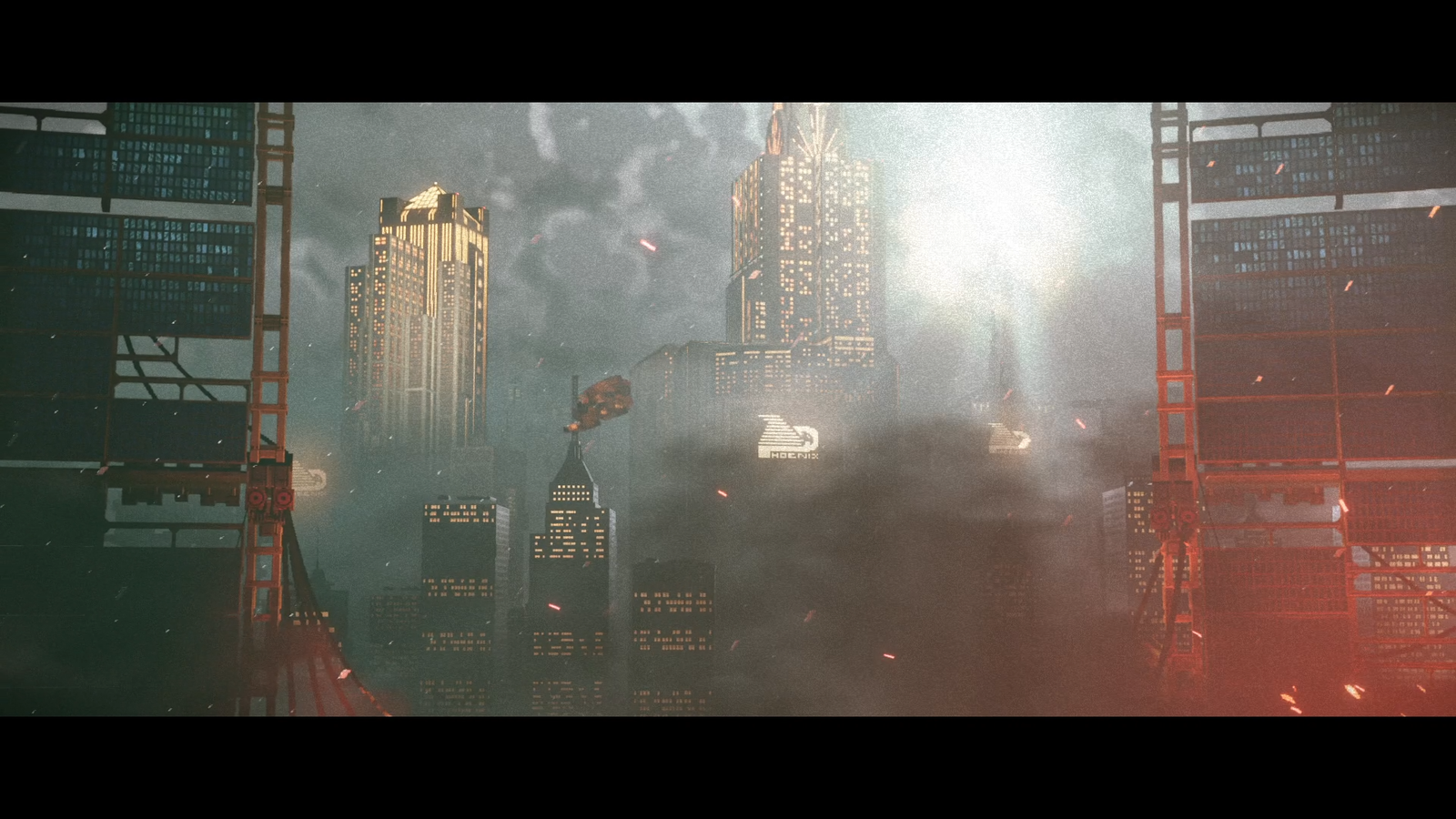
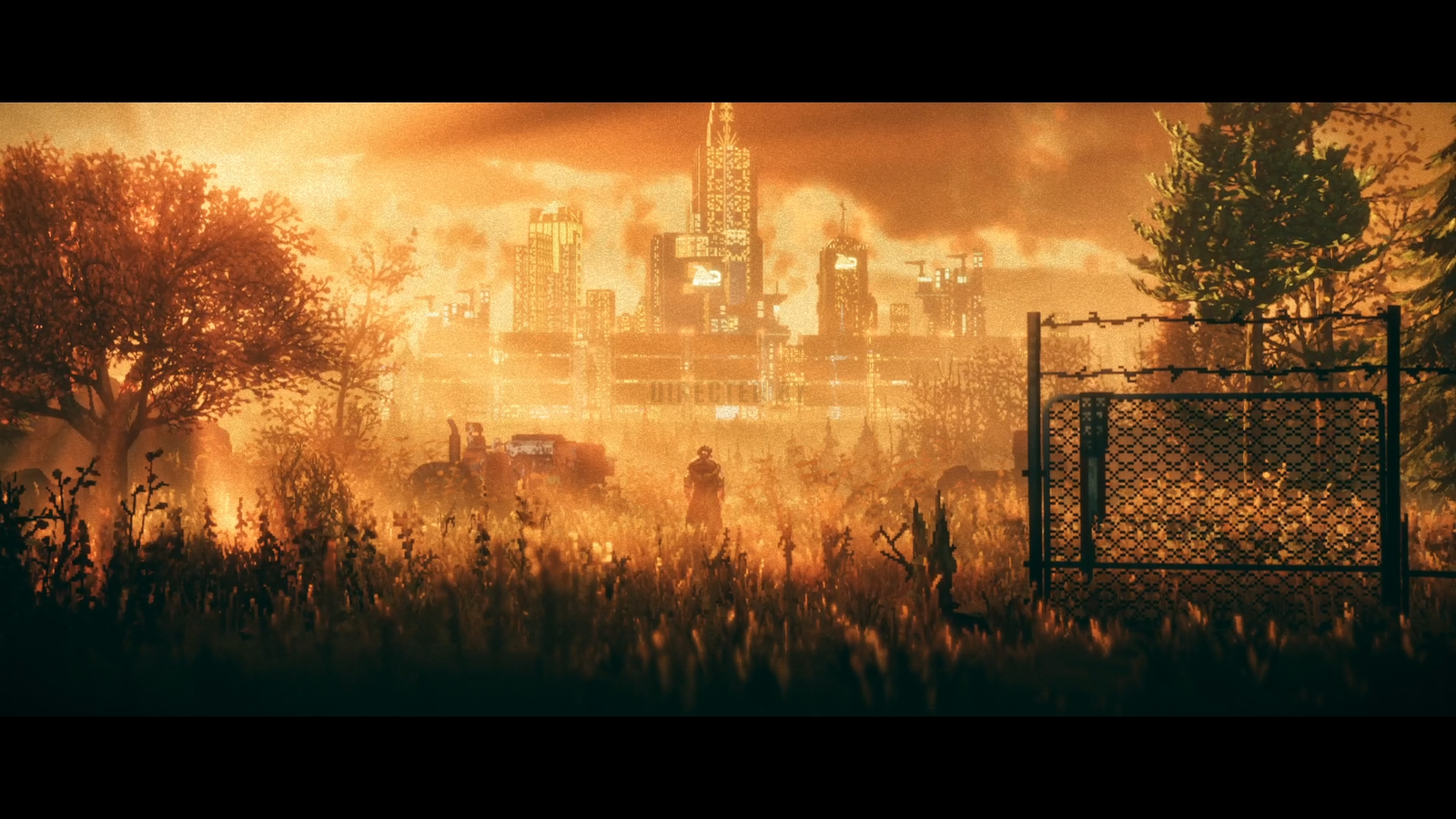
REPLACED is a perfect case of “what you see is what you get,” and what you see is that the game is undeniably visually striking. Its unique 2.5D pixel art graphics allow the game to create a beautiful horizon of its alternate 1980s setting. There are many moments when the game pans out, immersing you into the expansive and distant skylines. REPLACED will constantly surprise you with its breathtaking vistas of layered buildings illuminated by crude ads and broken neon signs, of harsh red search lights from murderous drones breaking the fog in thick forests, and of silhouettes of violence where splashes of blood provide a contrasting color to the figures clashing.
There’s a human cost behind the beauty, and REPLACED knows exactly how to fit these pieces in this dystopian diorama. Crumbling infrastructure, abandoned spaces, and makeshift shelters tell an environmental story where the game rarely needs to tell you anything when you can understand the tone immediately. There’s a weight to its environments: a quiet sense of history embedded into every flickering sign and citizen just trying to survive one more day. From the wide shots of the game’s landscapes to its more intimate but brutal close-ups, this is where REPLACED is at its element.
Where style obstructs substance
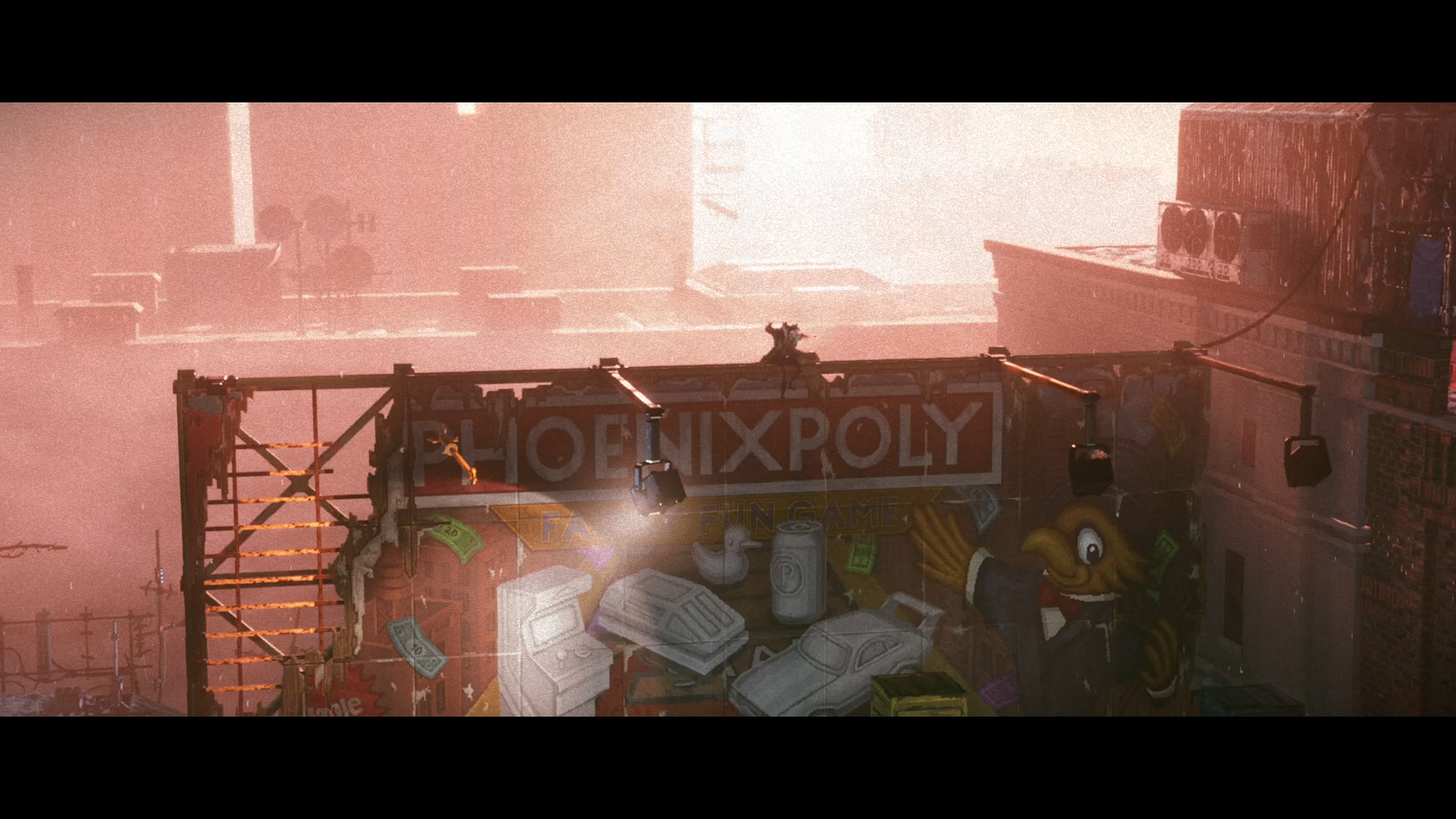
Unfortunately, I quickly realized this beauty came at the cost of clarity. The same beauty is oftentimes a detriment in a platformer. It felt like the whole game was acting in service of the art, instead of the art enhancing the core gameplay loop. In platforming and puzzles (like the Slave Cage one here, for example), movements are weighty and grounded in realism rather than exaggeration. REPLACED offers no shortcuts, and you’ll have to manually and tediously move objects often from one end of the screen to the other.
The moody lighting, dense backgrounds, and artistic use of shadow make it difficult to clearly read the space you’re supposed to be navigating. It’s common for platforms to blend into the environment or hazards to clip through the smallest pixel of your jacket or foot, immediately causing you to restart. In the middle of more chaotic sequences, it’s surprisingly easy to lose track of Reach as the game was busy paying a homage to the shadow action scene in Kill Bill. REPLACED is the only game that I’ve played where I was thankful for the yellow paint, so ubiquitously in modern gaming, used to guide players towards an interactable object.
This also extends into exploring and collectibles. What should have been a rewarding incentive to engage in the world turns into a frustrating exercise in guesswork. There’s no visual language that clearly distinguishes the main path from the optional ones, making it difficult to tell whether you’re progressing or not.
In most games, the ambiguity isn’t an issue. You can simply backtrack or load an earlier save to find these areas. But in REPLACED, there’s no way to create a manual save or load earlier chapters. Additionally, many times you’ll be locked out of going back once you progress through the main path. It makes the game feel restrictive and locks you out from the lore bits that are the strongest pieces of the game’s writing.
Being sent back to the start of long sequences was the cause of my biggest frustrations with REPLACED.
Reach is sluggish, weighty, and has a noticeable delay when moving around. The game’s cinematic platforming is serviceable for the most part, especially when it doesn’t detract from the beautiful landscape in the background. Reach has an intentional heaviness to his movement, which clashes with how demanding some of these platforming sections can be. Many segments require a level of precision that Reach isn’t built for. Tight jumps, narrow timing windows, and environmental hazards are a detriment to a character who feels just a step too slow.
When you fail (and you will), the checkpoint system does little to soften the blow. Being sent back to the start of long sequences was the cause of my biggest frustrations with REPLACED. There was one platforming section where you had to drag a box from one screen to another, jump on top of a billboard, drag the box from the billboard all the way down, so that you can move the previous object to another place. Finally, when all the pieces were in place, I failed the final jump, sending me back all the way to the start of the puzzle.
The platforming itself doesn’t evolve much either. It stretches on longer than it needs to, and comes so often that you’ll start to dread it. It rarely introduces new ideas or mechanics that would keep it engaging. Instead, it relies on slight variations while hoping you don’t notice, as you’re too busy admiring the scenery. Even when the game does attempt to introduce more interesting puzzle elements, it undermines its own design. Reach will often immediately spell out the solution with insulting impatience, removing any sense of discovery.
Cinematic combat, basic execution
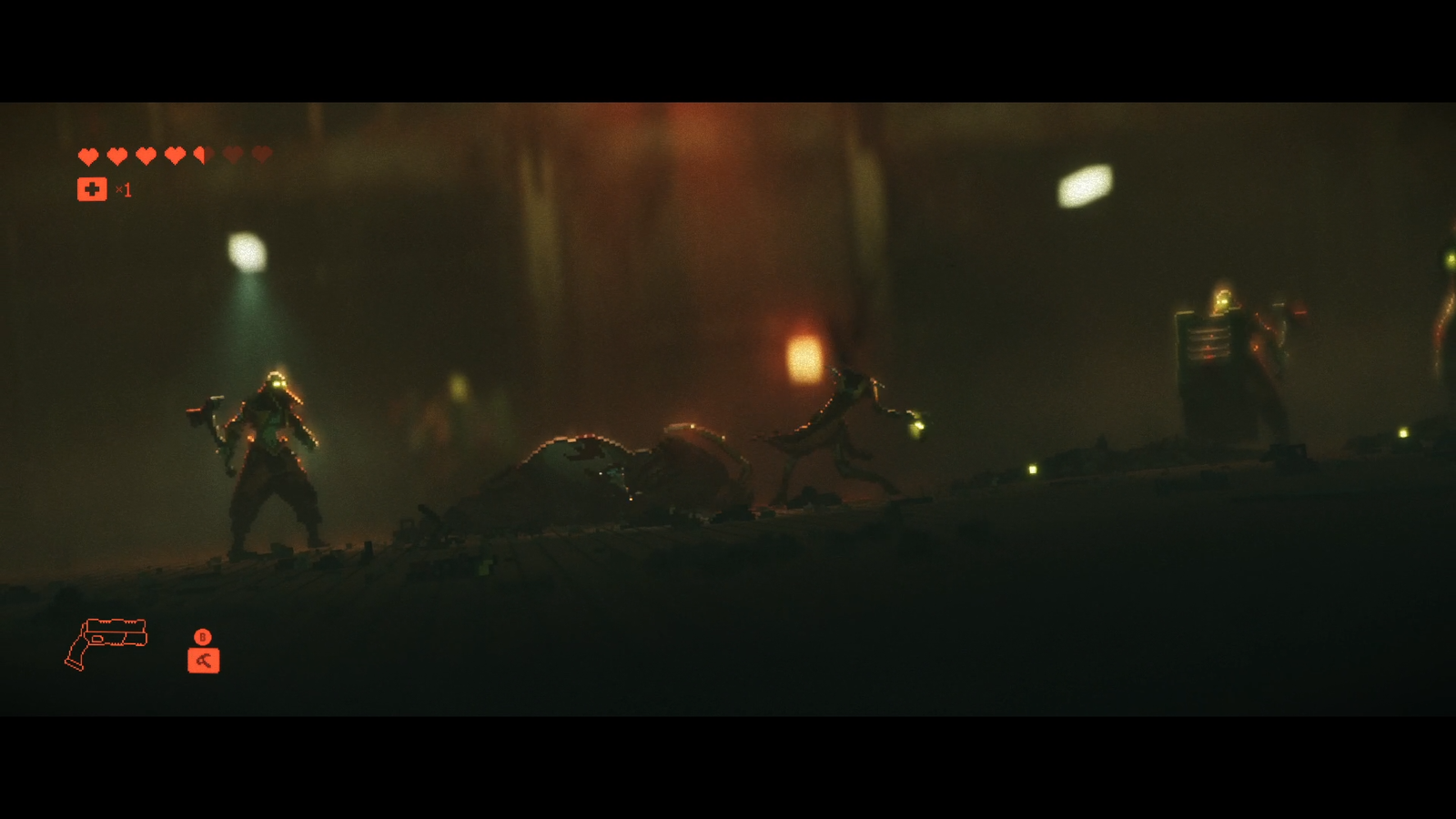
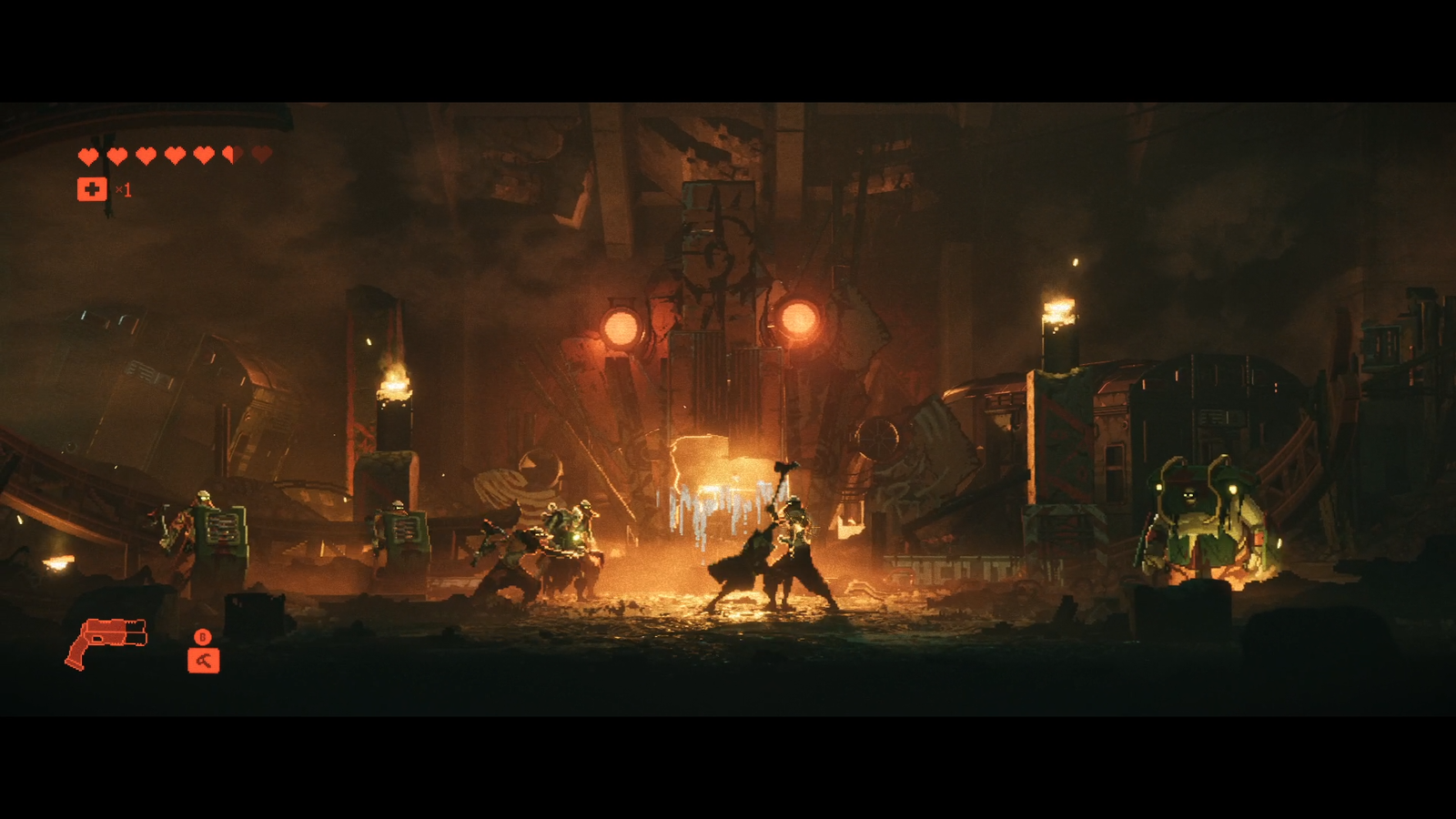
Like much of REPLACED, combat looks better than how it feels to play. This meticulous attention to detail also extends into character animations during combat encounters. There’s a dedication to the cinematic flair of a finisher or counterattack, panning the camera closer to emphasize the lethal choreography. Enemies stagger, react, and fall in ways to reinforce the physicality of each blunt hit from the baton or gunshot. When it works and everything falls into place, it’s so satisfying, and you feel like an unstoppable super soldier.
Combat in REPLACED borrows from the Batman: Arkham series, but without fully understanding what made those so fun. Encounters will lock you in place with a large group of enemies, and you’ll need to use a gun that transforms into a baton to take them down. The foundation of the combat is there with enemy intent signposted on the top of their head, counters, dodges, and deflects, but it lacks fluidity. Again, Reach’s sluggishness makes combat feel rigid, where every move needs a moment to catch up, and even if you react on time, Reach usually doesn’t.
Combat in REPLACED borrows from the Batman: Arkham series, but without fully understanding what made those so fun.
Encounters also suffer from poor readability and overlapping threats. There are moments where enemies will fire bullets while another is winding up an unblockable attack, creating situations that feel like you’re forced to take damage.
What’s most disappointing is how quickly combat plateaus. The game introduces new tools, abilities, and enemy types at a steady pace, yet abruptly stops around the midpoint. Enemy types are reskins of old ones, but thrown at a much larger volume. New techniques, like one that kicks your gun into overdrive, are made to end fights faster, instead of making them more fun or dynamic. There’s little sense of progression, and it becomes a chore near the end of the game, where combat encounters happen one after another.
Final Countdown
In the end, REPLACED is a game that I wanted to love more than I actually did.
It’s a visually stunning experience with a compelling premise and flashes of brilliance, but one that constantly holds itself back or tries to justify its existence. The overexplained narrative reaches for deep themes and never follows through, the platforming is tedious and demands too much of Reach, and the basic combat never evolves past its initial ideas. It’s caught between being a cinematic experience and an interactive one, never fully committing to either.
There’s another version of REPLACED that lives up to that E3 2021 trailer, or at least the version of what I was building up in my head. If I simply accepted the threads the game throws and filled in the blanks of its incomplete ideas, I could almost be content with how the game presents itself. However, the moment I try to engage with its system and narrative on its own terms, it’s clear that REPLACED wants me to do the introspective heavy lifting yet reap the payoff like it always meant to do that. The game feels like a story that wants to be perceived as meaningful without actually saying anything of its own.
And like Reach wanting to leave Warren’s body, I’m glad I can leave this experience behind me.
REPLACED is a game I wanted to love more than I did. It's 2.5D graphics is eye-catching and makes a strong impression, however its basic combat, frustrating platforming, and safe narrative doesn't do it justice.
The Good
- Visually striking 2.5D pixel graphics
- Strong lore and worldbuilding
- Excellent environmental storytelling
The Bad
- Weak, meandering narrative
- Basic combat that doesn't evolve
- Frustrating, slow platforming
