


It’s hard to talk about Romeo is a Dead Man without going over the entire career of Goichi Suda (aka Suda51), the game’s director. While I would love to go over why Flower, Sun, and Rain is great, how much Killer7 changed my life, or the way Shadows of the Damned sucks, all of that is beyond the scope of this review.
Which is a shame, because Romeo is a Dead Man almost begs for such an analysis. For better or worse, the game combines the auteurism of his earlier works with the style and gameplay of the No More Heroes series. That is, a rich, hard to understand narrative meshed with flashy, serviceable combat.
Style Over Substance Gameplay
Romeo is a Dead Man is not a hard game by any metric; you won’t find fuel for your typical “hardest bosses” ranking here. Yet, as you play the game, you’ll be bombarded not only by philosophical themes, but by game mechanics that seem complex at a glance.
For Romeo to “level up”, for example, you’ll have to engage with the Deadgear Cannonball minigame. It involves guiding a little purple guy through a Pac-Man styled maze, but with power-ups instead of pellets. Pick up a gun and your ranged attack power rises, pick up a heart and your health increases.
Once the novelty is gone, you’ll start seeing these systems for what they are: forms of character advancement like in any other game, but with extra steps.
To get the purple fella to move, however, you’ll have to spend a lot of Emerald Flowsion (the game’s currency) as fuel. So if you don’t plan how to get around efficiently, you’ll end up spending too much money just to get your Romeo to perform in combat.
Granted, the Flowsion spent in Deadgear Cannonball isn’t wasted if you see a better path than the one you took; you can go in reverse and recover what you spent.
Once the novelty is gone, you’ll start seeing these systems for what they are: forms of character advancement like in any other game, but with extra steps. If you aren’t fully committed to the game’s vision, these extra steps will feel jarring quickly.
The Deadgear Cannonball minigame is not fun, playing as Romeo is. For most of the game, I just wished for a more conventional way of progressing my character, and I wouldn’t be surprised if something like that gets patched in down the line.
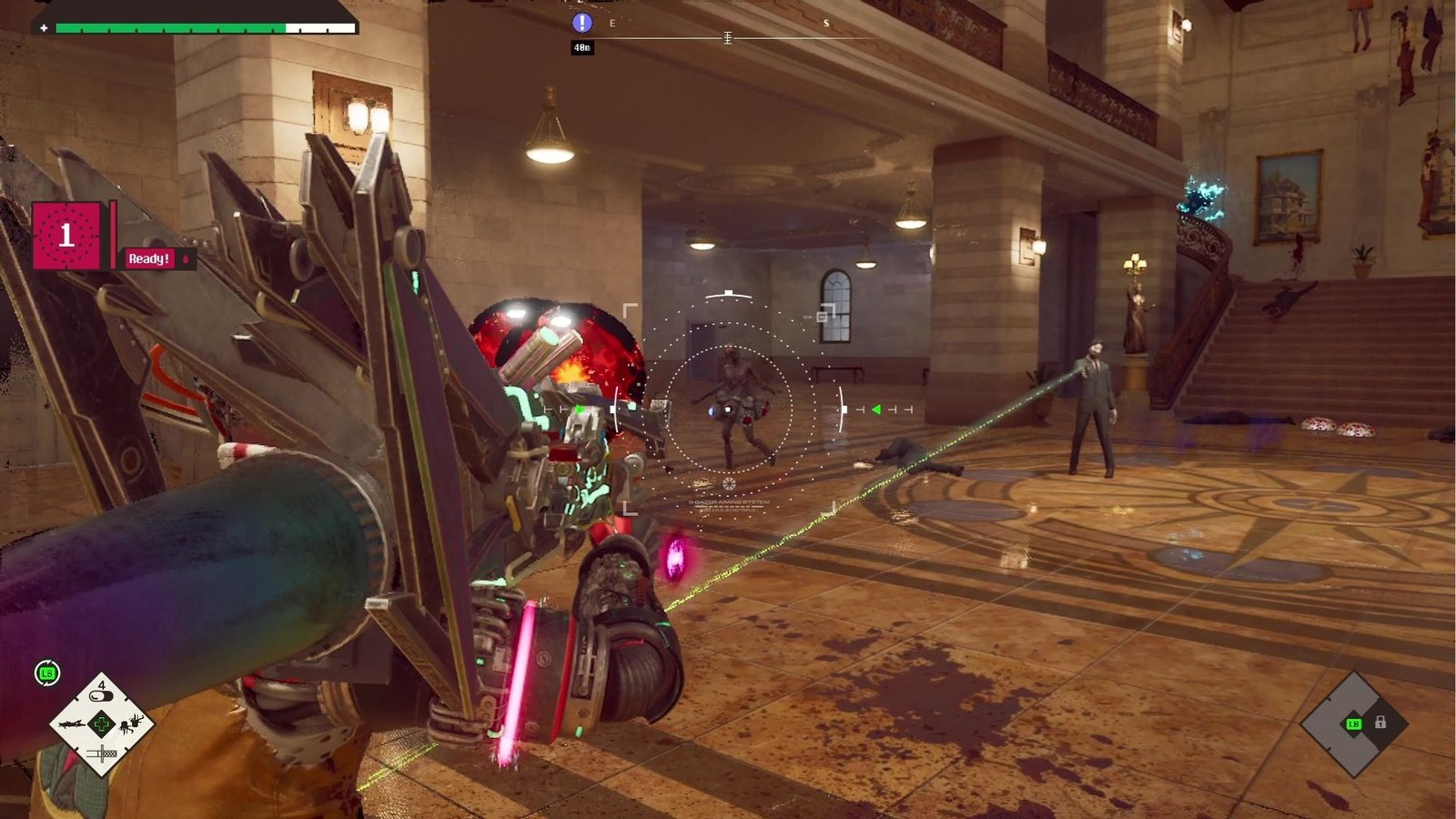
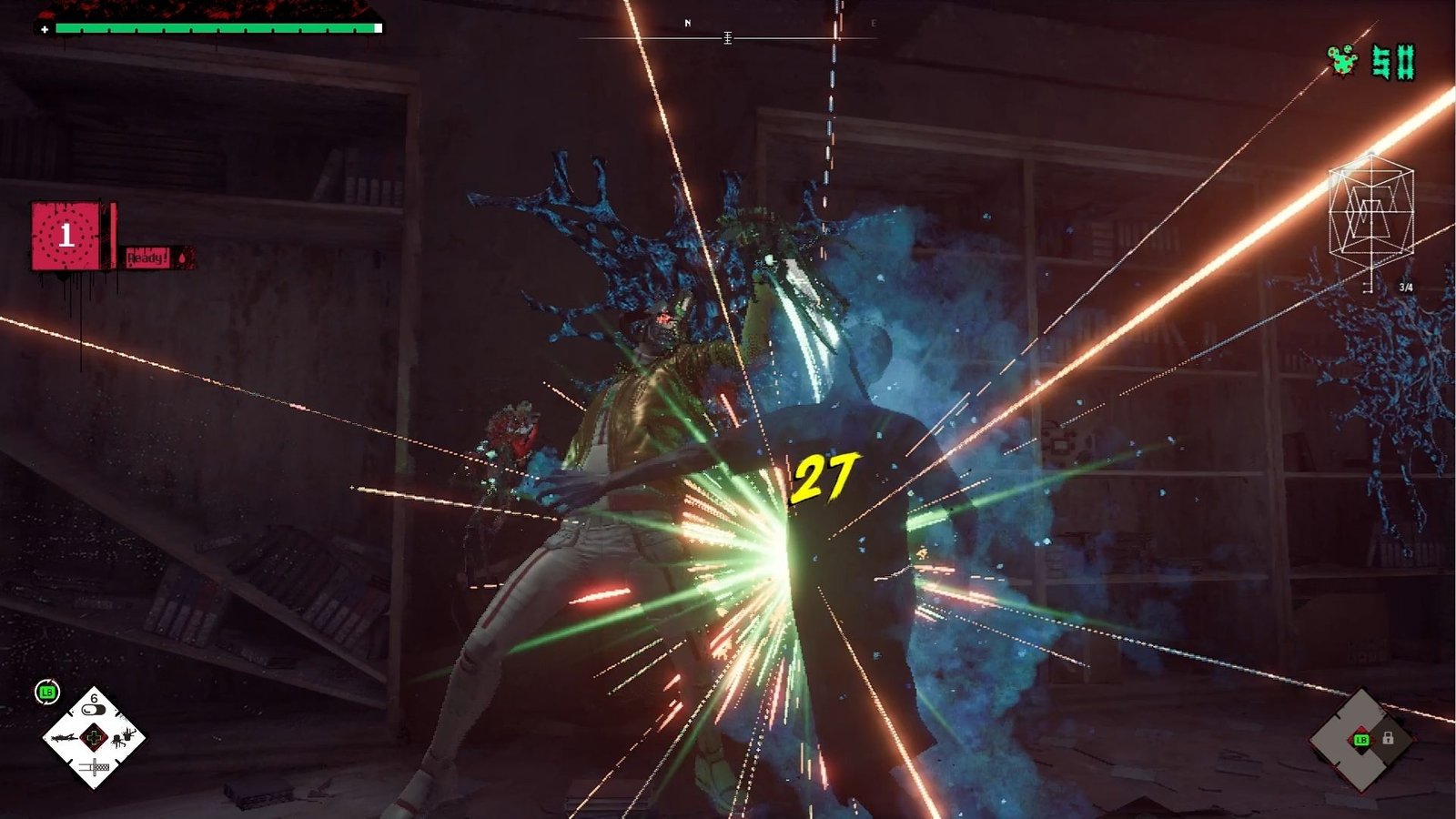
As a Hack and Slash game, once you’re in the thick of it, the game can be great (if a bit mindless) fun. Not all strategies work on all enemies, so you do need to get creative.
But equally, this game can feel like a second-rate Ninja Gaiden at times that lacks the nuance to keep you engaged long-term. That said, the combination of creature design, animation, and gory finishers makes even the easier fights entertaining.
Romeo has four melee weapons and four firearms at his disposal; you start with only one of each unlocked, but you can get all of them as early as Chapter 2. Your choice of melee weapon will define your moveset, so it is advised to play around with all of them before committing upgrade materials.
The firearms are what you’ll be swapping around the most, since their use is a bit more deliberate. The basic gun is ideal for hitting weak spots, while the shotgun is purely meant to deal with crowds; while having to swap among your options adds depth, it feels bad to upgrade one over the other.
On harder difficulties, the later fights can pack a lot of heat for a game without a block or a parry system; you can’t even animation-cancel with dodges. This is because the game expects you to use the Bastard system: zombie-like creatures you can grow like plants, each with a unique ability. The Plants Vs. Zombies parallel isn’t lost on me.
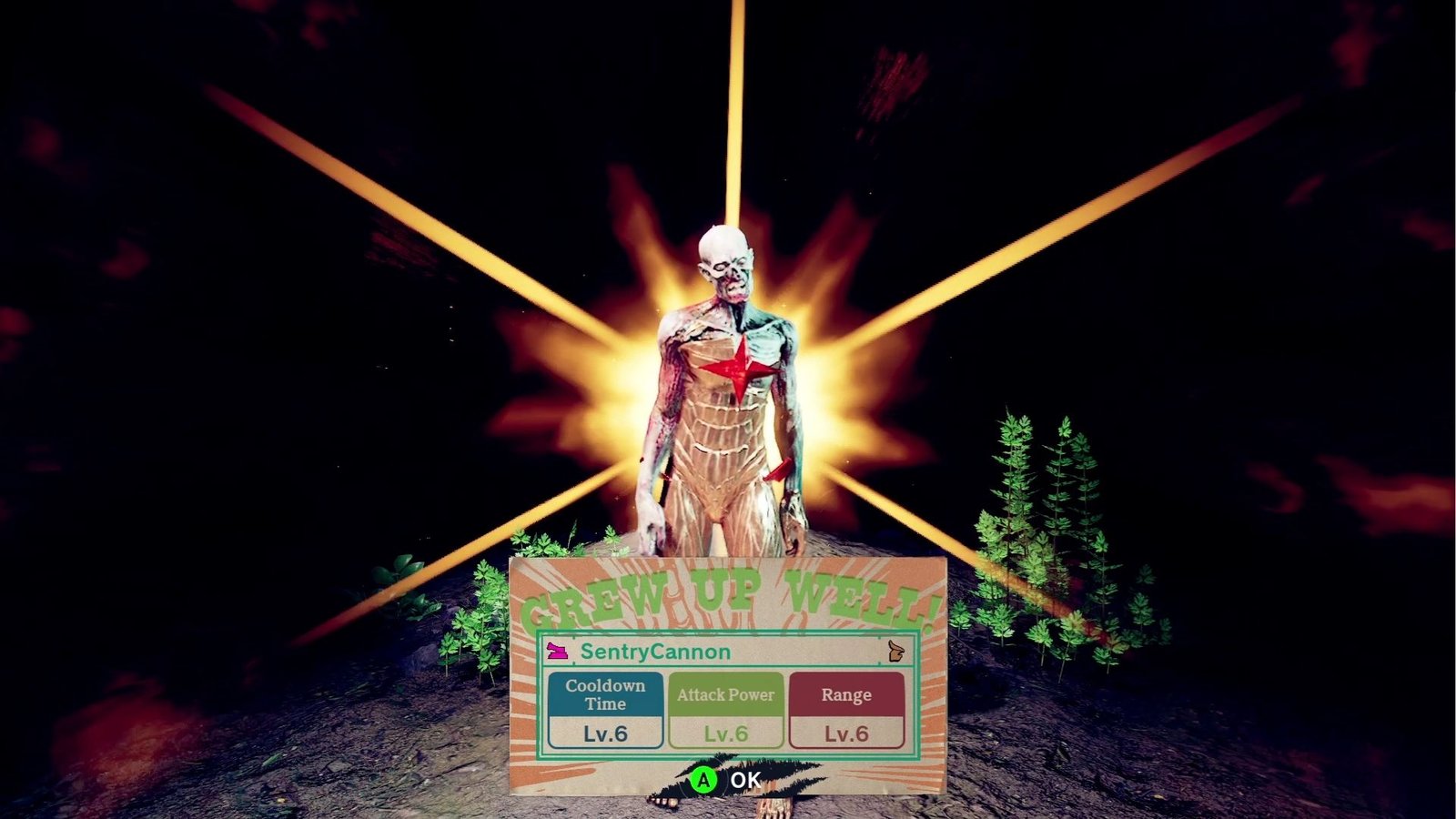
Bastards bring an extra layer of strategy, letting you freeze enemies (even bosses), add weak points or simply draw attention off of yourself. At worst, they give you time to heal, and at best, they can turn a tricky fight into a cakewalk, and it feels earned since you prepared for it.
It ends up being a great system to add build variety, if it wasn’t for how boring it gets to grow each Bastard. You need to take “Bastard seeds” enemies drop to your home base, have them appraised by Luna (Romeo’s sister), plant and wait about ten minutes, then watch a short animation of how the Bastard bursts out of the ground and gains a name.
Repeat that process hundreds of times and you’ll get the gist of it. And that’s without mentioning Bastard Fusion, where you combine two full-grown Bastards for a new and improved seed. The combination process has its own animations. You also need to do that multiple times.
There are also minigames sprinkled throughout the levels, and while I’m a fan of all they bring, even I felt the drag on my fourth time around Chapter 5’s looping corridor. Still, most of them know not to overstay their welcome, and end up bringing a nice break of pace between fighting and Subspace exploration.
Worlds Within Worlds
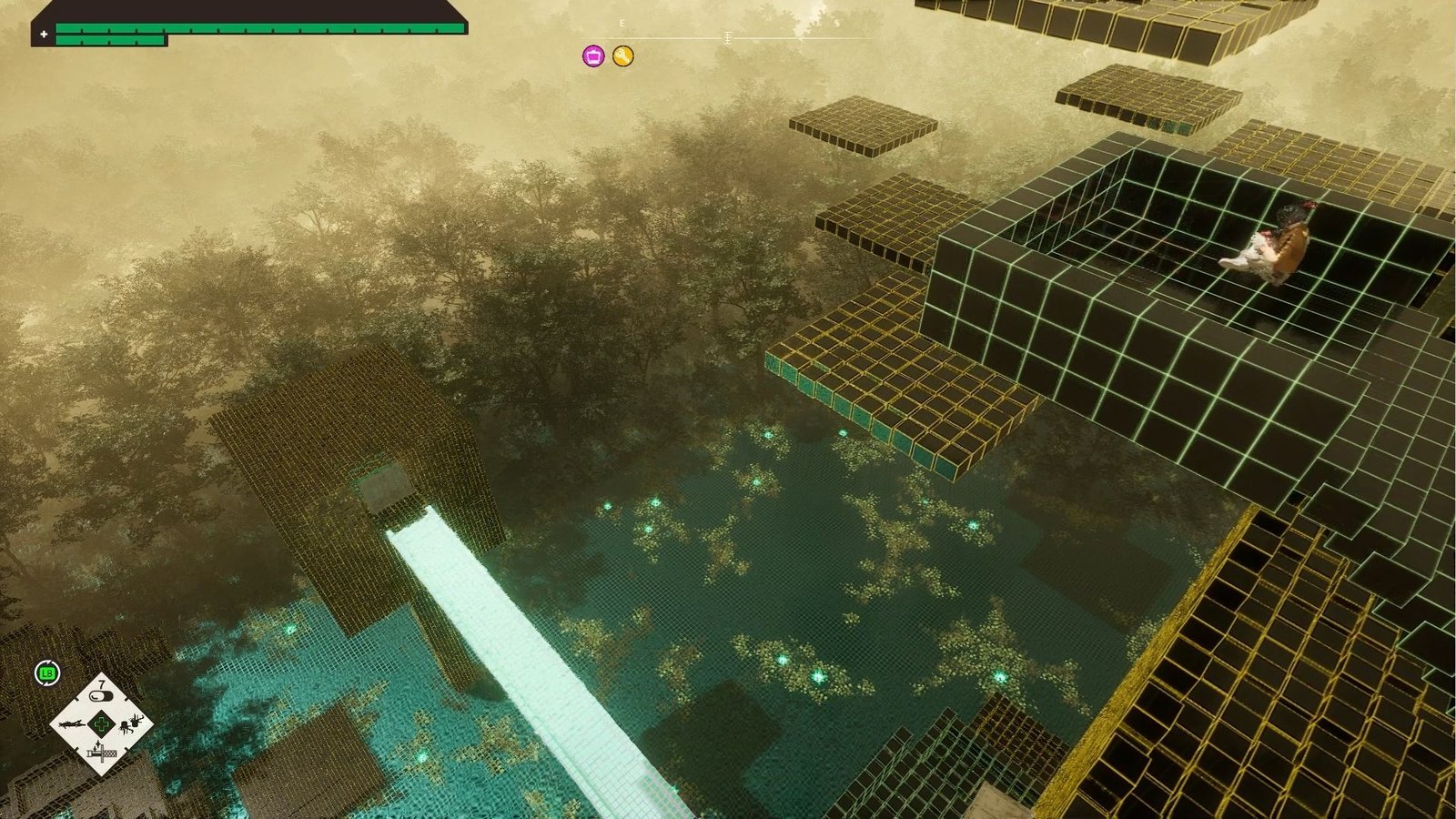
A core part of the gameplay loop is exploring the Subspace, an 80’s synth-inspired pocket dimension that you use to get around. It has no combat and minimal interactivity, so in the early Chapters it feels like a chore you have to get through in order to continue with the game.
The novelty of having a parallel universe that allows you to circumnavigate blockades in the ‘real world’ is a compelling one on paper. But the constant flitting between action and action-free, labyrinthine portions of the game can be a hard pill to swallow.
This changes drastically from Chapter 6 onward, where navigating the maze is far more involved; actually getting lost in the maze is possible, with gravity posing its own form of threat should you miss-time a jump. The best Subspace scenario is a map mimicking the real-world layout, so you’ll have to orient yourself by understanding how each room corresponds to one another.
The best part, however, is that Subspace is the main source of quotable lines, since whenever you go back-and-forth to it you have to talk to this strange guy on the TV. Not only does he drop some intense (if at times nonsensical) philosophical ideas, but he helps you know if you’re on the right track: if he says something new, you’re golden. If not, go back.
A Bizarre Take On Romeo And Juliet
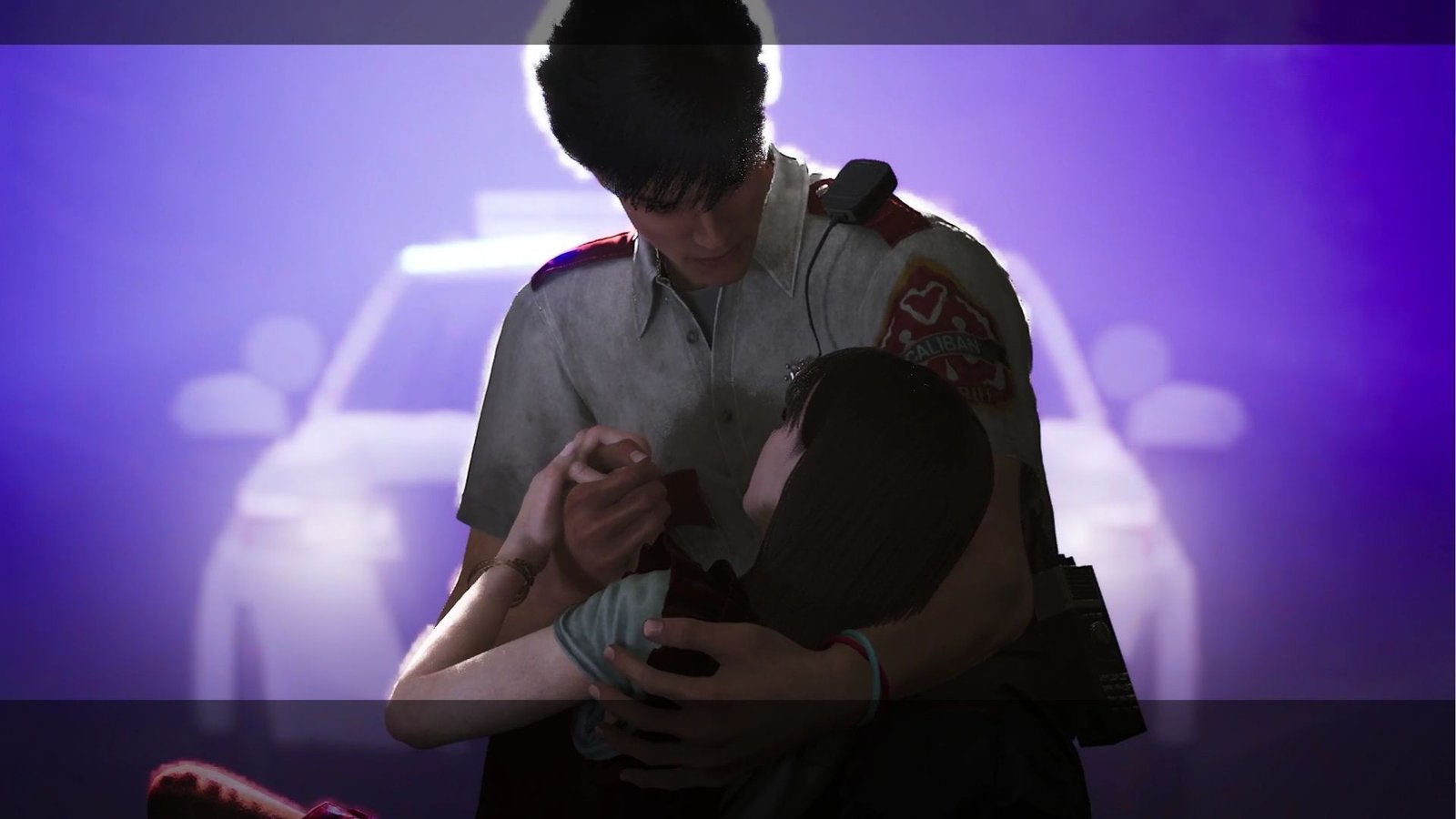
If, like me, you’re a fan of Suda51’s games, then you don’t want even the first five minutes spoiled. Trust me, go play it, it’s one of the good ones. For all the other normal human beings still reading, you probably expect the game to be a Japan-infused take on the Shakespearean classic.
And, yeah, there’s a bit of that. But it is mostly Rick & Morty, if Rick wasn’t an asshole.
You see, the story starts with Romeo’s grandfather Benjamin inventing time-travel, then communicating with several of his alternate-reality selves to save Romeo from the brink of death. Then, they have a series of adventures battling time-traveling criminals alongside the FBI.
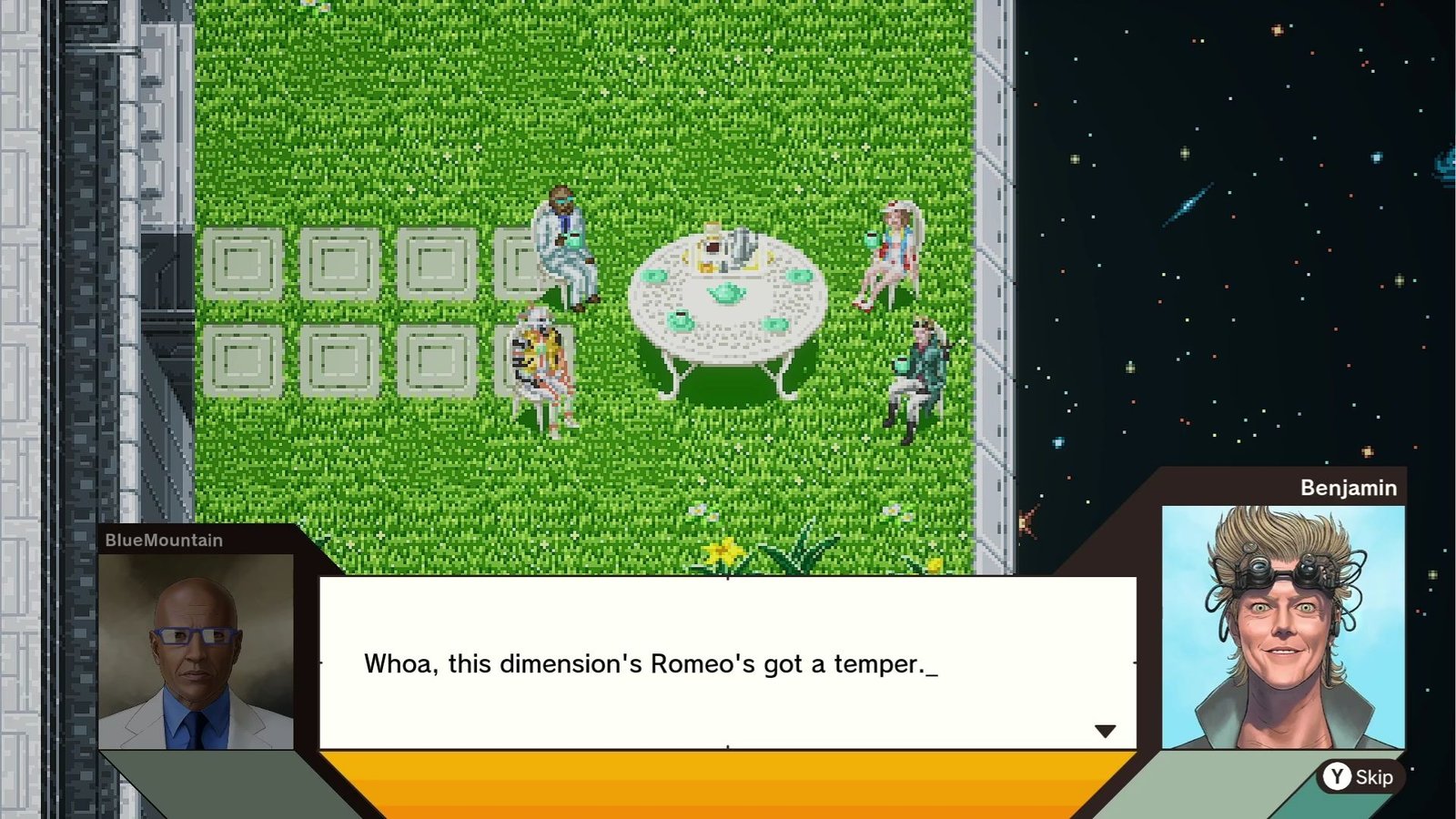
What Romeo actually wants is to find Juliet, who seems to be a time-warping anomaly that spawns in different versions across the multiverse. The crew helping Romeo have the same level of unhinged backstories/designs as the rest of the game, and interacting with all of it is where the true core of the experience lies.
The other creatures you hunt, other than Juliet, have their own themes and outlandish designs, but narrative-wise, they fail to pack a punch. While their stories might be lacking, their themes, level design, and experiences on offer turn them into my favorite stages of the game.
Romeo is a Dead Man is more of an experience than a game, a lynchian journey through space-time to have adventures worthy of Flash Gordon.
Once the credits roll, the game will have thrown enough twists and curve balls to have you spinning, but after enough plot twists, it’s hard to tell if the game is being serious or satirical. And considering everything else, it is probably both.
A Joyful Experience, But Not For Everyone
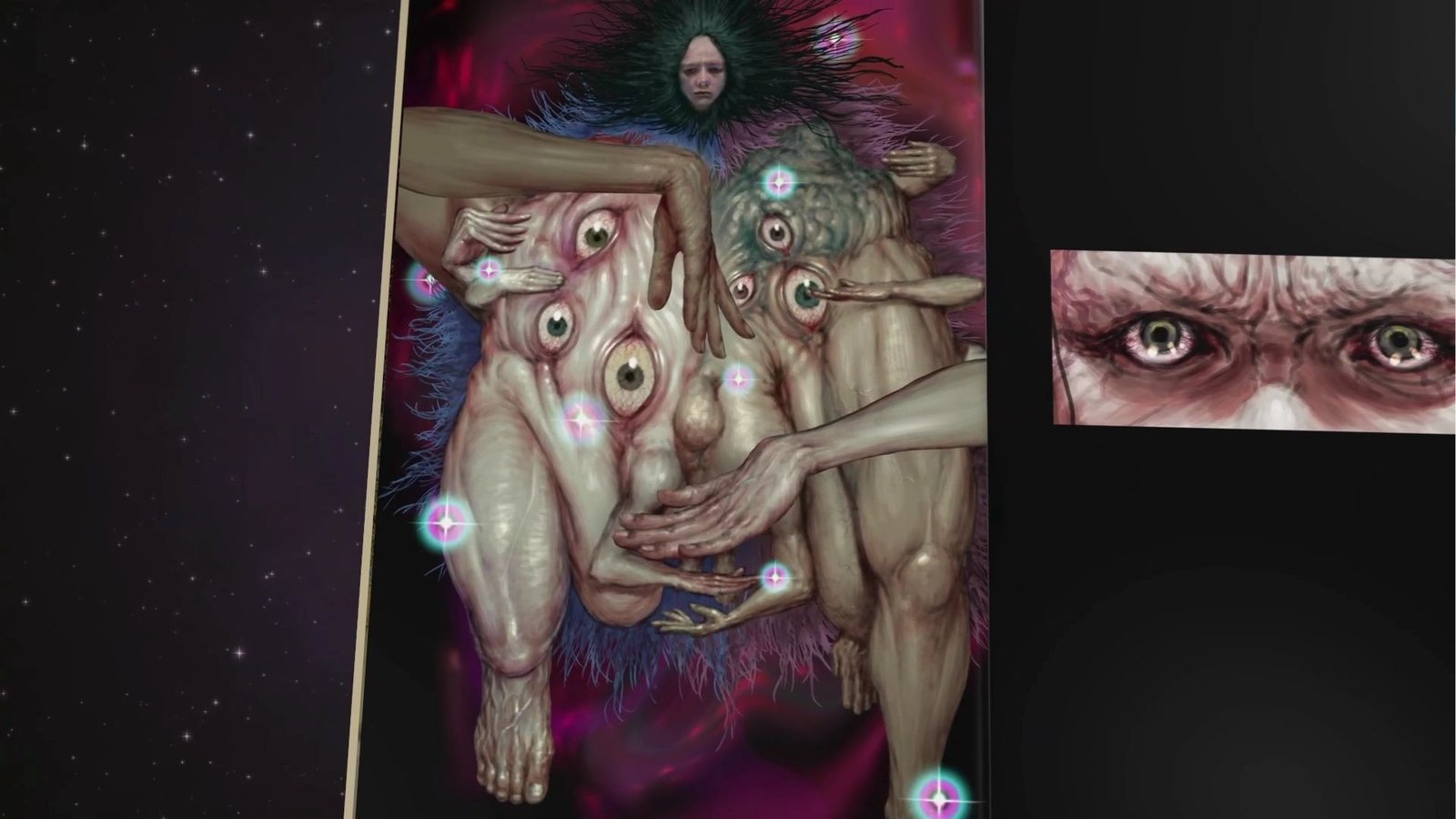
Romeo is a Dead Man is more of an experience than a game, a lynchian journey through space-time to have adventures worthy of Flash Gordon. There are games with tighter gameplay, with more thrilling narratives or with a clearer gameplay loop. But there are few games that have such an artistic intent, at least outside of the Indie scene (think Skate Story), and that aren’t afraid to look unpolished to reach their vision.
While fans of his work were happy to see Suda51 return in 2021 with No More Heroes III, it felt like he couldn’t escape the grip of his most successful franchise, and that he left his deeply narrative roots aside. He would no longer be known for his political commentary in Killer7, but for his fun, quirky Hack and Slash games like Lollipop Chainsaw.
Romeo is a Dead Man is a combination of both those Suda51 styles, while still bravely trying new things even when they don’t land. I say this isn’t for everyone, but if you’d like to play something plainly different, this is for you.
Reviewed on PC. Game code provided by the publisher.
Romeo is a Dead Man is an experience more than a game, and for anyone looking for that unique Suda51 style, it delivers. For people looking for depth in their Hack and Slash game, then the game can be lackluster, even on harder difficulties.
The Good
- Unique Style and Visuals
- Bizarre and Entertaining Story
- Accessible Gameplay
The Bad
- Lack of Combat Depth
- Unnecessarily Complicated Progression
