


Anyone who knows me, knows I have a penchant for time loop games. Groundhog day scenarios that present a grand puzzle where the only means of progression is through comprehension, gathering intel, and adapting that learned knowledge into a practical solution.
Rivage is another game of this ilk, placing you in the shoes of the last remaining member of a crew orbiting a newfound habitable planet called Vesta. It’s not clear where your colleagues went, or why you’re perpetually looping through the same day. But, finding out is part of the fun.
It’s an ambitious format, and one that promises a pocket-sized space station with densely packed areas, and details in abundance. But, is this puzzler out of this world, or does the loop drive you loopy?
In Space, No One Can Hear You Problem-Solve

I’ll be honest and say that I knew very little about Rivage going in, other than it posing an interesting space-based setting full of puzzles. However, in the space of one 15-minute period, I had gotten a full picture of what this game was shooting for.
It’s a game that feels like a lovechild of Tacoma and Outer Wilds. Placing you in a world rich in detail, and oodles of clutter to pick up and examine. Aiming to largely hold your attention not because of what is happening in front of you, but rather, what has existed before you took control.
It’s a game that feels like a lovechild of Tacoma and Outer Wilds.
When it comes to the two inspirations mentioned, Tacoma is the game Rivage emulates when it comes to storytelling, and the one it emulates best. Ushering the player into the circumstance and politics of the A.R.E.S. space station through data logs, emails, audio recordings and items that you can twirl around in your hand, if you just so happen to want to read the nutritional content of a candy bar.
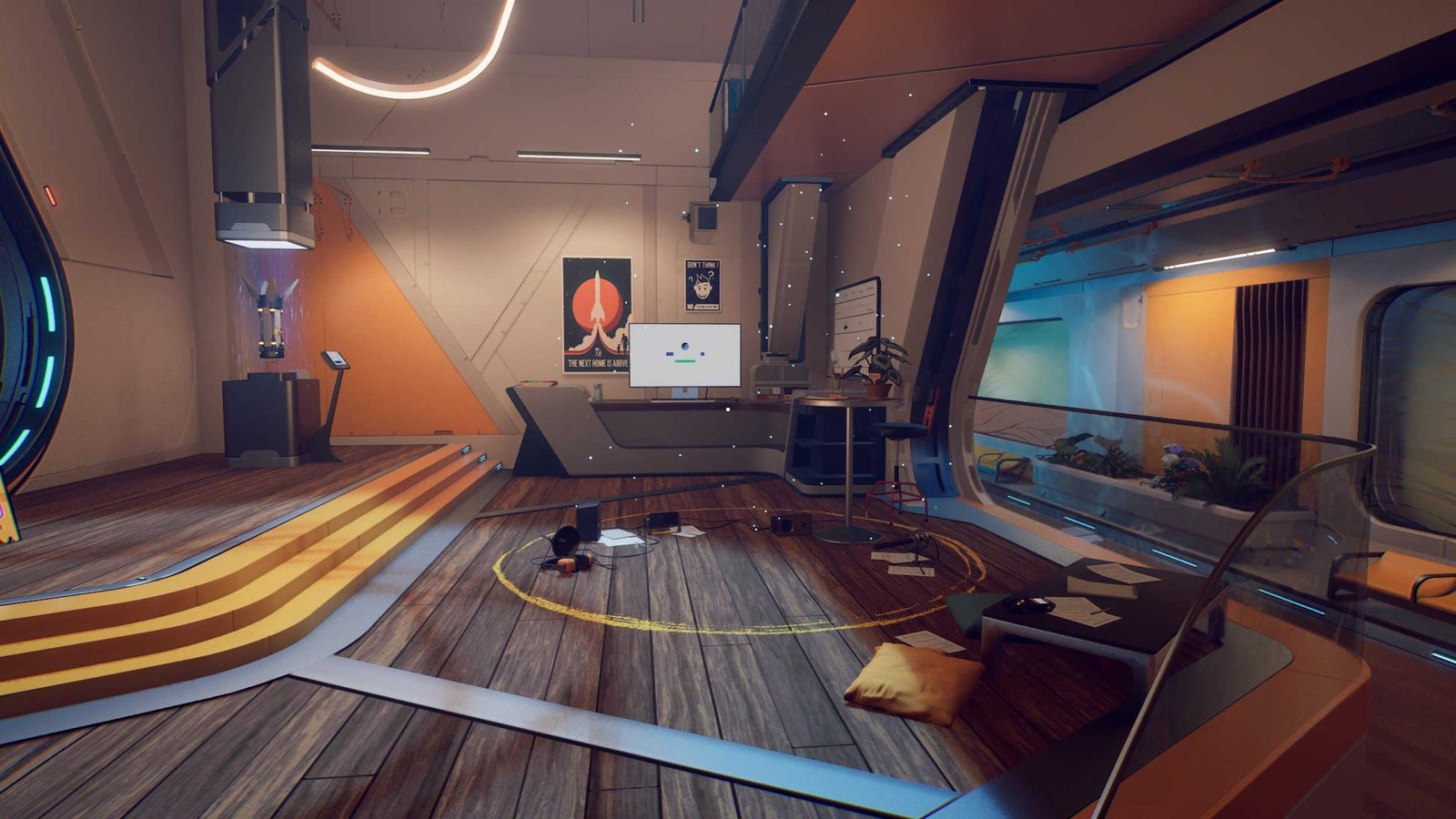
Not everything is important, but everything helps build a believable, eerie, and engrossing space to explore. Which helps when you end up exploring the same spaces over and over due to the looping mechanic.
But above all, I love how non-negotiable engagement is with the world. It’s perhaps a ‘me’ problem. But I know that if the game invites me to read lore, snippets and additional information. At best I will skim, and more likely, I will ignore it entirely, like a stubborn man building flat pack furniture without instructions.
That’s simply not an option in Rivage, as the entire space station you inhabit is the puzzle. Minor items, scraps of paper, and little oddities could be breadcrumbs leading you to your next discovery. To only engage with the obvious is to limit your progression in this puzzler, and as a result, you truly do feel immersed in the world, and the lives of the people who called it home.
That said, at the end of the day, this is a puzzle game. So, really, it can only be as good of an experience as the puzzles allow.
Same S**t, Different Day
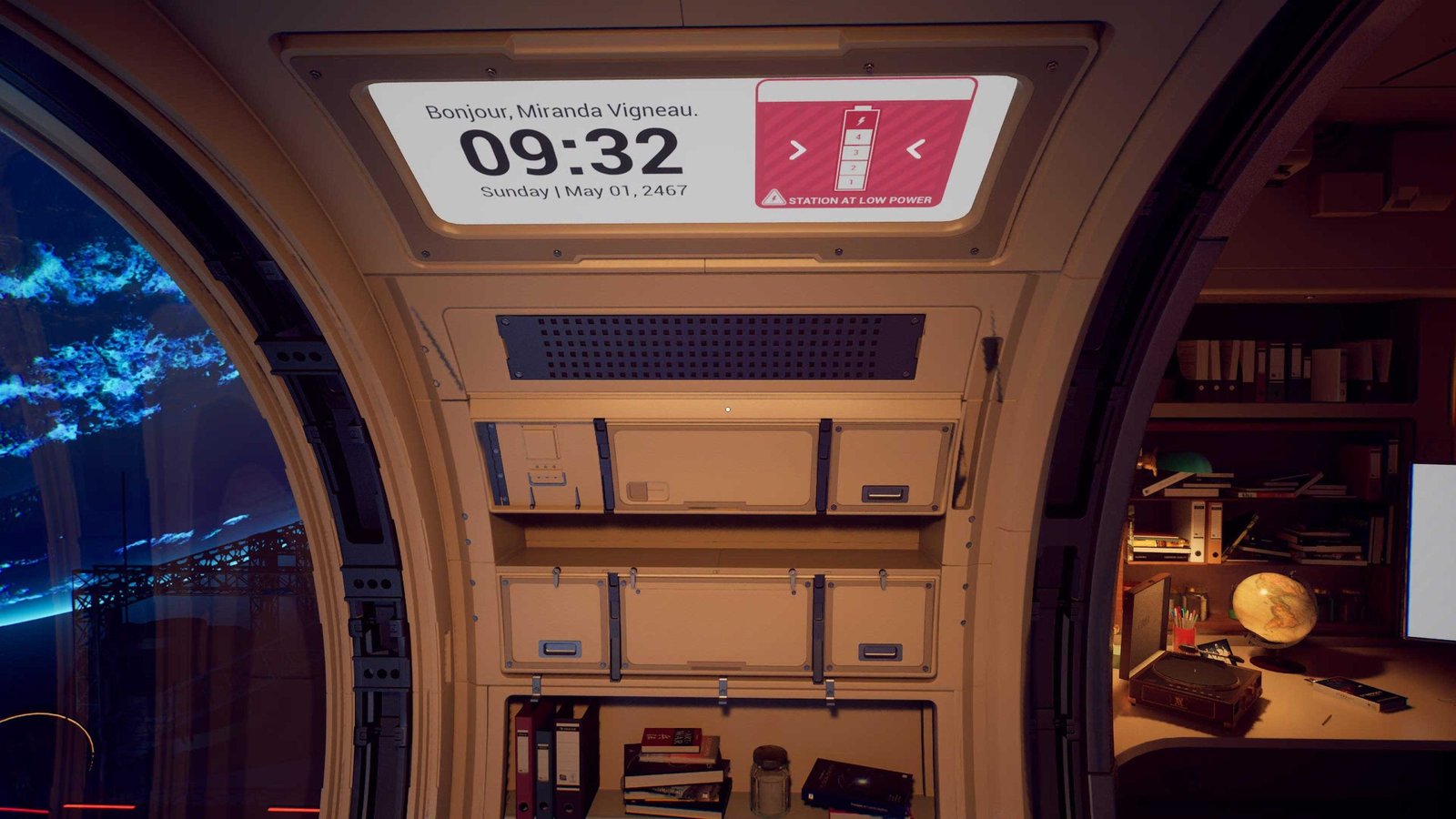
Firstly, let’s get into the looping aspect of Rivage. Something I was initially delighted to stumble upon, as it wasn’t immediately clear this was a groundhog day scenario until I found myself waking up once again at 9:32am and watching the little Roomba track the same path down the hall.
However, it became pretty clear to me that, aside from the narrative reasons why this loop was in place, there was little reason for this mechanic to be in place at all.
In my humble opinion, a good time loop is there to allow to experiment, dive into the ‘what ifs’ and gives you the freedom to get the most out of every individual loop, ideally exhausting the time you have before you are ushered into the next loop.
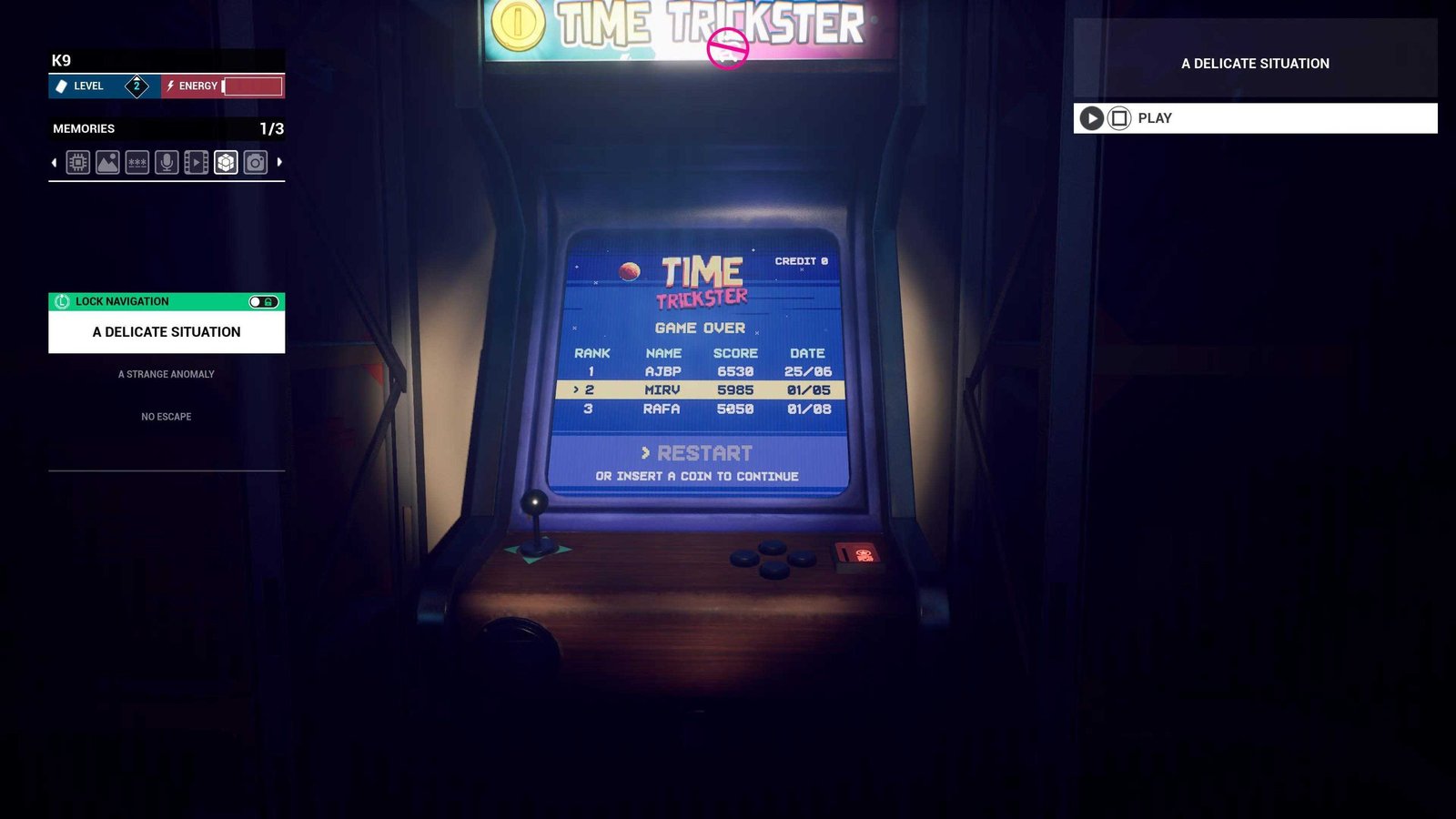
Rivage on the other hand presents a time loop that serves as a constant hurdle to the player. Where you will perform actions that drain the power of the space station, at which point you have little choice but to loop around and go again. I’m deeply against loops that present dead ends, and Rivage is a maze where every other turn leads to nowhere.
On so many occasions you are presented with scenarios where you can only find the pieces of the puzzle you need if you loop to find them, take note of them, loop back, and then use that info in a new area of the ship. Making the time loop less of a fun mechanic to play around with, and instead, a constant burden you need to endure.
A rewind feature could have significantly eased this burden, or honestly, removing the looping mechanic wouldn’t have bugged me at all. I’m a sucker for a time loop, but this one left a lot to be desired, and it probably would have been a better experience as a standard puzzler.
Biting Pieces To Make Them Fit
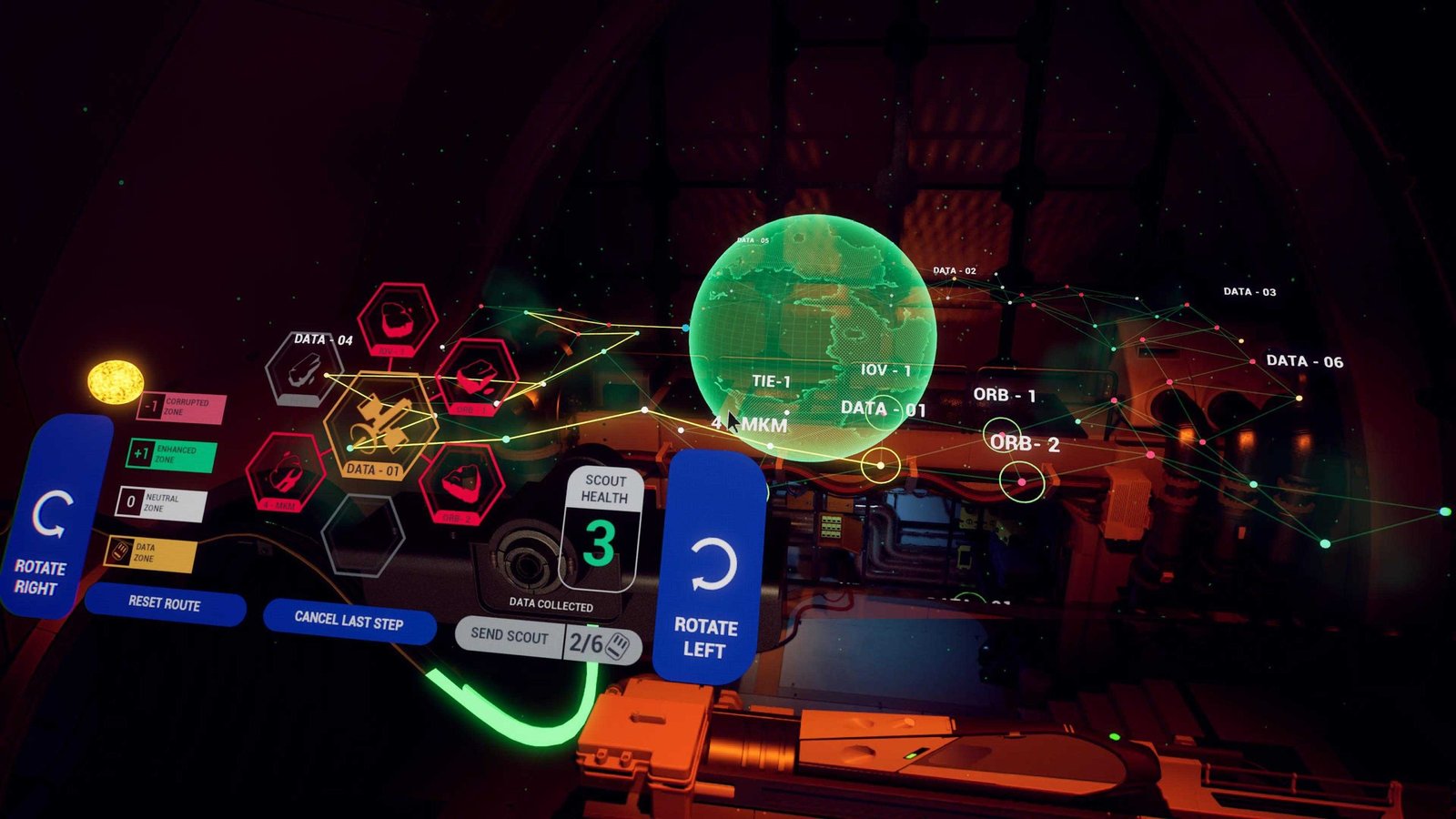
Which brings me to the puzzles themselves. I’ve already mentioned that it was rather annoying to gather the clues to eventually progress a puzzle and get that coveted eureka moment. But, there’s more pain points to endure than just a padded out sequence unfortunately.
The puzzles themselves are range from simple comprehension, as you read notes, retain codes and keywords, and then use them to unlock new containers, lockers, and doorways to new areas. Or, as is more often the case, obtuse, awkward puzzles where you obtain the solution long before you can actually solve the puzzle, as inputs are too specific, or you need to brute force your way through.
Whether that was down to inputting super specific codes or words that needed the exact spelling and punctuation, leading me to believe that my logic was wrong when it wasn’t. Or down to puzzles that relied less on logic, and more on trial and error. The takeaway was that due to the presentation of some puzzles, that moment of satisfaction never came, only to be replaced with a feeling of relief.
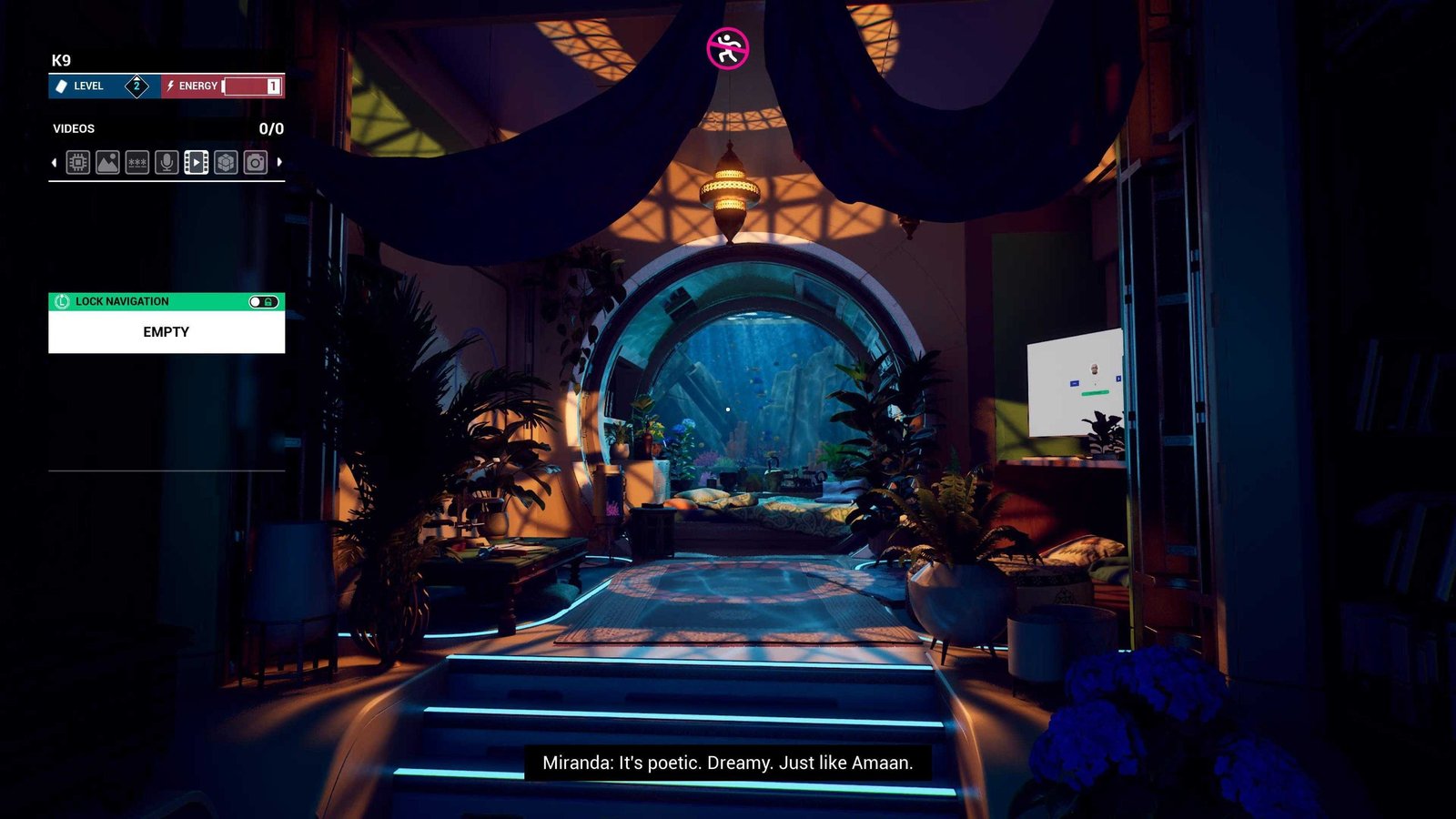
That’s not to say that a lot of the puzzles aren’t interesting conceptually, because some of them truly are. But almost all the puzzles presented are dragged down by their execution. At the end of the day, this is a Metroidbrainia, where knowledge is the key. But, I found it staggering just how many times I had the knowledge, only to run into unnecessary hurdles.
Gone Home, Outer Wilds, Killer Frequency, the aforementioned Tacoma. These all use this format to great effect, and offer smaller puzzles that all come together to form something bigger in a seamless and satisfying way. Rivage by comparison reaches the finish line running the same race as these games, but not without suffering a few injuries along the way.
Innovative Interface Issues
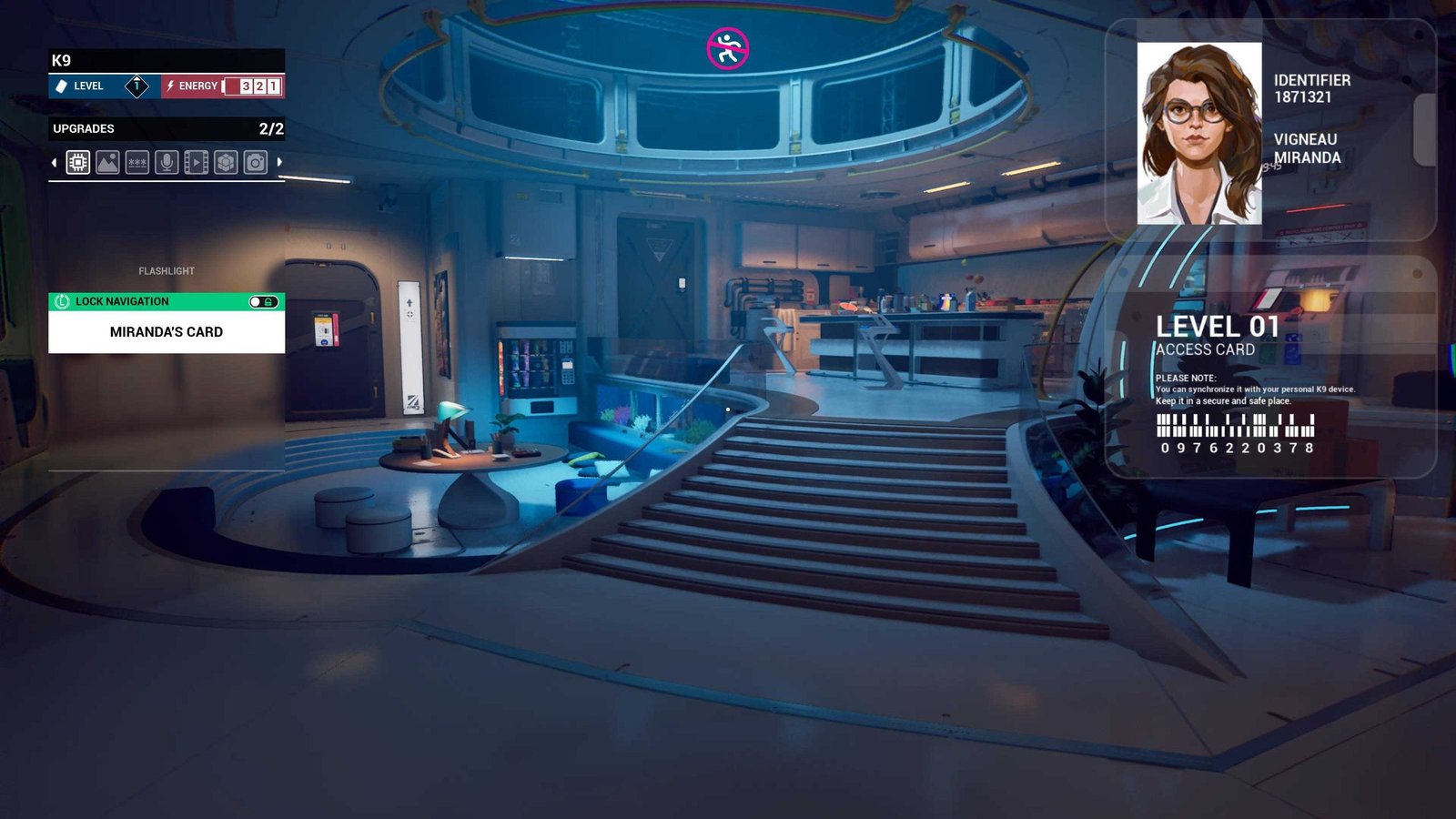
Speaking of seamless, I do have to commend Rivage for what it tries to do in terms of UI design. I say ‘tries’ because while it often feels great to use, there are plenty of times when it falters.
This relates to the games K9 unit, your AI tool you can use to shine a flashlight, take in-game screenshots you can pull up with ease. Plus, where you can also access notes, audio recordings and much more.
Ultimately, what this aims to do, is replace the need for menus entirely, as everything is interactable, and can be read with your standard POV. Which, as mentioned, is great when it works, but due to some puzzle design, can be annoying to rely on.
For example, you may take a screenshot of something like a fine print code. Which you need to input elsewhere, only to get to that point, be unable to zoom in on the screenshot as much as you need, and then be forced to loop around again, and take a manual screenshot or a physical note. Beating the purpose of this streamlined UI in the first place.
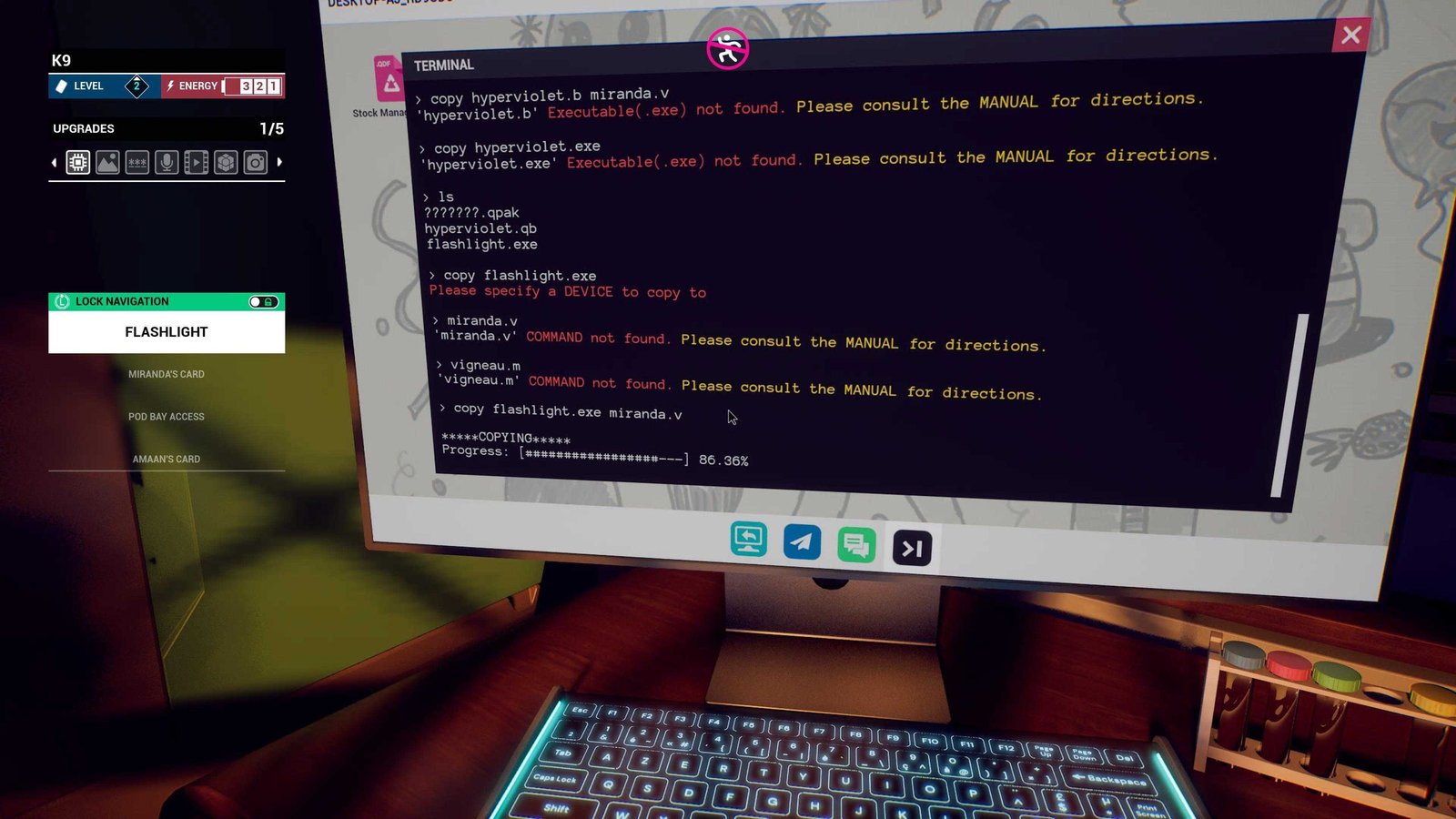
Not to mention, it’s very clear that this game was designed for PC, and then haphazardly jury-rigged to suit console. As a lot of the inputs for flicking through pages of the K9 overlap with in-world functions. Meaning you need to constantly wrestle with the K9 to maintain the info you need on screen while actually physically solving the puzzle.
The puzzles in a lot of cases were already rather uninteresting, long-winded and easily solved. So, adding artificial difficulty through basic inputs really doesn’t help the player warm to the experience and give the game the benefit of the doubt.
Code provided by publisher, reviewed on PS5
Rivage is an ambitious groundhog day puzzler that presents a compelling mystery, and rewards those that dig deep into the finer details. However, despite some good world building, and interesting ideas. The puzzles aren't all that satisfying to engage with, the UI feels cumbersome to work with, and the timeloop format feels like an unnecessary burden at times.
Pros
- Great visual and audio design
- Impressive writing & world-building
Cons
- Cumbersome UI, especially on console
- Awkward and irritating puzzle design
- A timeloop that adds little to the experience
