

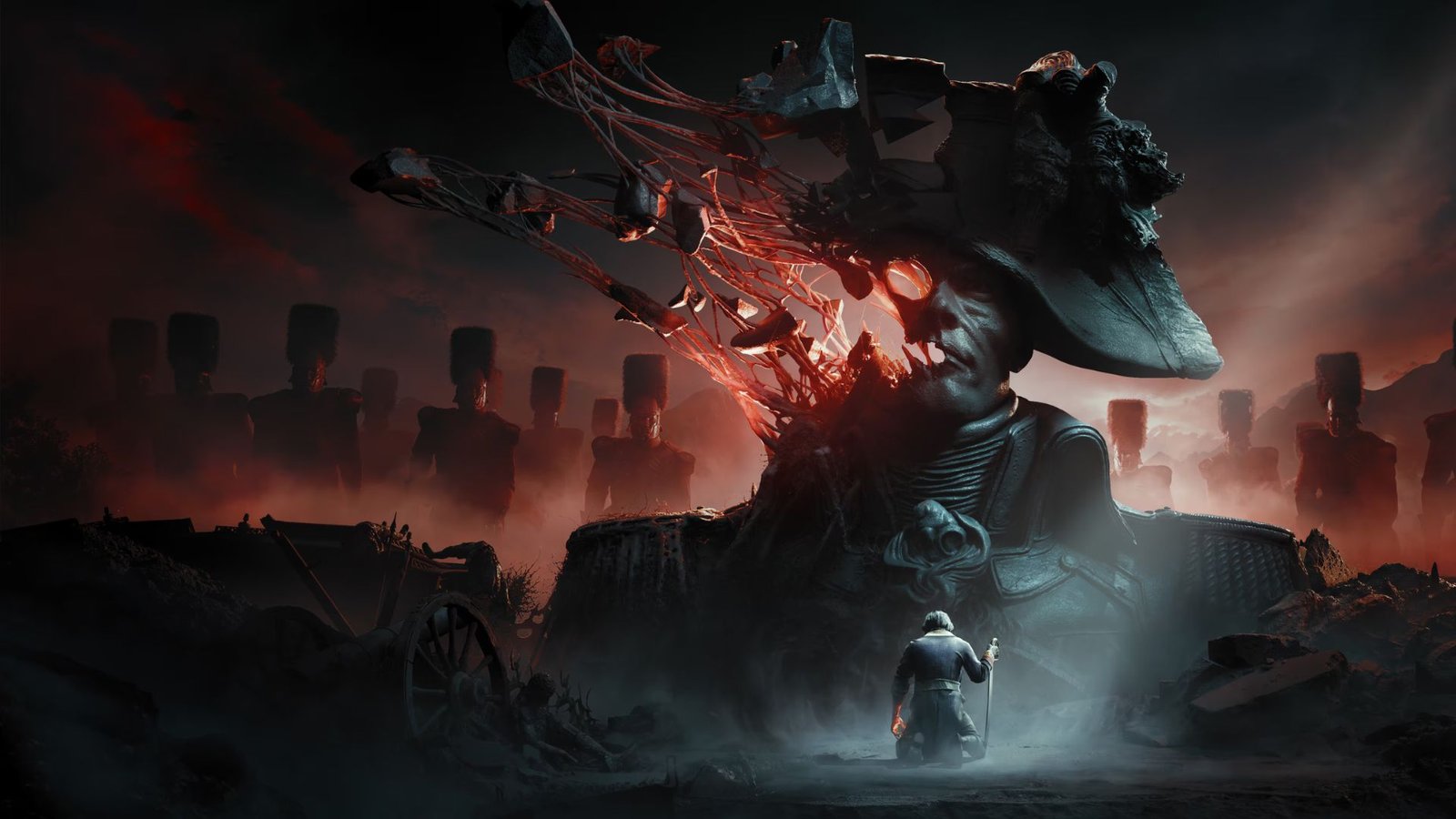
There comes a time when every breakout sub-genre becomes so mainstream and saturated that even the copycat games start to consistently deliver top-tier entertainment. That’s the period we are living through right now as Soulslike epics come thick and fast.
However, despite the consistent quality, it would be hard to make a case that the Soulslikes of late have been truly unique. Many have recreated the FromSoftware blueprint, but few games have ripped up the script and tried something undeniably new.
Valor Mortis is the exception, aiming to blend the smooth parkour action of the developer’s flagship series, Ghostrunner, with Soulslike principles. It’s a bold move, and one that seems audacious to say the least. But, against the odds, Valor Mortis, despite some clear flaws, is one of the most unique Soulslikes we have played in years.
Vive La Révolution
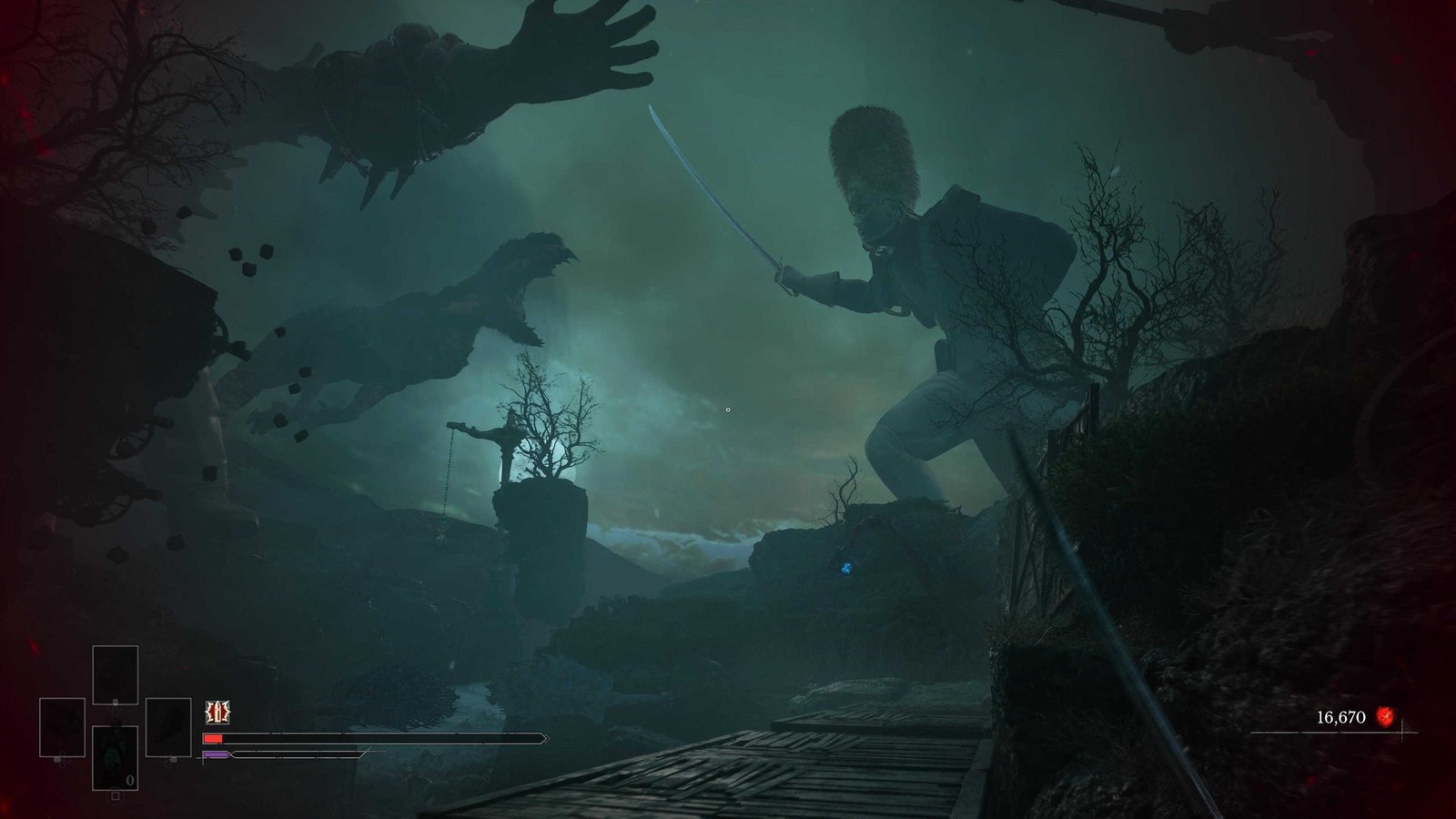
One of the things that caught my eye most about Valor Mortis beyond the obvious first-person switch-up was the setting and narrative concept. You play as William, a soldier of Napoleon Bonaparte’s army fighting against the rebels, but there’s a twist.
It seems someone or something has been dabbling in some dark, twisted and crude science, and some sort of plague has corrupted the fleet of soldiers, forcing you to battle through hordes of undead, grotesque, mutated brutes to find out just how the powers that be have somehow upped the ante on the brutalities of war.
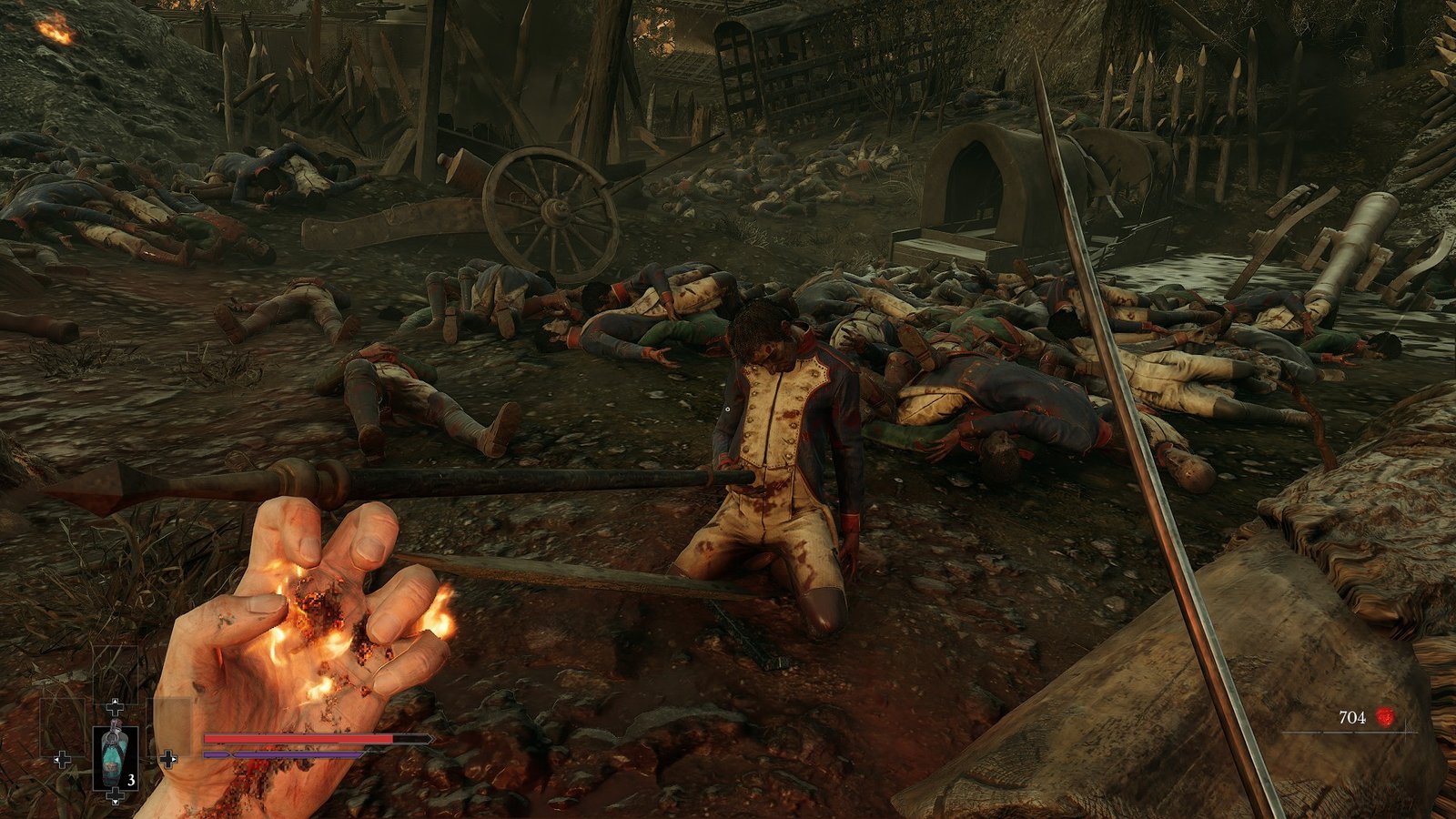
I maintain that it’s a solid and immediately interesting angle. But the problem is that once the game has you on the hook, it takes what feels like an age to offer you any more depth or nuance. You’ll work your way through half of the game’s chapters before you truly get to the juicy meat on the bone, which is the relationship between Napoleon and the enigmatic figure, The Shrike. Played by Jennifer English who shines brightest in what is a very competent vocal cast.
What struck me about this story the entire way through is that it relies on the gameplay to do the heavy lifting a little too much. Which is a shame, as the writing and what’s present of the story that is being told is strong; it’s just a little threadbare. It dangles the carrot for a little too long, and it’s very easy to lose interest in what’s going on before you actually get to any sort of intriguing revelation.
The good news is that the setting and the concept give birth to some very satisfying and diverse level design. The various areas you explore are beautifully bleak, and the quest design woven throughout offers little departures from the grand goal that are surprisingly gripping, albeit very short and sweet. I will concede that the later levels feel a little labyrinthine which makes backtracking feel like a bit of a chore, especially without a dedicated map of each area. But nonetheless, the game succeeds in translating traditional Souls interconnected map design to a first-person format.
I just wish there was a little more substance to the narrative early on besides ‘go here, fight this thing.’ There’s scope for this to be a whole lot more, but it’s clear that the gameplay is where all the big swings were taken.
En Garde Souls
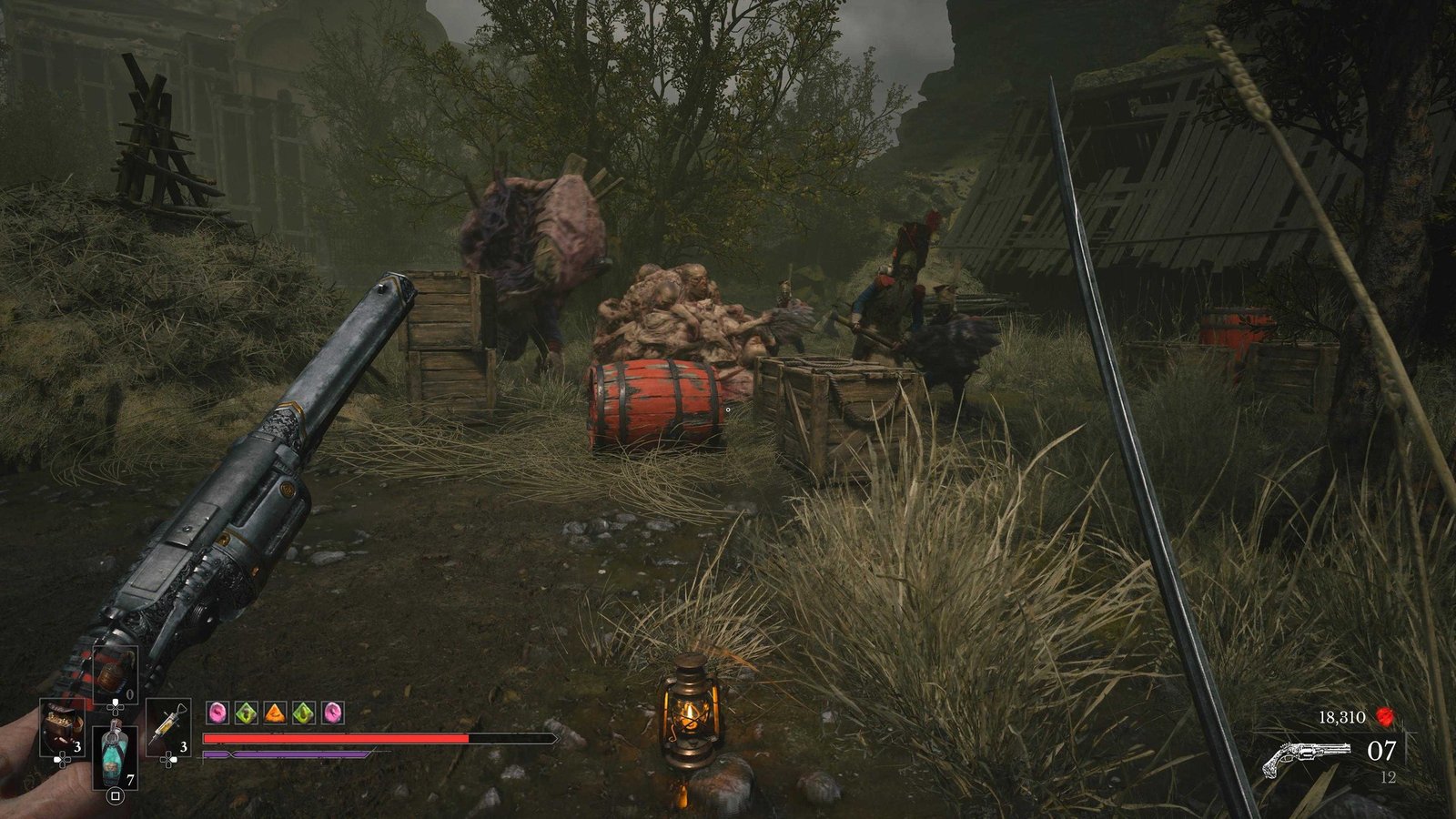
The elevator pitch for Valor Mortis is essentially ‘what if a Soulslike was first person’. But the scope of this game goes far beyond merely changing the player’s point of view. Valor Mortis blends a number of mechanics from various video game greats to create a selection box of Soulslike treats for everyone to enjoy.
You have tight swordplay and parrying mechanics, as well as tight platforming that Ghostrunner was so beloved for. You have powers akin to plasmids made famous by a little game called BioShock. You have tight gunplay that feels as responsive and weighty as most modern shooters out there. But above all, you have Soulslike staples baked into the experience that make this an action-heavy game that pulls no punches.
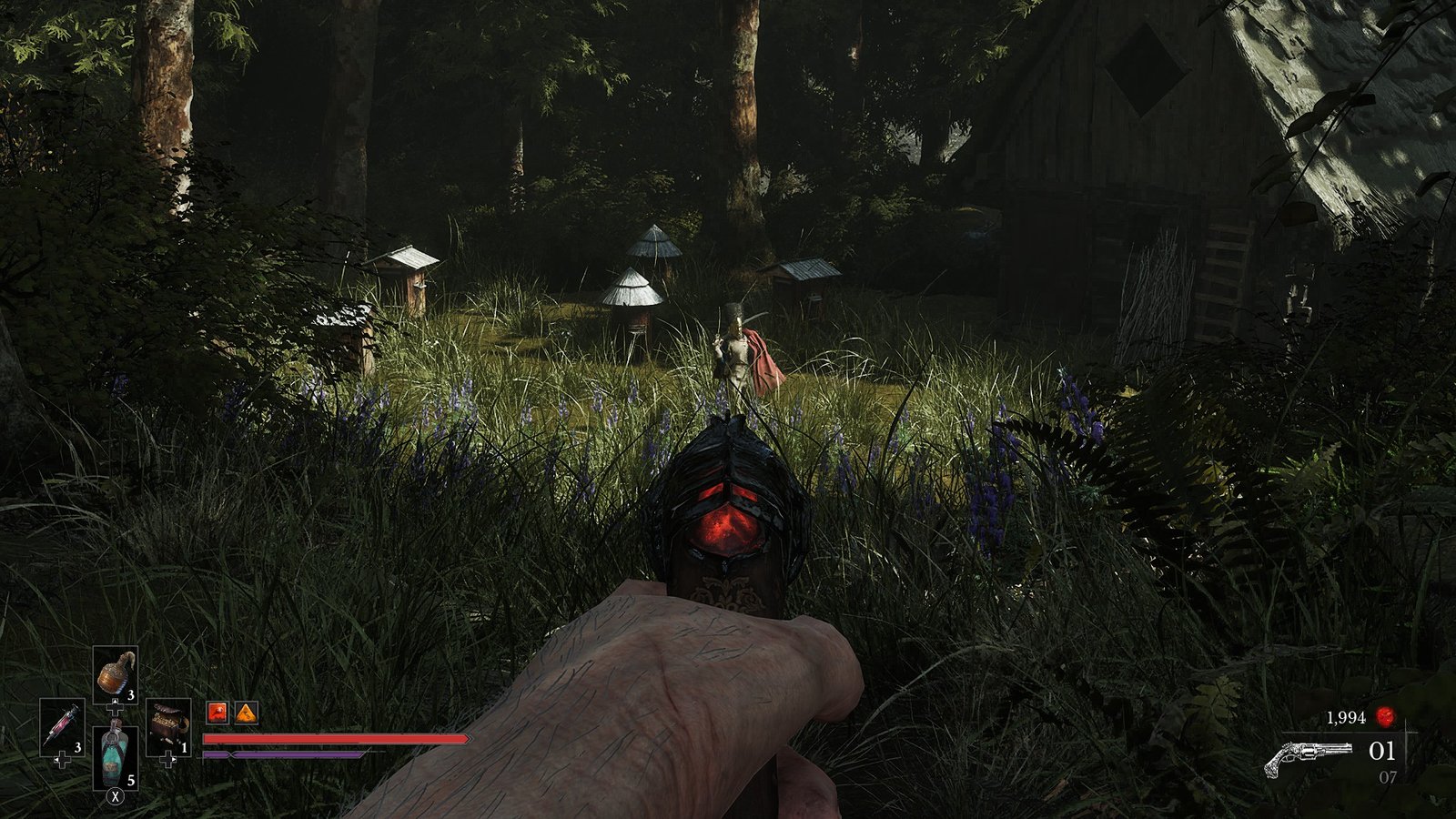
From the moment you are dropped into the battlefield to wade through the bodies of your fellow soldiers, you get a sense of catharsis with each perfect parry, headshot, or leaping slice from the heavens on an unsuspecting enemy. Culminating in an experience that really races out of the traps and makes a fine first impression.
The early chapters are a joy as you enjoy phenomenally tight level design with typical Souls shortcuts to connect the areas seamlessly, and you’ll also pick up new skills and weapons along the way that keep things feeling fresh as your arsenal grows.
All the while, you’ll be encouraged to return to earlier chapters with newfound skills and abilities akin to a Metroidvania, encouraging thorough exploration.
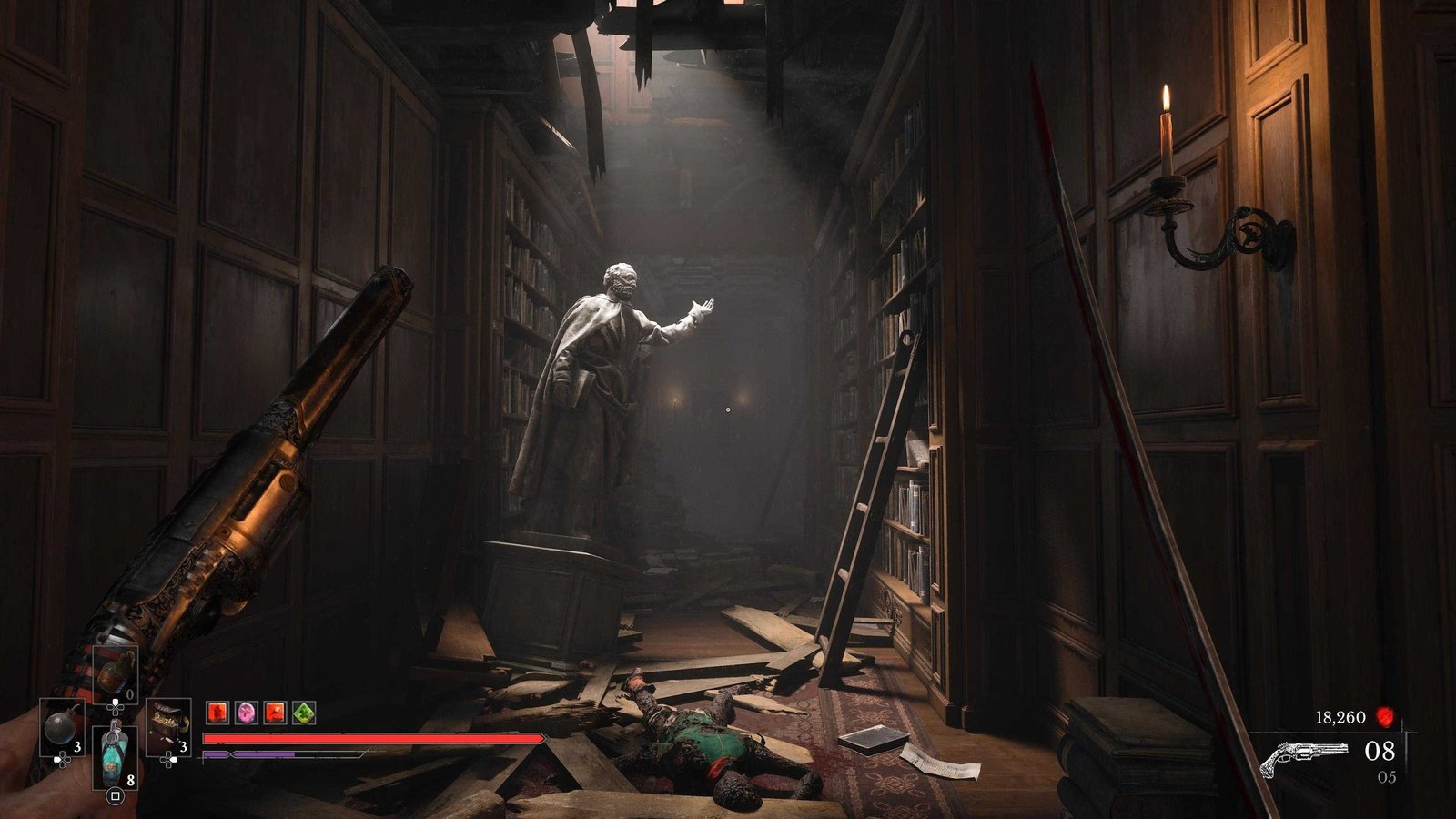
This is all to say that, when this game shines, it really shines bright. It feels like a breath of fresh air within the saturated Souls space. It delivers countless moments of combat catharsis as you blend shots, sword slashes, and spells seamlessly. Plus, there’s just something deeply immersive and visceral about the in-your-face first-person style.
It’s very easy to love Valor Mortis for taking these big swings. But even with a lot of those swings leading to home runs, there are more than a few times where the game strikes out, largely by getting in its own way.
The Horrors Of War
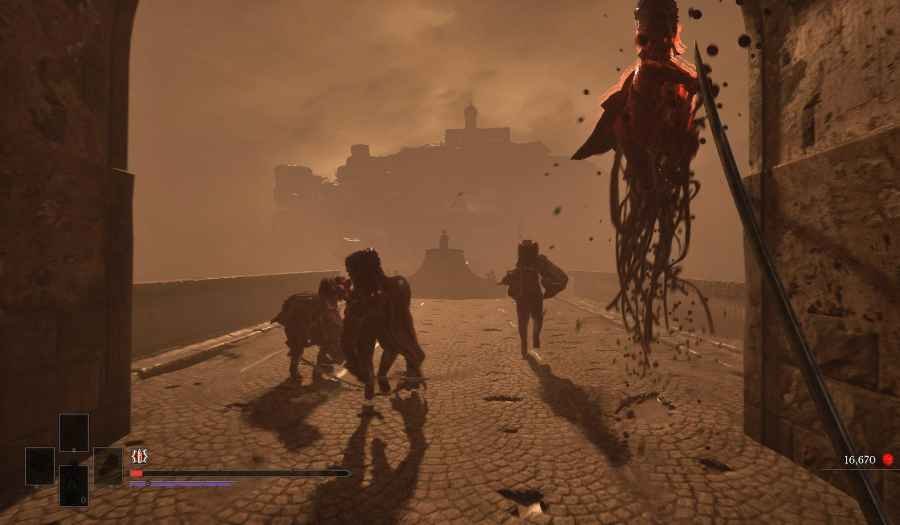
With all my heart, I want to champion Valor Mortis for doing something unique and interesting in the space. But it’s very hard to call this game the complete package, as there are so many times when the game’s core design choices only serve to frustrate the player.
It’s clear almost immediately that the game is at its best when you are tasked with fighting one-on-one, getting the most out of the commendable swordplay. Then, when in large open spaces, gunplay is the best way to throw multiple enemies at the player. So, with that in mind, it’s staggering how often you are chucked into scenarios where you’re in tight spaces with multiple enemies, penned into corners, and cheaply killed.
In fact, one particular room filled with Howlers (the obligatory souls dog enemy) within The University was so egregiously bad that it made me wonder if anyone within the development team had played that section. I’m all for a challenge, but when panicked movement, exploiting the AI, and luck are valued more than skilled gameplay, that’s where I draw the line.
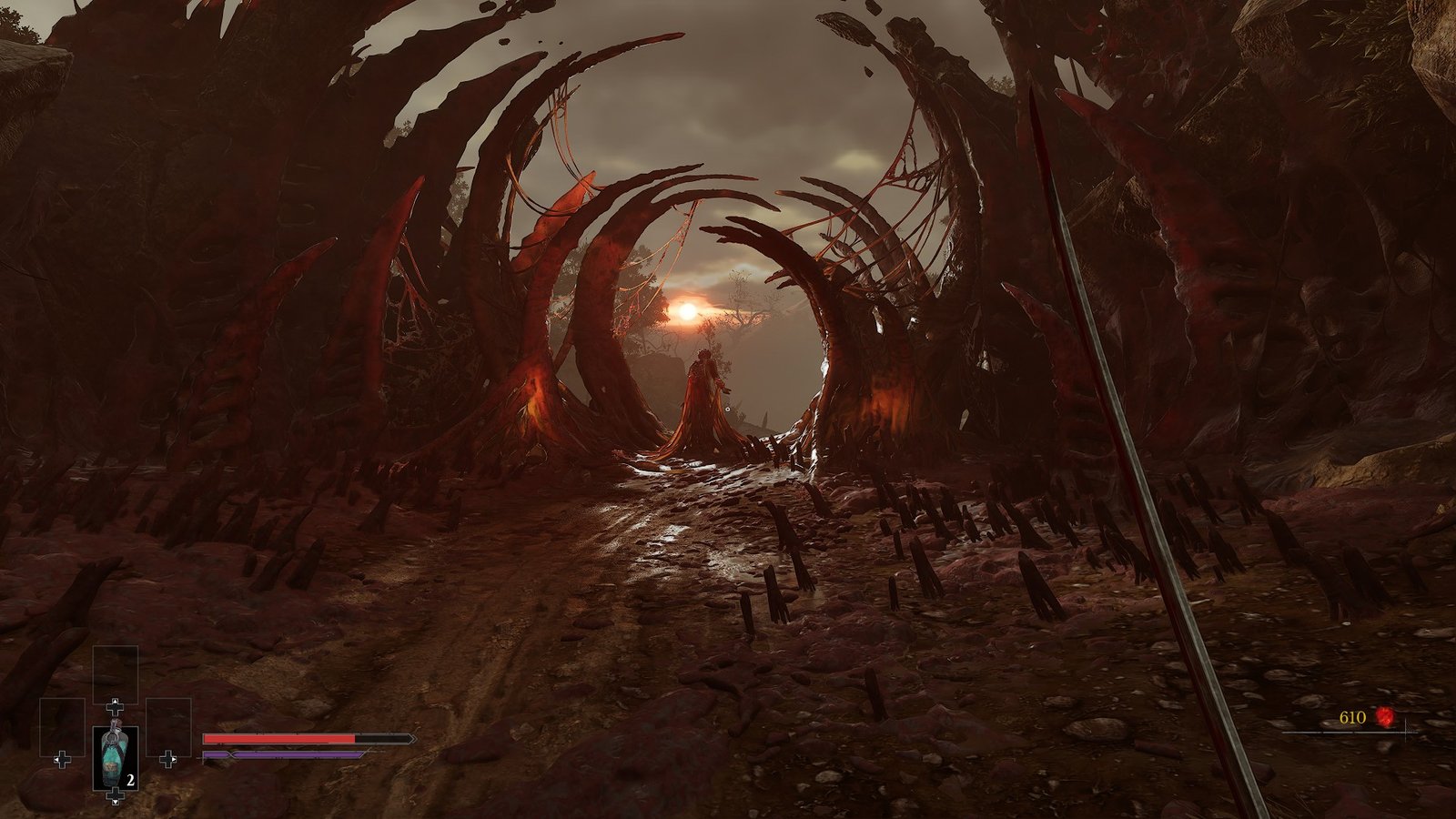
Secondly, while I hate to hit a game over the head with this particular stick, as these problems tend to be eradicated with early release patches, I feel in this case, it’s hard to ignore. Even with extensive patches days before release, I still find myself encountering new bugs and issues within this game. Mostly ranging from comical to irritating small issues, but occasionally, you’ll encounter a quest-breaking bug, or a softlock that ruins your entire playthrough.
But this could all have been overlooked if the game simply didn’t overstay its welcome. With ten chapters in total and a long end-game stretch, the game comes in at about 15-20 hours of playtime, skill-dependent. But after you get through to the closing chapters, if you’re anything like me, you’ll probably be wanting for things to wrap up. Something that doesn’t happen until you endure a labored stealth chapter and a lackluster platforming-focused slog that only serves to highlight the compromises and concessions the devs have had to make when trying to replicate Ghostrunner’s movement.
Combine this with small gripes like a lack of an in-game map for each area and a terrible default control scheme that I changed almost immediately, and you have a game where you have to turn a blind eye to a lot of problems to appreciate. Something that I am more than willing to do, as the high points are so high, but for every peak, there is an equally low valley.
You And What Army?
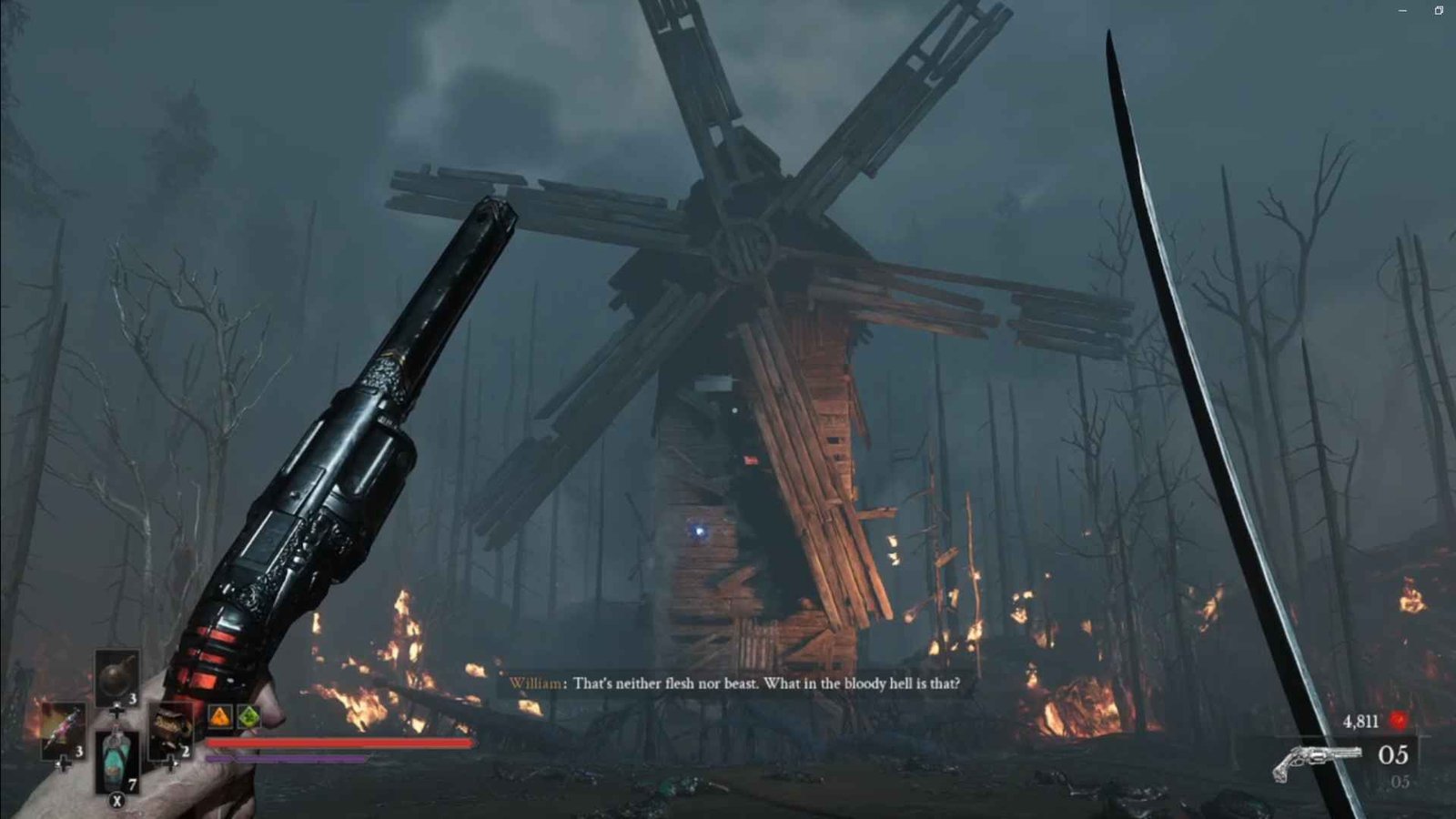
Lastly, I think it’s only fair that we give Valor Mortis’ selection of bosses their moment, but much like almost every Souls game out there, there are some thrilling fights, and some throwaway rubbish.
There are some outstanding bosses you’ll encounter throughout this run, from hulking mutated commanders, sentient windmills, and humanoid fencers that are just as skilled as you one-on-one.
However, my main issue with the bosses within this game is that when the quality dips, it effectively falls off a cliff. Some bosses are, without hyperbole, much easier to fight than some basic mob enemies. Some bosses are filler fights that could just as easily not be there at all, and a lot of these bosses become standard enemies as the game goes on, which cheapens the fights even further. Not to mention, when you get to the end of the game, the stark increase in boss difficulty is enough to give you whiplash, as bosses all of a sudden ask for perfect parrying and breakneck speeds.
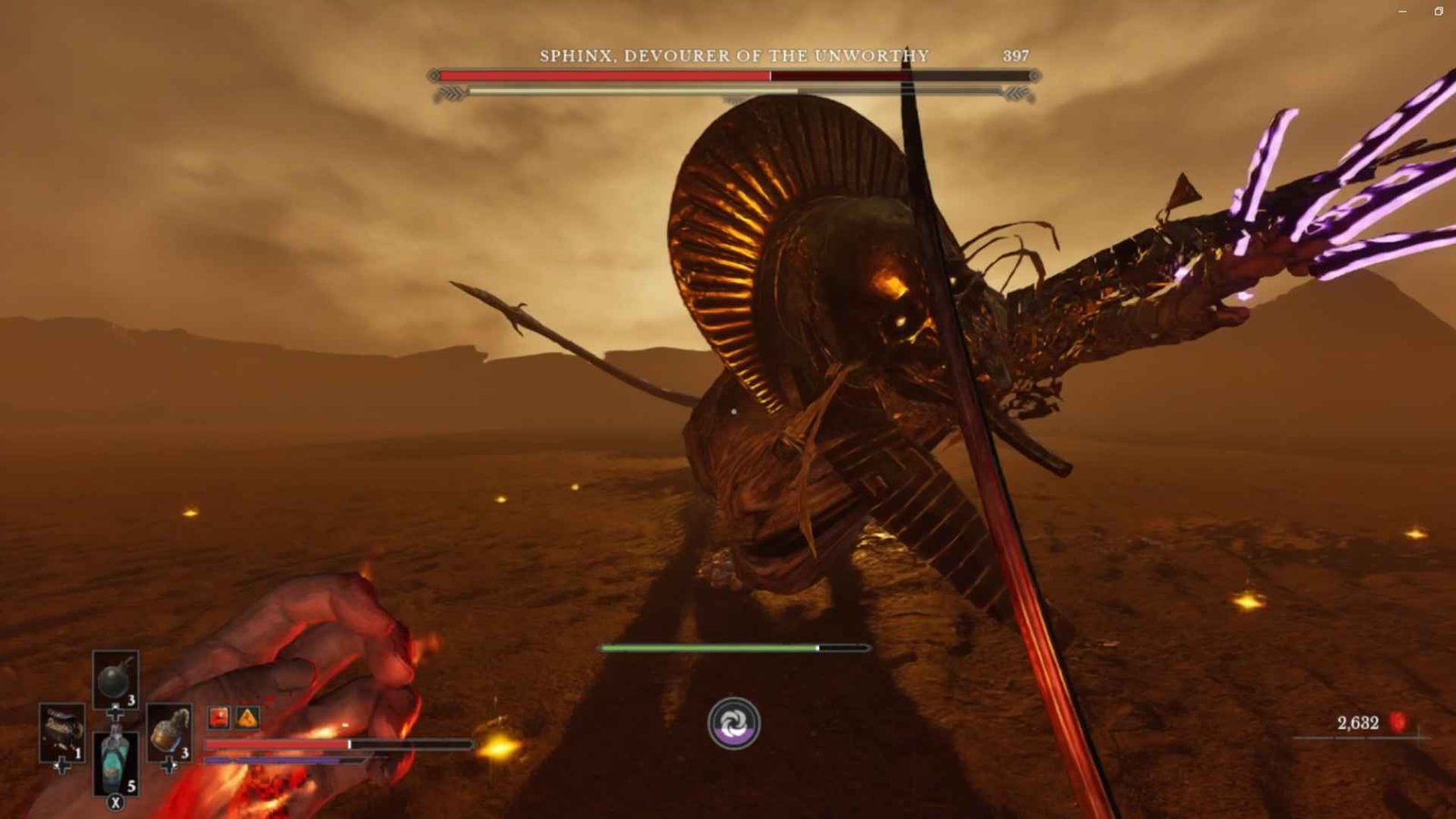
To me, it felt like some bosses were afforded a lot of time and effort, whereas others were shoved into the role to fill a space. Leading to a rather unbalanced chapter-to-chapter progression. Admittedly, the strength of the level design and standard enemy density does a lot to prepare you for what’s to come, but I just wish there was a little more consistent quality from one boss to the next.
Reviewed on a PS5. Review code provided by the publisher.
Valor Mortis is a flawed gem, but a gem nonetheless. It presents one of the most unique and interesting Soulslike formats in recent memory, with a compelling setting and superb interconnected level design. However, balance issues, baffling design choices, and friction that comes part and parcel with the first-person format hold it back from being a Soulslike hall of famer.
The Good
- Tight one-on-one combat
- Brilliant interconnected level design
- immersive first-person format
The Bad
- Combat against groups is frustrating
- Tech issues prevalent throughout
- Bosses are a mixed bag
