

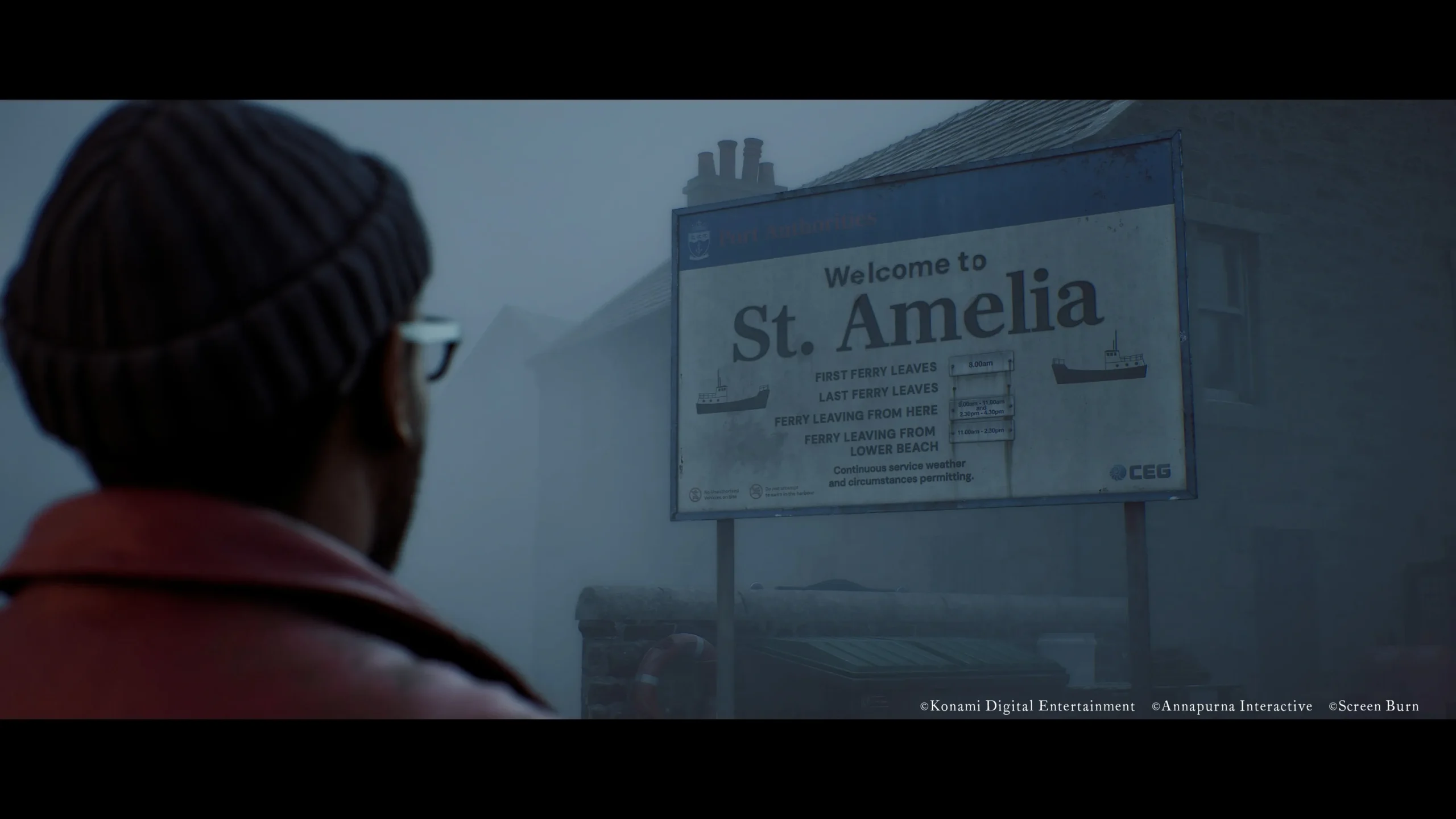
It has been a while since Konami has decided to treat “Silent Hill” as—and these are series longtime producer Motoi Okamoto’s own words—”a state of mind” and not an actual, physical location, and that decision pans out beautifully in Silent Hill: Townfall.
The franchise’s new outing has everything longtime fans have always expected from a Silent Hill game: the eerie vibe, the fog as a sign of looming danger, metaphysical transitions between worlds and deep, very layered narrative with branching out outcomes.
At the same time, it counts on studio Screen Burn Interactive’s take on introducing new elements that keep everything fresh and with that “new” feeling. Overall, it sets the pace for a great experience—though not a flawless one.
This is our Silent Hill: Downfall review.
Visuals to die for
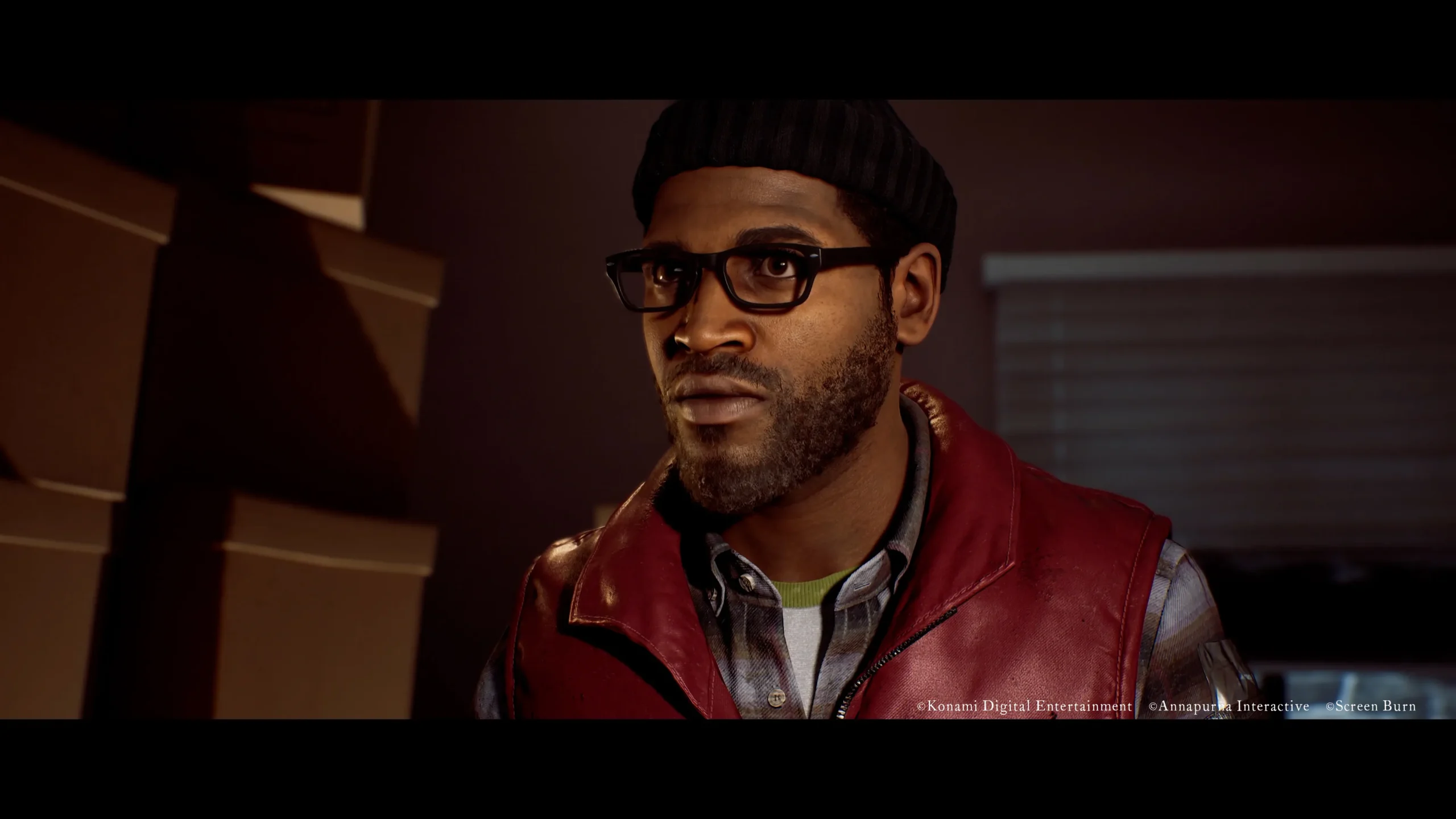
Honestly, the best thing—by a wide margin—about Silent Hill: Townfall is its visual style. Despite being developed under Epic’s Unreal Engine 5, the game doesn’t follow the usual, hyper-realistic look, instead opting for something I can easily describe as Telltale’s The Walking Dead series, except less watercolor-y and more literal.
From humans to buildings and, of course, monsters and enemies, the models look full, developed and, in some cases, you can even see muscle contraptions and facial expressions deliver a sense of purpose and translation of what that character is going through. And because this is a psychological thriller first, it is easy to see the main character, Simon Ordell, shift his expression as the horrors of the game start taking a toll on his mind.
Even more so, the environment goes above and beyond to pay proper homage to the original Silent Hill game’s, applying very advanced physics behavior into the well-known fog that permeates the town’s setting, not merely updating something old school, but increasing the ever present sense of dread you get when you fear something is lurking around the corner—in every corner.
It is a true testament on how storytelling can be told visually instead of literally, as every aspect of the game is tied to how you see it. That, alongside the sound structure that brings crescendos in the most dire, dangerous moments, make for a very thrilling—and very scary—experience.
Also Read: Rivage Review: Progress Comes At A Cost
New setting, new look (literally)
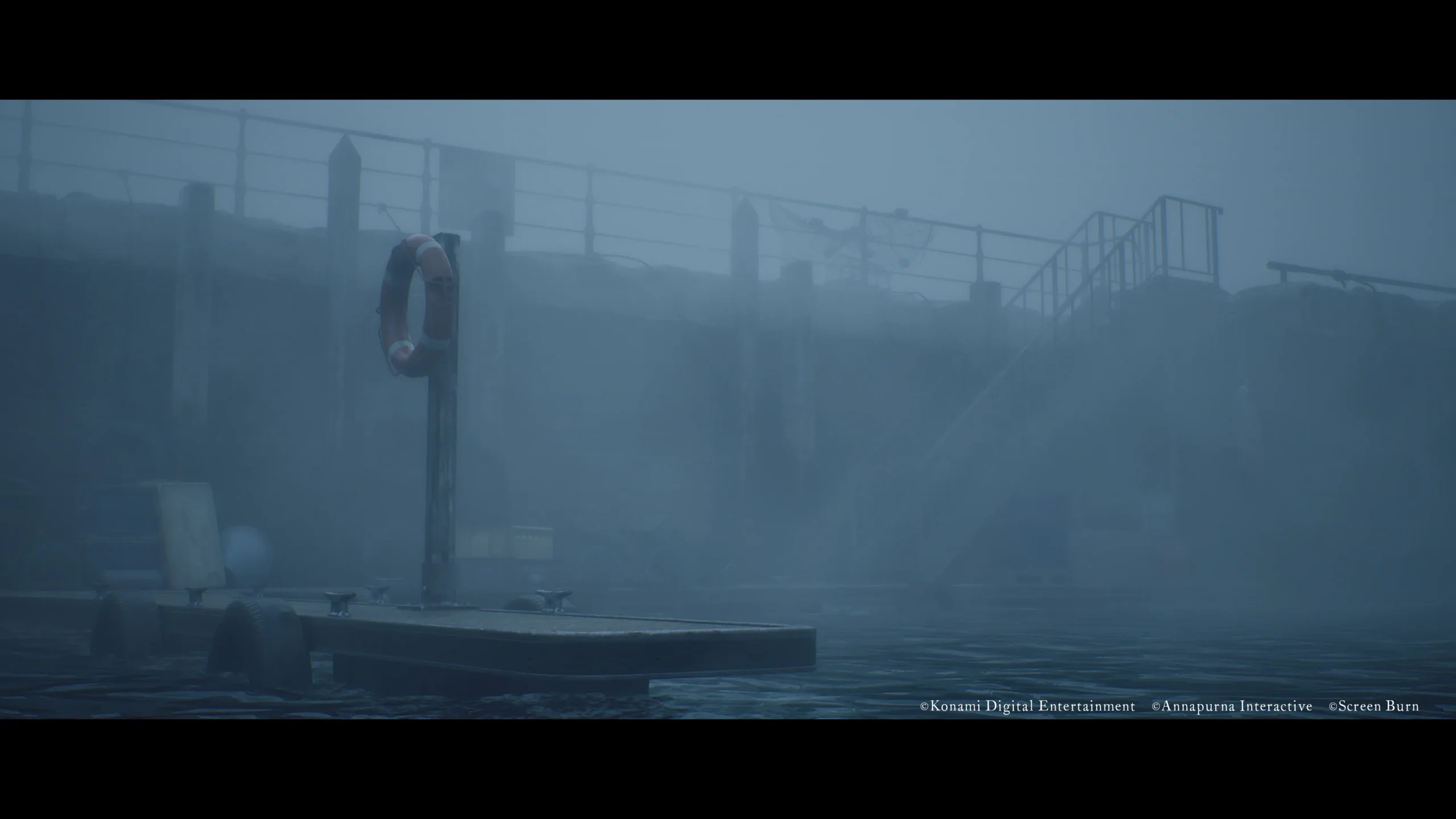
Narratively speaking, Silent Hill: Townfall does not, in fact, take place “in Silent Hill”. The place to be now is called “St. Adelia”, an idyllic, 90s-looking harbor town in Scotland, where lead character Simon Ordell arrives via a not-so-subtle landing…he wakes up on the beach, immediately looking for people and navigating the town’s main square and adjacent streets in search for his mission.
For the sake of spoilers, we won’t delve much into these details in order to preserve your experience. But the old “amnesiac main character with some connection to the town” recipe is prevalent here: Ordell was summoned by an enigmatic figure in order to make things right in the town, which had a major, downfall-like event, in its past, to which Simon is directly connected to.
Having only fragments of memories helps maintaining the eerie environmental perception, and will cater specifically to more investigative players. As usual, this is a game that rewards players who explore and search for clues—though there is always the option of Rambo-ing your way towards a conclusion.
Yes, “a” conclusion: Silent Hill: Townfall has five different endings, two of them available only through New Game Plus playthrough. So Konami and co-publisher Annapurna Interactive make their intentions clear from the beginning: they want you playing this over and over.
Replay factor takes an L
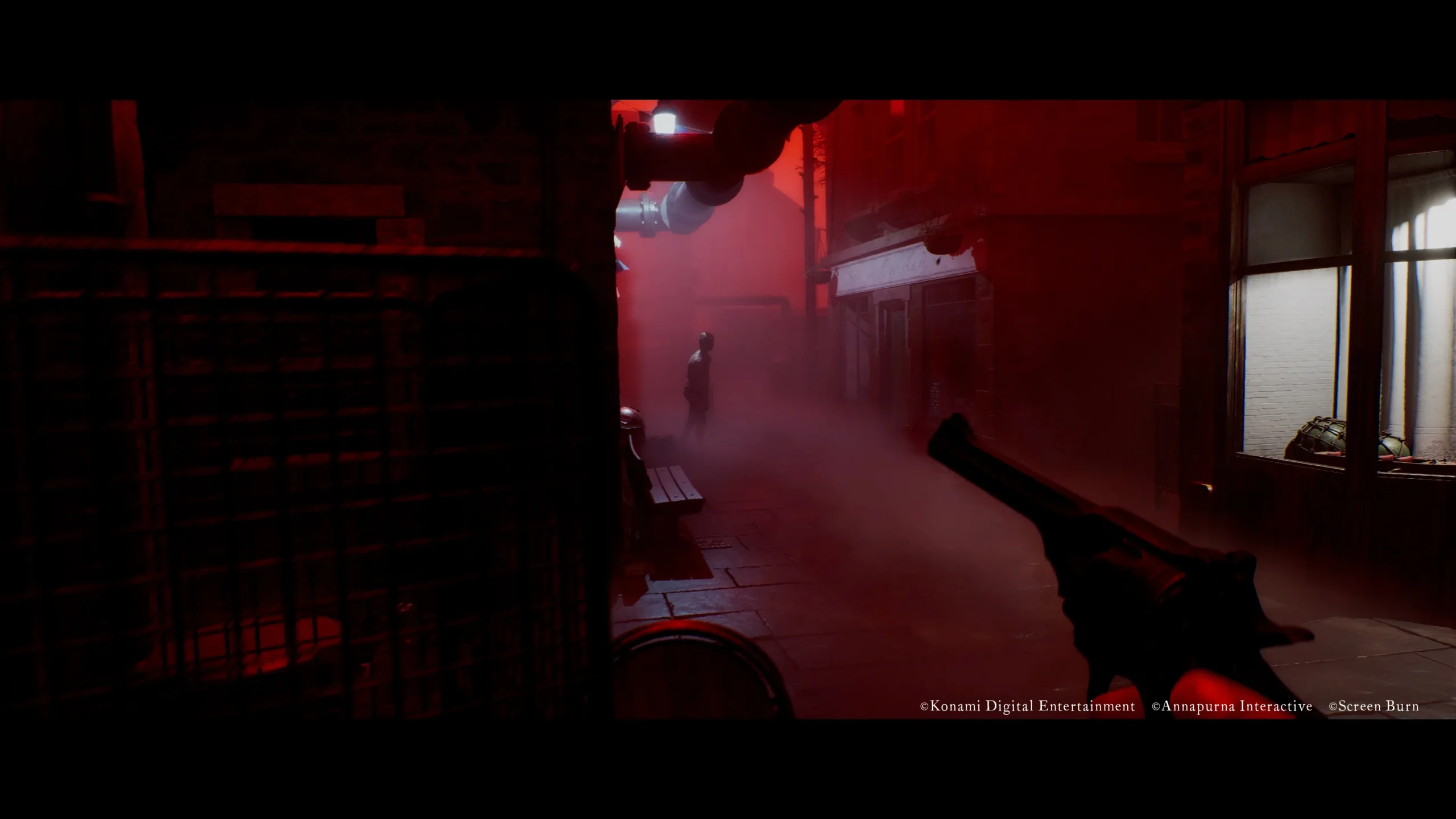
Except the more impatient players likely won’t repeat their playthrough, at least not straight away. In Silent Hill: Townfall, combat is not the norm, but it is still needlessly clunky, with physical engagements sometimes showing bugs like impact windows being off, making enemy attacks land when they were clearly off.
One might think this is easily ignored, given the fact that the Silent Hill franchise rewards stealth, which is true. However, this component is also not optimal: enemies have weird detection ranges, and more often than not, one-hit-kill capabilities that will see you fail certain sneaking engagements for no reason, leading to some very frustrating moments.
It’s not “Dark Souls” annoying, mind you. You won’t be hurling your controller on the wall in anger. But you will need to brace yourself for disappointment and retries even before you start. Having said that, there is a bit of a silver lining in the sensation of bliss and overwhelming satisfaction of clearing a particularly complicated/ominous section. Granted, you’re bragging to no one, but it still gives a very feel-good conclusion.
Don’t try to milk it, though: Silent Hill: Townfall has virtually no “pressure valve” concept insertions, meaning you won’t have many breathers after beating a tough spot. Usually, it is one difficult section stitched to…another, likely more difficult section, which can leave some players mentally spent and stressed out.
The Analog, CRTV Horror
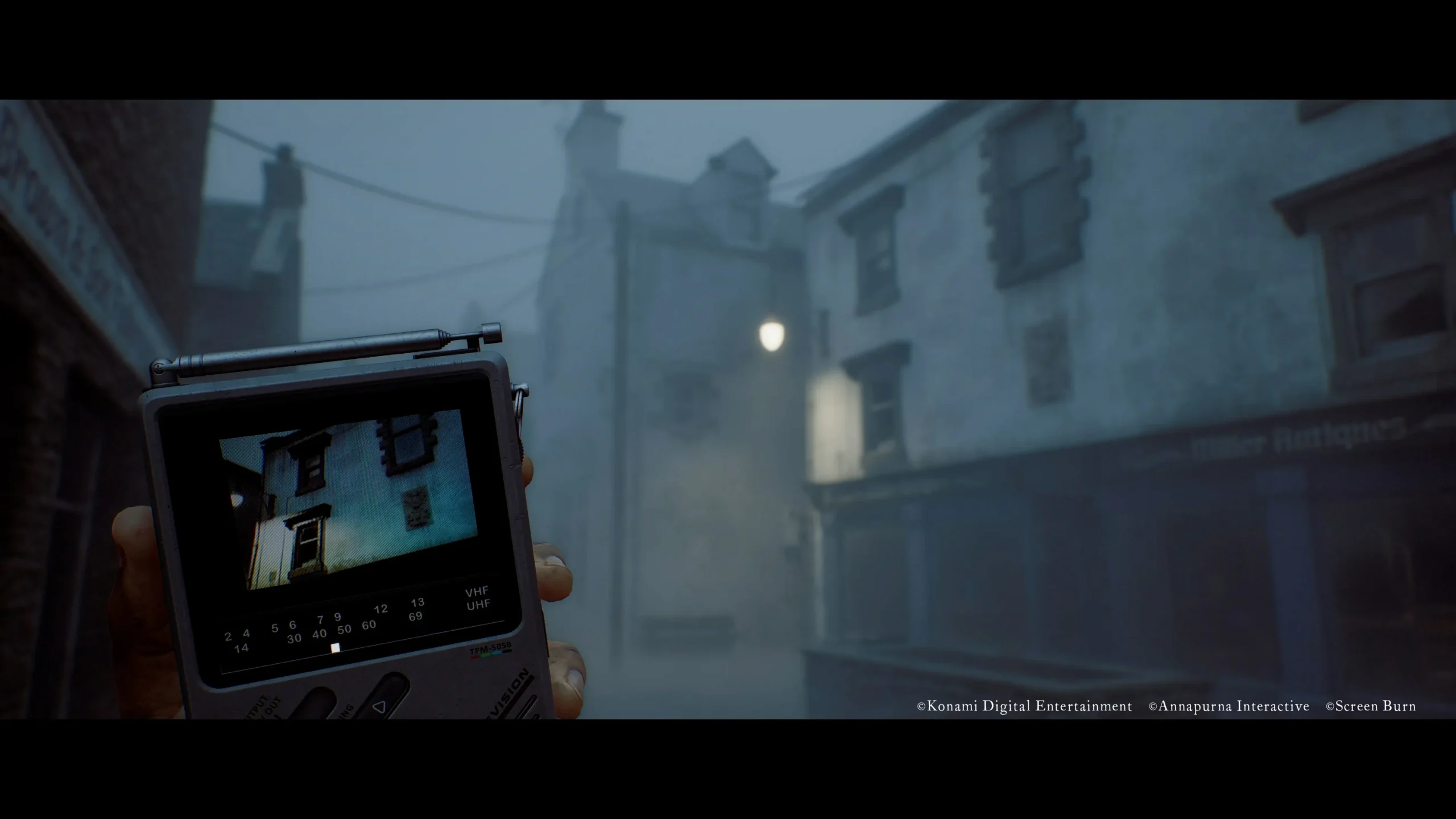
One very positive take is the insertion of a CRTV monitor, a handheld device Simon uses for exploration, some puzzle-solving and enemy scanner. I was scared that it would feel cheesy or over-the-top, like guiding players’ hands too much, but this little gadget (that replaces the old radio from previous games) is perfectly balanced. It will tell you about enemies and lore, and that’s it. You’re on your own to figure out the course of action with as little info available as possible.
Puzzle design is another major highlight, delivering rewarding, Myst-style complexity that requires players to actively take notes on things like controlling medical dosing—all very precise so not much room for error. This all adds tension to an already tense game, and the sensation of danger slowly creeps up on you. Much better than any jump scare, if you ask me.
Final Thoughts
All in all, Silent Hill: Townfall is a great game that does justice to the brand’s legacy. The creative liberties taken with it—changing the place, moving to a first-person view, they all add some much needed creativity to an otherwise stale franchise.
Much like Silent Hill f, this game too feels like Konami is willing to experiment with the brand, carefully inserting new mechanics to avoid things from becoming too boring, too expected. This is good, as it makes it look like the company is gradually going back to its more innovative roots.
Still, some of the game’s cons could have a bit of work, as some gameplay aspects feel too rough around the edges, especially for a Silent Hill game. Overall, the entire thing can be played in some 20 hours, but you will get tired sooner rather than later, so this might be the kind of game where you’ll do two endings, move on and come back for the rest after a month or something.
Konami and Screen Burn Interactive hit the mark with Silent Hill: Townfall, a first-person psychological thriller set in a eerie 1990s Scottish harbor town. Trading hyper-realism for a striking stylized look, it shines with spine-chilling soundscapes, clever note-worthy puzzles, and a rad handheld CRTV gadget for tracking lore and enemies.
The Good
- Highly authentic 1990s Scottish island setting with rich environmental storytelling
- Innovative retro gadgetry and visuals that perfectly blends realism and creativity.
- Engaging narrative & puzzles give a good sense of effort and reward.
The Bad
- Clunky encounter systems with unpredictable aspects reduce replay factor.
- Relentless pacing, no breather in between major encounters.
- Uneven final act kind of drops the high-stakes pace from the rest of the game.
