


The second of the characters new to Slay the Spire 2, the Necrobinder is a fantastic spin on the necromantic archetype. Between her soul-stealing, doom-chanting, and her oh so trusty left hand, Osty, she’s sure to carry you to the top of the Spire.
Those lines aren’t just for show, like every class, the Necrobinder has a myriad of potential ways to play her, and each is more diabolical than the last. Let’s go over all her unique mechanics, crucial cards, and whether or not she’s right for you as you attempt to Slay the Spire.
Summoning and Osty
The most immediate new mechanic for the Necrobinder is Osty, her trusty left hand. Osty is summoned and buffed whenever the Necrobinder plays a card with Summon on it, increasing its Max HP by the total Summon.
Osty always has the buff Die For You, redirecting all unblocked damage to itself. This makes the Necrobinder, despite having the least max HP of the Climbers, potentially the tankiest.
Plenty of attacks available to the Necrobinder play with Osty’s max HP, rewarding high Summon totals with massive damage, payoff for sacrificing Osty, or combos fully reliant on the skeletal hand’s heft.
Cards that rely on Osty to attack will specify that Osty deals damage, rather than the Necrobinder herself. Osty can’t gain Strength, so its damage is wholly based on its max HP.
Summon is a very safe keyword for the Necrobinder, guaranteeing passive protection, setting up huge damage, and bringing a taste of Co-Op to even single player runs.
Keep Osty healthy, and it’ll keep you in the fight much longer than you would be otherwise. And the best part of having a necromantic puppet as a pet? They don’t mind being sacrificed a few times mid-fight for the greater good.
Important Cards
There are quite a few cards that propel Osty from a boney meat shield to an absolute powerhouse, if you know where to look.
There are two real ways you can look at using Osty, sacrificing and bringing it back over and over, or stacking it to pay off with massive damage.
Flatten
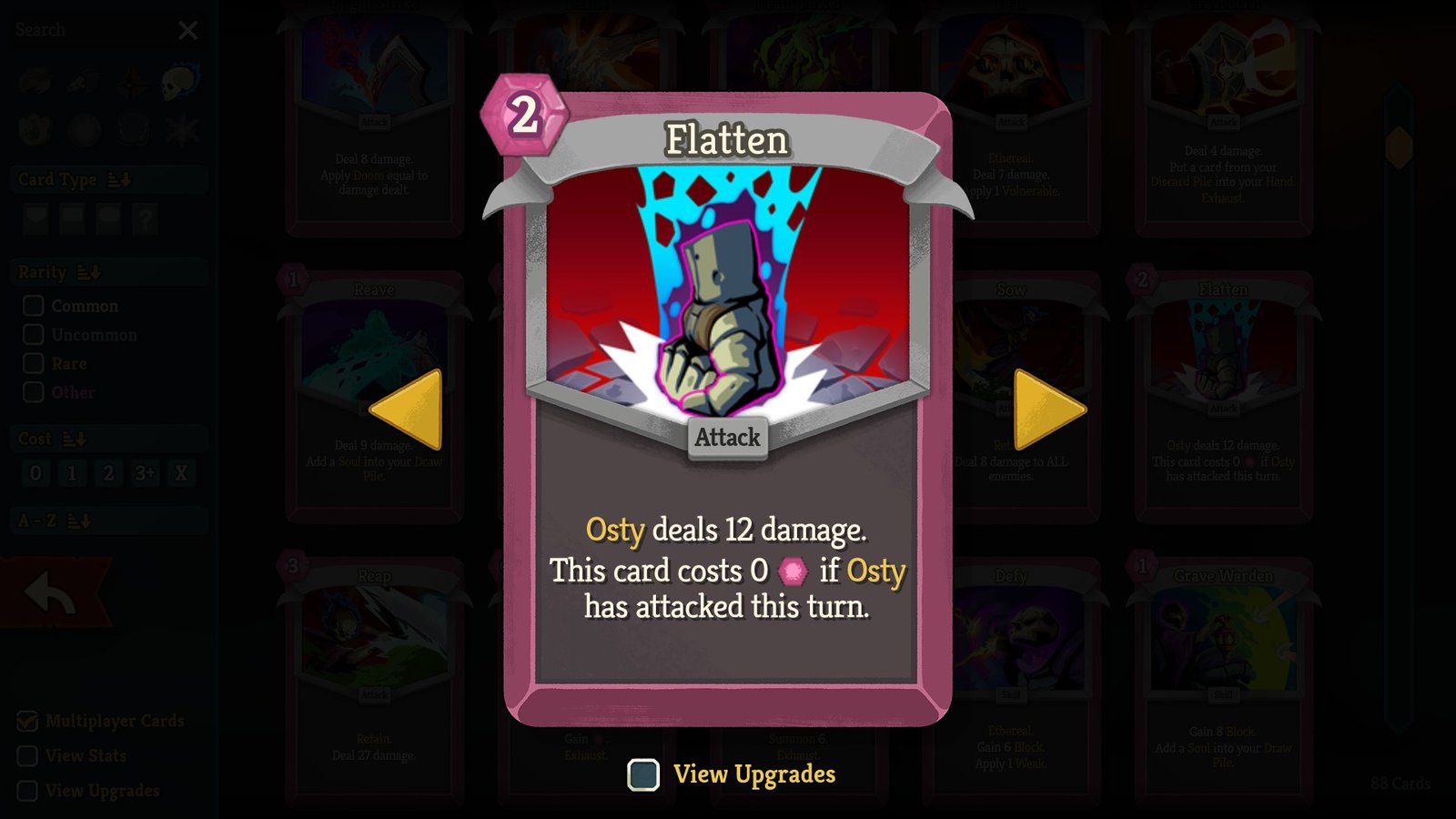
A stellar tool for multi hit combos with Osty, Flatten is a seemingly expensive attack for decent damage. Luckily, the card makes itself free if Osty has attacked at all prior this turn.
Free Osty attacks synergize beautifully with a number of other cards we’ll go over, and 12 damage is nothing to sneeze at if you don’t have to pay the Energy Cost.
Right Hand Hand
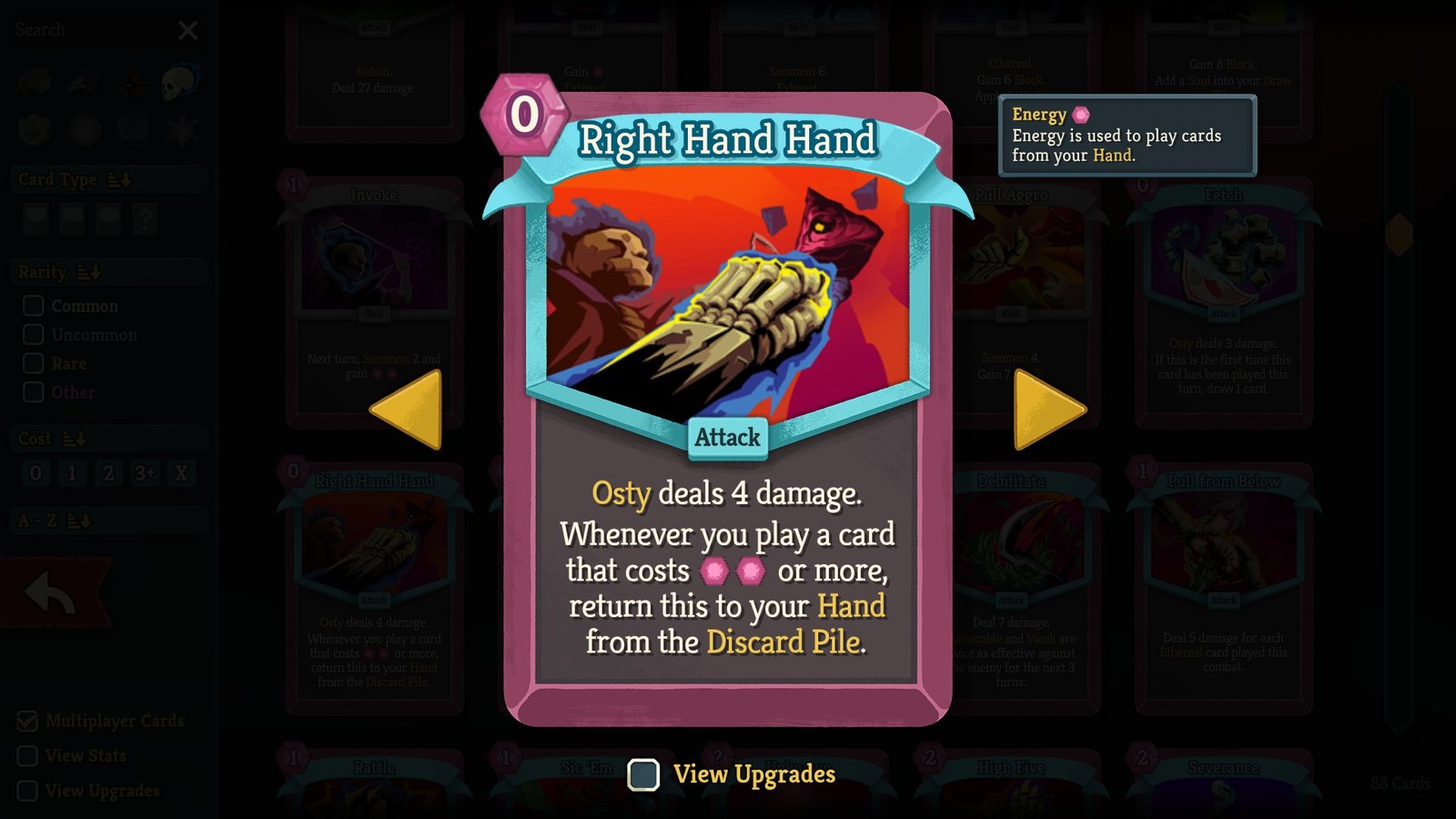
Necrobinder’s version of the 0 cost card that gets looped a billion times, Right Hand Hand is a weak attack that places itself back in hand every time you play a card that costs 2 or more Energy.
Sadly, you do have to spend 2 Energy on the card to activate the effect, playing Flattens for free doesn’t give you Right Hand Hand back.
A generally decent option for how many good 2 cost cards Necrobinder has, and sees great extra use here for proccing Osty combos.
Sic ‘Em
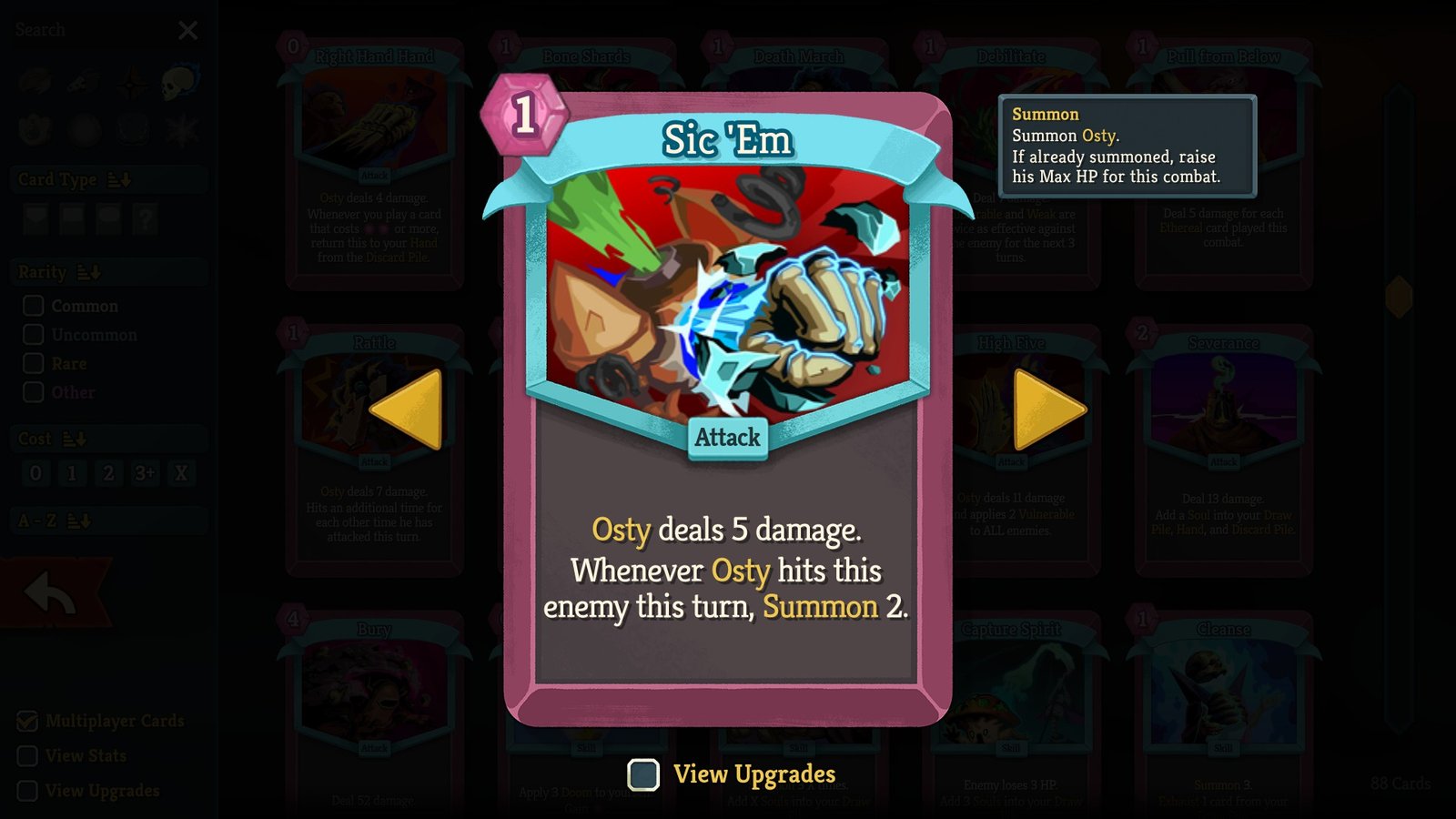
The basis of plenty of Osty attack combos, Sic ‘Em is a decently damaging attack that allows the Nercobinder to Summon every time Osty hits the afflicted enemy.
This does count as a debuff, as effects like Artifact will block it, but applying it and letting loose is a great way to cover yourself and keep Osty healthy.
Necro Mastery
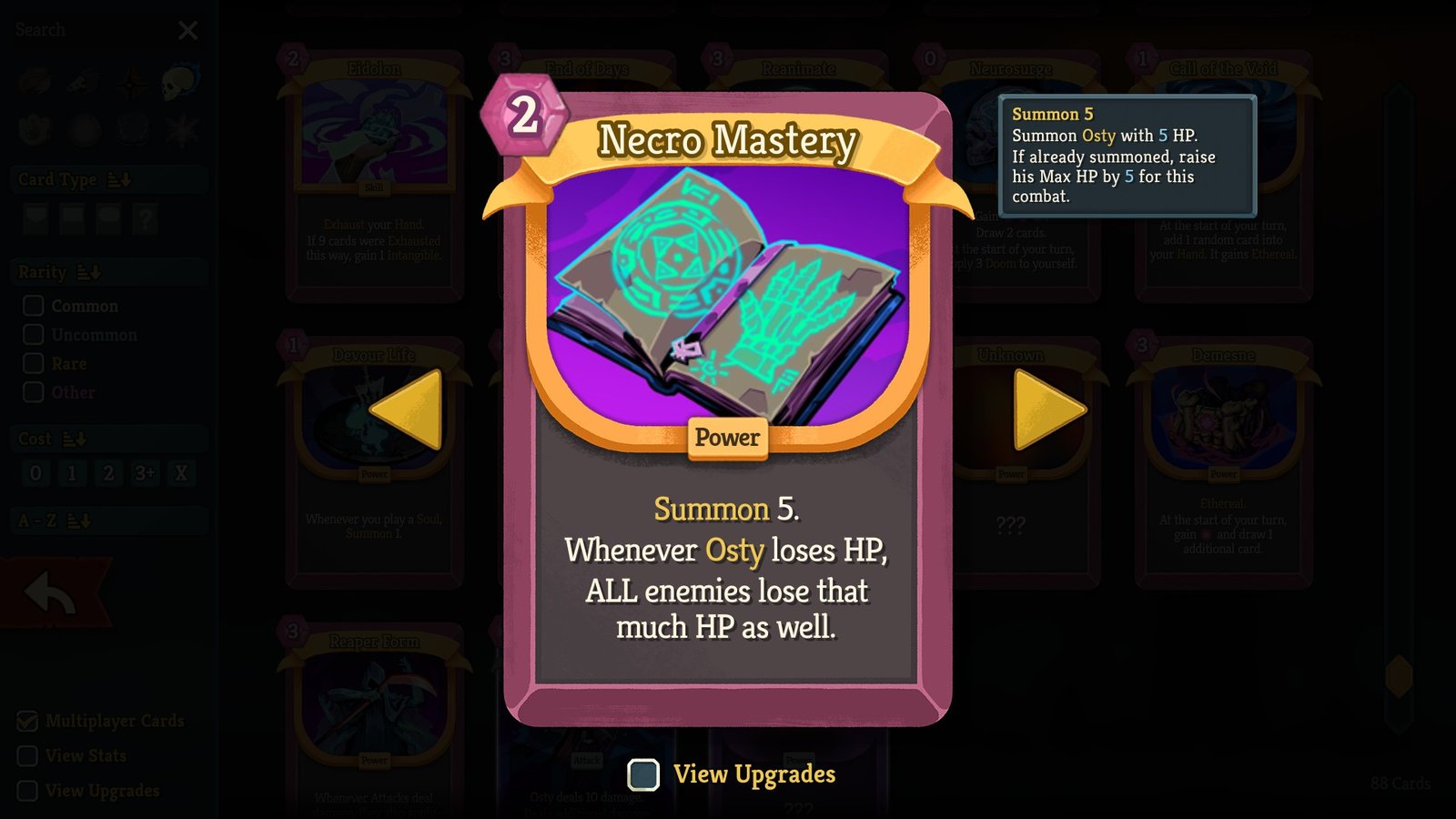
A power with a small amount Summon, the main benefit from Necro Mastery comes from its secondary effect. As long as Necro Mastery is up, enemies will take damage equal to the damage dealt to Osty. This makes stacking Osty not only a great defense, but stellar offense.
This damage hits ALL enemies on the field, so it works great in multi-man encounters. Necro Mastery is a must slot if you’ve got any kind of Summon in your deck.
Doom
Doom is a debuff applied by a number of Necrobinder’s cards, acting as an alt win-con, similarly to Poison.
When Doom is stacked, it will slowly overtake the afflicted enemy’s HP bar, filling it purple. Should the total of Doom on a unit ever exceed that unit’s current HP, the unit will die at the end of its turn, no matter what.
Doom, unlike Poison, never reduces itself; unless the enemy can clear debuffs in general, Doom is a permanent affliction. Think of Doom like an alternative damage type, with plenty of cards that can quickly apply it to mass enemies and multiply itself exponentially.
With the proper cards and a few good hands, most foes will be out of the fight long before they can become an issue. Doom notably doesn’t have many defensive options, so you’ll need to bring some extra debuffs as well.
Luckily, the Necrobinder has plenty of sources of Weakness to keep the enemy low, bring them with if you start building Doom to minimize the damage you take on the way up.
Important Cards
Doom relies on very specific cards to get the ball rolling, and some very abusable payoffs.
You’ll need to spec a good bit into Doom if you want to make it effective, so let’s go over what’s worth taking.
Negative Pulse
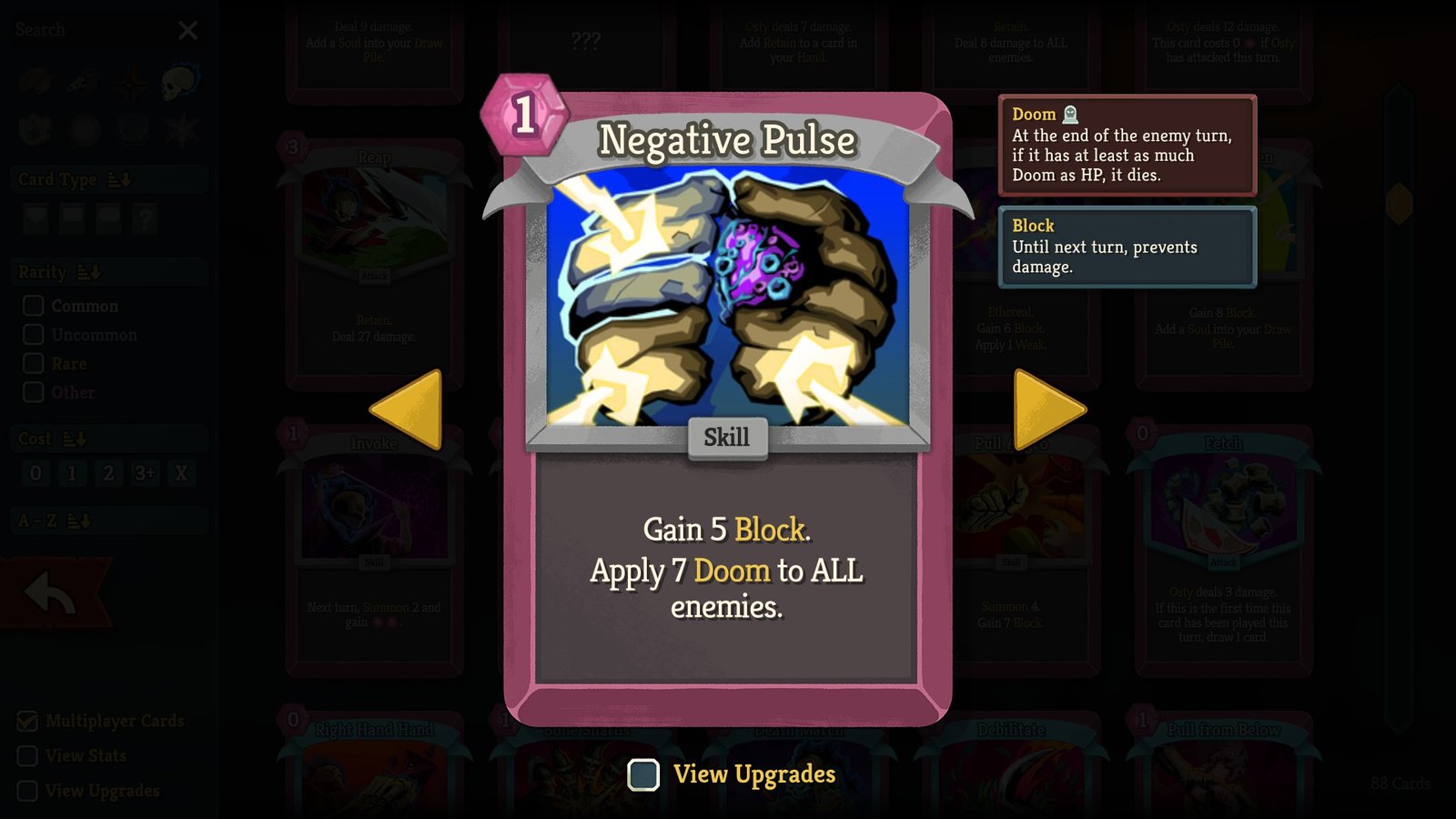
A great upgraded Defend that applies Doom to ALL enemies, Negative Pulse is an easy lock-in if you want to make Doom work.
The AOE Doom application is already great, but an upgraded Negative Pulse implants a whopping 11 Doom for only 1 Energy. Great 1v1 or multi-target application whenever you can play it!
No Escape
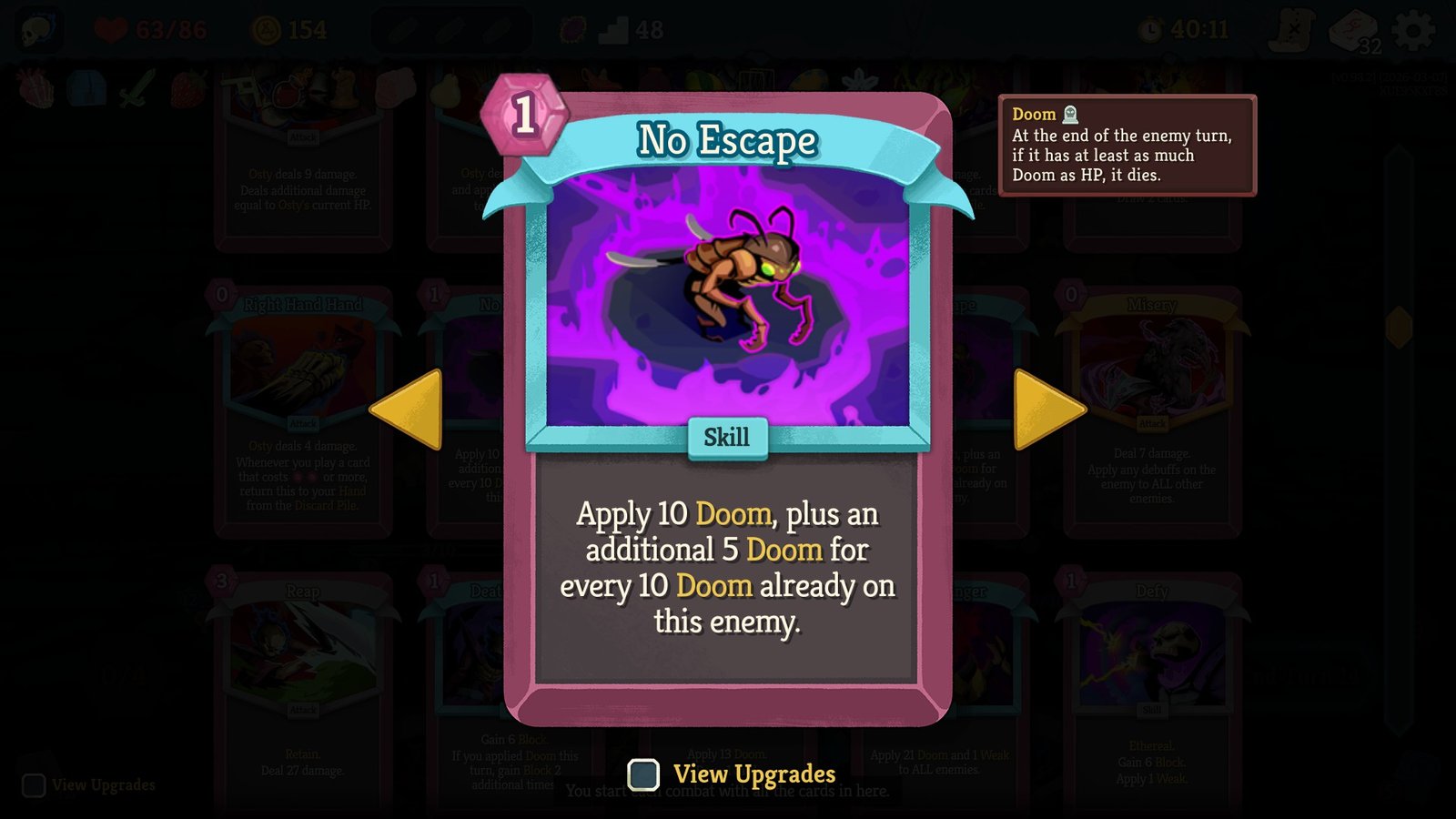
An excellent way to snowball Doom once you’ve already applied some, Doom stacks a chunk of Doom, increased based on the Doom already on the unit.
This can lead to downright comedic amounts of Doom, nuking enemies once the enemy is already afflicted.
Countdown
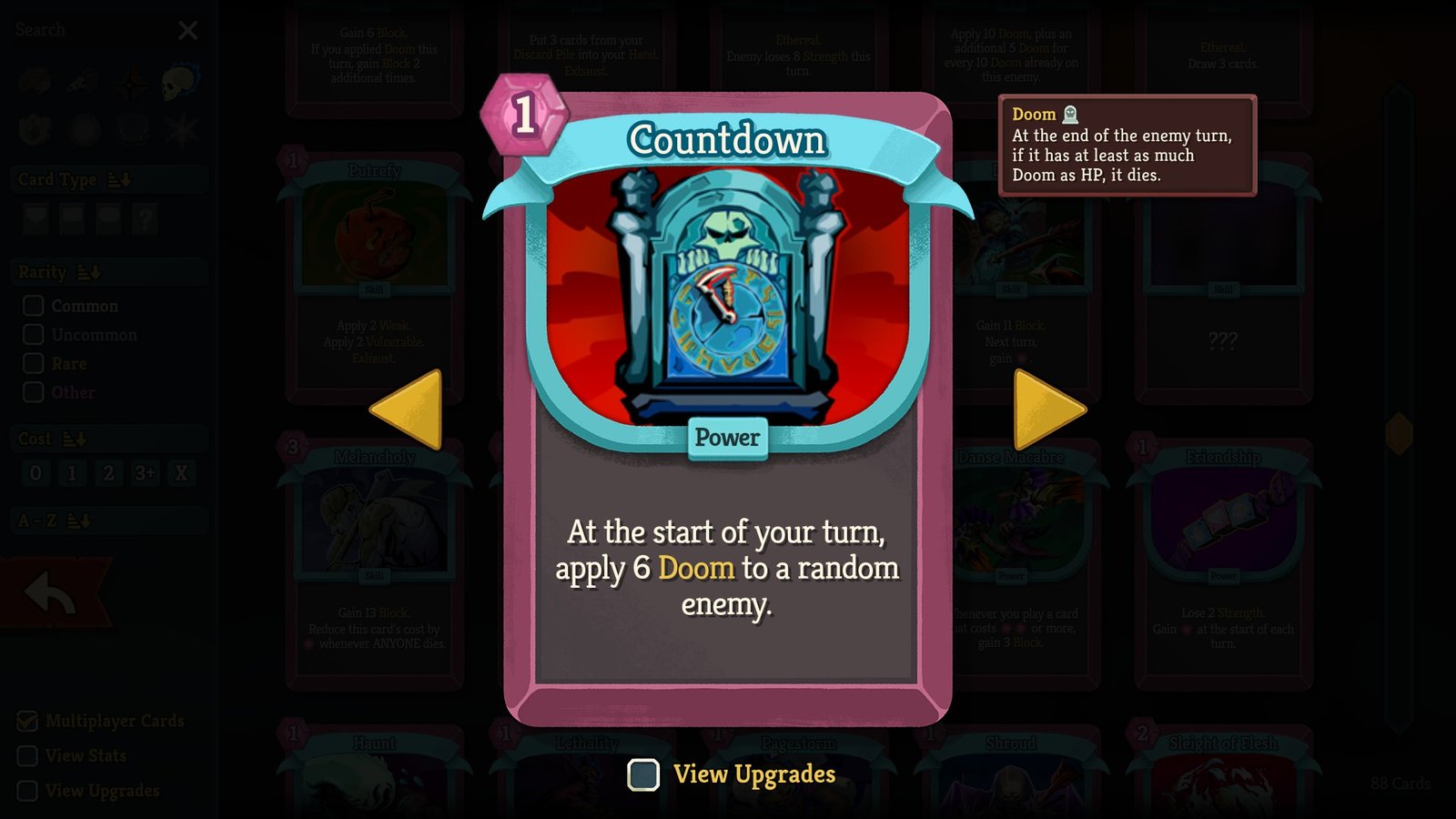
The neccessary passive Power for the archetype, Countdown applies Doom to a random enemy at the start of your turn.
For only a single Energy, this is stellar uptime, constantly progressing your gameplan. While it only targets one enemy, it’s hard to overstate how quickly it stacks.
Shroud
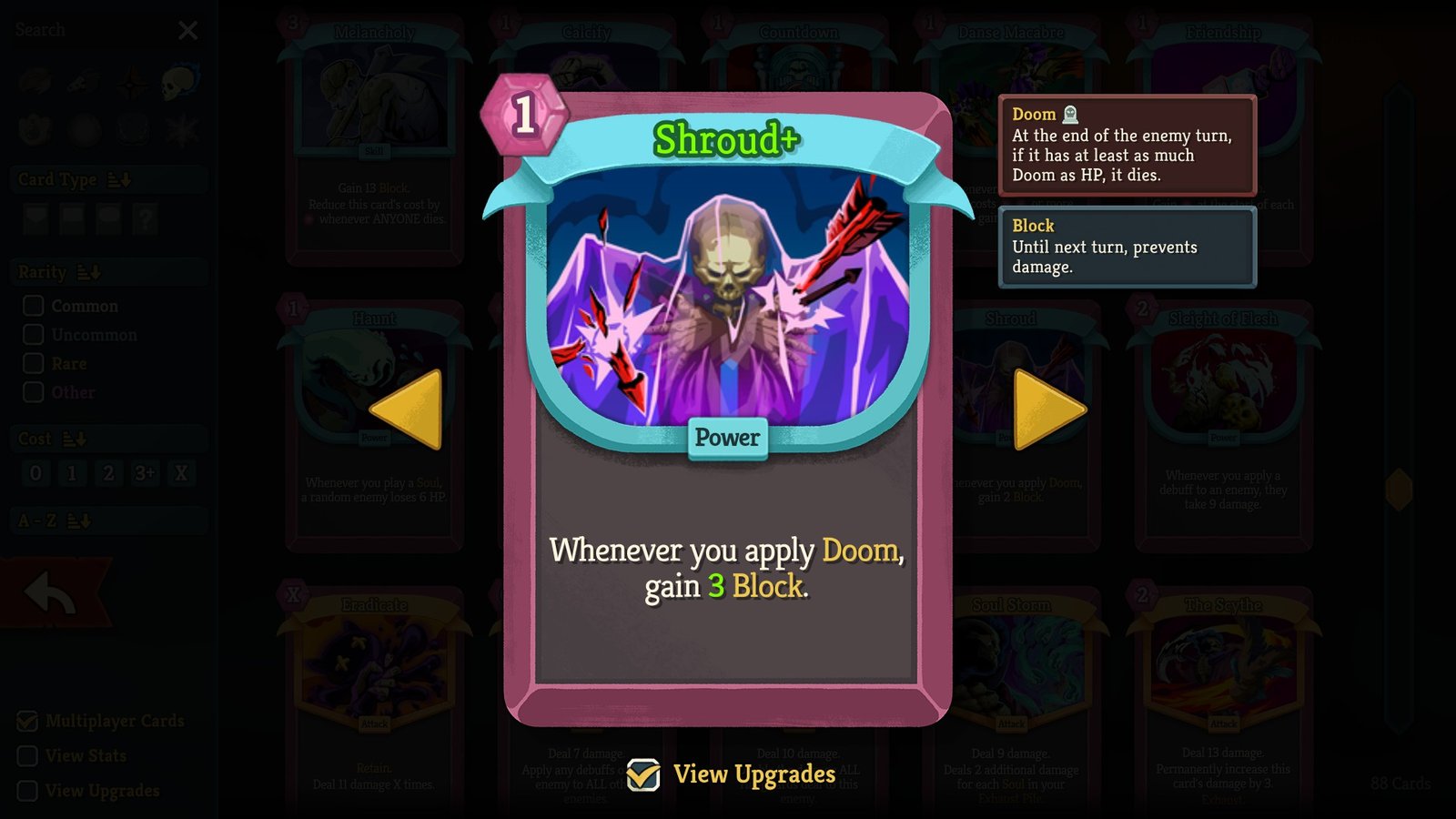
A one-cost power, Shroud provides some block every time you apply Doom to the enemy.
Doom doesn’t have much built-in defense, so taking the options that do is very important. Doom can be rushed very easily, but blocking every bit of damage you can is paramount. Just make sure to upgrade it to get the most use out of it.
End of Days
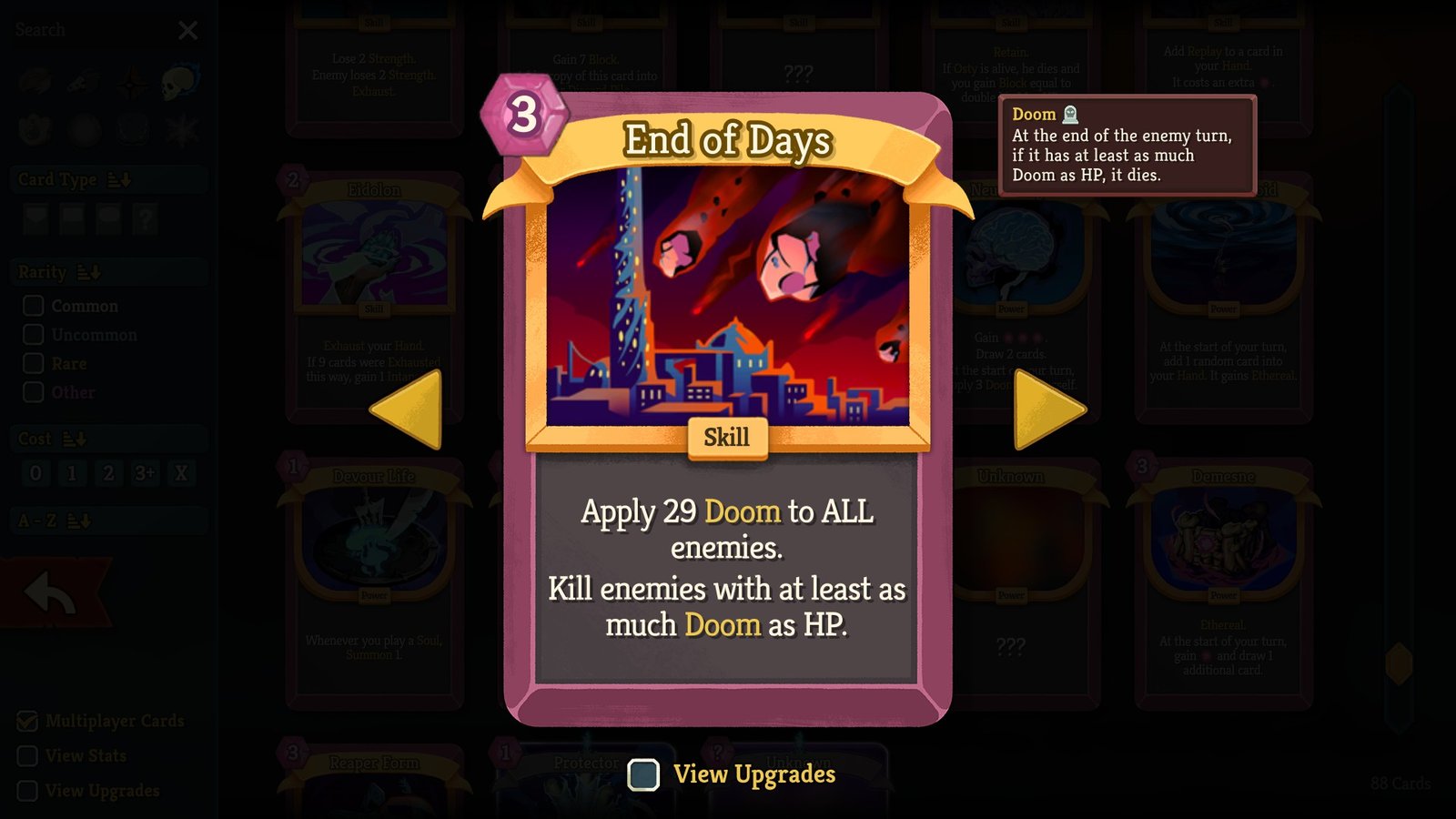
For 3 Energy, End of Days deals a huge chunk of Doom to every enemy, and instantly procs the Doom kill check. Usualy, Doom only procs at the end of the enemy’s turn, letting them get out attacks before the affliction takes hold.
With End of Days, if the enemy’s Doom is higher than their HP, they’ll drop dead. A great tempo increase while continuing to apply Doom.
Souls
The Necrobinder’s third original mechanic comes in the form of Souls, 0-cost token cards that draw cards and exhaust themselves on play.
Necrobinder has all kinds of ways to generate these Souls, and while card draw is king, the bonus effects she gains from playing them are a very nice cherry on top.
Souls allow for some absolutely fantastic hand cycling, giving the Necrobinder more options in every single fight. There’s no harm in filling your deck with Souls mid fight, as they’re always at least draw neutral.
Upgraded cards can even create Soul+, which can each draw multiple cards for no cost or deck bloat. Another stellar tool allowing the Necrobinder to play with a large deck than other classes without getting locked out of options or drawing duds.
Important Cards
Souls have plenty of generally decent cards that you can slot in to most strategies, but others are fairly weak, so we’ll need to take the right ones.
Souls also have great synergies with her other archetypes, if you know what to snag.
Grave Warden
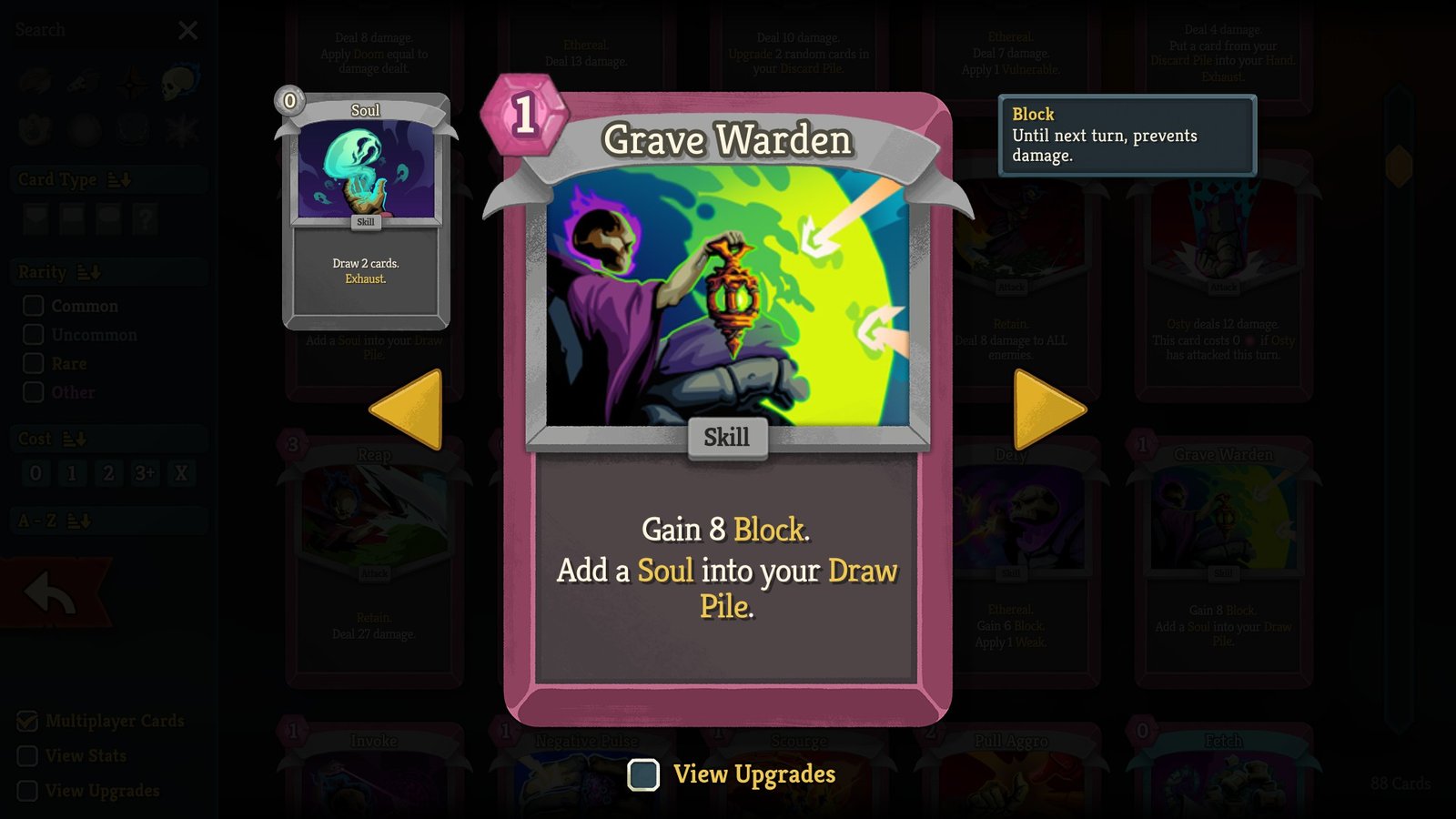
A great block upgrade that shuffles a single Soul into your Draw Pile, Grave Warden is very solid swap out for standard Defends.
Putting the Soul into your Draw Pile is a bonus, allowing you to quickly get the benefit. A single Grave Warden will make it much easier to dig through your deck for spicer options, so don’t feel worried about slotting a few in.
Death March
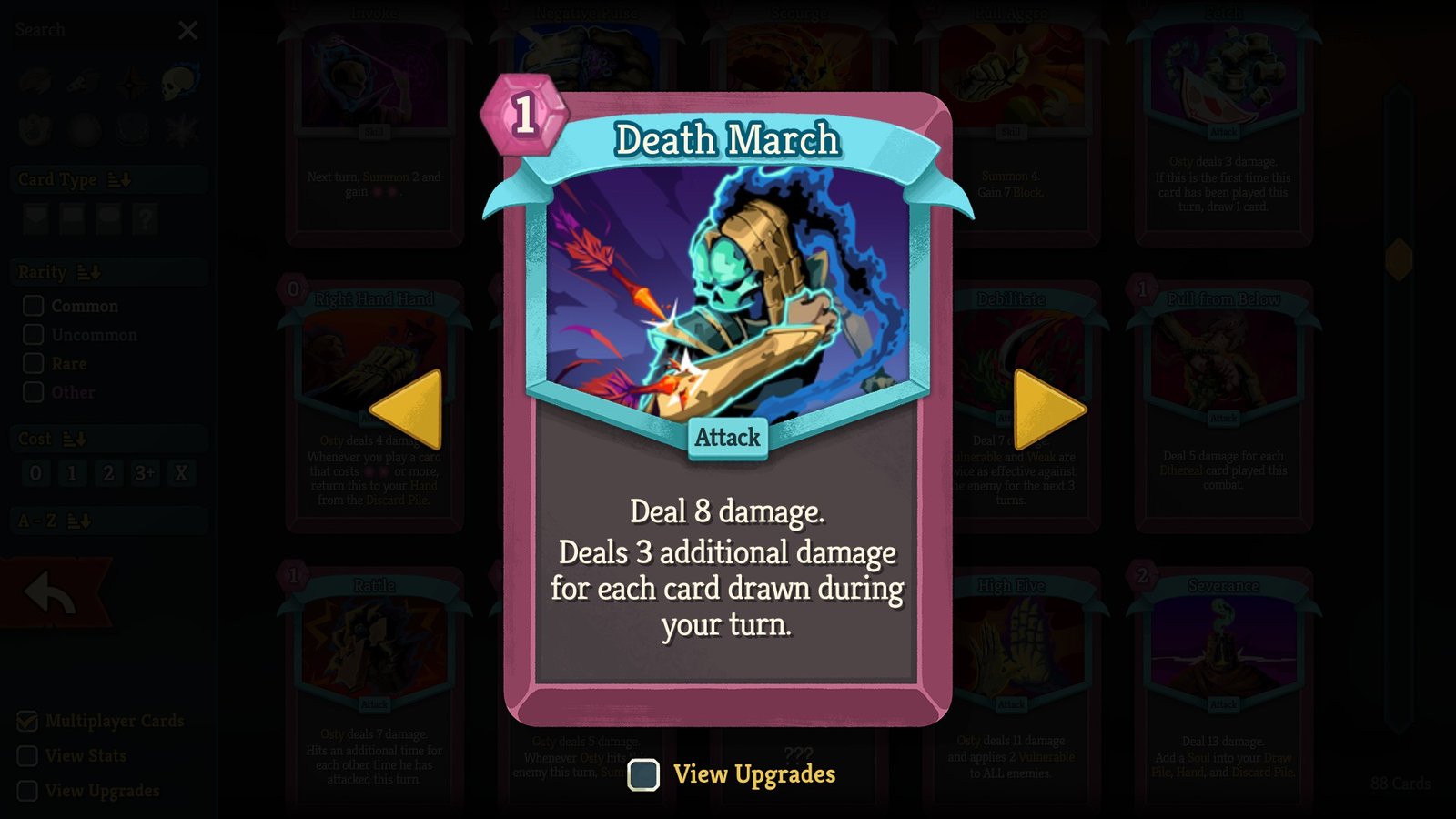
A single Energy attack that already starts stronger than a Strike, Death March gains extra damage for each card drawn this turn.
With a proper Soul engine, you can amplify Death March to a ridiculous degree. Every deck needs a heavy hitter, and Death March can easily fill that role.
Soul Storm
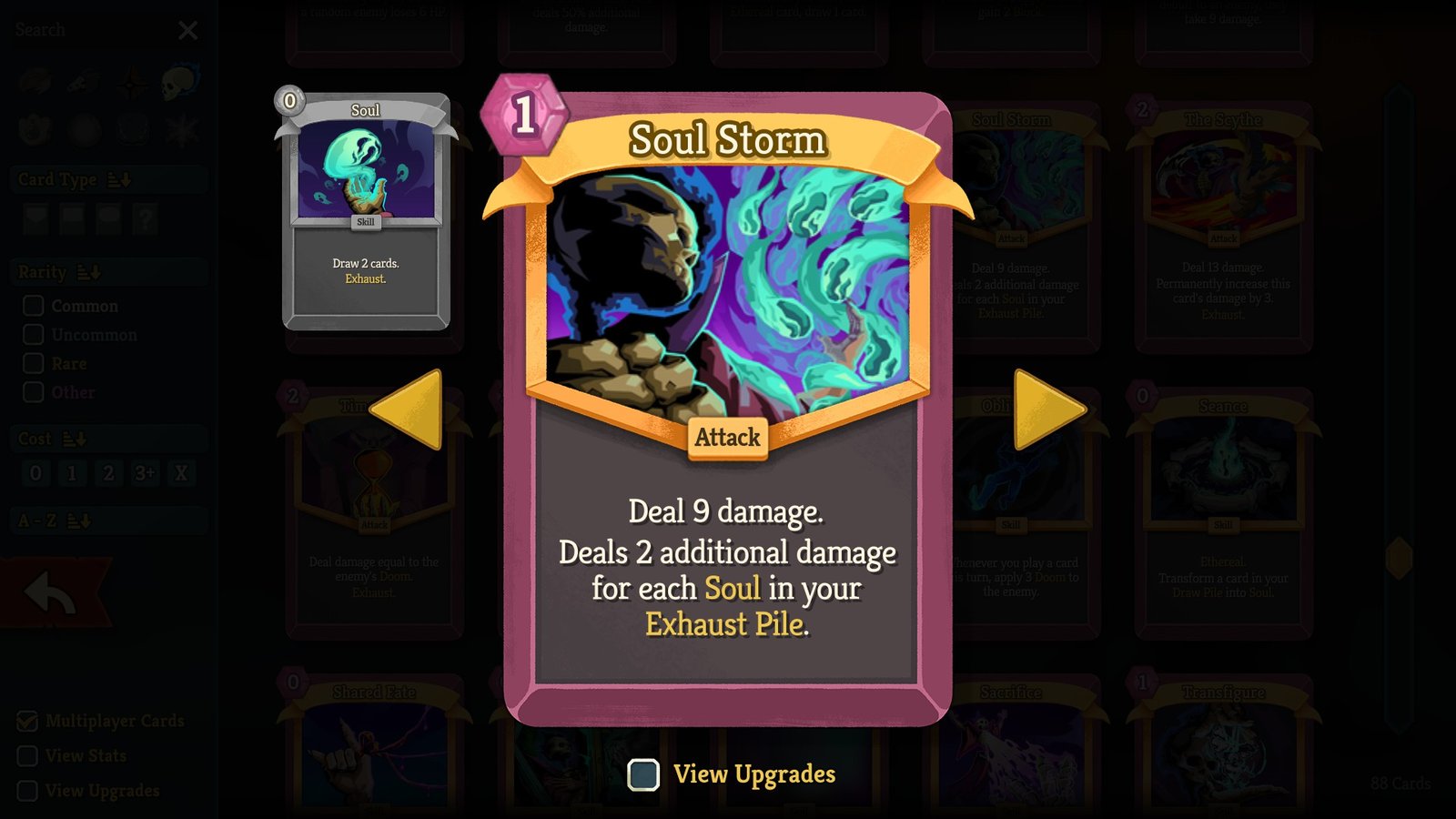
Another cheap, scaling attack, Soul Storm deals extra damage for every Soul in the Exhaust Pile.
While Death March relies on a setup turn of drawing dozens of cards, Soul Storm is always scaling as long as you’re playing Souls in a fight. With a high enough number, it’s a genuine nuke, so take any copies you’re lucky enough to find.
Devour Life
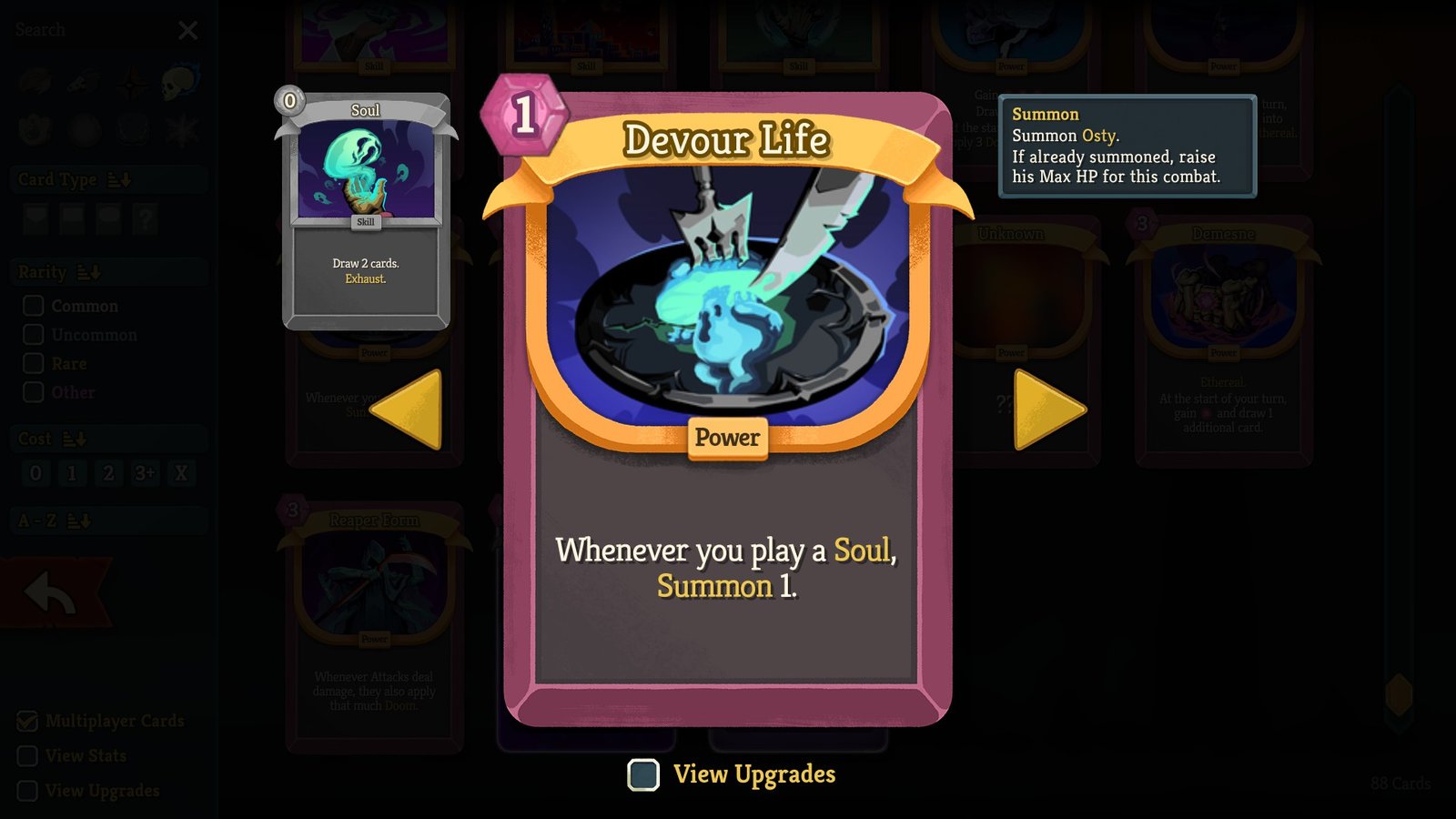
More of a Summon card than a Souls card, Devour Life is a single-cost Power that Summons 1 every time you play a Soul.
With that, Souls become card draw and natural defenses, scaling Osty even faster. Upgrading it doubles the Summon, making it even better. A very easy to slot upgrade if you’re running any kind of Summon support.
Ethereal
For the generalist rule Necrobinder plays around with, enter Ethereal, a StS 1 keyword that sees your cards exhaust themselves if you end the turn without playing them.
Initially, Ethereal cards sound awkward to play around, demanding your Energy and attention and minimizing your options if you to use them or draw them on a bad turn. They’re very all or nothing, but that can quickly become a benefit.
Ethereal cards are much easier to take than standard cards, especially if your deck is bloating, because they’ll simply remove themself from your deck if they can’t see use in the current fight.
Drawing a card that simply isn’t good against an enemy over and over can not only be frustrating, but lead to unnecessary damage and even death. If an Ethereal card isn’t going to be useful, simply let it fade away, thinning your deck and allowing you easier access to other options.
Necrobinder uniquely benefits from playing Ethereal cards, while also packing a few ways to pass Ethereal onto other cards that don’t already have it. Etheral cards also tend to be stronger on average to make up for forcing you to play them. As we discussed, hardly an issue.
Both a nice flavor touch with the whole undead angle, and a practical way for Necrobinder to play with a few more cards than other classes without getting punished for running a bloated deck.
