


I’ve never really had an odd little skill that you would call a ‘party trick’. But, it’s not for a lack of trying, as I’ve experimented with more than a few, Origami being one of them. However, as much as I can appreciate the art of paper folding, I simply don’t have the patience or the precision to pull it off.
This means that Origami-themed games are about as close as I get. Which might seem like a pretty limited niche, but it’s actually a livelier subcategory than you might think. I have loved games like Tearaway, Paper Trail, and Hirogami. Which has ultimately led me to check out Origament.
This is a cozy little platformer that allows you to fold and contort into whatever shape you need to succeed. But despite early impressions being quite positive, Origament is about as plain as the piece of paper you play as.
Pretty Paves The Cracks
I’ll be honest right off the bat here. I judged the book by the cover, so to speak. From the moment I saw a handful of screenshots for this cute paper-folding platformer, I was sold hook, line, and sinker by its gorgeous water effects and environments.
That is, until I truly got a full understanding of what was truly on offer.
This game is the epitome of gaming comfort food. It’s not remarkable, it ain’t gourmet, but it hits the spot for casual platforming fans like myself.
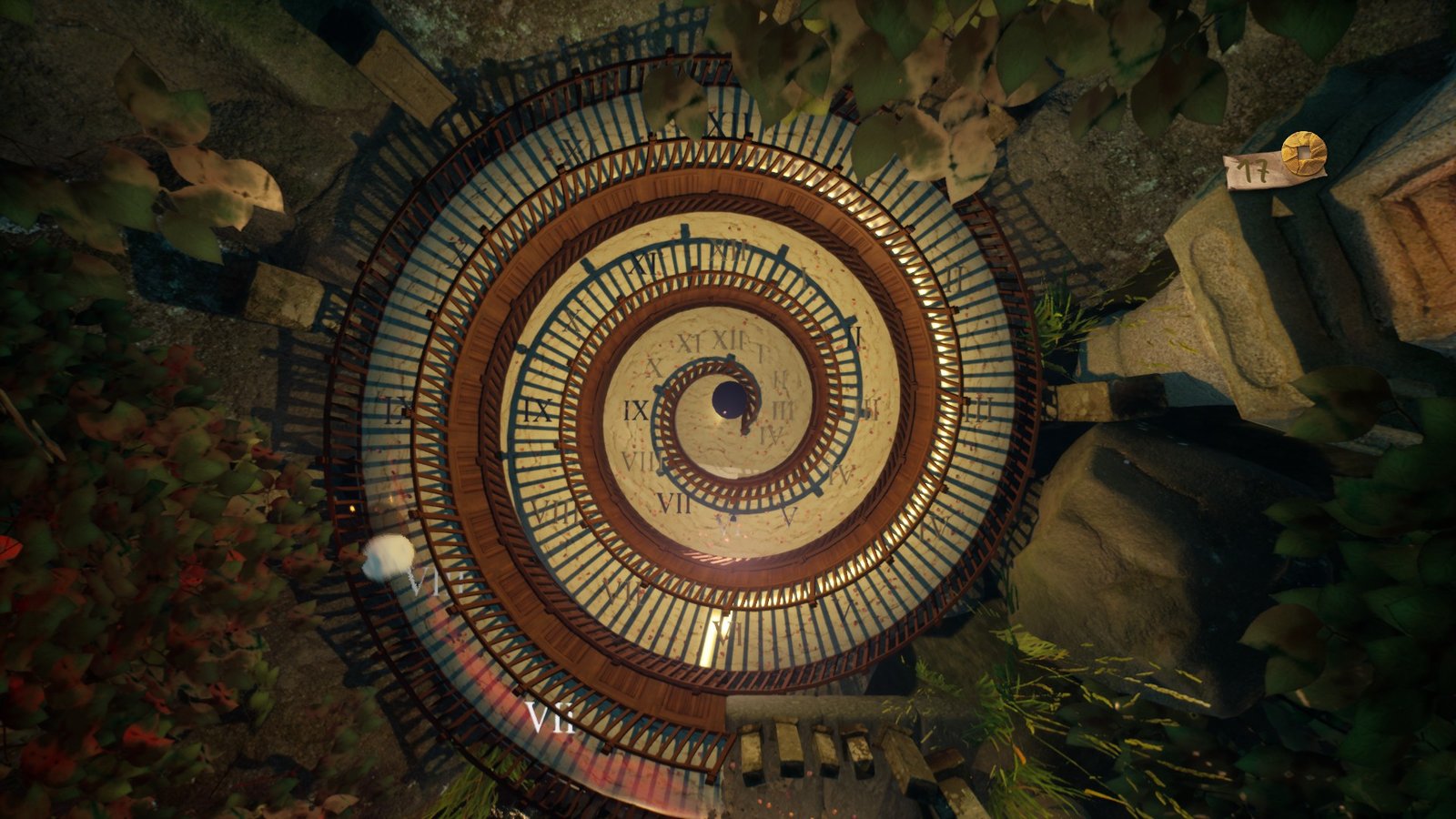
Now, to be completely fair, thanks to the excellent lighting and fidelity that Unreal Engine offers, the game does look pretty snazzy, especially in the opening levels that offer varied and eye-catching environments to casually work through.
That said, once that initial layer of pretty is peeled back, there is very little substance to keep the player enthused. There are real peaks and valleys in the overall presentation.
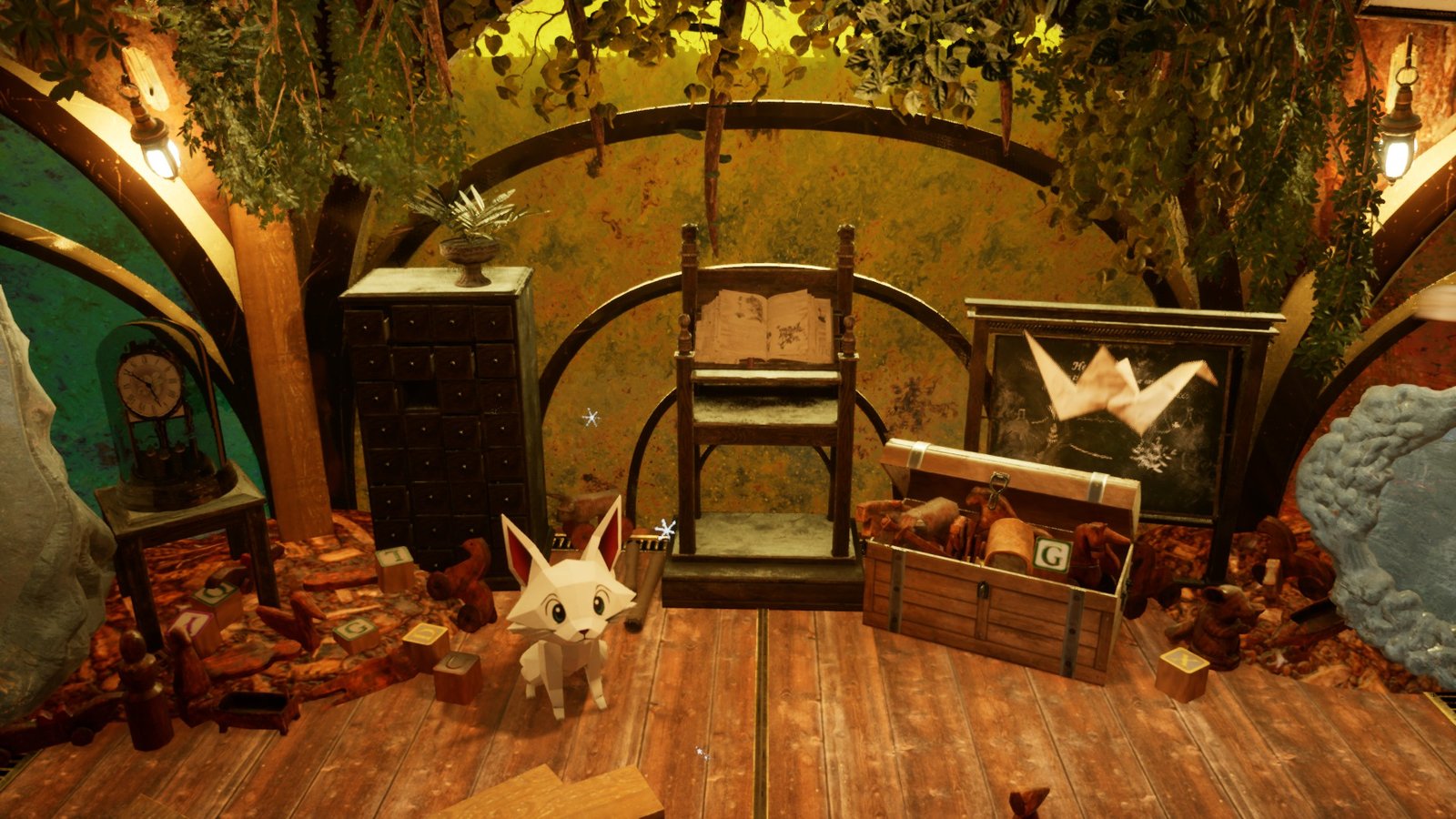
You see, while the game can look picture perfect at times, it does also have that feel of a ‘my first Unity game’ affair. It’s not exactly a game that screams ‘amateur hour.’ But, it’s a game that is pretty bereft of ideas.
Conversations with NPCs are paper-thin in terms of content and substance, environmental aspects often repeat to bulk out levels, animations look comically bad at times, and some levels, like the futuristic one, feel so uninspired and plain that the game would benefit more from their absence.
Couple this with the background music that feels like placeholder, unlicensed tunes rather than a bespoke score to elevate the action on screen, and you have a game that very much flatters to deceive.
But I don’t want to be too harsh here. Nothing is so egregiously choppy or ugly that you can’t find pockets of beauty here. It’s just a little cookie-cutter at times, and certainly doesn’t match up with the artsy game I thought I was getting based on the marketing material.
Know When To Fold ‘Em
The game might not be as holistically charming or as abundant with eye candy as I had initially hoped. But that could have all been forgiven if the platforming and action on screen was engaging and fun.
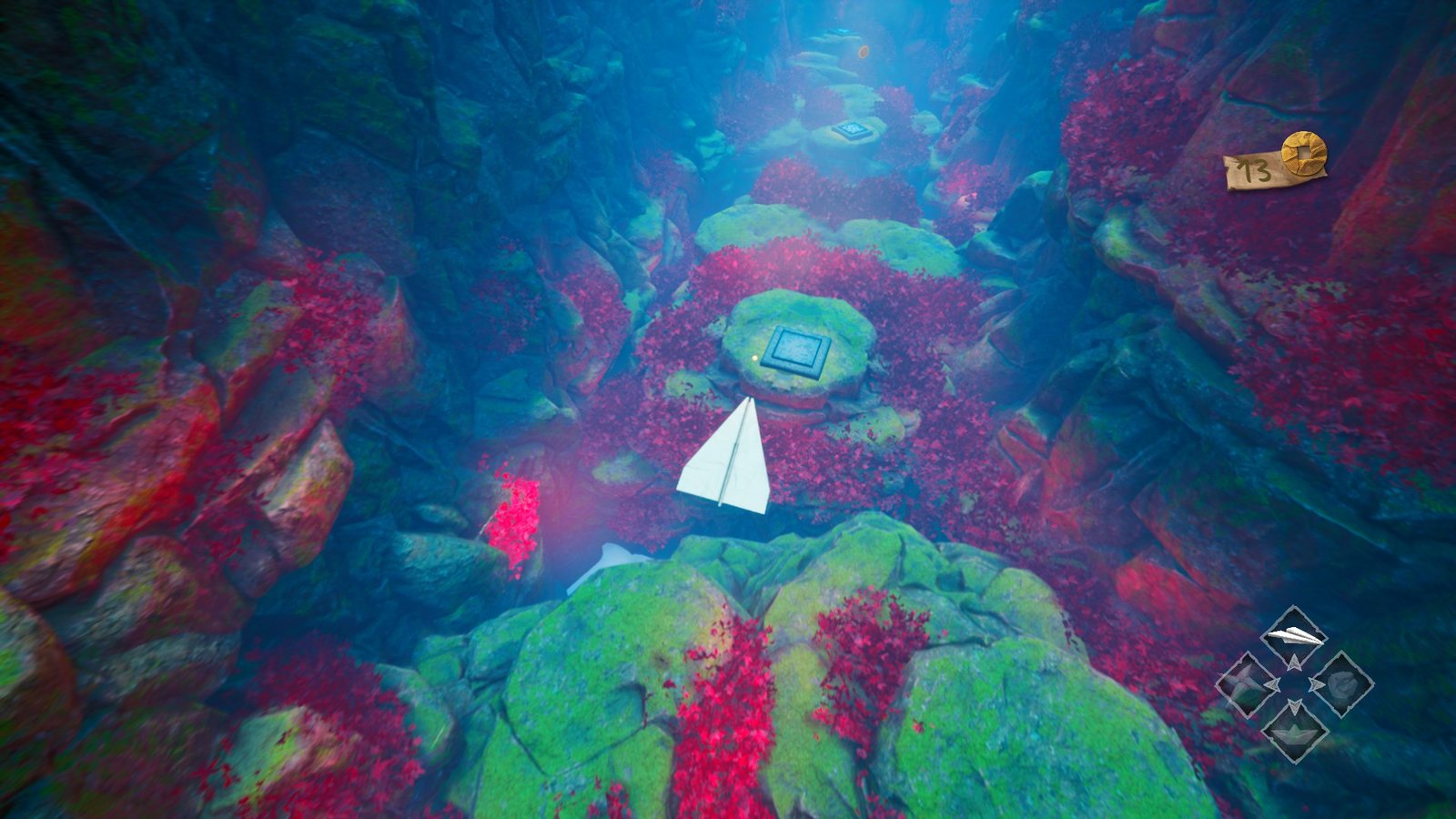
Again, the game lulls you into a false sense of appreciation, as the opening levels showcase the core movement mechanics to great effect. Allowing you to turn into a paper plane, boat, Shuriken, and crumpled ball to get around. Getting around feels great, the controls are intuitive, and the foundation is in place for these mechanics to build upon.
The issue here is that the game simply doesn’t do that.
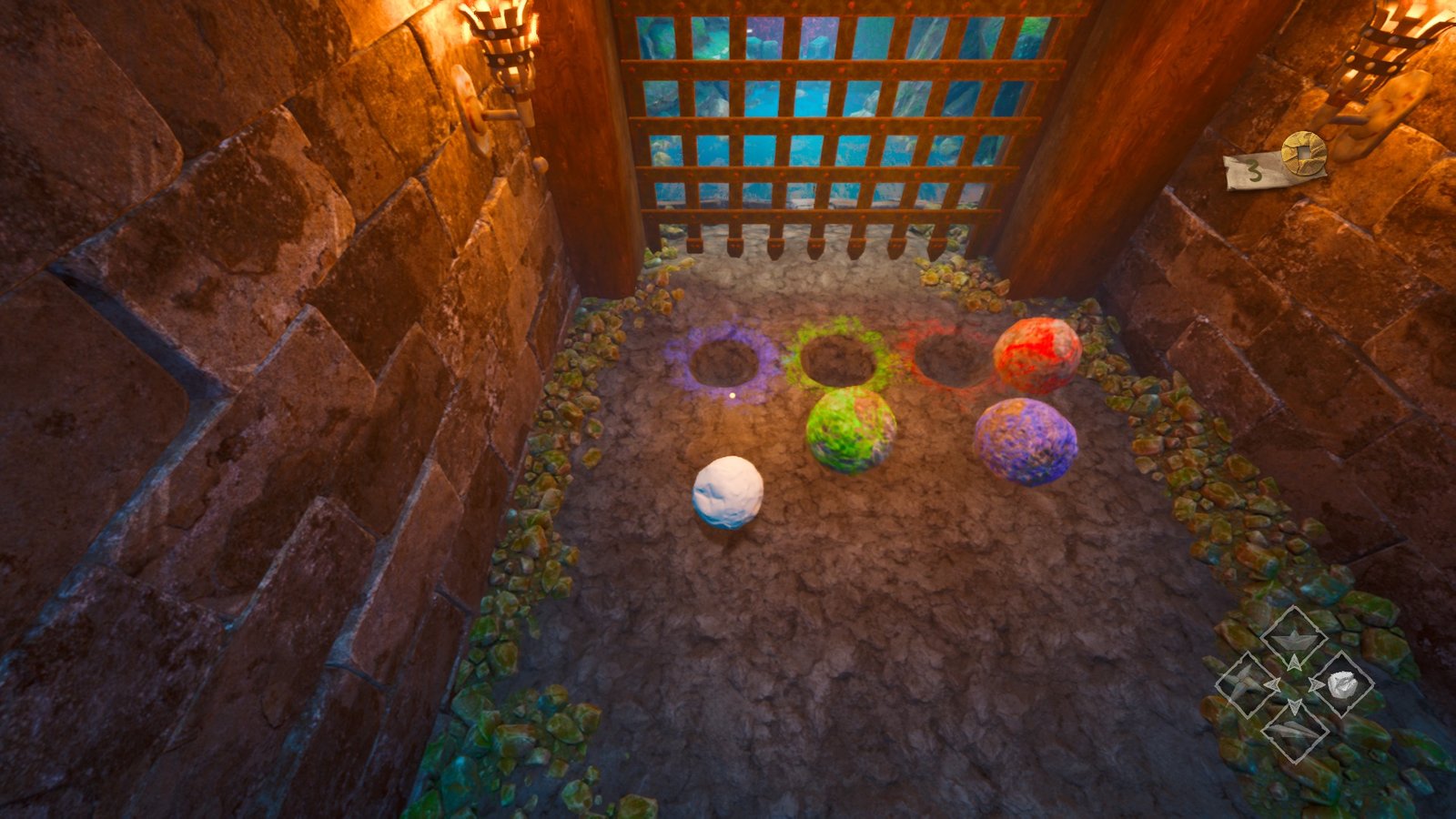
That initial praise for the action on screen turned sour fast as one level blended into the next, with the same trials and tribulations playing out over again, albeit with a new theme for each level, and maybe the occasional labored puzzle to navigate.
The game never raises the stakes, never offers any form of challenge, and yet, inexplicably, it decides to make these all-too-familiar levels even longer as time goes on.
Don’t get me wrong, none are all that long as the game can be completed in full if you’re willing to put aside a couple of hours. But, the fact that I still found them bloated and boring speaks volumes.
This blow might have been softened by a more robust collect-a-thon mechanic to prop up the action, but sadly, this boils down to a rudimentary coin collection system that awards players with low-effort cosmetic skins. The upside is that the coins are never all that difficult to find, but the downside is that they are more or less worthless anyway.
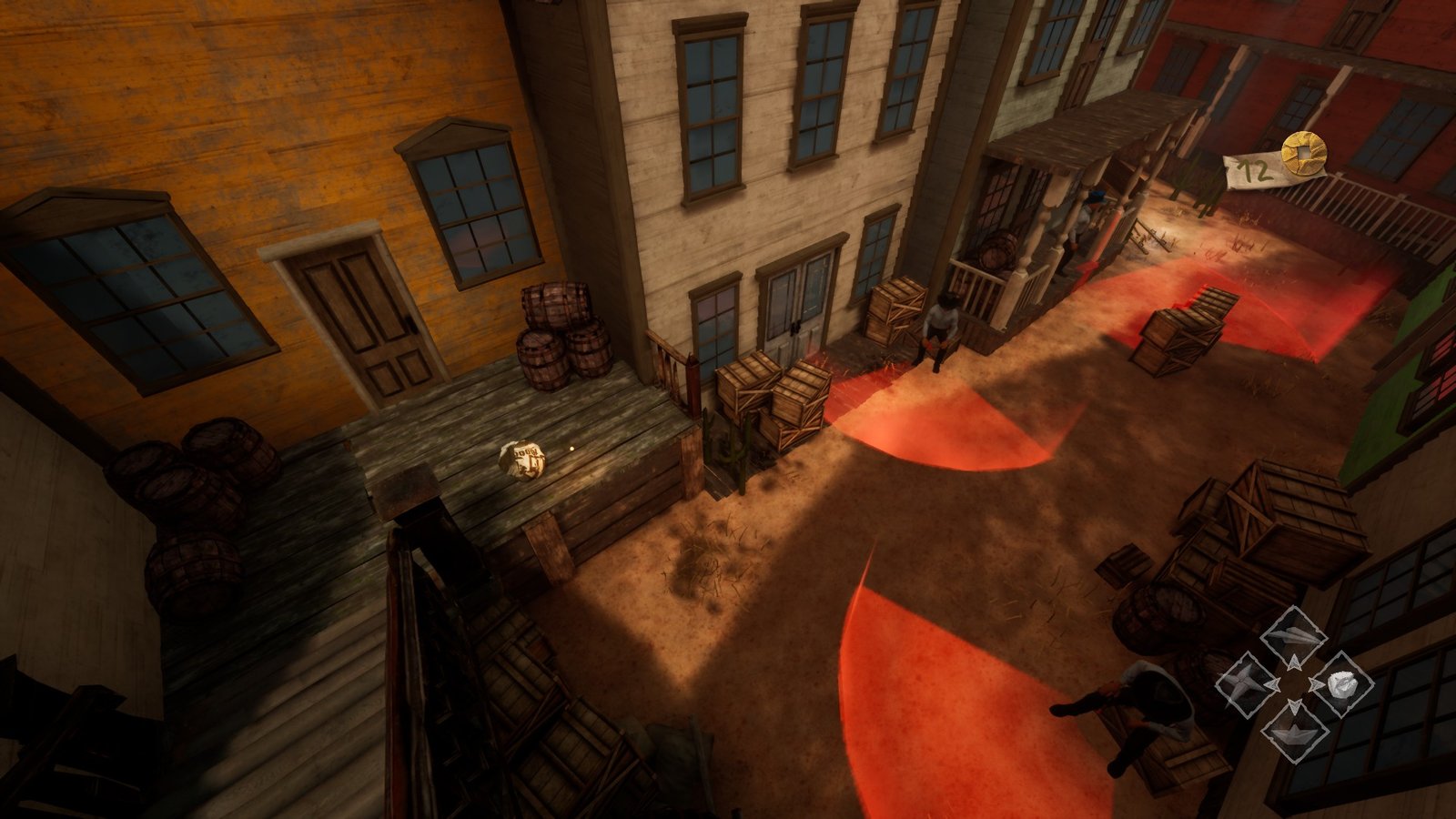
The only attempt to offer something new in terms of mechanics throughout was the baffling addition of a stealth section throughout the western-themed level, which was novel, but hardly anything worth writing home about. Or perhaps the opening mine cart section, which once again, broke the tedium ever so slightly. There was an attempt, I can acknowledge that. But an attempt does not equate to a triumph.
Gaming Comfort Food
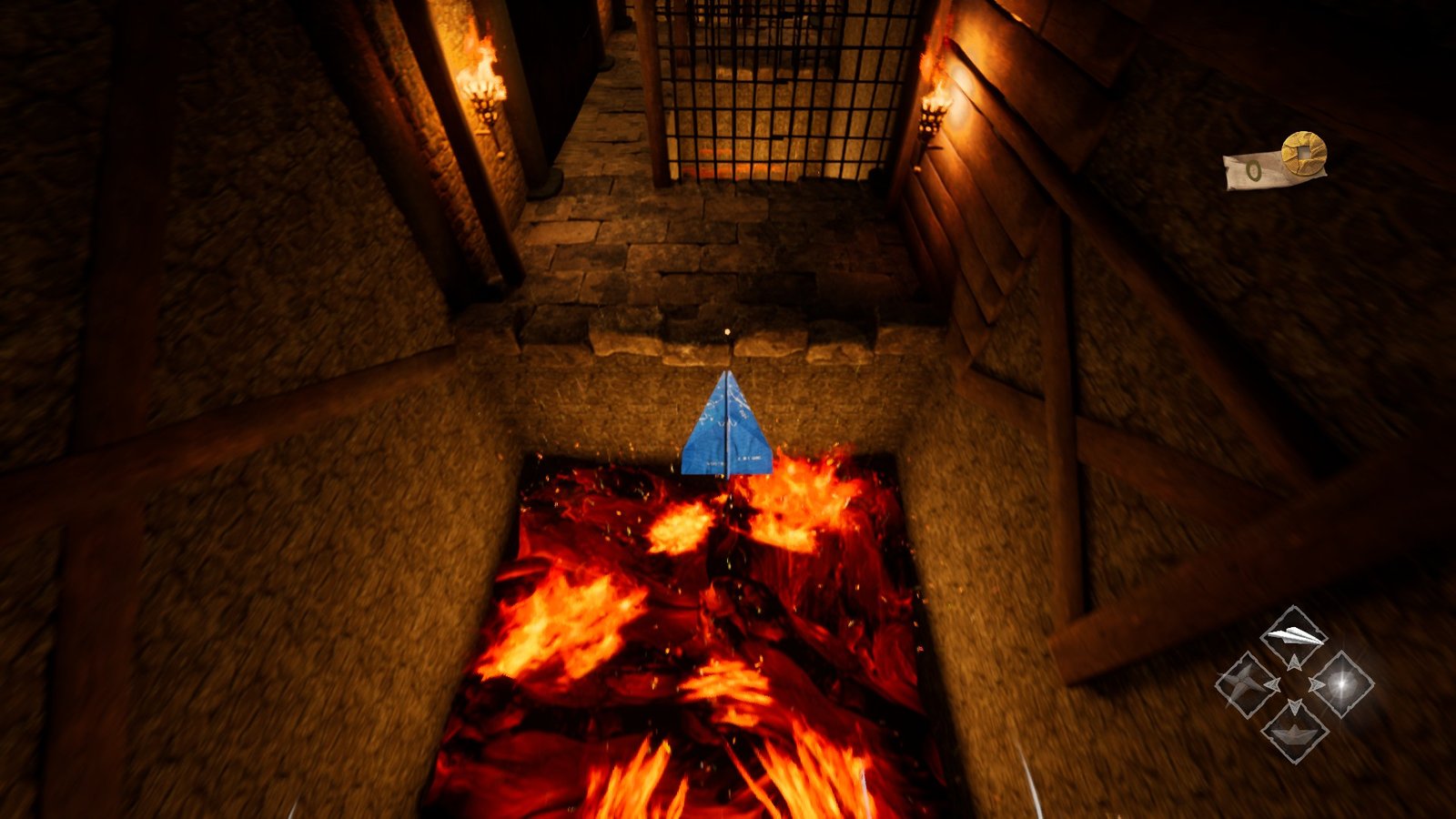
At this point, I would probably wrap things up with a rundown of the narrative chops. But, truthfully, that would be akin to doing a thorough analysis of the most rudimentary of children’s books. The story boils down to you playing as a sentient letter who needs to be delivered to Santa. That’s right, a Christmas-themed game in April, how timely.
Why must that letter travel through sun-kissed cities, oriental lakes, and cyberspace? Your guess is as good as mine. Honestly, it’s best to just treat it for what it is. A means to an end.
I would have loved this game to offer more environmental and subtle but profound storybeats akin to games like Unravel, as I feel that these games aim to occupy the same space. But, apparently, that was a little too much to ask.
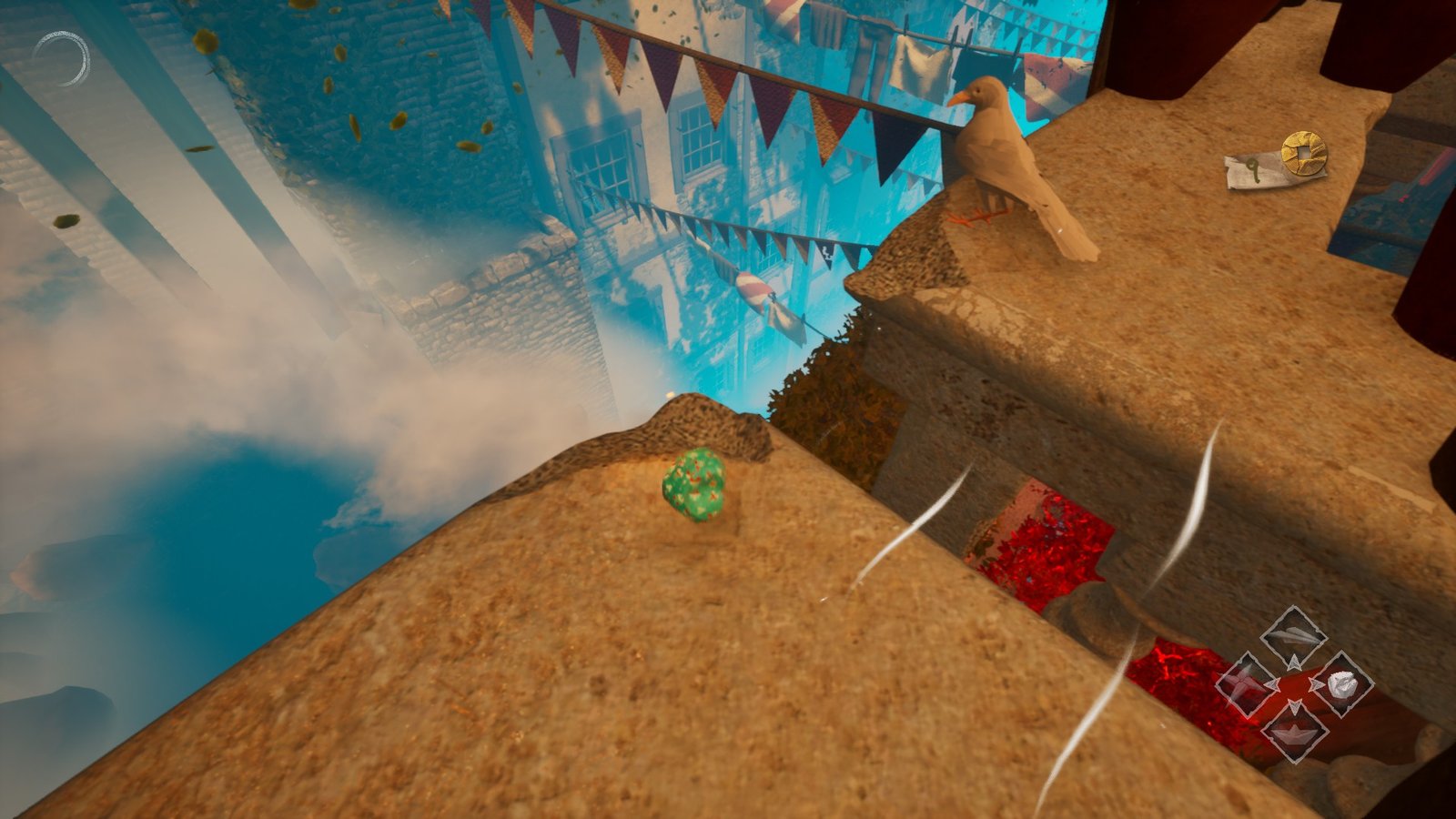
So, instead of reviewing the nothing-burger of a story. I would rather fight this game’s corner a little. As surprising as that might be, as I’ve run it through the mud. But, here’s the thing. Despite all the jagged edges and uninspired design choices. I still found this one rather refreshing.
This game is the epitome of gaming comfort food. It’s not remarkable, it ain’t gourmet, but it hits the spot for casual platforming fans like myself.
It’s a great game for beginner platformer fans due to the low skill ceiling, it does feel satisfying to work through, and it doesn’t overstay it’s welcome at all.
Don’t get me wrong, the critical side of my brain knows this isn’t a worldbeater. Heck, it’s not even a local legend. But, if you just want a low-stress game to fill some time. You could do a lot worse than Origament.
Origamant: A Paper Adventure looks far better than it actually is. The game's admittedly solid platforming mechanics quickly become stale and tired. This is only further hindered by the uninspired level design. However, if you're looking for a short, sweet experience that feels like comfort food rather than a new, exciting gourmet meal. Origament might sate your appetite until something more filling comes along.
Pros
- Eye-catching visuals
- Intuitive and satisfying movement mechanics
Cons
- Extremely short and shallow experience
- Nonsensical, borderline non-existent story
- Lackluster level design
