


Before getting into this review, I want to put one debate to rest: the Nioh series is a Soulslike. There have been online discussions that argue otherwise, stating that it’s an ARPG, but the truth of the matter is that it is both.
One of my favorite genres is Soulslike, as I absolutely love the challenge, build variety, and level designs the genre is known for. I have played them all, such as the fantastic Lies of P, brutally difficult The First Berserker: Khazan, and the more relaxed ones, such as Enotria: The Last Song. If you name a Soulslike, there is a 99 percent chance that I have played it.
Now that you know my history with Soulslikes and the number of them I have under my belt, this next statement will hit harder: Nioh 3 has just claimed the spot for my favorite Soulslike of all time. In fact, it may have also claimed my top spot for the best ARPG of all time, too.
Simply put, I was not expecting this to be the case going into it. But Nioh 3 continued to impress me time and time again with each new boss encounter, each new region, and the amount of complexity in its mechanics and systems that allow for some deep build variety.
Ninja or Samurai?
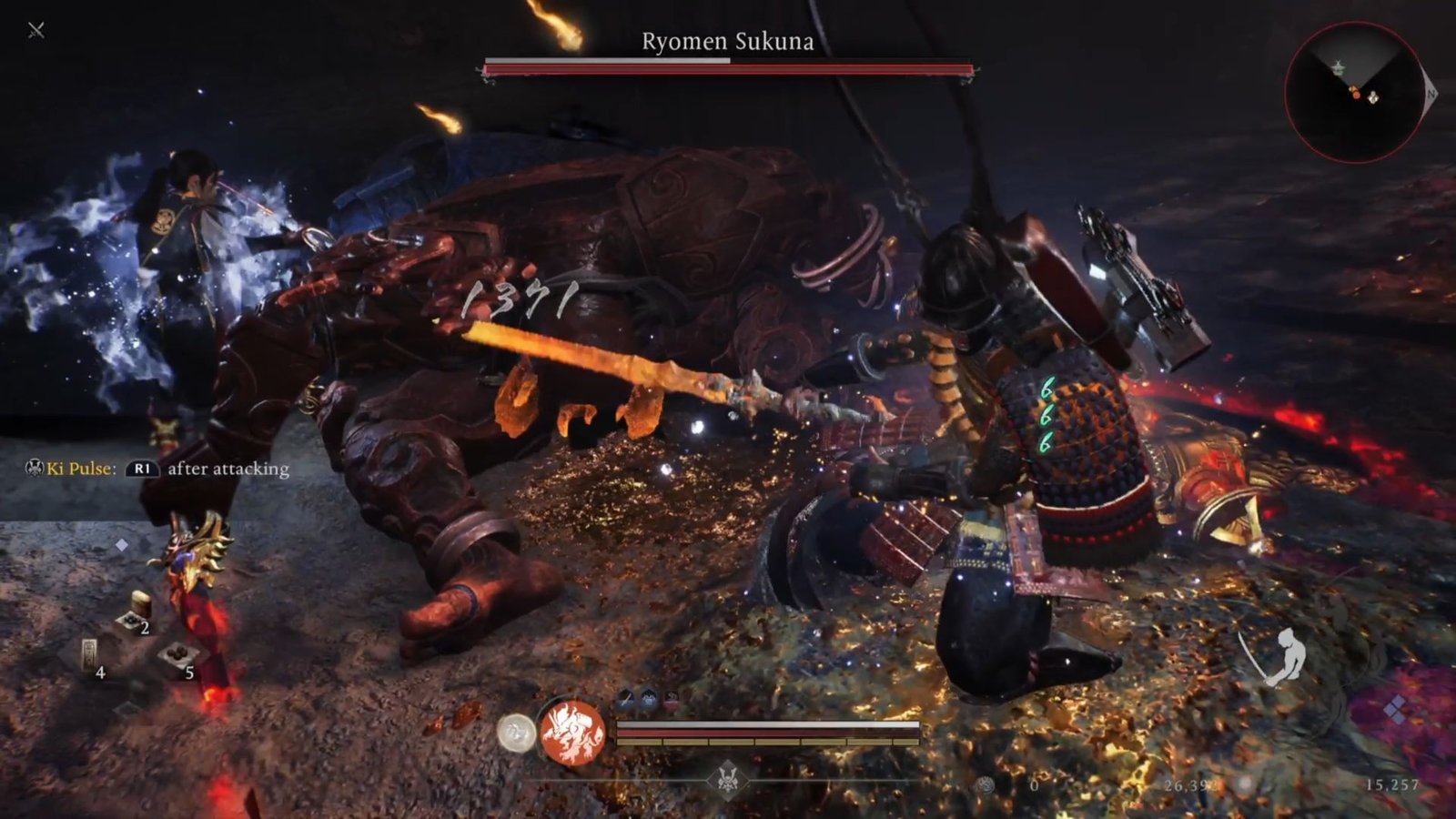
Nioh 3’s combat is a standout, and just like its predecessors, it’s absolutely incredible. The biggest change introduced is Styles, which allows players to switch between combat modes that feel significantly different from one another.
Ninja Style, also known as Ninjutsu, is a more fast-paced approach, offering better dodging capabilities and speed to outmaneuver the enemy. Samurai Style, on the other hand, is more focused on strength and blocking incoming attacks.
I spent most of my journey playing in Ninja Style, but that doesn’t mean I didn’t use Samurai to my advantage. In fact, the game encourages switching between the two to counter Burst Attacks, charged-up attacks indicated by the enemy glowing red.
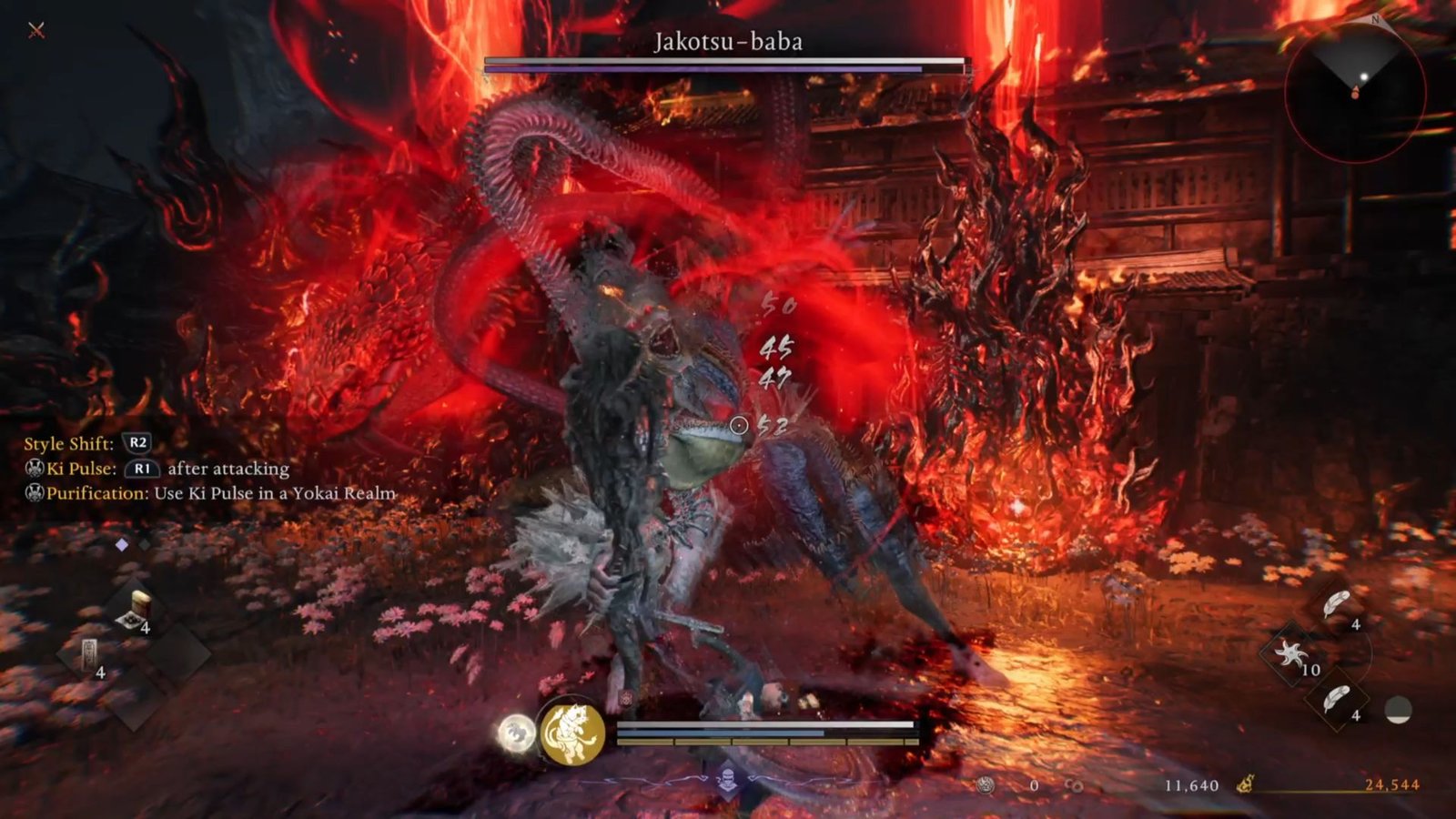
Changing styles right when the Burst Attack lands will stun the enemy, opening up a window to deal a ton of damage. It feels fantastic every time you succeed at this, since getting the timing right can be challenging, and you risk taking a ton of damage if you fail.
There is absolutely no cooldown to switch, either, allowing you to immediately switch back to your preferred style after completing a Burst Counter. However, I found it best to play as Ninja up until a Burst Attack, Burst Counter into Samurai, deal as much damage to the enemy as Samurai while it’s stunned for maximum damage. Then, switch right back to Ninja when said enemy is back on its feet.
This feels like the most efficient way, and I can see it being the same for most players since Samurai isn’t the best against fast-paced enemies. However, due to the Samurai being good at blocking, I can also see players taking the time to master fighting head-on with this style.
Become a True Warrior
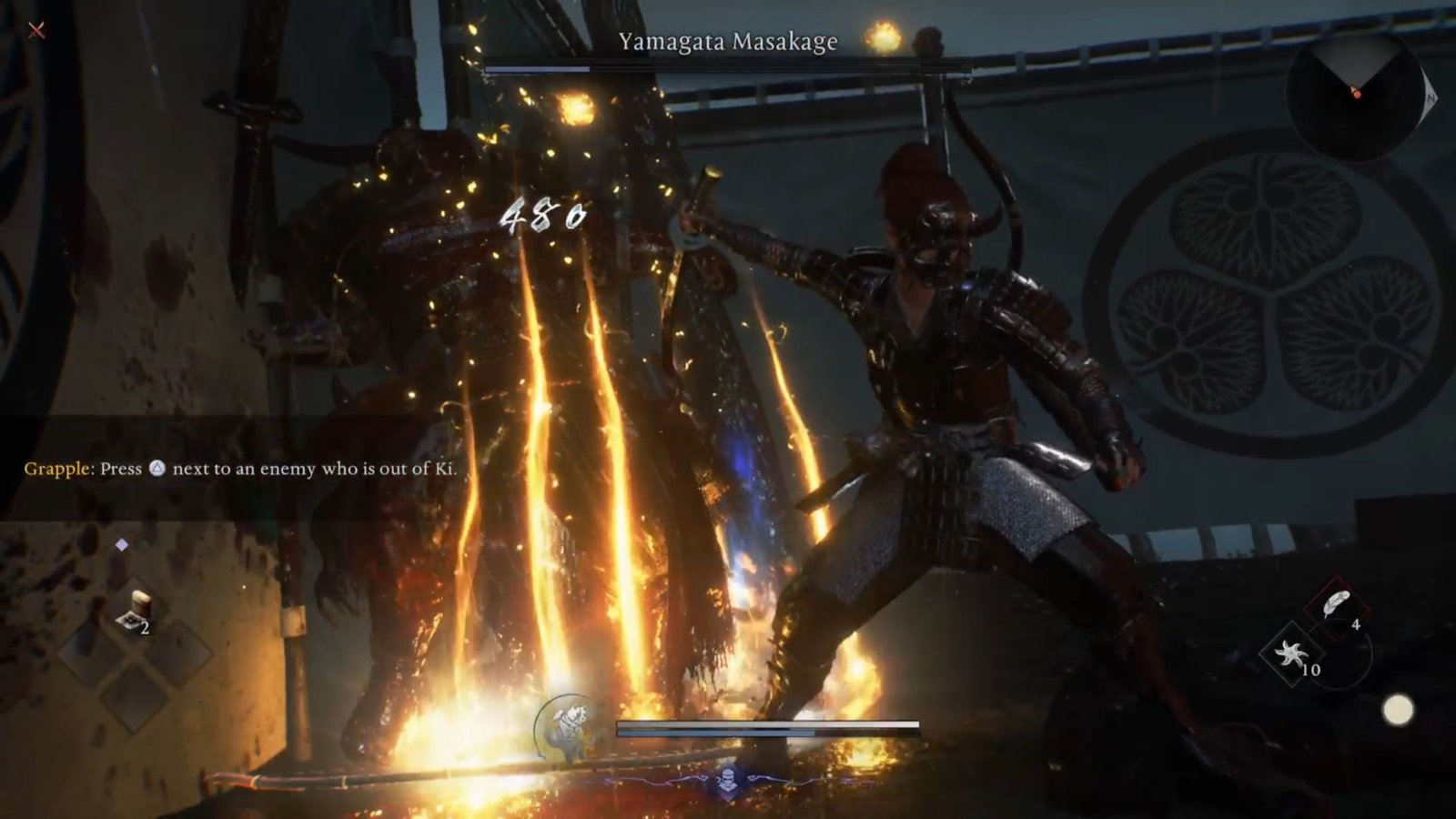
As players progress, they will unlock Ninjutsu and Martial Arts skills, which are special attacks for the Ninja and Samurai styles, respectively. These essentially are used to create a combo kit of sorts that is unique to your playthrough, similar to how coins unlocked new combos in the Ninja Gaiden series. The more skills you unlock here, the more extensive your kit feels, and combat becomes more complex due to additional button inputs.
On top of combos, players can expect to customize their character further through the Soul Core and Skill Management system. For starters, Soul Cores are equippable items that have two effects, falling under Yin and Yang categories.
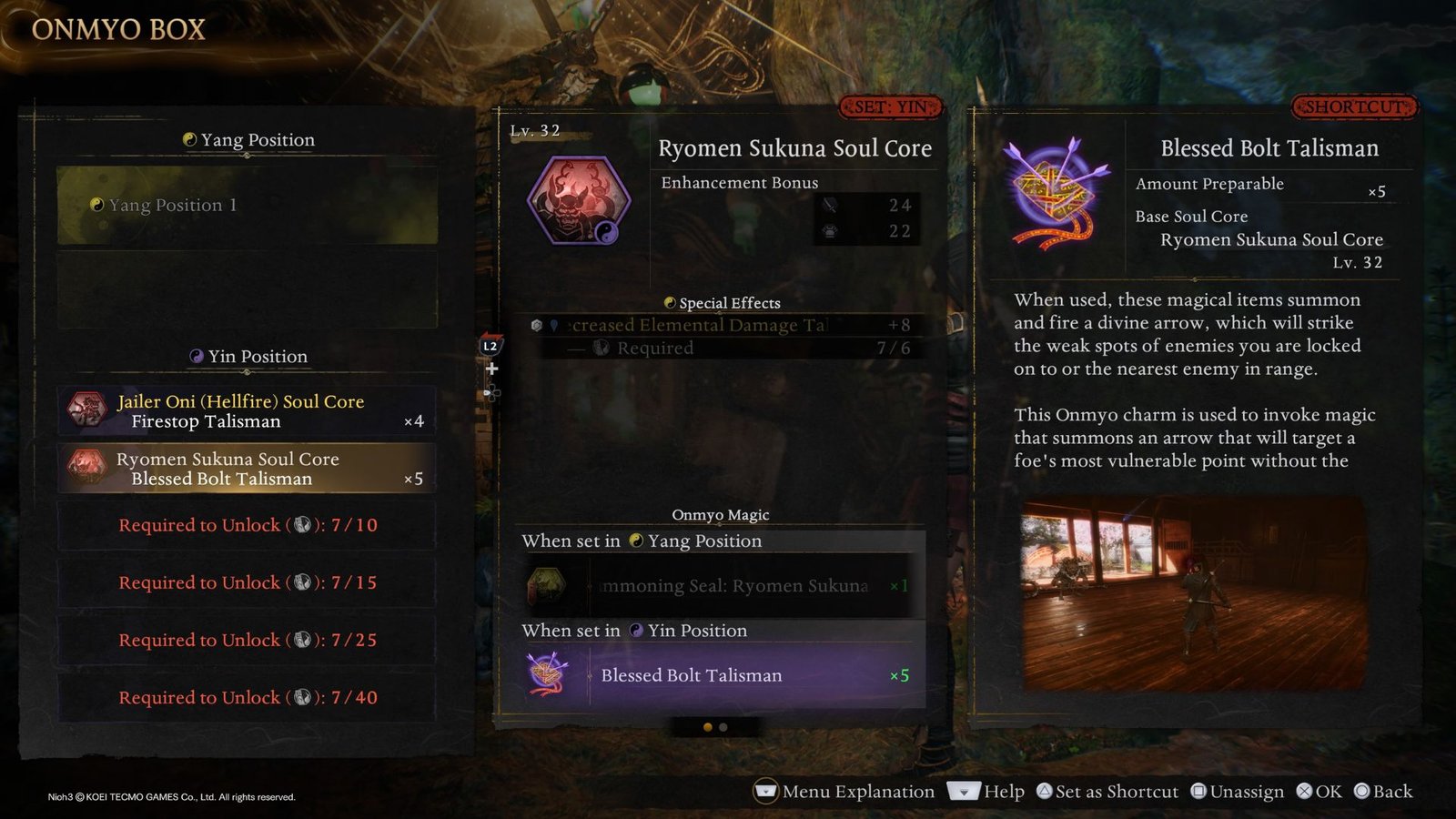
Depending on where you place a Soul Core will determine the type of effect you receive for it. For example, the Yin positions provide usable items that can buff your character, shoot projectiles, etc. Meanwhile, Yang positions allow players to summon certain monsters to help in combat. Soul Cores are a great way to enhance your character’s overall efficiency in combat.
As for the Skill Management system, this allows you to equip passive buffs to your character by finding Skill Texts in chests throughout the world. This operates on a point system, where each Skill Text has a certain number of points, and you can only equip as many as your maximum points allow.
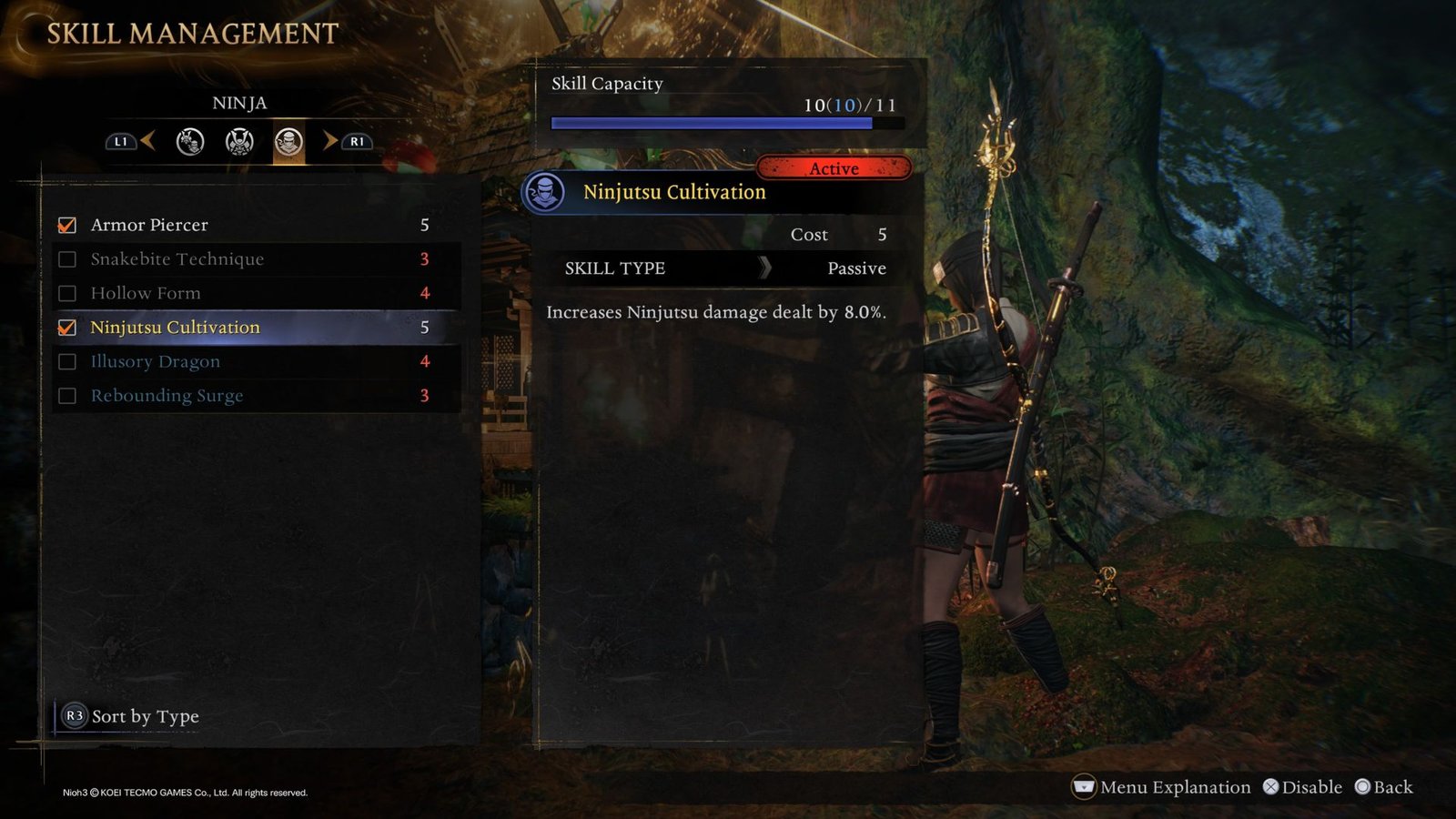
Luckily, players can find Memorandum to increase the allowed number of points. One example of a skill in the Skill Management menu is “increases Life restored by elixirs by 15.0%.” It’s that sort of passive stuff that can make a huge difference in combat.
I found that all of these systems complemented each other well and gave me a lot of agency in how my character performed. I will say, though, that it can be a bit overwhelming at first as the game throws a lot of mechanics at you in the starting hours.
While there is an in-depth tutorial system, it still can be a bit much, especially since there are other systems to learn on top of these, such as crafting, collectibles that offer upgrades, unique ways of traversal, upgrading Guardians, etc. Either way, once everything begins to click, you’re in for a game that offers deep and complex build variety.
Combat That Doesn’t Let Up
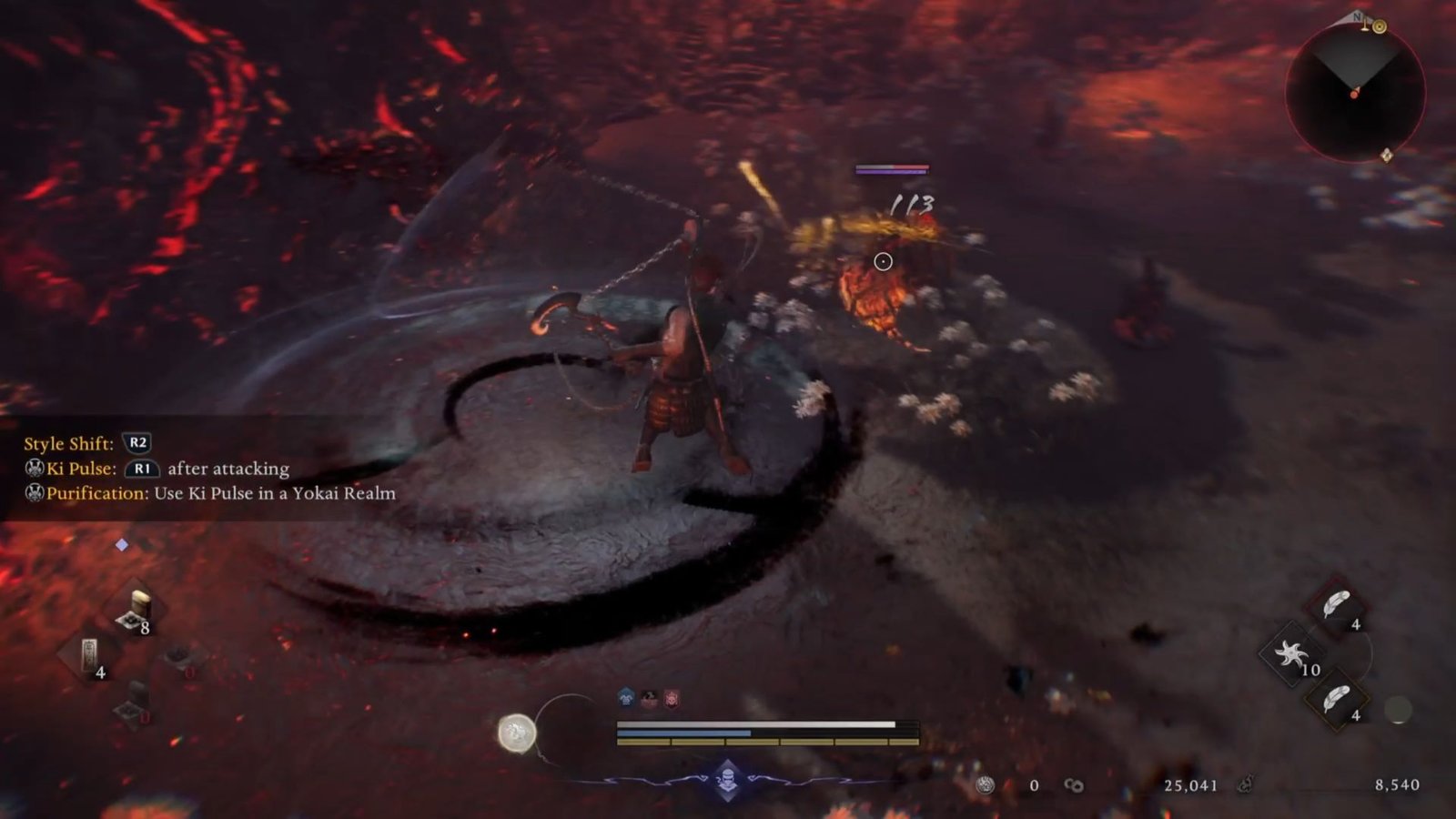
What I love most about Nioh 3’s combat is that it doesn’t ever let up, even for smaller enemies. In a lot of Soulslikes and ARPGs, mob enemies are just there as a distraction and can typically be killed with no issue at all.
However, in Nioh 3, most encounters require focus and for you to be on top of your game. Failing to do so will result in enemies overpowering you, stunning you, and draining the health bar quickly. Enemies deal a ton of damage, so it’s essential to try your hardest at all times. I love this as it makes the dungeons leading up to the boss feel like a boss themselves.
Nioh 3 is about patience and grit, and that is especially clear in its boss fights. Players without the willpower or willingness to learn will not enjoy this game, as it has bosses with a really high skill ceiling that refuse to forgive even the slightest mistake.
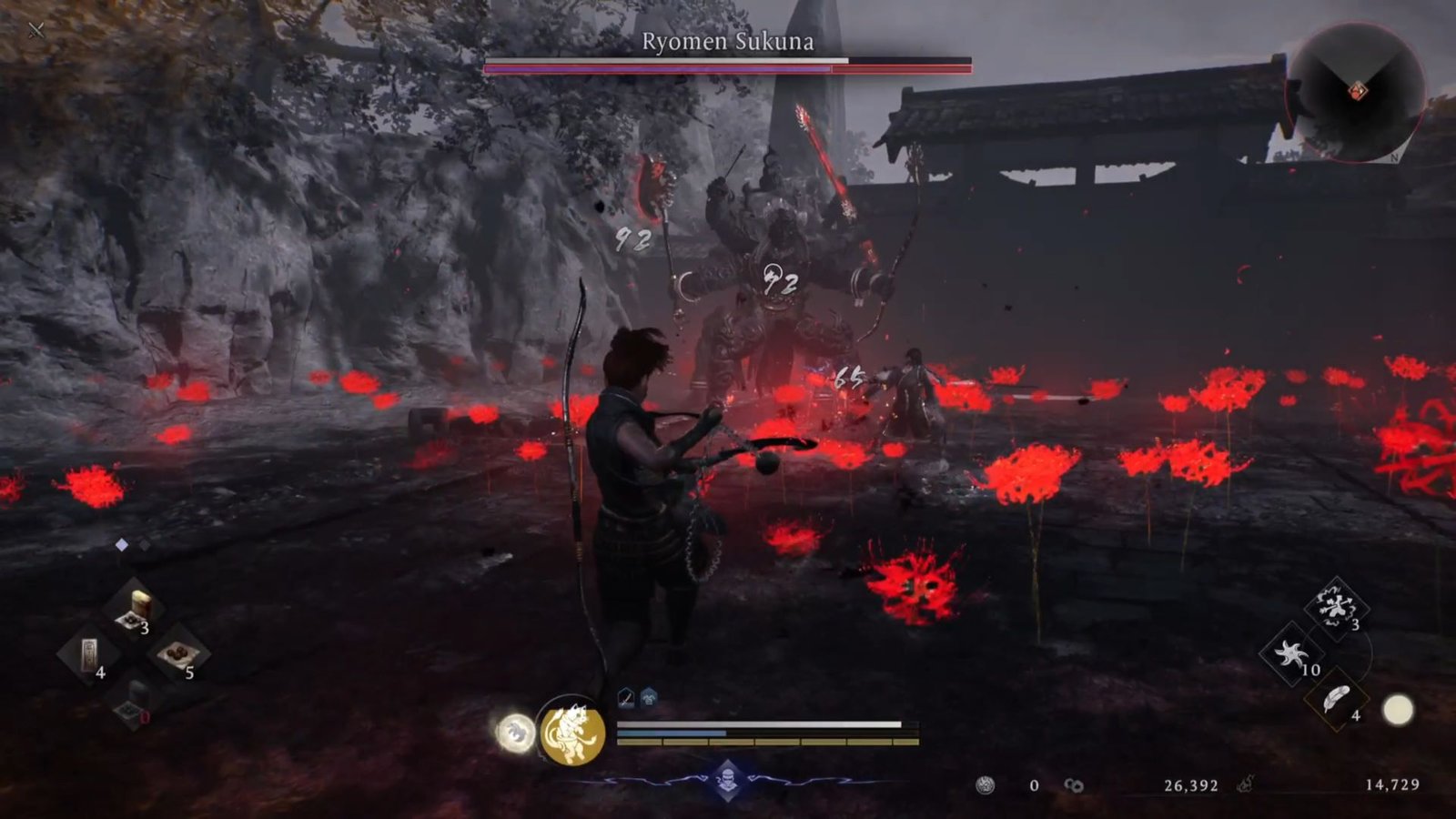
The game will punish you for the tiniest errors, such as dodging and guarding too late, parrying too early, all of which have extremely tiny, but fair, windows. The game is all about failing, learning, failing again, and repeating until you finally come out on top. And that is what makes it so incredible.
Most of Nioh 3’s bosses took me upwards of 20 attempts, sometimes even up to 50 attempts. I consider myself to be pretty good at these games, but Nioh 3 is absolutely brutal and demands that I learn every attack pattern, every weakness, and master the timing of dodges and parries perfectly.
Every failed attempt was a lesson in how to get better, and even though I would get incredibly frustrated dying so often, I always felt like it was my fault and never the game being unfair. The game is incredibly fair and well-balanced
Boss fights turn into a dance of memorization, remembering attack cues and patterns, and then using what you learned to counter said moves. Mastering a boss is a joy in Nioh 3 as it feels like you have actually come a long way in your journey of becoming a true Samurai and Ninja.
About halfway through my journey, I was able to defeat some of the earlier bosses (you can replay bosses through Battle Scrolls) without taking damage, and it’s incredible to see how far my skills have improved since last fighting them. Everything is possible with a little bit of patience and Nioh 3 knows this.
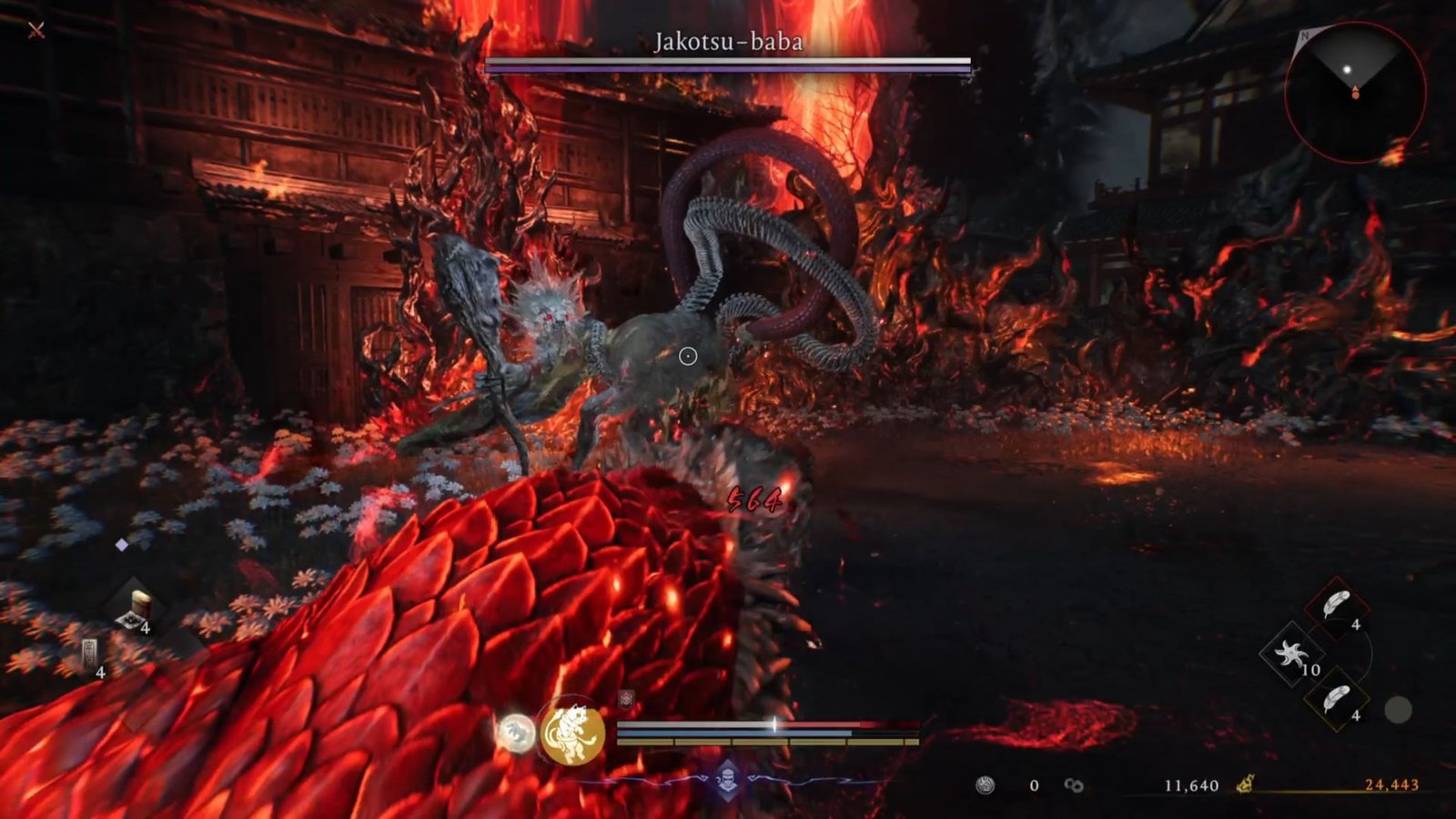
Each boss is well crafted by Team Ninja with unique characteristics that make each encounter feel fresh and a new test to take on. One boss might focus on quick melee attacks with delayed animations, while another might utilize projectile magic to its advantage.
Sometimes they mix the two, filling the arena with flames and lightning, all while the boss is in your face, swinging away its axe. The result is boss fights that are colorful, adrenaline-inducing, and simply a work of art. I would go as far as to say that some of these bosses are better than FromSoftware’s.
A Vast World to Explore
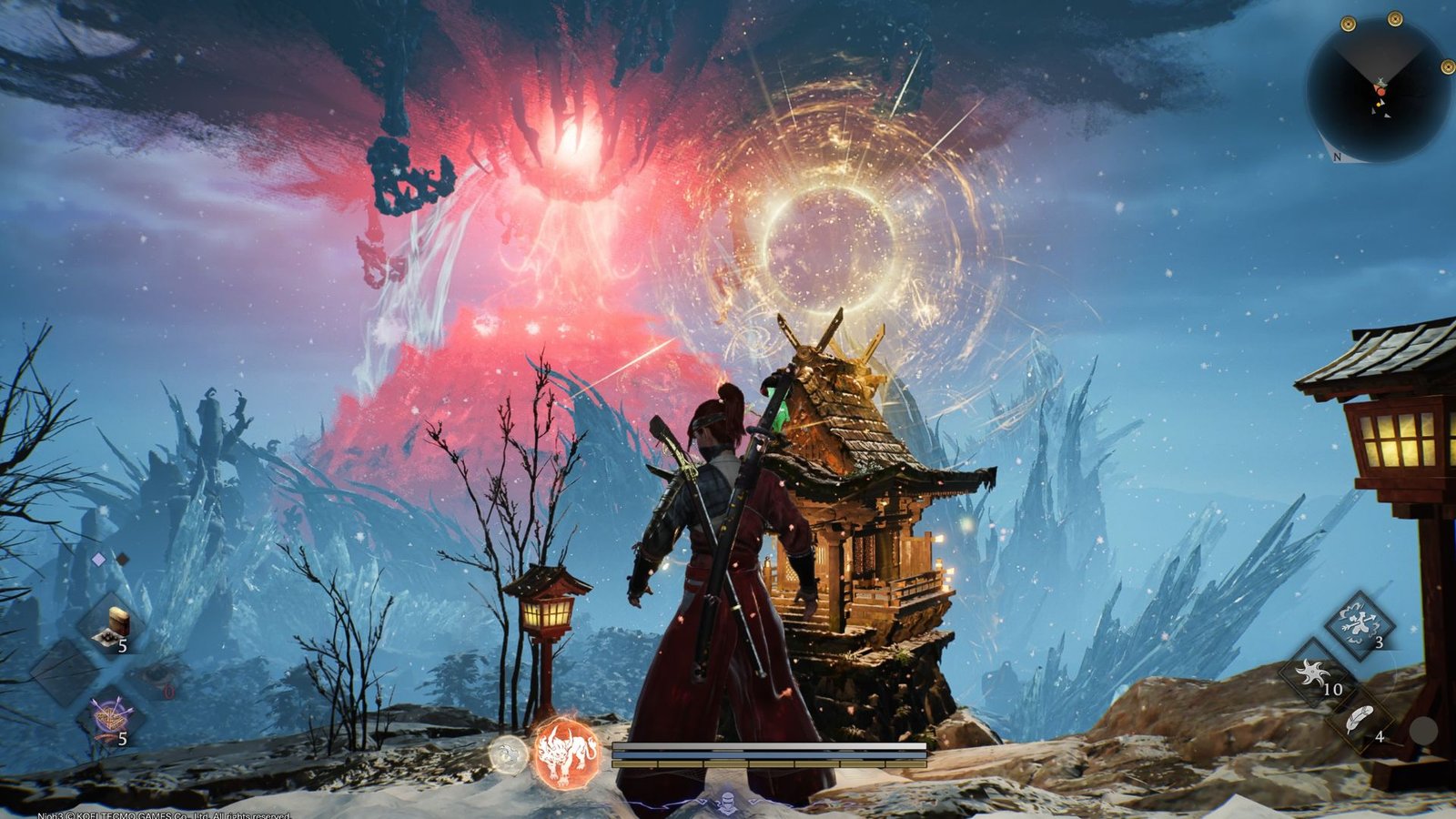
Unlike the previous two games, Nioh 3 changes its level layout by adding open-zoned regions. While the linear-based missions are still there, in the form of dungeons, the main map is fairly huge and offers a large amount of content to complete.
Each region has its own fair share of activities for players looking to complete everything the game has to offer. Some of these activities offer permanent upgrades to your character, such as increased uses of Elixirs, while others offer rare weapon drops and unique items.
This world is free to explore as much as you please, up to a certain limit. For example, there are some regions blocked off due to having to progress the story, so the entire world is not completely explorable from the get-go.
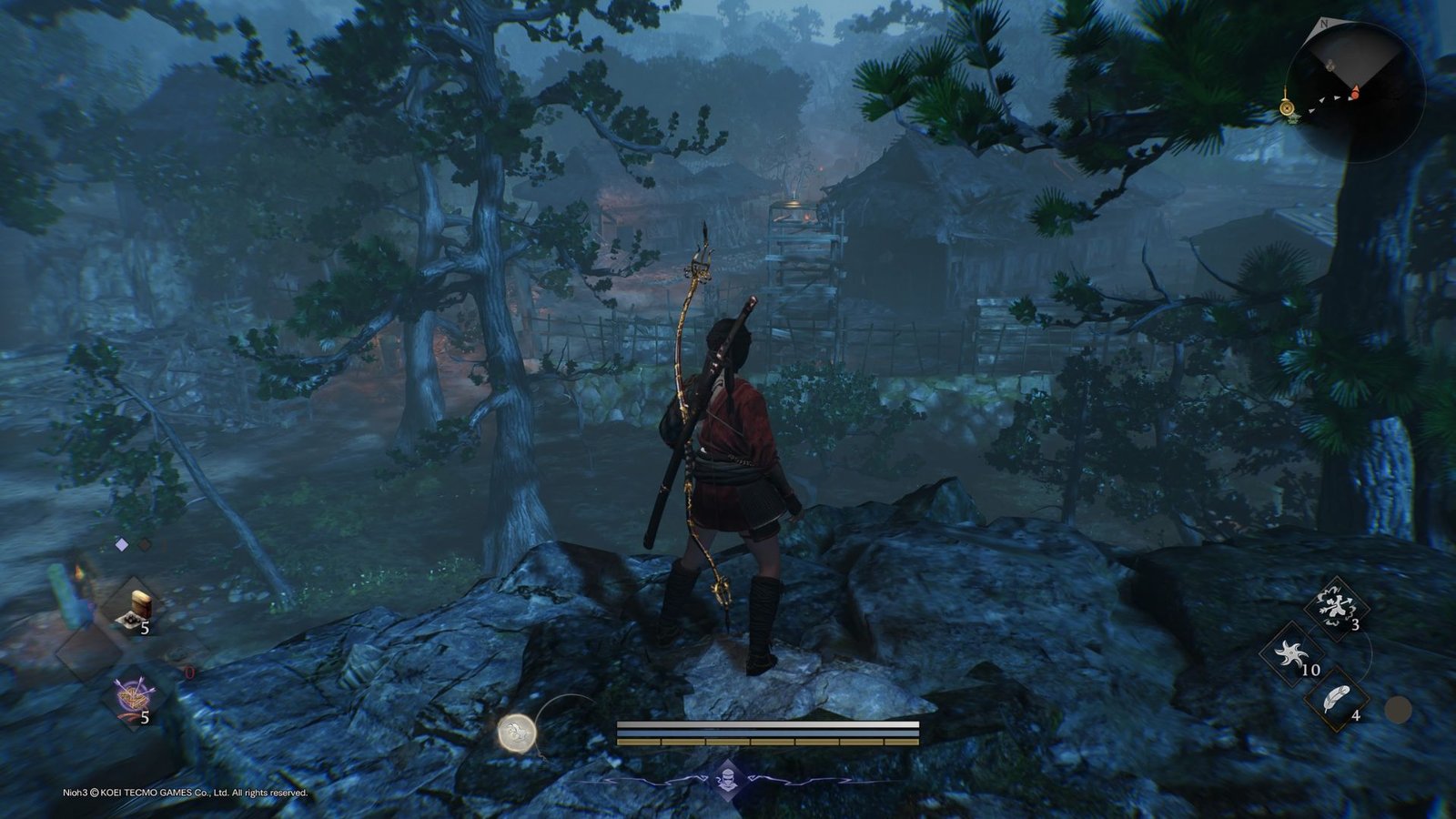
However, there will come a point in the story where players go everywhere they like to complete the various activities. It never really gets to a point where the game feels open world, but all in all, it feels massive. Especially compared to the past two games.
As you explore the world of Nioh 3, you begin to increase your “Exploration Level,” which is this game’s way of showing how far you’ve been. I loved this feature since reaching a certain Exploration Level resulted in points of interest being marked on my map, making it easier for me to find. I appreciated this since it respects the player’s time.
The greatest thing about exploration, though, is the fact that each region feels considerably unique from one another and are brimming with personality. Players will encounter different enemies depending on the region, variety of environments, etc.
Closing Comments
Nioh 3 does almost everything right for both an action RPG and Soulslike. For an ARPG, it offers some of the most satisfying combat in the entire genre, and as a Soulslike, it has some of the best bosses of any game on the market. That’s not an exaggeration either, as I have not been this invested in mastering the combat and taking down formidable foes as much as I have with Nioh 3 since Elden Ring. The switch to an open-zone world, rather than strictly linear levels like those in the first two games, was a great choice, as it gives players more freedom to explore off the beaten path, grind for levels, complete activities, and discover secrets. Nioh 3 is a masterclass in game design and will go down as one of Team Ninja’s best games.
Nioh 3 does almost everything right for both an action RPG and Soulslike. For an ARPG, it offers some of the most satisfying combat in the entire genre, and as a Soulslike, it has some of the best bosses of any game on the market. Nioh 3 is a masterclass in game design and will go down as one of Team Ninja’s best games.
The Good
- Incredible combat that's fun to master
- Some of the best boss designs in the genre
- Deeply complex and engaging build variety
- The world has tons of activities to complete
- Very challenging, but always fair
- Runs perfectly on the PS5
- Superb level design inside dungeons
The Bad
- Onboarding can be a bit much as there are a ton of mechanics and systems
