


If you are a new player jumping into Europa Universalis V, then you would be overwhelmed by the sheer amount of features that the game offers. To begin, you need to choose a nation to practice your strategy on. Some countries offer more stability, while others can be challenging. Keep reading below to know which countries are the best for beginners in Europa Universalis V.
Top 5 Nations for Beginners in Europa Universalis V
Some of the key features we will be looking out for when choosing the best beginner nations are how easily and quickly you can build your economy, monopolize a market, and the ability to win wars. This is what we recommend as the countries to start with for a much easier time getting a hang of the intricate mechanics in EU5.
Kingdom of Hungary
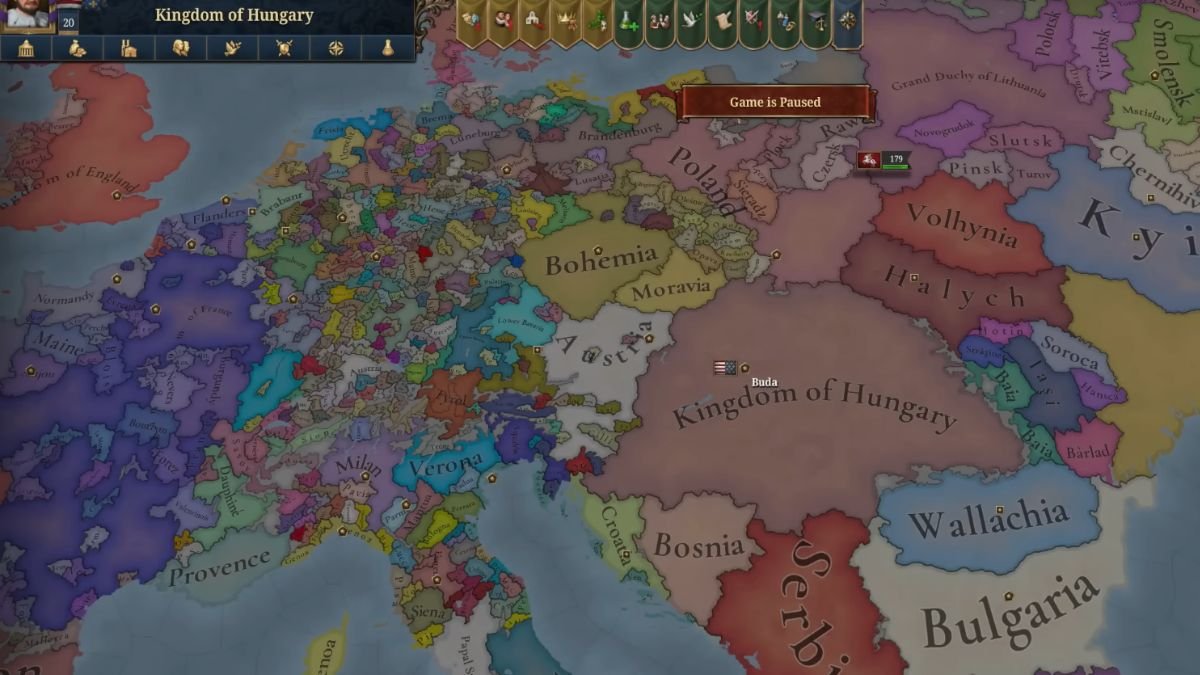
Since Hungary sits almost in the middle of Europe, you will have easy access to your neighbors and also have plenty of access to various resources, especially silver and gold. Also, Hungary offers various natural resources, like the rivers and flat lands, to build your civilization on. Hungary also specializes in the Pest Market, giving you a monopoly over this niche area and helping you earn a decent profit.
As for expanding your region, the Ottomans and the Kingdom of Bohemia will show resistance to the forces of Hungary. But, with your population size and the large influx of Cavalry, you stand a good chance of capturing the Balkans southwards. Now, to profit off of Hungary’s economy, ban the export of Gold and Silver and import goods from Venezia. That way, you earn enough Tech points early on to spend on upgrading your institutions.
Also Read: Europa Universalis V – How To Transfer Occupation
Portugal
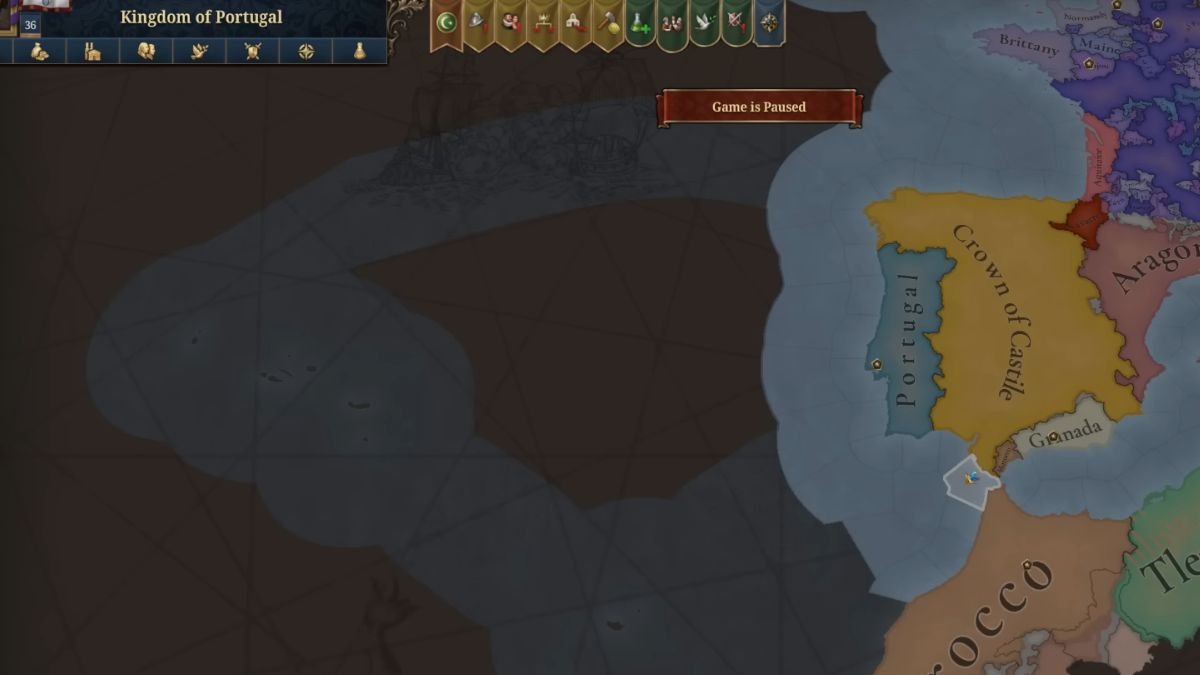
Another great pick for beginners is Portugal, since this nation is resource-rich and economically stable. You get all your basic resources like Wool, Lumber, and Iron, which makes it easier to create early-game tools and buildings. For expansion purposes, taking over the northern strip of Africa will be easy to do. Building a Lieutenancy after that will help you increase your control over them and also improve agriculture.
What makes Portugal such a solid pick is that it offers better Tax Efficiency. However, most of your budget will be allocated to Fort Maintenance of Portugal. If you don’t want to spend your budget here, destroy forts besides the one around the main capital. Since Castile will be your main neighbour, focus on improving your relationship with them. That way, you get to seek their help in occupying more nations. But, do avoid confrontation with any of Castile’s enemies, especially Aragon, and focus more on building your economy.
Kingdom of England
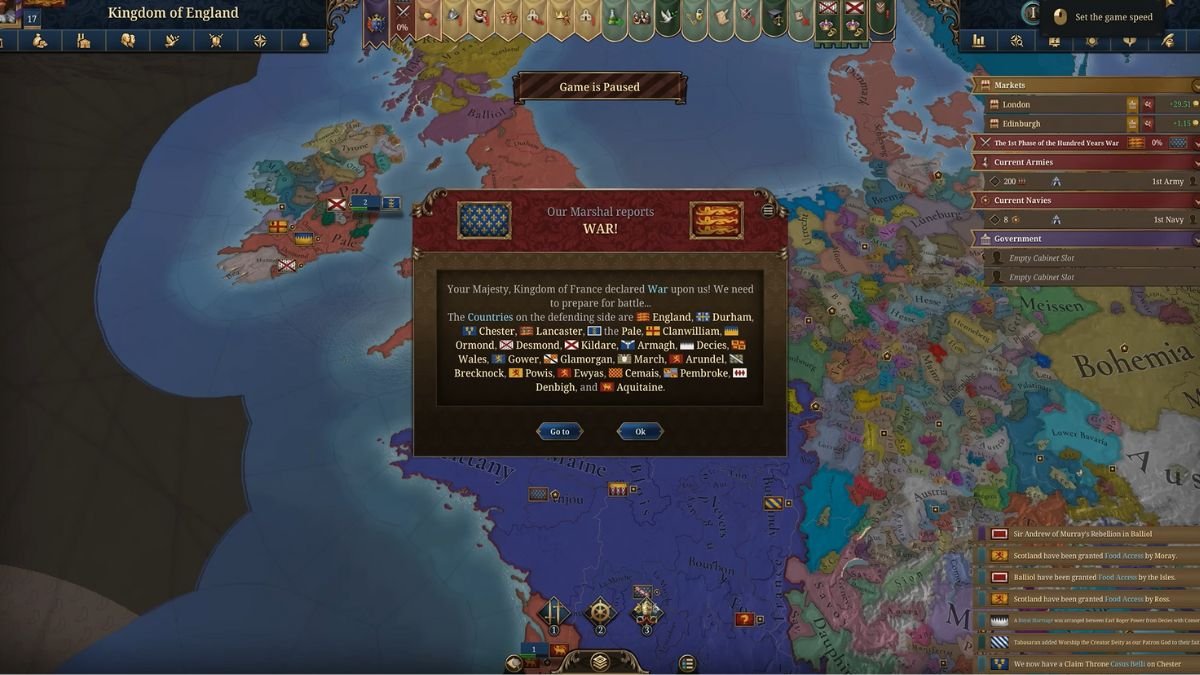
If your main goal isn’t to build an economy, but rather to get into politics and the military, then England would be a good choice to experiment on. England will be set up against France for the 100 Years’ War, giving you ample content to work on your military. England’s strength lies in its Navy, so focus more on maritime activities and improving your naval capabilities to overtake France.
At the start, you also get the option to form Great Britain by annexing Wales and the Isle of Man. If that doesn’t work out, you could take over bits of Scotland too. Since bringing power to the Crown is the primary goal for England, you need to work on the English Parliament policy to implement the Distribution of Power. Favor the Ruler is another great law to implement that will offer a better output while taking over nations. Adding Crown characters, like the King, to your army will significantly improve Crown power.
Kingdom of Norway
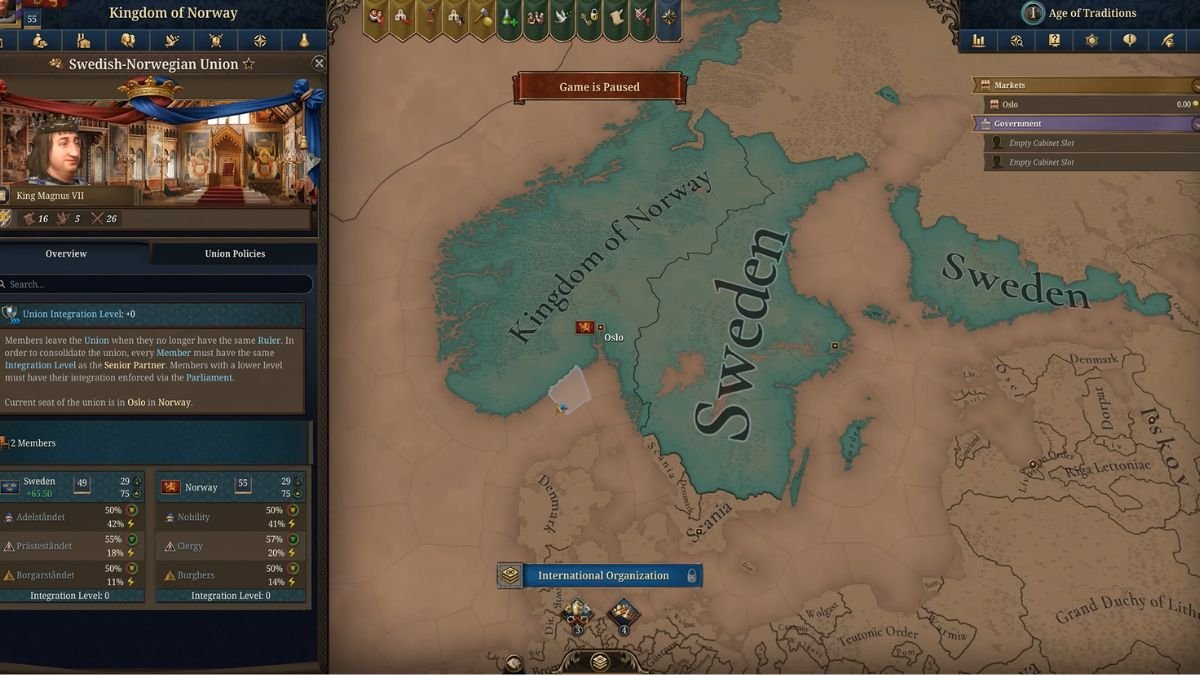
Norway already comes with an alliance to Sweden, making it easier to get defensive and military momentum. But, Norway becomes a challenge to control once Sweden decides to overtake it in a seniority vote. If you want to break off ties with Sweden, all you have to do is wait for Sweden to fall due to war. Then, immediately jump on the seniority bandwagon to get the upper hand. If this doesn’t work out, ally with Denmark to sabotage Sweden. Scotland is also a good choice, but the chances of them overturning you are higher. Also, changing your heir by implementing a Policy for the Union Foundation will help break off your ties with Sweden.
Nonetheless, Norway is easy to maintain economically, since you get Silver and Wheat. Focus on improving your main capital and working on your Navy. Like England, improving your Navy from the start is crucial, since your nation borders the sea. Also, like England, Norway also falls under the Crown, so working on Crown Power to influence neighboring nations is required. Focus on centralization to increase Norway’s national value, which, in turn, will increase neighboring control and improve taxes.
The Ottoman
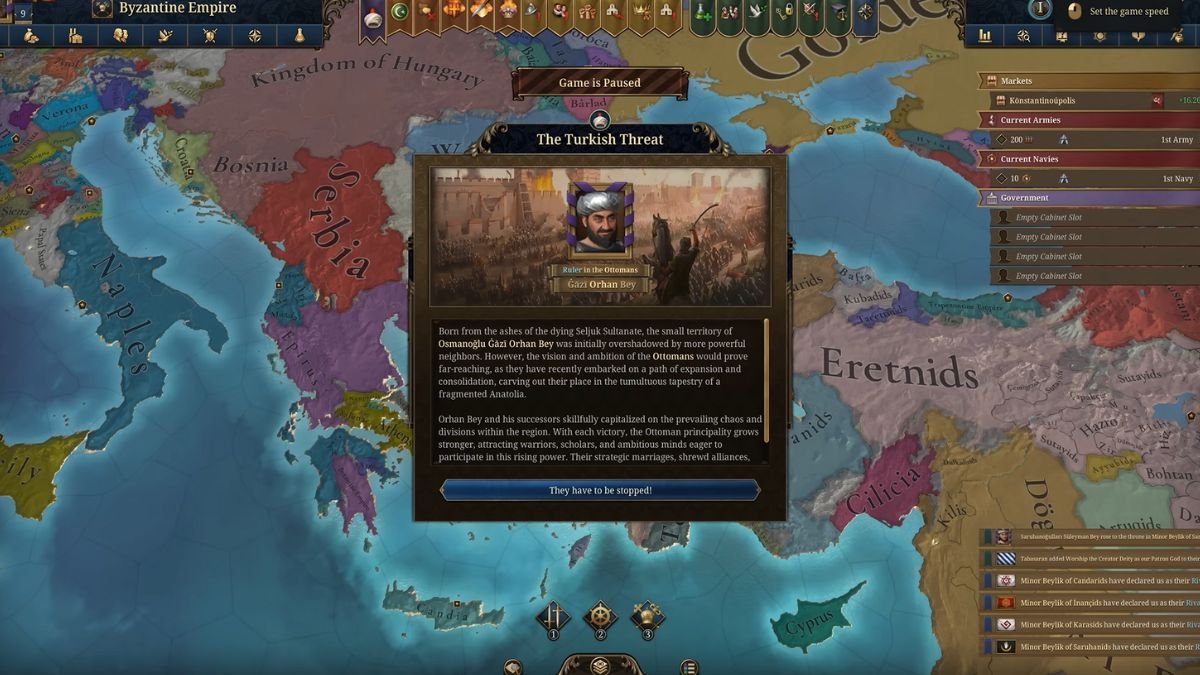
If you want a fast-paced yet beginner-friendly nation, then you can’t go wrong picking the Ottoman Empire. The Ottomans will have the Rise of the Turks event, which helps you quickly overtake several of your neighboring nations. But, before you get to do that, you will be tasked with moving your capital. If that situation arises, pick anywhere within the Ottoman or Constantinople, since these areas are safer from war. Then focus on improving your navy and increasing maritime presence.
While picking which nation to expand to, avoid picking your immediate neighbors like the Karasids. Rather, try to improve your relations and ultimately overtake Constantinople first. Improving control over your existing states helps unify the Ottoman Empire more efficiently, rather than working on overtaking other nations and starting wars for expansion.
Notable Mentions
For a quieter gameplay experience, where you could experiment with the game’s features without consequences, pick any nation outside European influence. Smaller nations in the Asian belt like Korea, Japan, Yuan, or Vijayanagar, are great picks, as they offer stable resources and limited warfare. Your gameplay experience will be more straightforward with these, where you get to touch upon the key features of Europa Universalis V and learn the ropes easily.
