

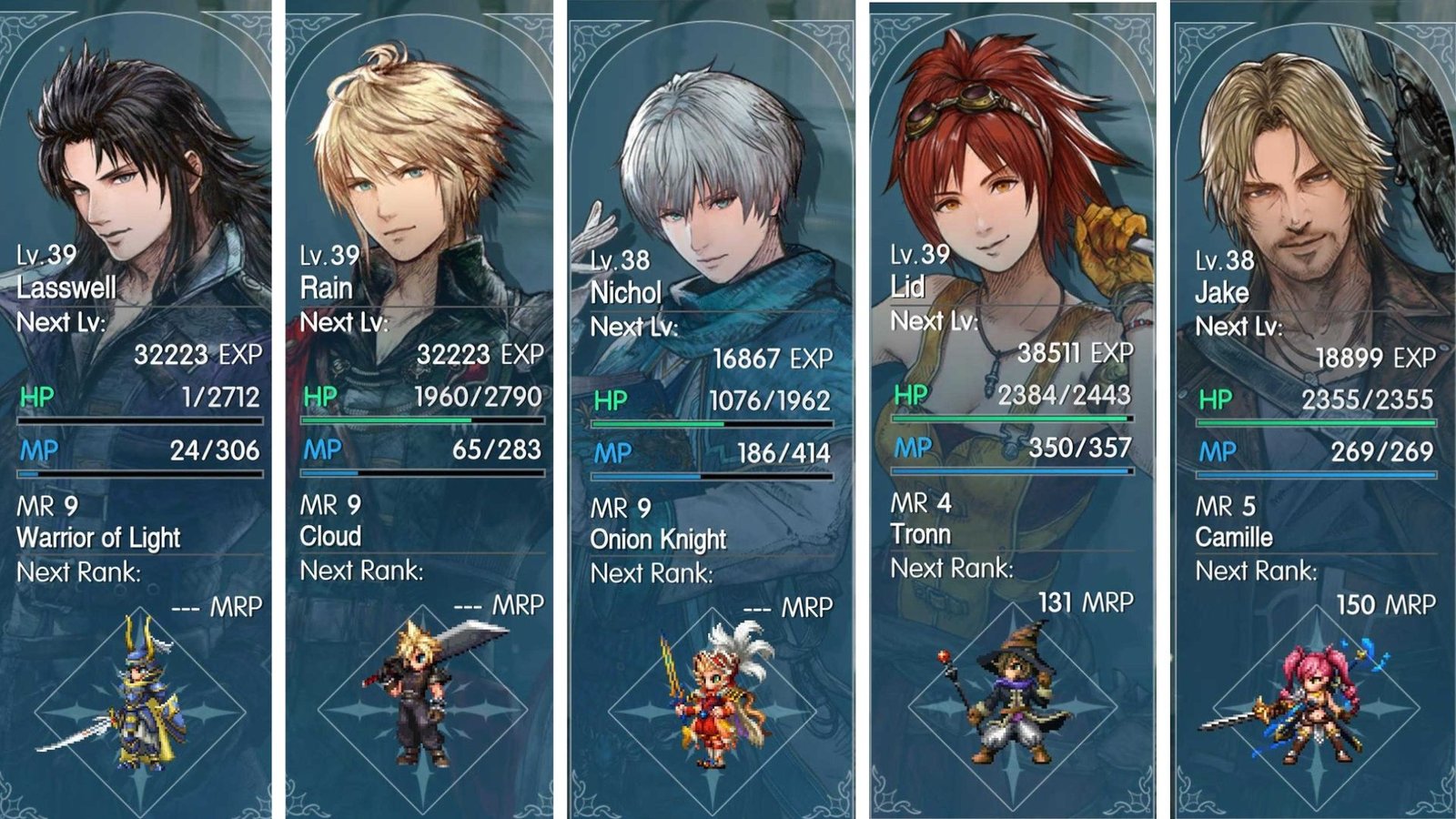
Final Fantasy Resonance gives the player to fight with eight unique characters, two of which sharing a name and a psyche if we are splitting hairs, but nonetheless, eight distinct fighters to choose from.
Each have their uses in battle, but like most JRPG parties, there are some fighters that stand out from the bunch, making them simply undroppable from your four selected fighters in battle.
To help you decide which of these you should have leading the line for you, we have ranked every party member in Final Fantasy Resonance, making the choice a little bit easier.
Note: We will be purely basing these rankings on the characters skills, not their synergies with various visions and gear.
Lid
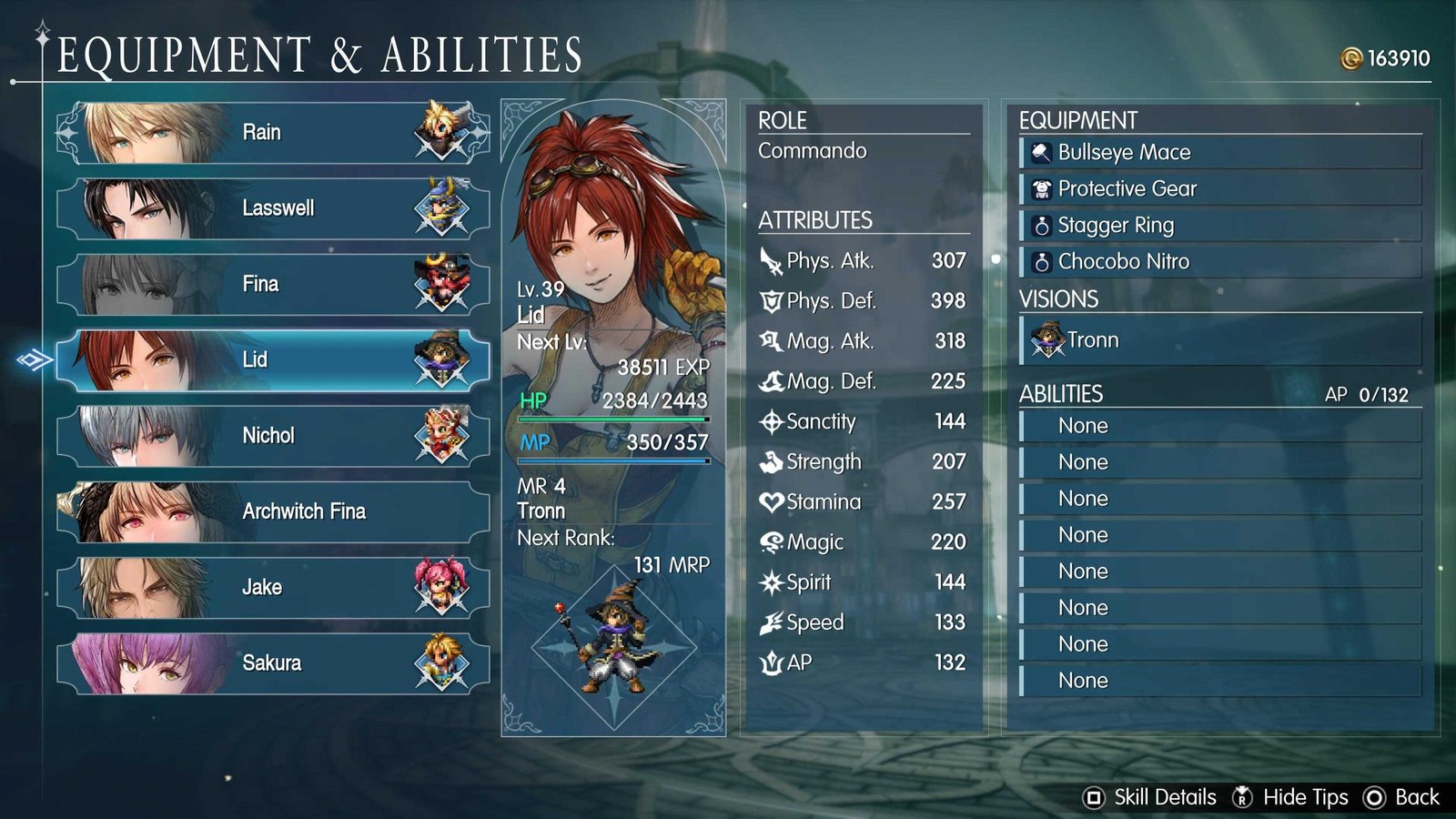
Unfortunately for poor old Lid, she takes the wooden spoon award for me, purely because you need to do some serious legwork before she is even a viable option. Granted, you will need to use her in Chapter 3, but as soon as an alternative fourth member comes along, you’ll likely never use her again.
This is because you need to evolve her Mechabo if you want to realistically make her a useful character, but even when you do, there’s a pretty limited use case for this, as the way some of these attacks scale requires additional legwork.
In short, the juice just isn’t worth the squeeze to use Lid, and ultimately, her novelty Mechabo design pales in comparison to the rest of the party with powerful traditional setups.
Jake
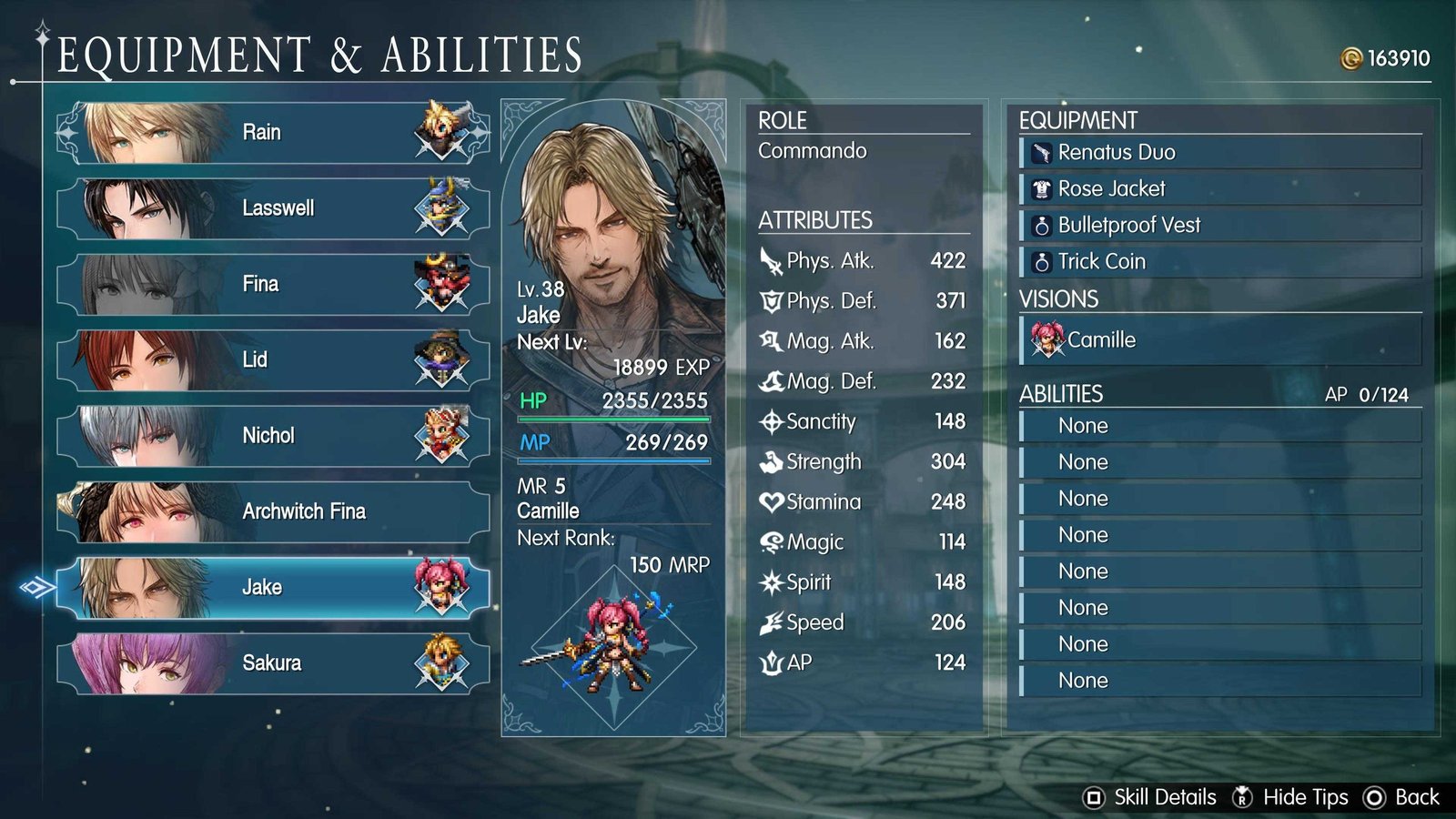
While there will undoubtedly be some that like the gimmicky nature of Jake’s luck system, it’s one that is more trouble to engage with than it’s worth. All of his attacks require a great deal of setup to up his luck rank, and the payoff just isn’t worth the time and the turns you need to invest. This can be somewhat remedied with the Trick Coin, but without it, it’s far too RNG-based.
If there’s anyone in the party that you’ll leave to rot, it’s Jake. Simply because there is always a better option, no matter the situation. The only reason we place him above Lid is because, when you do scale their luck and hit a Blitztrahl or a Glücksshmeid, it does pack a punch.
Lasswell
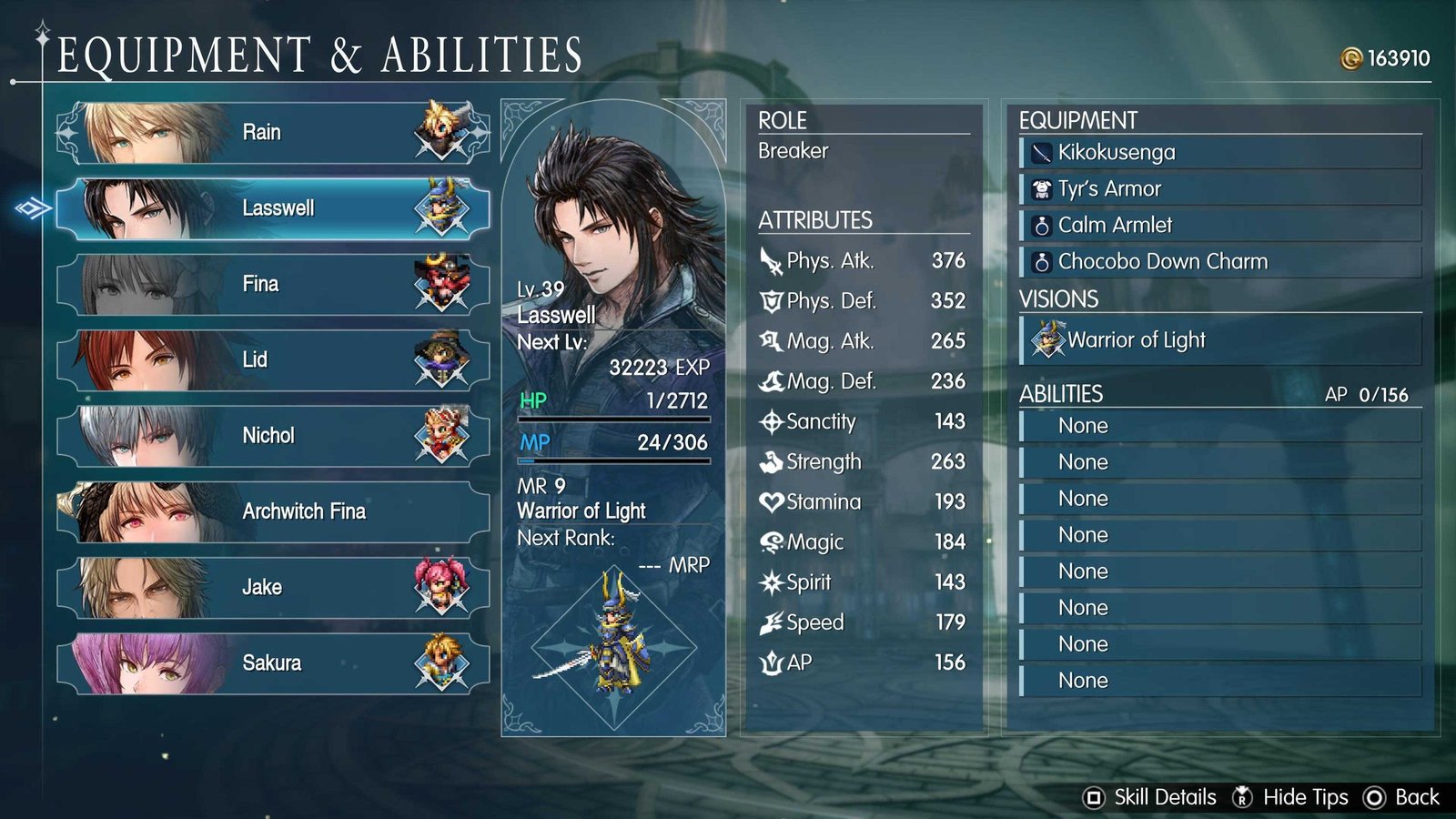
While you would think that Rain and Lasswell would be the frontrunners on this list, the reality is that they are pretty much bang average amongst the pack. This is partly due to the fact that there are very one dimensional physical attackers. However, Lasswell is marginally the weaker of the two.
Lasswell does have some powerful moves like Absolving Hailstorm, and the ability to up their speed, stagger and criticals through Placidity and Hone Senses. But, aside from this, there is little they can do in the late game aside from serve as a big meathead attacker.
Rain
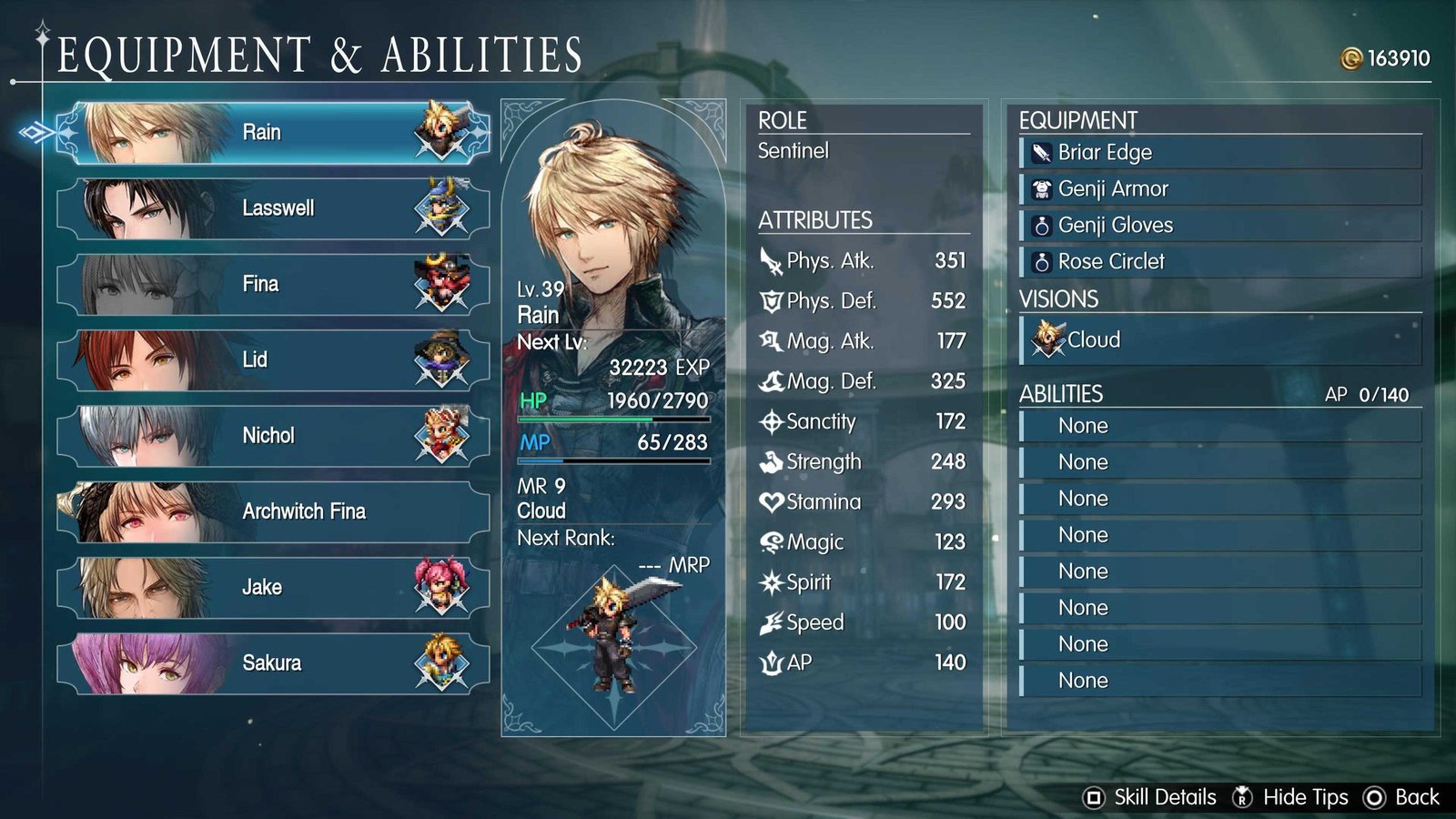
As mentioned, Rain and Lasswell are very similar, offering a meathead attacker approach to tactical battling. However, Rain is slightly more reliable, and that is down to their ability to build themselves as a tank to draw attention from others, playing the meathead role a lot better than Lasswell.
With higher HP, Rain can make use of moves like Soul of Valiance when on the offence, and can also use moves like Provoke and Unity to draw attention while allowing other party members to take center stage.
All the while having the option to use Fill Gauge to hit an Infinity Drive that works excellently when enemies are staggered. They are still a little one-note and work best as a damage sponge, but they’re a good damage sponge at least.
Sakura
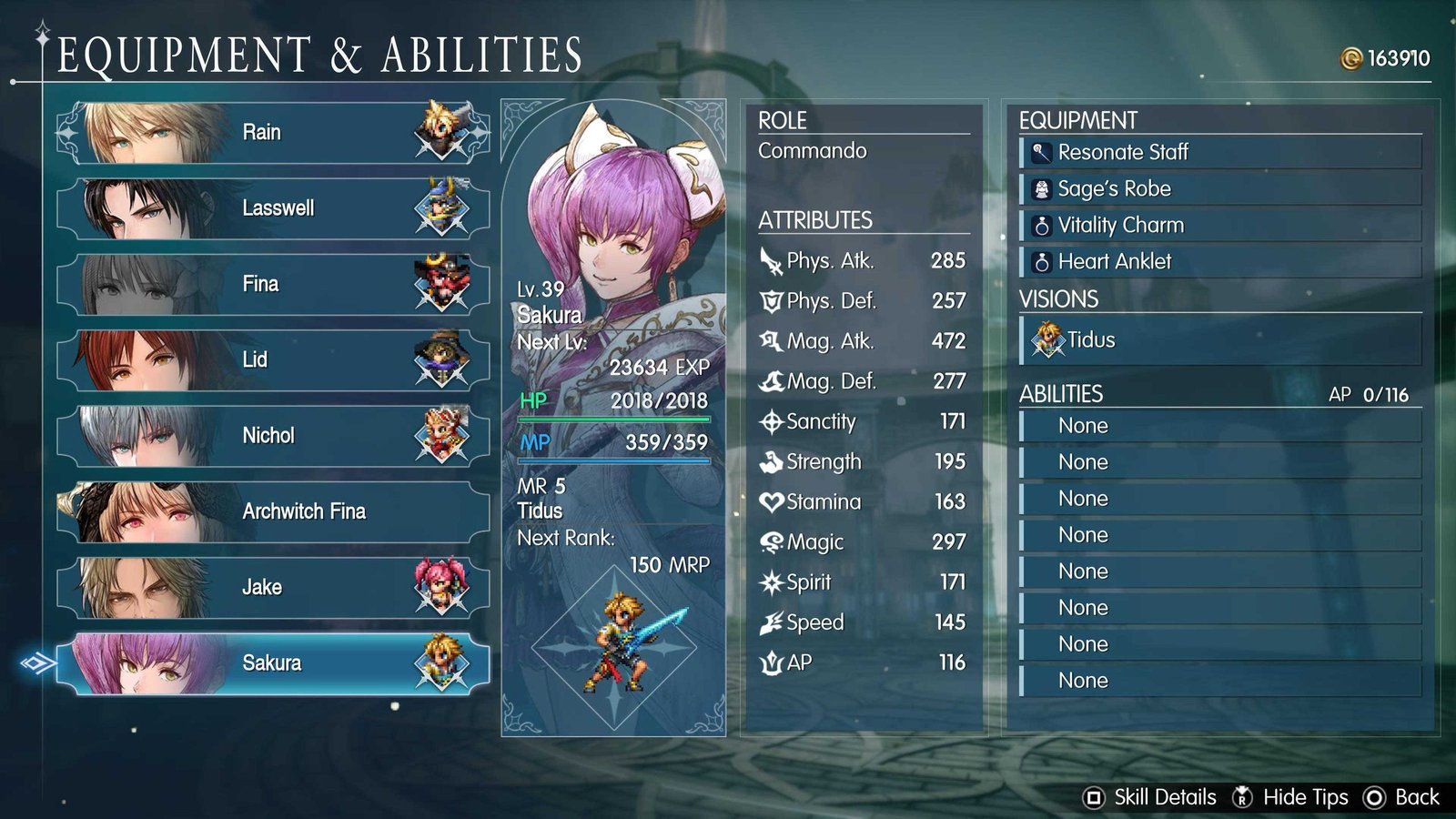
Sakura is a late game addition to the party that feels a little bit like a magic-focused version of Lasswell and Rain in many ways. But, critically, with a lot more scope for tactical use than just being a standard breaker.
Sakura has triple-type coverage, and has Rampart Elements to bridge the gap for elements she doesn’t have access to, often allowing you to find out the enemy weakness with less guesswork.
Plus, alongside this, most of her magic attacks deal a debuff, she can use buffs like Reckless Abandonment, Concentrate and Focus to up her attack power, and also can hone in on weaknesses with the use of Sage’s Eye.
In short, Sakura is the closest thing to a natural all-rounder you’ll find in this game, and it makes her an amazing asset to have when you finally get her.
Archwitch Fina
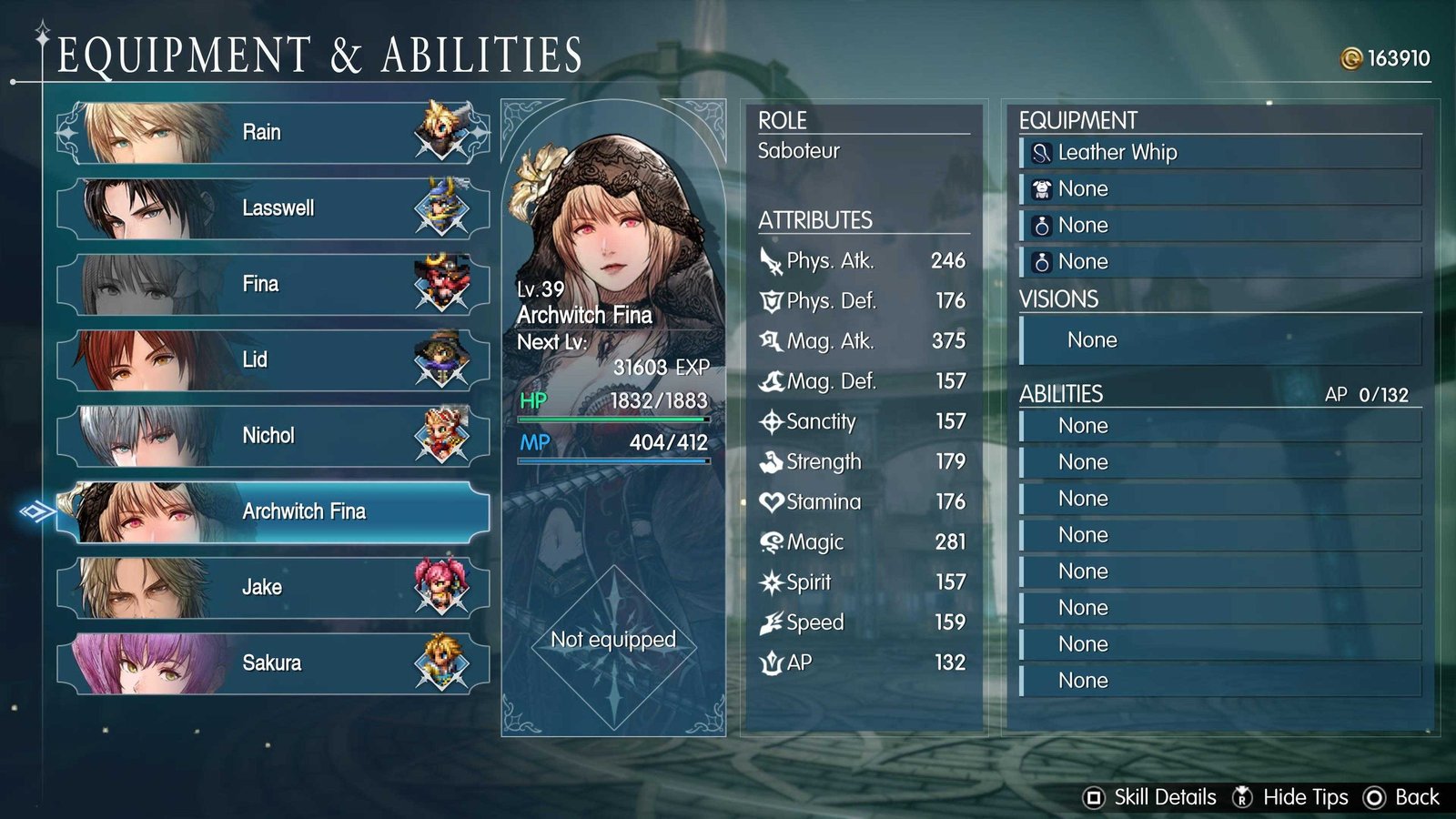
Despite how devastatingly powerful she was in the game’s prologue, Archwitch Fina just doesn’t match up to her non-archwitch counterpart. That said, she’s still a powerful resource to call upon if you want to go on an all out offensive.
Archwitch Fina is basically the opposite of Fina, offering a wide range of attacks, both magical and physical, able to inflict a variety of debuffs on enemies, while also being able to buff herself up with Witching Hour, which makes her unable to heal but gives her a huge power buff as a trade-off.
But, due to this all-out-attack mindset, all of her other stats like physical and magic defense for example, are rather low, making her a bit of a glass cannon. Ideally, you want both versions of Fina in there to compliment each other. But, if you could only choose one, regular Fina wins every time.
Fina
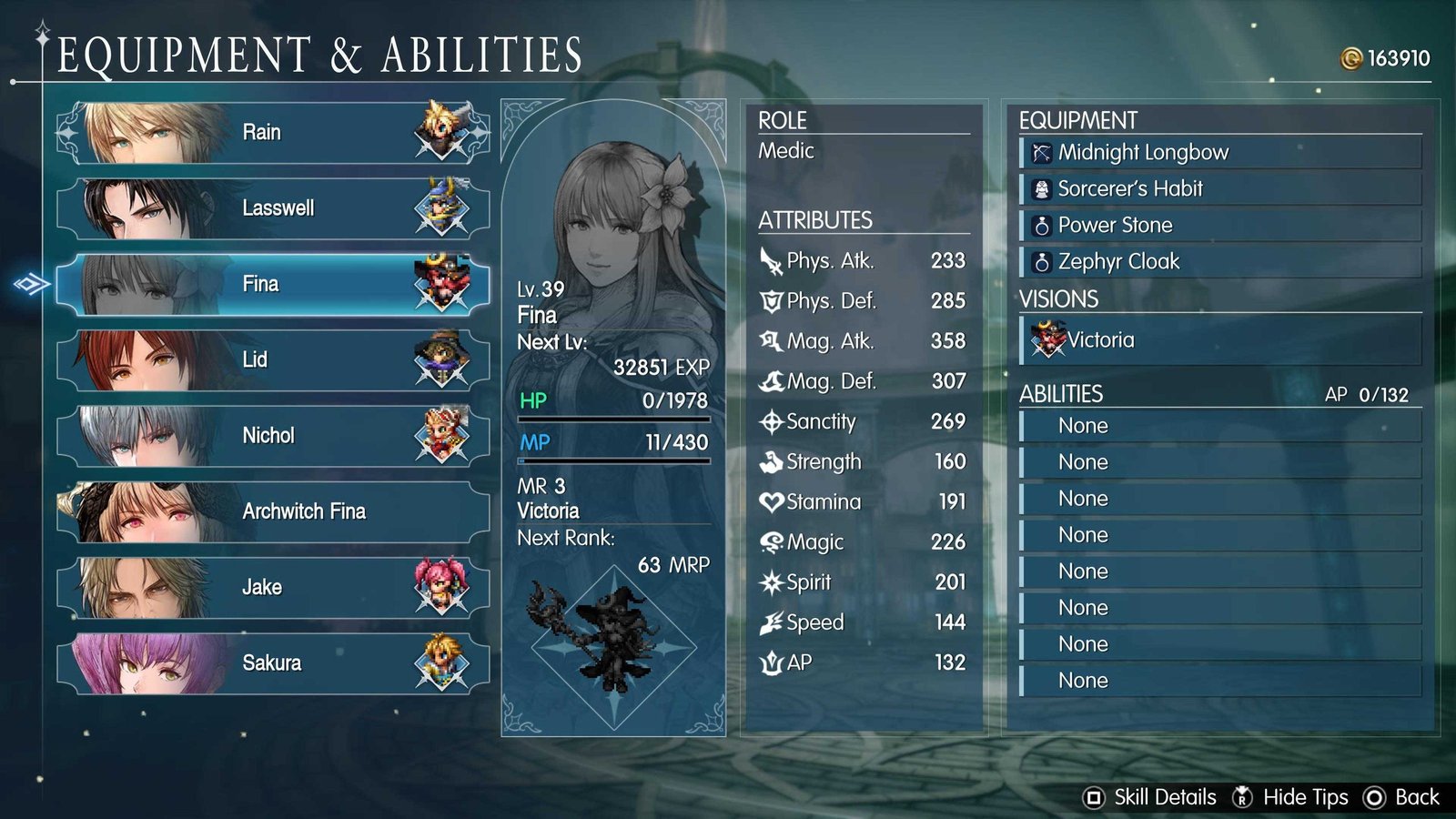
You can’t underestimate the power of a natural healer, and that’s exactly what Fina offers. Instead of relying on Leah or other sentinel visions with cure powers, you can simply have Fina in your team to heal you, take away status ailments and buff you with moves like Shellga, Cheer or Arcane Guard.
While she isn’t all that much of an attacking threat without a solid Vision back her up, she does have one other trick up her sleeve that makes her a party essential.
With her ability to summon Espers, an ability unique to her and Archwitch Fina, she can request the help of literal gods of the realm, basically adding a temporary 5th party member to the mix.
If she was just a little more comfortable on the offense she would be the best of the bunch, but one party member just pips her at the post.
Nichol
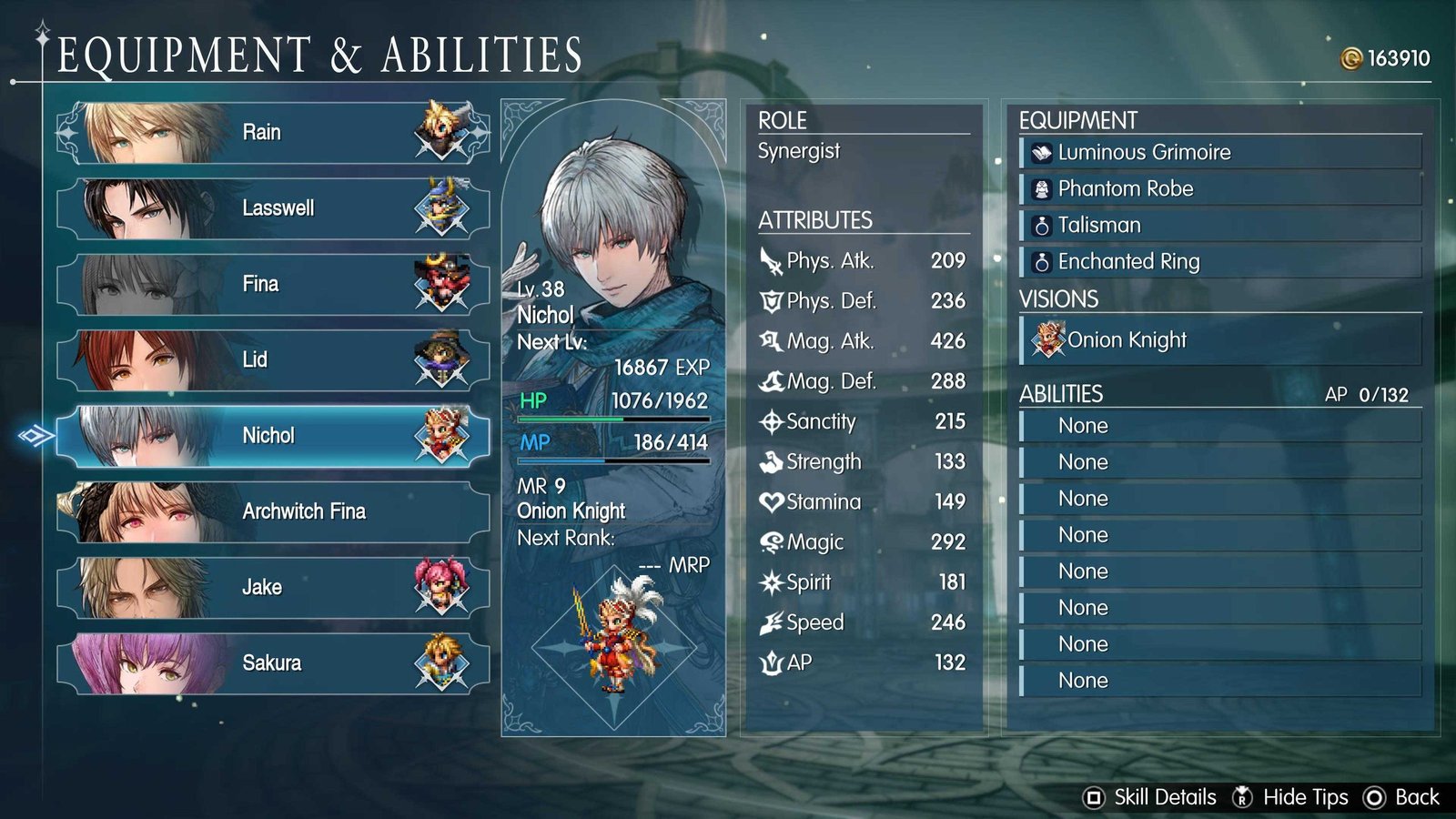
It should come as no surprise that the master strategist is the most useful in the entire bunch. Nichol may seem like a pretty unassuming type with minimal offensive power. But, it’s all about Nichol’s support work, as he sets everyone else up for success.
First, you have their Fluid Warfare tactic that allows them to perform Formation Skills with more frequency. Meaning you’ll have four buffs on all party members in three turns, helping you stagger, crit, and deal more damage while taking less.
Plus, Nichol can slow down enemies, use Faith to up magic power, and use Dispel to take away all enemy buffs. But above all, their limit break is the reason why you need Nichol on your team.
His Mirroring Prism allows all party members to perform two actions back to back. Something which really speaks for itself. Want to do two limit breaks at once? Nichol can make that happen. He’s the first name on my team sheet, and he should be on yours too.
