

With the withered attention spans of the general population these days, and the viral, disposable culture we all consume, it’s pretty rare that you get to celebrate something that has enjoyed genuine longevity. Something that Final Fantasy has enjoyed for approaching four decades now.
Final Fantasy has been around for longer than I have, but the formula has remained largely the same. There’s some airships, some crystals and a guy named Cid. However, there’s always something added to the broth to give the next iteration a fresh flavor.
On this occasion, it’s a hearty helping of nostalgia.
Final Fantasy Resonance is the next HD-2D JRPG jumping on the Octopath bandwagon, but doing so with the signature charm, killer soundtrack, and seasoned JRPG design principles that only Final Fantasy can provide. Final Fantasy Resonance is a glorious look back at those that blazed the trail, all the while, pushing the series onward to new and exciting heights. Hop aboard our airship, we have so much to show you.
A Knight Does What’s Right
Before we get into things, can we just talk for a moment about the word Resonance. Resonance: A Plague’s Tale Legacy, Control Resonant, and now this. Did everyone in the industry buy the same word of the day toilet paper and have that lightbulb moment in unison or something? It’s absurd, but I digress.
Final Fantasy’s version of the Resonance moniker has you step into the shoes of Rain, a knight of Grandshelt who finds himself embroiled in a war centuries in the making, as the Sworn Six attack the kingdom, destroy the Earth Crystal, and plan to destroy the rest around the kingdom for nefarious reasons unknown.
It’s about as cookie cutter of a Final Fantasy setup as it could possibly be. The baddies are after the crystals, you’re playing the role of the pure of heart goodie-two-shoes. And despite the obscene power of who you are up against, and the odds being stacked in your favor; you can bet your bottom dollar that through the power of friendship, you’ll take down god. As is JRPG tradition.
The biggest compliment that I can pay Resonance’s story is that it does what it needs to do, serving as a perfectly good vehicle for all the other excellent things the game has to offer. But, by far, the core narrative is the weak point of this celebration of Final Fantasy’s past and present.
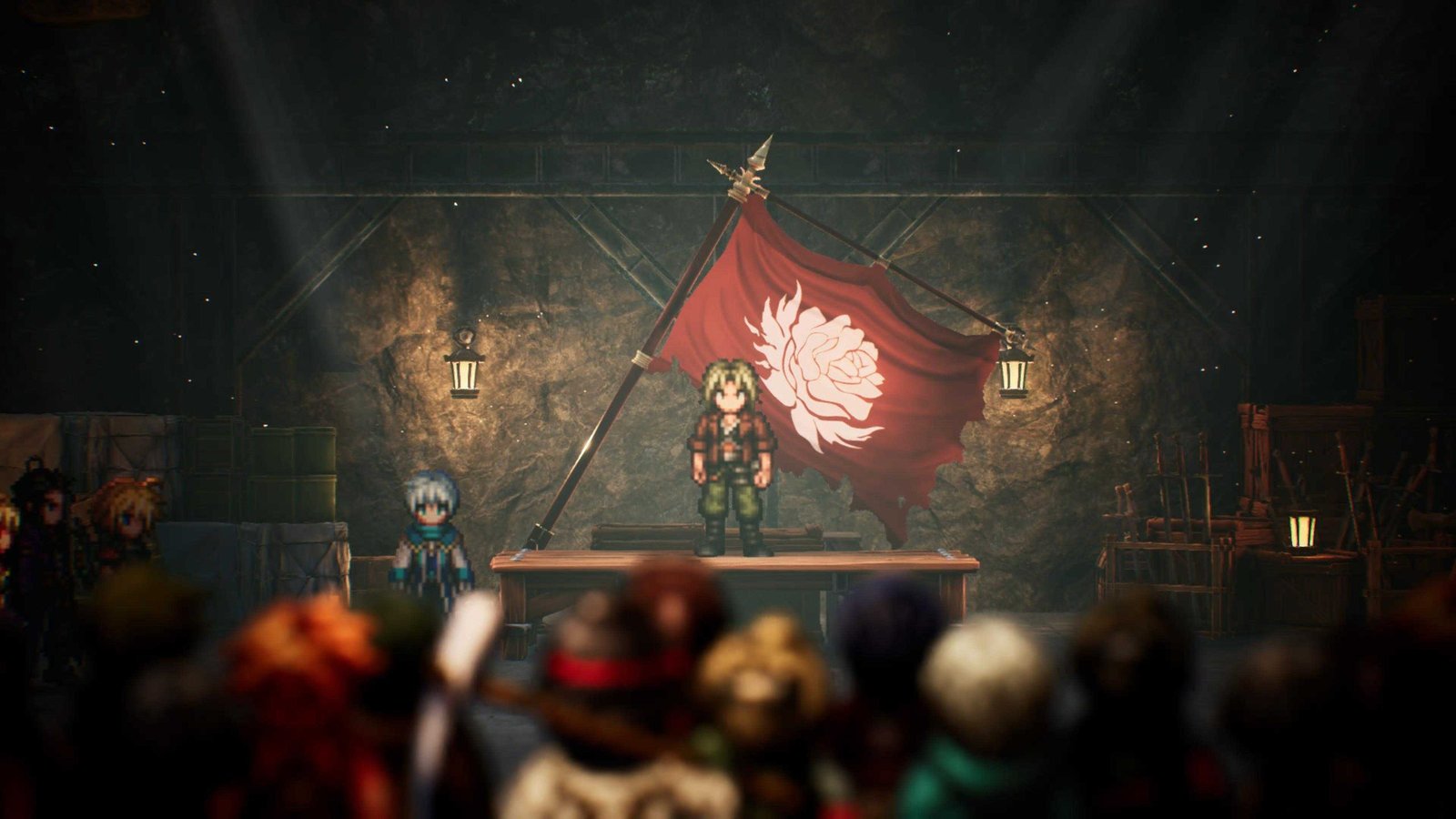
Perhaps this is to be expected as this game is more or less an altered version of Brave Exvius’ first season. A mobile game under the Final Fantasy umbrella I was honestly unaware of until very recently. But, upon discovery I thought to myself, this would be a well above par mobile game narrative, but it doesn’t quite translate when hopping over to flagship systems where expectations are much higher.
The party members are likable without being lovable. The core plot points that punctuate the story keep things on the rails without ever delivering memorable moments the series is synonymous for. The comic relief lightens the load without ever evoking as much as a smirk, and the emotional moments have the depth of a paddling pool for the most part.
Without question, it’s the most gorgeous HD-2D game to date.
Rain’s story was one I wanted to love, but it just felt like a series of Final Fantasy tropes thrown together, culminating in a story that often feels stilted, predictable, and like going through the motions. Something that is largely remedied by literally everything else the game does, but I would have loved a little more punchy and profound than the milquetoast offering provided.
An Amalgamation Of Eras
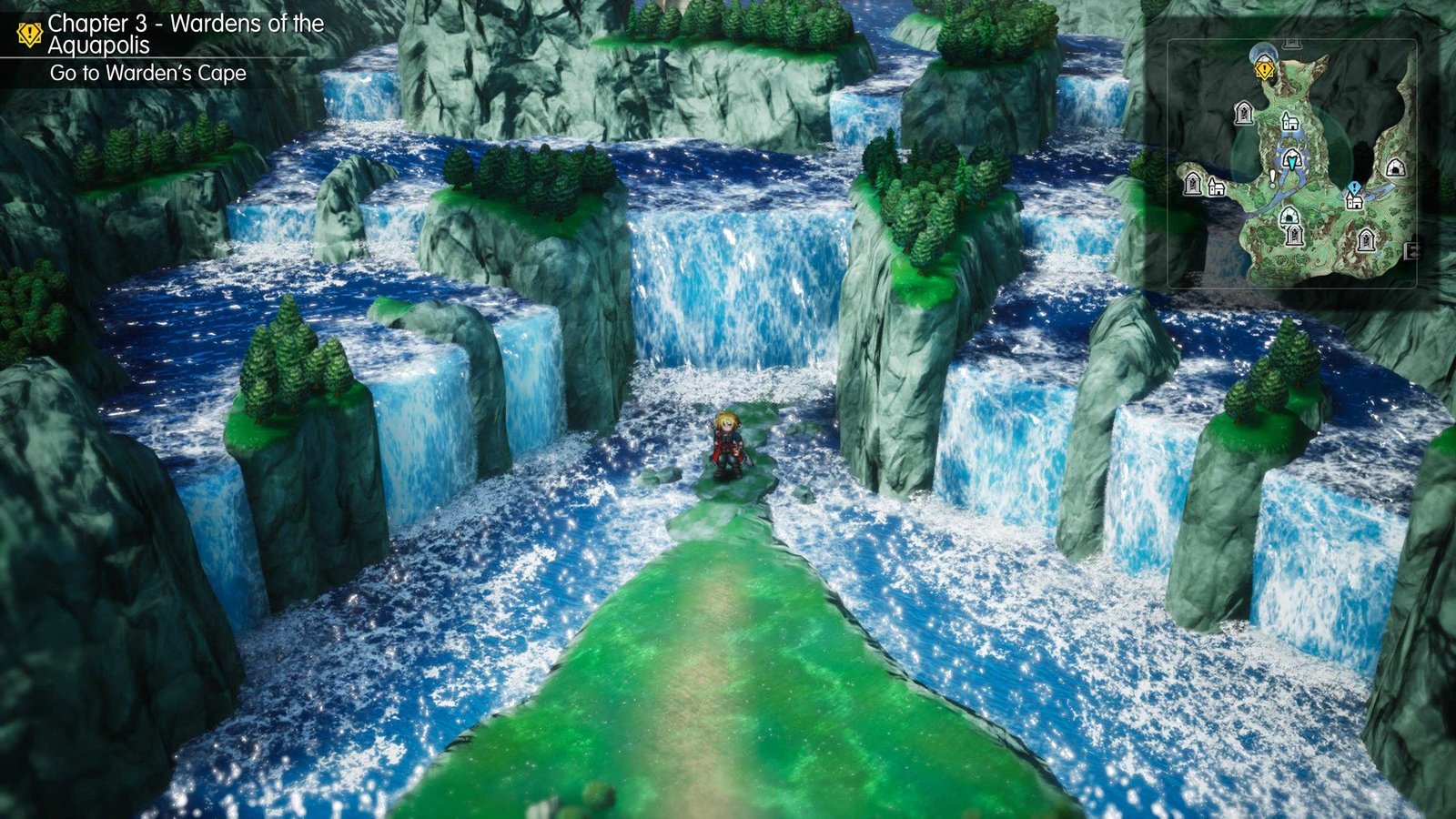
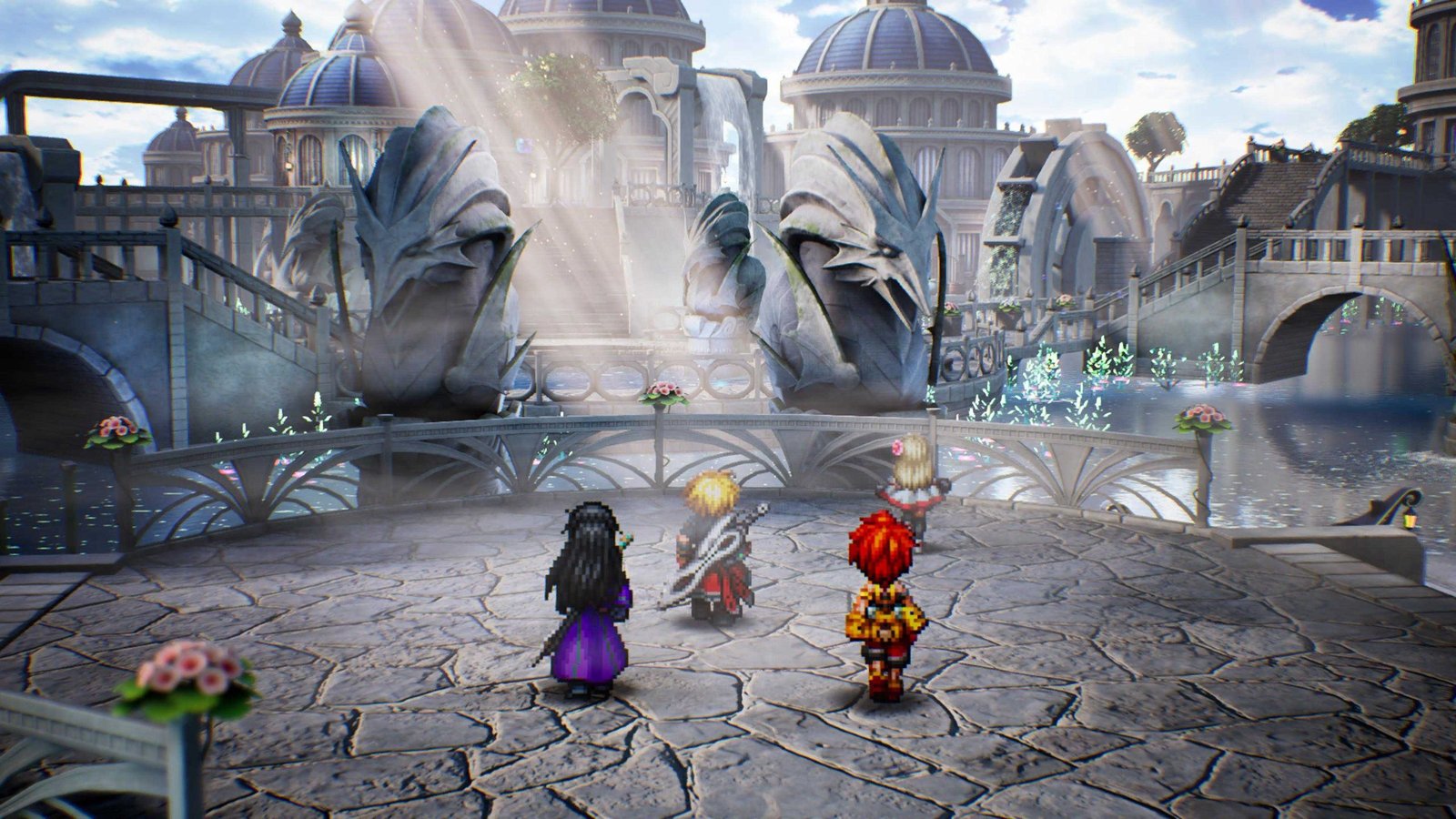
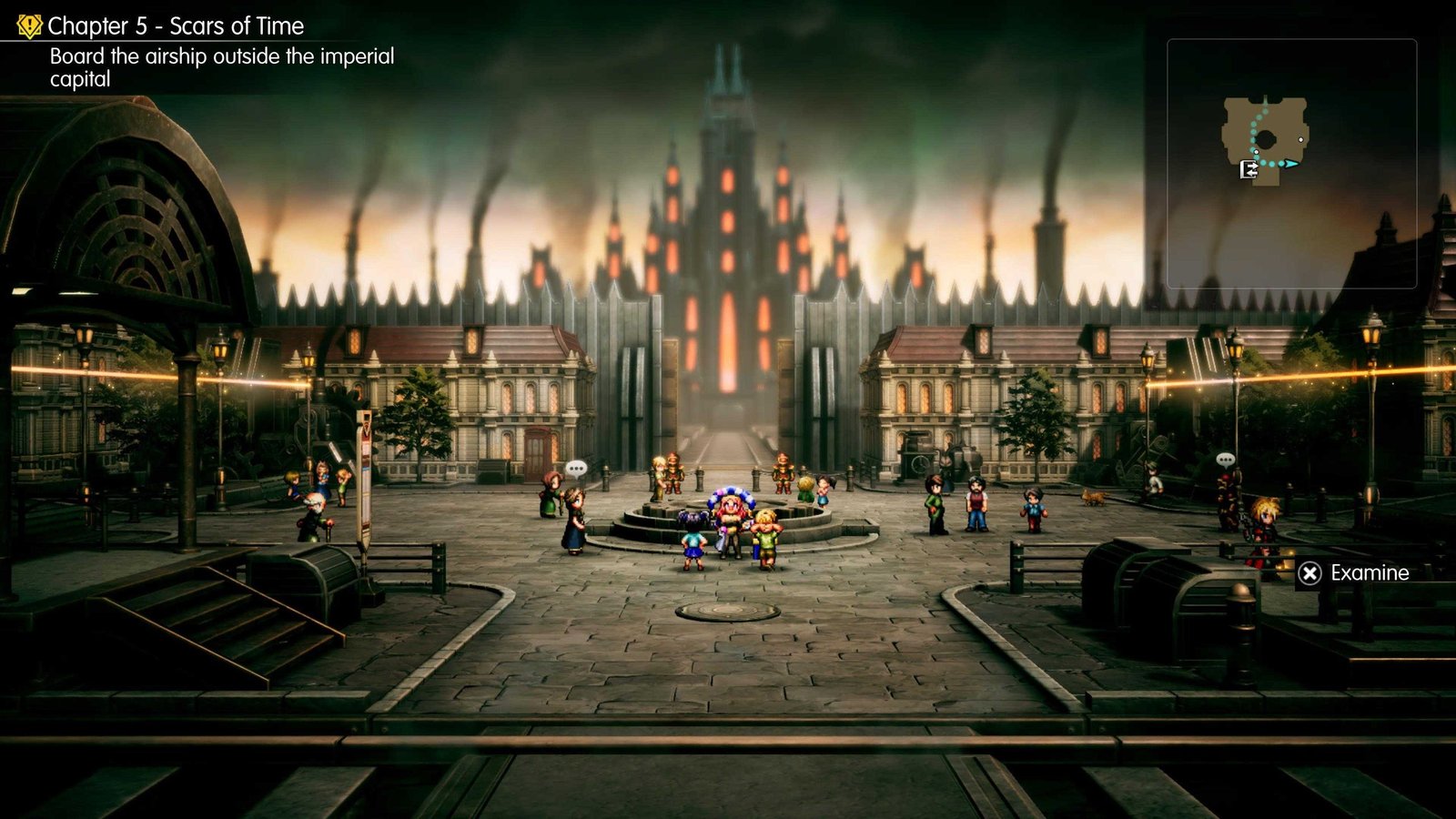
While Resonance’s storyline may not have resonated with me all that much, the overall presentation of this HD-2D epic sure did. The HD-2D art style has always been an easy sell for me, as the blend of retro pixel-art and modern polish feels like a combo that simply can’t miss. But, even with that in mind, Final Fantasy Resonance absolutely knocks it out of the park. Without question, it’s the most gorgeous HD-2D game to date.
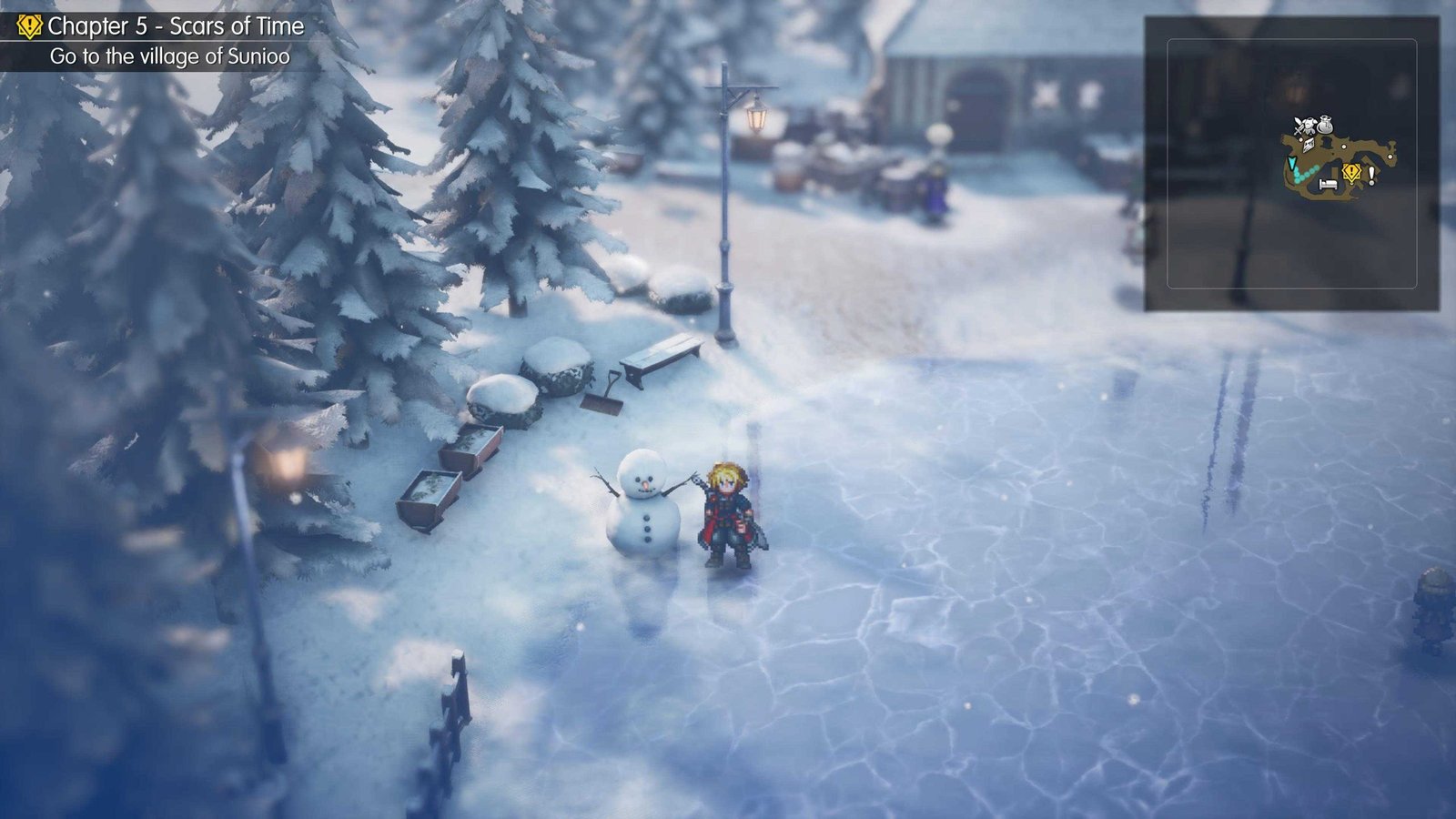
It’s a staggeringly eye-catching mesh that feels, at least to me, as if the artstyle of Final Fantasy Tactics was given a dramatic facelift. Every area you visit feels like a living, breathing diorama. Every moment spent exploring the overworld feels like a welcome blast from the past as you navigate the map from a top-down view reminiscent of the 16-bit golden era. But it’s always the most striking when these two styles clash, with 2D airships battling to a gorgeously rendered modern backdrop, or two pixelated models standing face-to-face as striking flames engulf the battlefield.
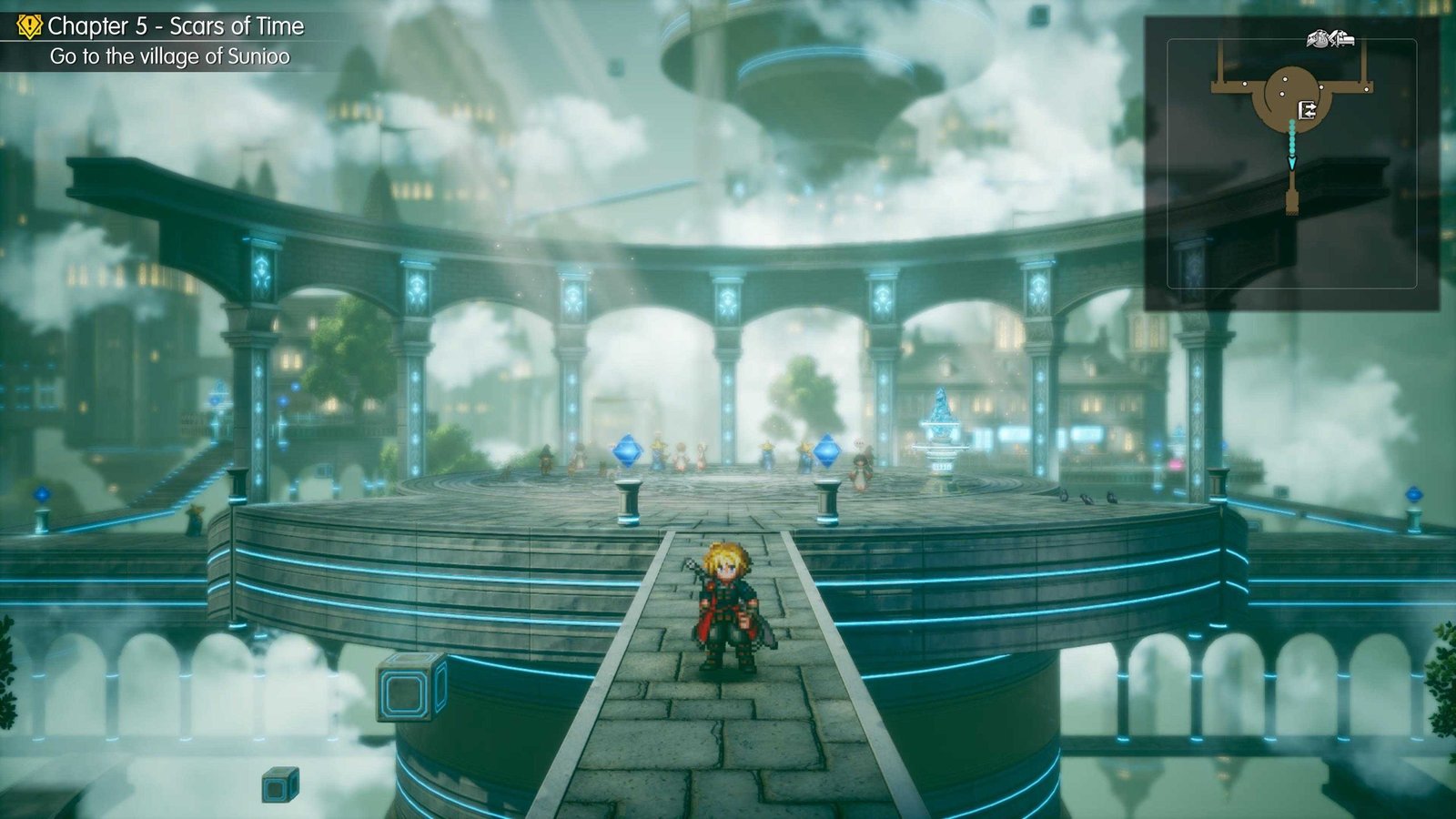
I don’t want this to turn into a rundown of why I love HD-2D as a medium, because the takeaway here is that, I do, but more importantly, that Resonance absolutely aces it. The world feels so dynamic, it’s beautifully lit, the varied camerawork makes things feel incredibly cimematic, the world feels distinct from one region to the next. Yet overall , Resonance is true to the franchise, nailing the artstyle without ever losing that quintessential Final Fantasy feel in the process.
But perhaps the most striking visual effect you’ll enjoy throughout, without jumping the gun too much, is when using the Resonance attacks of your various visions. By employing the powers of these protagonists and key characters of Final Fantasy’s past, you’ll witness a CG scene showcasing an ultimate attack where the HD-2D artstyle gives way to the modern day, mainline Final Fantasy look, where these Final Fantasy hall of famers get their moment in the spotlight, akin to Marvel Vs Capcom, briefly bursting onto the scene and laying the Smack-down on your foes and making the damage counter go crazy on screen.
Aesthetically, nothing ever feels like a gimmick, or a half-baked idea. The world design, the crisp visuals, the blend of retro and modern, the glorious score and sound design. It all comes together masterfully, and truly, I have very few notes when it comes to artistic flair. It’s fanfare done right, and even hundreds of Resonance attacks later, watching my favorite FF characters go in for the kill and those damage counters tick never gets old.
My only criticism of the art style is that the jump to high quality, fully rendered CG for a Resonance attack, and then back to HD-2D can feel a little jarring at times, and don’t always play nice in the transition. But overall, I feel the trade off of the over-the-top cinematic scene is worth it.
Wonderful Vision
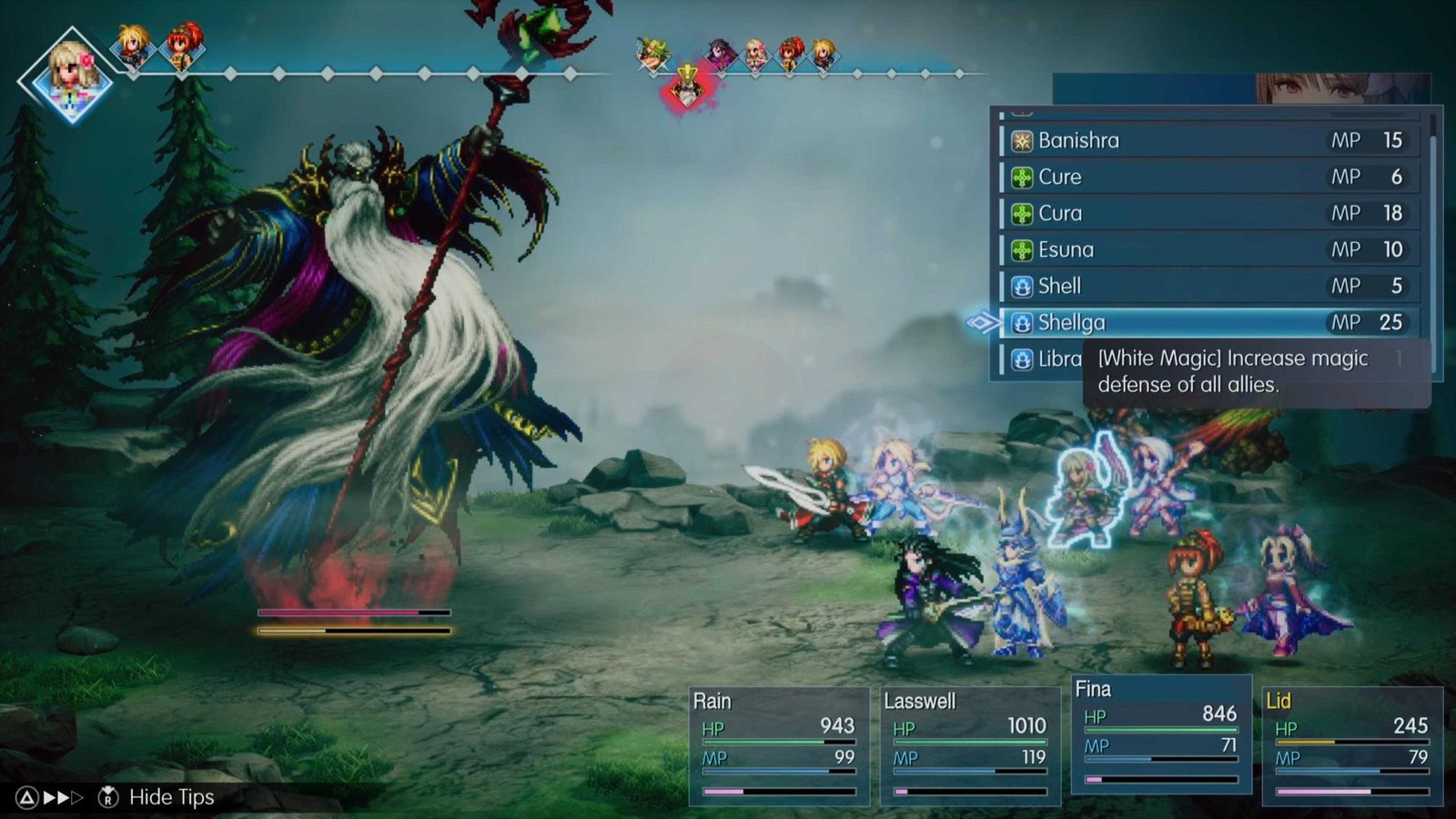
Speaking of that Marvel Vs Capcom approach that Resonance takes to combat, you may be wondering how this works in action, as the usual job system has been sidelined in favor of something a little more experimental. Something that has proved to be an excellent decision, as this tag-team approach feels like a breath of fresh air for the format.
In terms of the turn-based combat, when you look under the hood and really scrutinize what you’re engaging with, you’ll soon realize that it’s all very by the books. You’ve got elemental attacks, and weaknesses and resistances to such elements, you’ve got limit breaks, and you’ve got your usual selection of buffs and debuffs to help you strategize and get the most out of each attack.
It leans into the tried and tested in this respect, but it’s remained popular as a setup all these years because it just works. So, it then becomes more about the bells and whistles around these traditional systems that the game will be judged on. The bells and whistles in this case are the Visions, the Resonance attacks, and the stagger system that informs these more eye-catching systems.
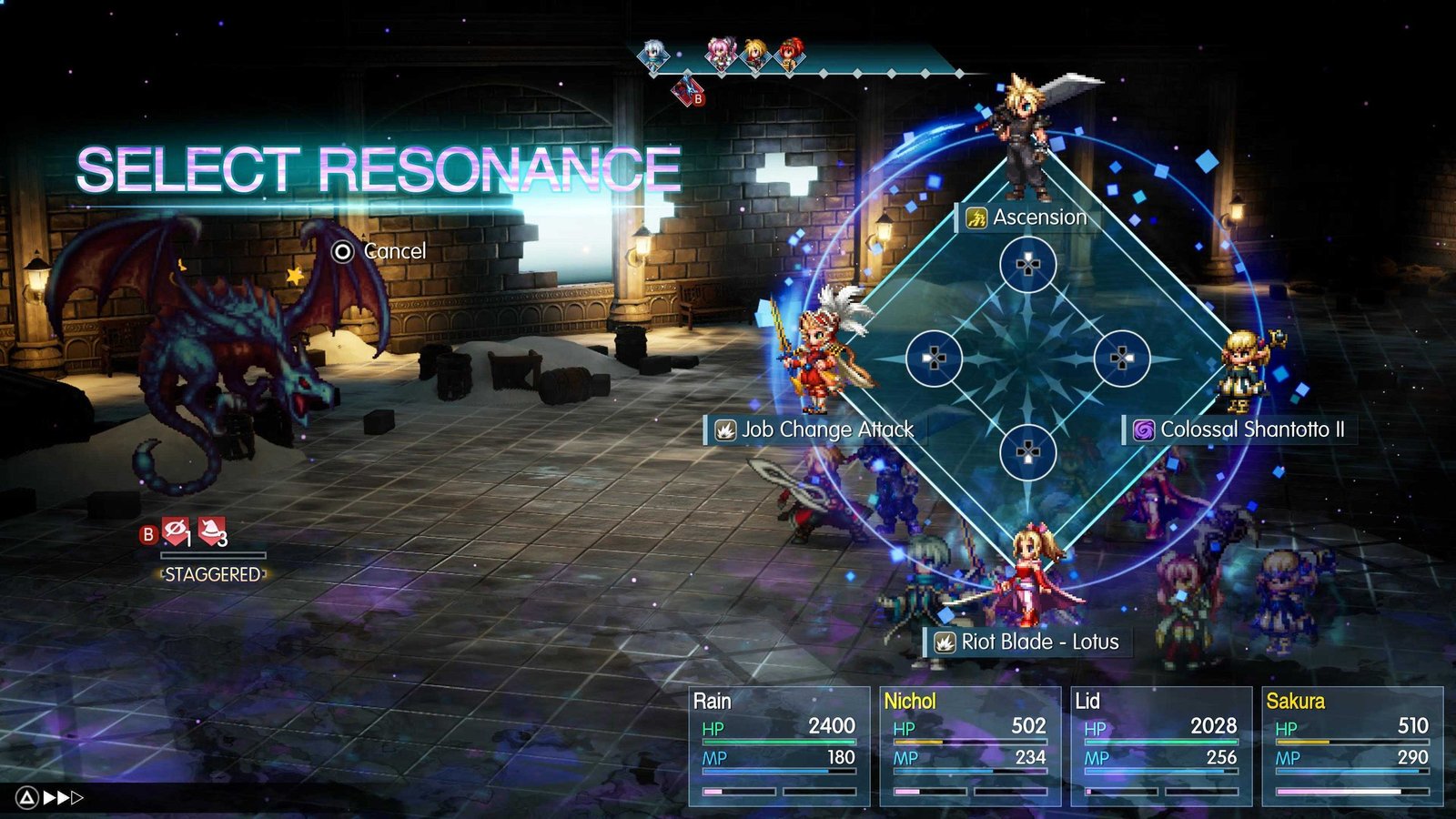
Players during battles are always working towards staggering their opponent, allowing for bonus phases, and with enough bonus phases where party members are dealing excess damage, you deal overkill damage. Which, triggers your Resonance attack, a powerful ultimate move not to be confused with your limit break which usually is enough to turn the tide of a battle or melt an enemy HP bar. On paper, it sounds a little complex, but it’s incredibly accessible and most will slip into the rhythm of this battle system seamlessly.
But the marquee system that underpins everything is the vision system, a formerly Gacha-fuelled endeavour in Brave Exvius which effectively allows you to use FF legends as you would a Persona in the Persona series, combining their skills and abilities with your own to try and cover all type advantages and synergise to create devastating combos with fellow party members.
While there are some minor gripes I have with the battle system, such as the Resonance attack always playing out last during a bonus phase leading to attacks landing on already devastated enemy parties, or the encounter system being something that happens to you rather than something that you can engage with as and when suits.
But perhaps the biggest gripe has to be that when you find a Vision that suits your party member, much like switching jobs in other FF titles, you need to level them all up individually, meaning you’ll effectively be trying to battle through the story with an under-leveled and weak party member. Which makes it all the more likely that you’ll pick one, and stick with one, which really isn’t in the spirit of the Visions, especially when Brave Exvius had over 200 of the things. That said, overall, it’s a set of systems that are a joy to engage with.
I felt challenged as a tactician in battle, stimulated as a fan of high-octane action, satisfied by the snappy combat that doesn’t overstay it’s welcome from one battle to the next, and comforted by the familiarity of the core systems that inform the newer, more exciting features. That’s all you can ask for, and it’s a combat cocktail I would happily sip on all day long.
Final Fantasy Resonance is a glorious celebration of Final Fantasy's illustrious history, with fanfare in abundance, and a blend of modern and retro ideals. Boasting pristine pixel-art, a typically superb score, and nostalgia-fueled battle systems, Resonance is a game for Final Fantasy purists that want to revel in all the franchise has offered us down the years.
The Good
- Unique yet accessible battle systems
- Mastery of the HD-2D medium
- Surprisingly worthwhile side content
The Bad
- Lukewarm main story
- No incentive to experiment with Visions
- CG scenes don't always play nice with HD-2D style
