


Games with Soulslike elements have been increasingly popular as of late, and the next on the docket is Death Howl, a Soulslike-Deckbuilder. I absolutely love deckbuilders, and genre-splices are always welcome, but even I wondered, how the hell could Soulslike and Deckbuilder mechanics live in perfect harmony?
Developer The Outer Zone not only showed me throughout my time with Death Howl that mixing the two can not only be done, but also done incredibly well. In fact, just about everything about it was superb, from the gameplay to its art direction and general aesthetic.
There are a lot of elements the team took from their last release, Mind Scanners, including the crunchy pixel graphics that kind of feel as though Elden Ring or Grim Dawn ate a SNES game, as well as the limited color palette that just accentuates the world so much more.
It’s clear that The Outer Zone is looking to make a distinct mark in the indie gaming world, and Death Howl feels much like a stamp that other games in similar genres will look at for inspiration. Maybe we’ll be seeing Deathlikes in the future.
A Love For One’s Son

The story of Death Howl follows a mother searching for her son in a bleak world filled with nothing but the gross sounds of mutated insects and the squelching of diseased animals. At first, you’re introduced to a single part of this hellscape, and then forced to explore an open map of various, similar areas, each with its own lore, creatures, and secrets.
The core of the narrative is tied to this simple premise, and the rest is wrapped up in environmental features, symbolism, and niche folklore that help make the world of Death Howl feel so unique. Which, naturally, means that mileage may vary for some, as the narrative isn’t spoon-fed to you.
But, if you’re a Souls fan like myself who loves to find finer details and extract your own meaning, reading between the lines, so to speak, then Death Howl will be right up your alley.
While the overarching story relies on you going to four locations on the map to learn more about what happened to your son, a lot is also placed in the different areas you’ll encounter throughout, and the random characters you’ll meet.
In one instance, I met a weird, furry guy who would continue to off himself every time I revived him, which not only unsettled me to my core but also alluded to the dark, twisted nature of the world around me. I’ll admit that also made all the more determined to stop the madness.

Also Read
Side quests follow a similar vein through twisted narratives that can be a little tough to follow if you aren’t used to this sort of storytelling. However, this is exactly what helps make it feel so dark fantasy-like, and exactly what made me like it so much.
Believe in the Heart of the Cards
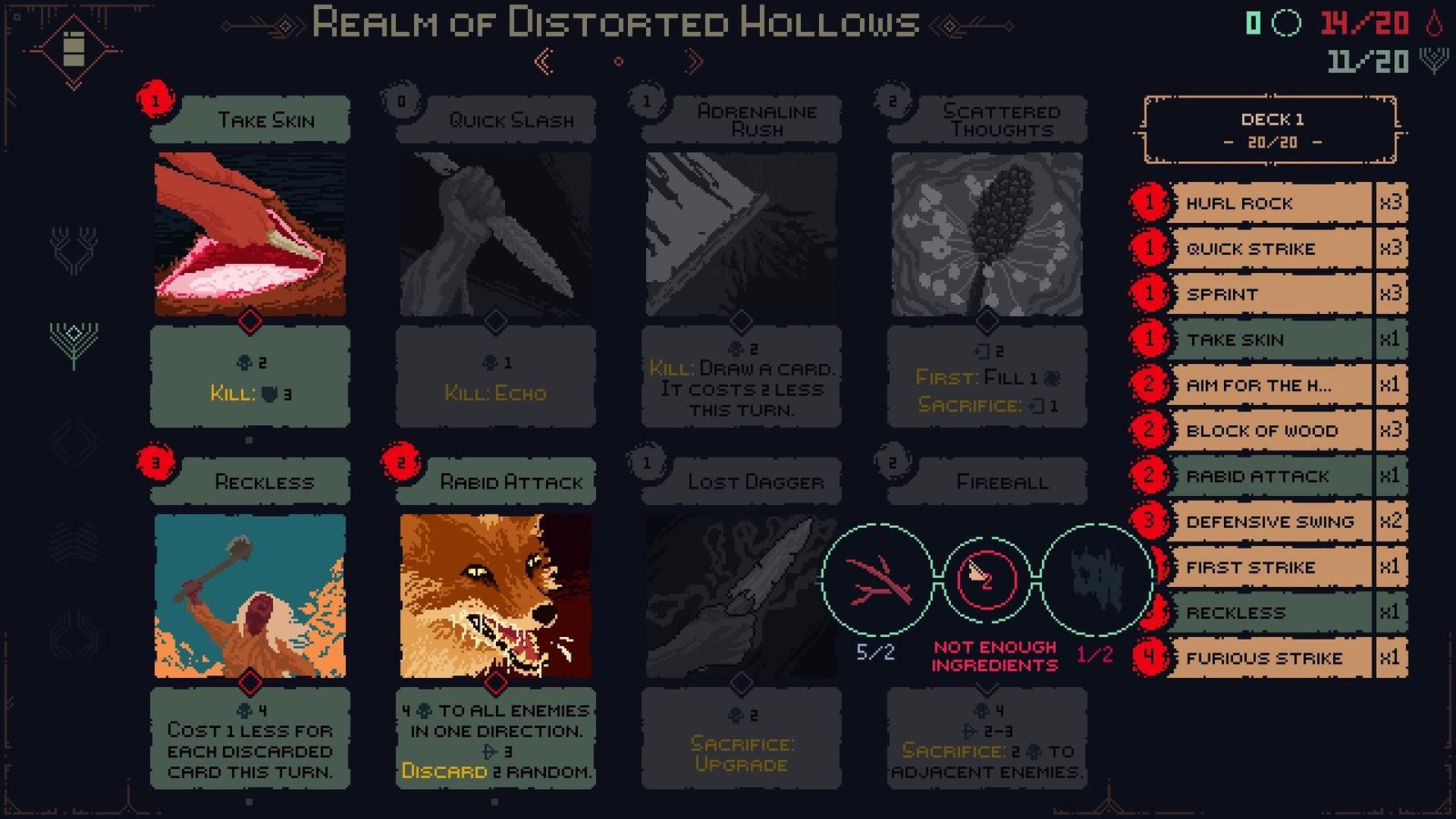
As you might have gathered, gameplay here is entirely turn-based, with cards acting as your attacks. Cards are purchased throughout the game using points earned from killing enemies, called death howls. Plus, to add more variety, or suffering depending on how you handle it, the cards and your actions vary depending on where exactly you are on the map.
Speaking of the card battles, they don’t really differ much from what fans of deckbuilders would expect. You’re given blips of power that determine how many cards you can use that turn, with the aforementioned areas determining how those points are used. I’d liken it to Magic: The Gathering, in which the cards act more like spells based on you as a Planeswalker, rather than the power within the card itself.
But what’s really interesting is that the card combat is so tied to your progression, and to master this combat system, you have to explore. If you aren’t into exploring and picking up items, looking through caves, and going down paths less traveled, this might not be for you.
Each area in Death Howl is essentially a new biome, which plays into how your cards will actually work, and whether you’ll have an extra turn, a unique card, or additional shields, to name a few. Your deck will stay the same throughout (unless you get new cards and switch old ones in and out), it’s how it will work that changes. Each of these biomes shares similarities in this vein, but if you aren’t pumping Teardrops into them, areas can easily become way more challenging than others.
Every time you kill an enemy, you get a death howl, and with each death howl, you can visit a Sacred Grove and add to a vial of what the game calls Teardrops. Does it sound familiar at all? With every Teardrop filled, you get a point that can then be used towards this progression, and so on.
I absolutely loved this gameplay progression because I genuinely felt I could play however I wanted. I started by defeating one or two enemies, running back, and dumping those death howls into the Teardrop vial so I wouldn’t have to worry about accidentally losing them if I fail in battle. That might not work for everyone, but it absolutely worked for me.
Death Howl prioritizes the world and the dark beings within, and puts the cards second.
That being said, every single encounter was a challenge. Like a Soulslike, your focus on defending yourself is almost as important as being offensive. You can push through and continue to progress and battle, but at the risk of losing it all with one wrong move. Which, even in a grid-based format with all the thinking time you want, is still very possible.
I’ll admit to feeling as though some parts were a bit too slow for me. I really disliked the walking speed and felt that some combat sequences took a lot longer than I’d have liked for what is typically considered fast-paced gameplay. However, I wouldn’t call that a dealbreaker.
Dark Souls Meets Slay the Spire
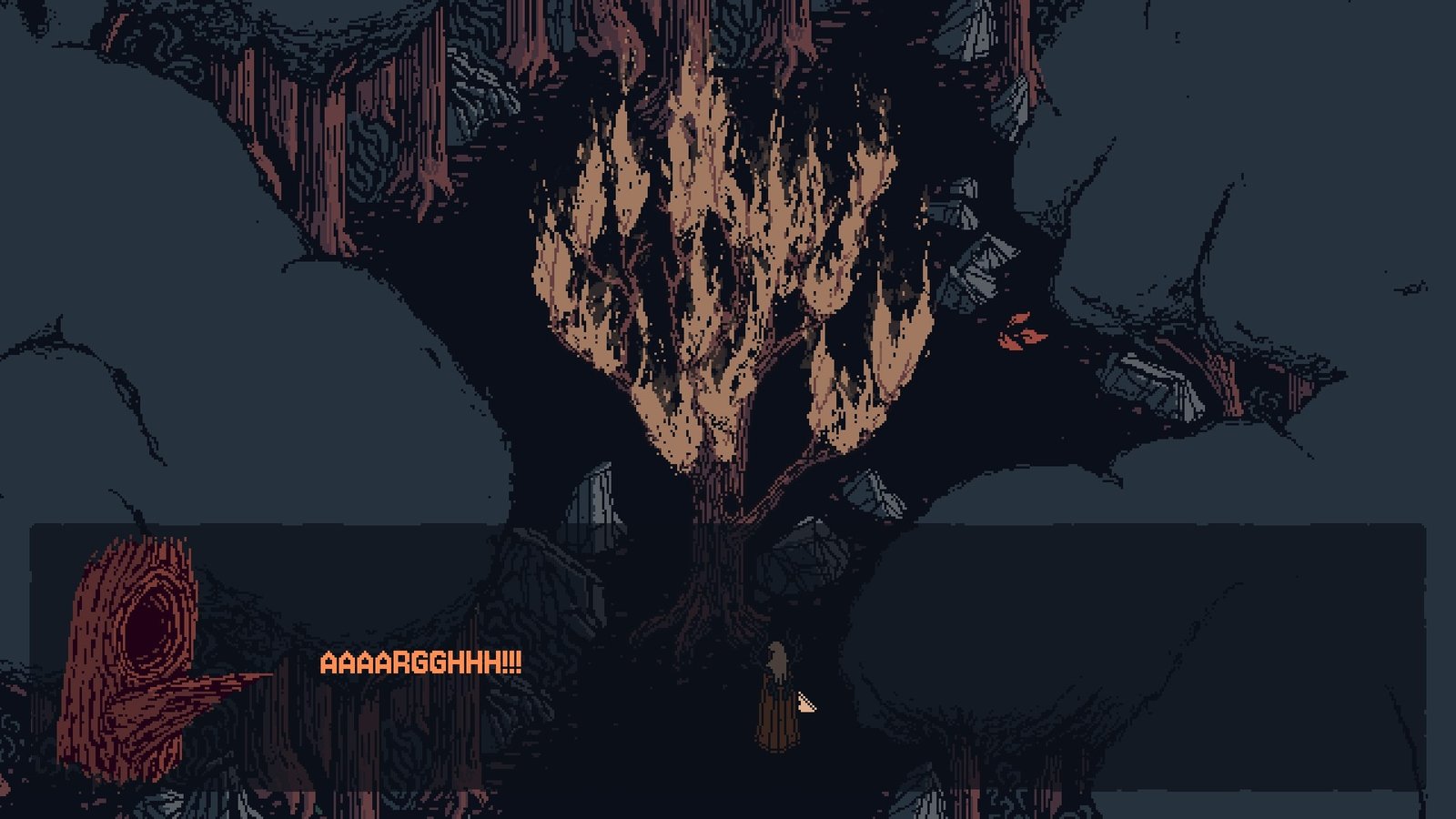
I think the game’s aesthetic is what made me fall in love with this one. I’ve always loved roguelike deck builders like Slay the Spire, but felt that their worlds are typically not really elaborated on outside of the card game itself. Death Howl prioritizes the world and the dark beings within, and puts the cards second.
You’re searching for your son in a dark, depressing, hostile world, and the visuals of disgusting beasts, ethereal creatures, and blemished flora you encounter along the way accentuate this foreboding feeling, and the pit of despair in your stomach grows.
However, the visuals wouldn’t be half as affecting without the sound effects and music, especially, which made battles feel more visceral and intense, as poisonous centipedes with bulging abdomens spewed poison on me, and stone monoliths broke apart and struck my broken bones.

Also Read
Everything really comes together to deliver a crunchy aesthetic that feels a bit as though Dark Souls and Blasphemous had some sort of Scandinavian folktale lovechild. The gameplay is solid, and the story is enough to keep you engaged, but it’s the art style and overall presentation that will stay with you after the credits roll.
Pixel Perfect Dark Fantasy
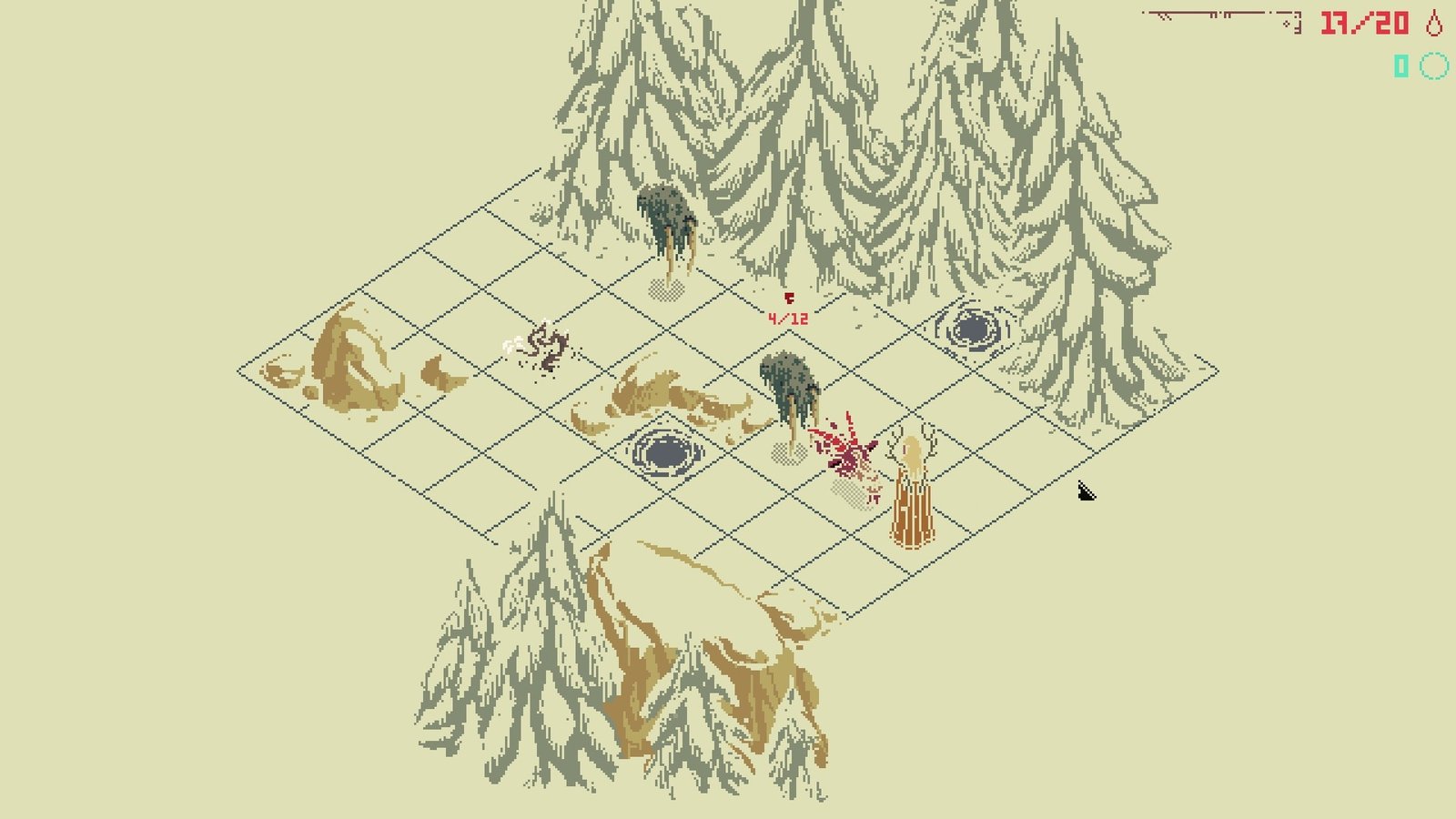
I mentioned that Death Howl utilizes a very limited color palette of washed-out yellows, blues, greens, browns, and reds to better portray that dark fantasy setting. Mixing that color palette with pixel art was the best decision The Outer Zone made.
Deaths and magic are beautifully rendered, and character designs felt both disgusting and beautiful in a way that only those who love popular Soulslike games would understand.
It comes from a place of beauty that carves out what it’s like to be absolutely alone, with nothing but the regenerated corpses of your enemies to comfort you.
It makes me remember why it’s such a popular aesthetic among these sorts of games, even if it’s a little played out by this point.
Review Code provided by the publisher. Reviewed on PC.
Review Summary
Death Howl blends Soulslike brutality with deckbuilding and roguelike progression in a way that swallowed me whole, delivering challenging and thought-provoking gameplay wrapped in The Outer Zone's now signature crunchy pixel art and moody color palette. What ultimately makes it shine is its aesthetic: a grimy fusion of SNES-era pixels and atmospheric horror where every sound, creature, and environment reinforces a world that's disgusting, beautiful, and unforgettable. It can be a little tricky to follow along with the narrative, and some aspects felt a bit too slow for my liking, but all-in-all, this is a genre-splice that comes off without a hitch
The Good
- Beautiful art style that cements its dark fantasy aesthetic
- Excellent deckbuilding gameplay
- Beautifully grotesque character and atmospheric designs
The Bad
- The narrative and side quests were hard to follow at times
- Some gameplay features felt slow
- Some card descriptions were difficult to understand
