

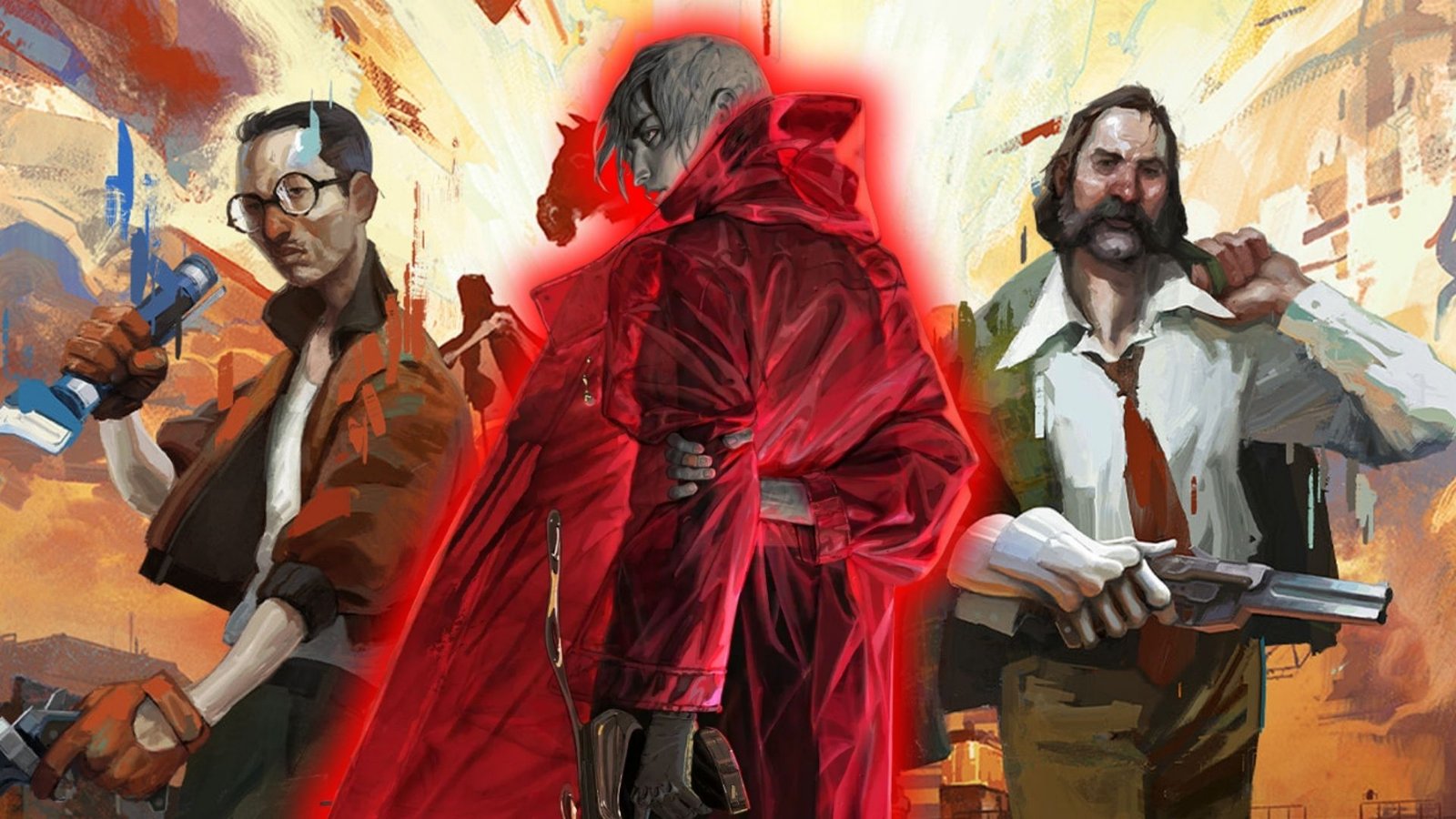
Whether you like it or not, there is no denying that Zero Parades and Disco Elysium share a lot of the same DNA. From the instantly recognizable art style and UI to the punchy, politically charged, and surreal writing throughout, they feel like siblings in many ways.
However, to call them twins would be an unfair statement. Mainly because there are a lot of notable changes about Zero Parades that make it stand apart from it’s miraculous predecessor.
Differences that we want to highlight to give you the full picture, and perhaps allow you to decide whether you, a Disco fan, should invest time in this spiritual successor.
No Fail States
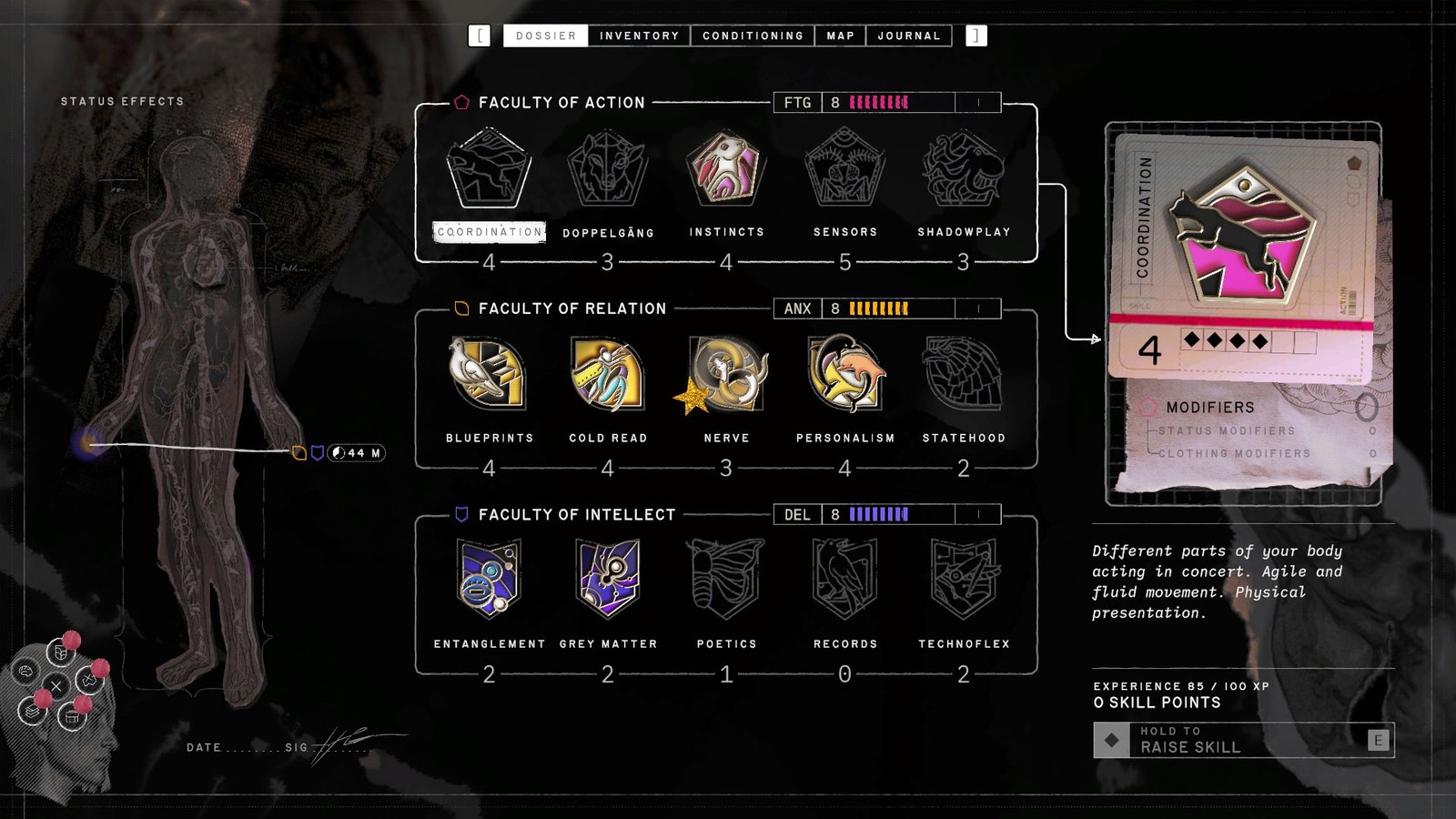
The most important gameplay change that Zero Parades makes is the removal of fail states. No longer will those with a meathead build get a game-over screen before they even get out of their Whirling In-Rags hotel room. Hershel is a bit harderier, but there is a trade-off.
You see, instead of getting a ‘game-over’, you’ll lose skill points. A vital commodity when it comes to passing skill checks and rolling on passive checks to perceive secrets in the world.
This is governed by a new stat system that includes Fatigue, Anxiety, and Delirium, replacing Disco’s Physical and Morale stats. These stats will allow you to gather up to 14 notches, but as soon as you overdo it in any category, you’ll need to lower a skill governed by that respective stat.
These can be lowered using consumables and in-conversation, but this requires a lot more careful management than Disco.
Exerting Yourself
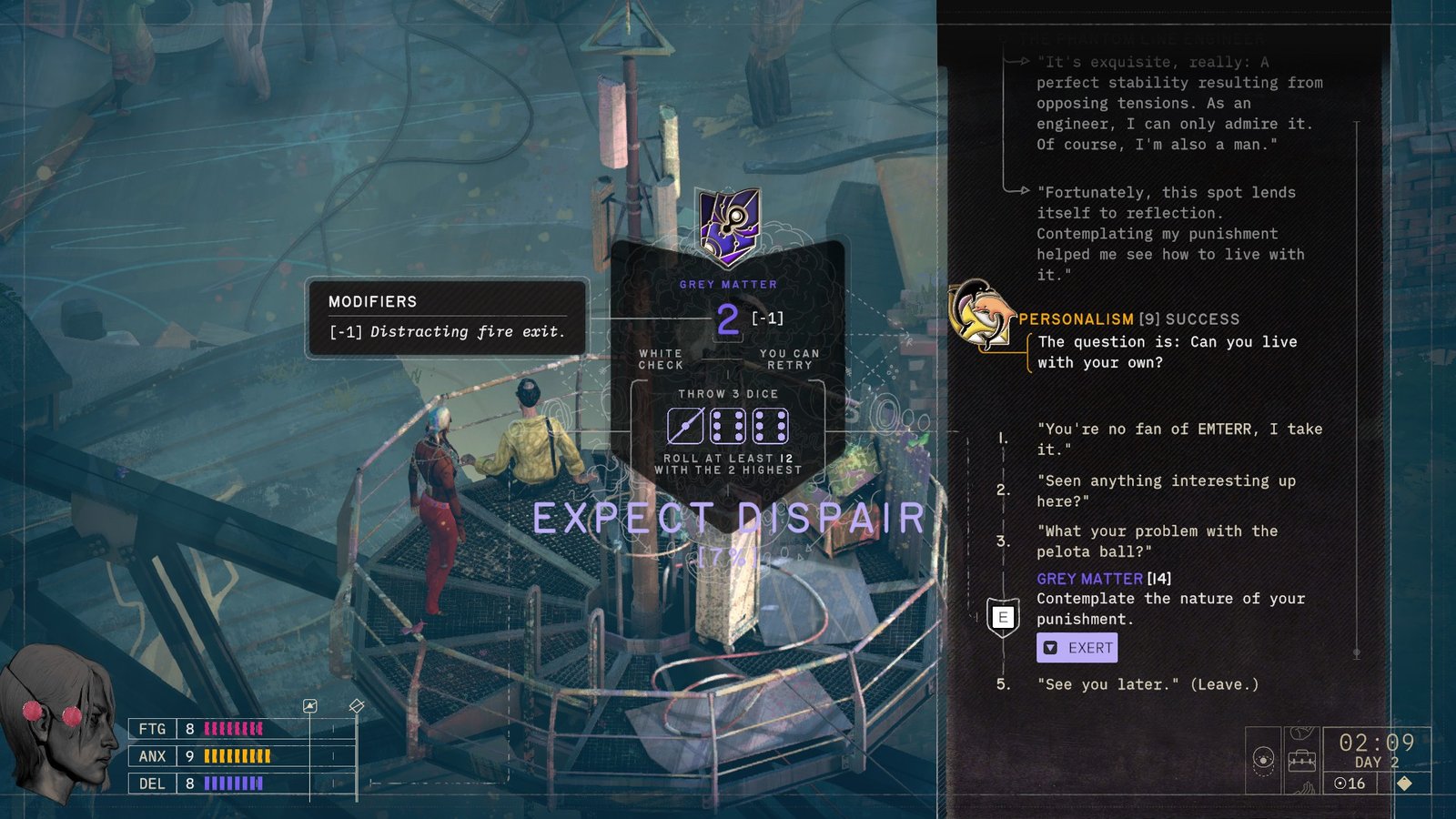
An additional detail we want to highlight with this new stat system. There is a new element of risk and reward present when it comes to skill checks. Making them easier to pass, but this higher probability always comes at a cost.
Players will have the option to ‘exert’ themselves. Effectively upping their percentage change of passing a check. But with the guarantee that if they do, one of the three aforementioned stats will get a +5 bump.
In some cases, this can be entirely worth it, especially if you’ve been managing your stats carefully. But in others, it feels like gambling with your wellbeing, and in turn, the efficacy of your character’s build long-term.
Time Isn’t As Finite
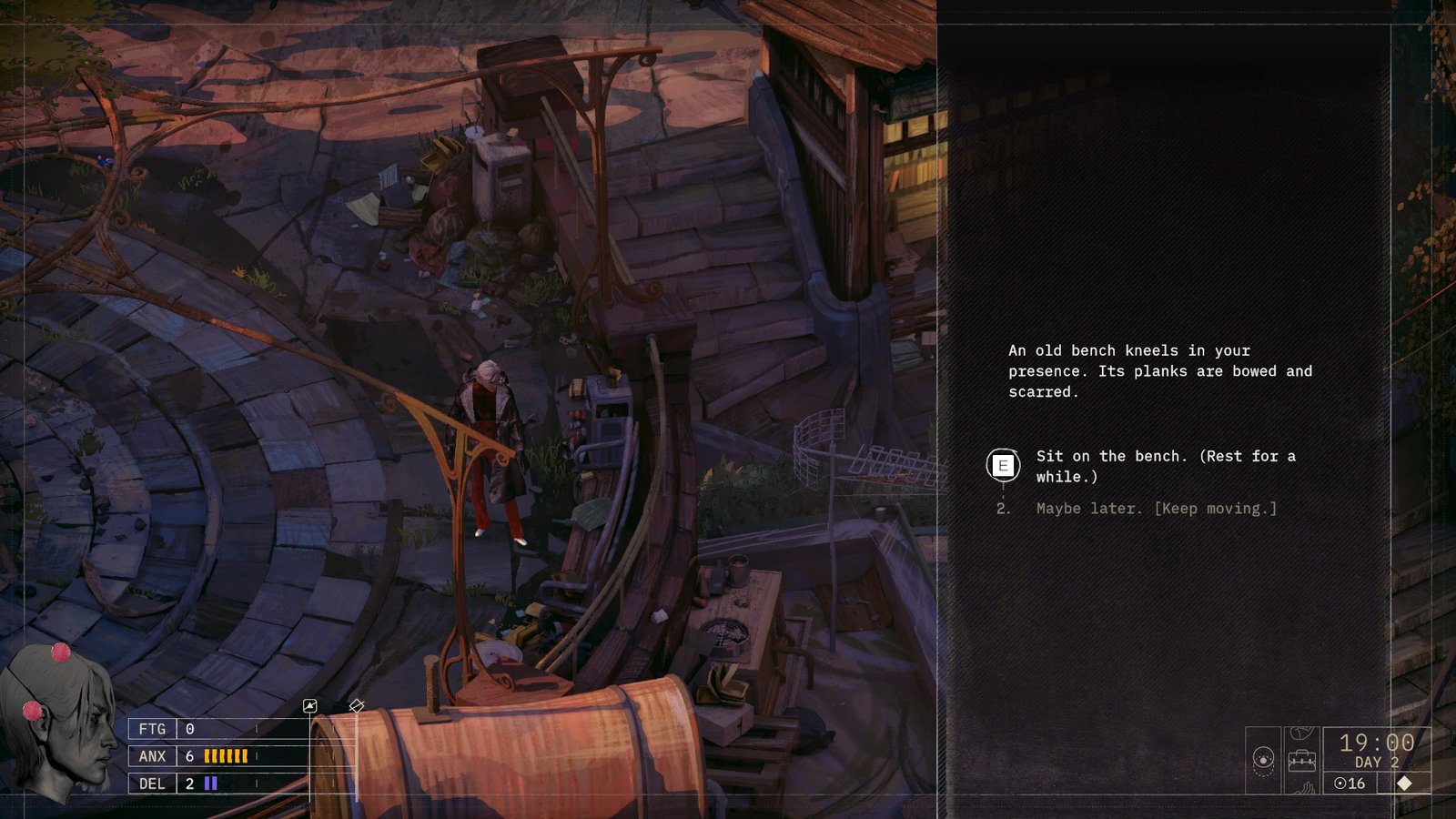
If you played Disco Elysium, you’ll know that every day felt like its own little time capsule. As the state of play in Revachol would chop and change every time morning rolled around. Whether that be Titus’ gang arriving, or the bridge getting fixed so you can explore further.
Zero Parades is less about this passing of time and more about hitting important triggers that push the narrative forward. There are still time-critical aspects, and times of the day when things occur and when they do not. But, all in all, it feels more relaxed.
For example, the game will not allow you to explore beyond the initial portions of the map until you break into Tempo’s office. Meaning that it’s not about methodically planning your time, it’s about being thorough, gathering intel, and then using that info to further your assignment. You know, proper spy stuff.
You’re All Alone
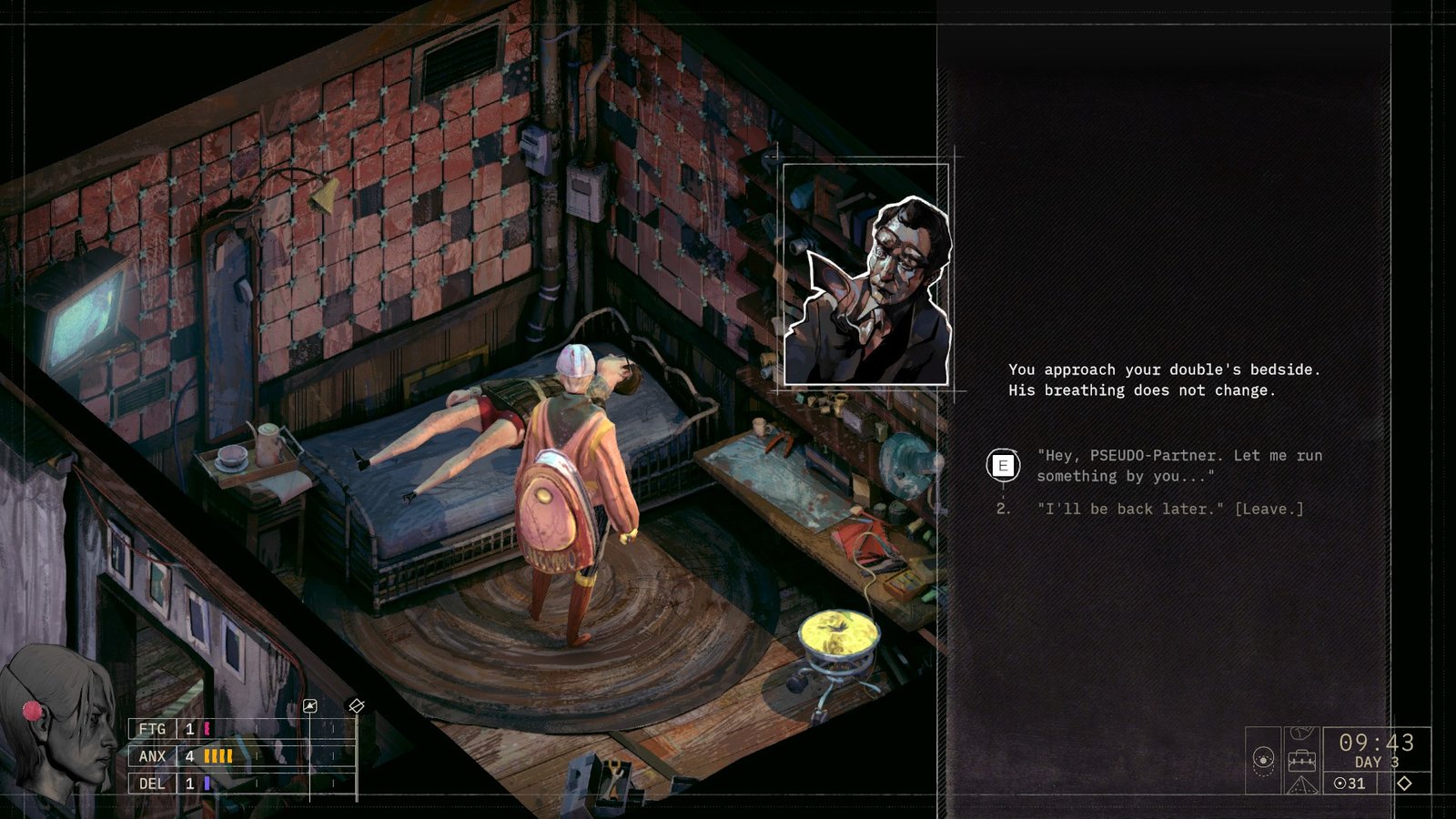
The beating heart of Disco Elysium was Kim Kitsuragi. Your RCM companion who served as the (laughable) centrist, moral compass. The angel on your shoulder in all encounters. Zero Parades has no such thing, as your partner is as good as dead from the second you start your game.
Hershel has wronged everyone she held near in Portofiro. But beyond that, she’s a spy, and spies tend to keep a low profile and rely on themselves above all else to get the job done.
This is all a long-winded way of saying that there are no companions in ZP, and as such, you are free to make your own decisions without worrying about losing favor with your partner. An interesting, rather freeing tweak to the action.

Also Read:
Dramatic Encounters
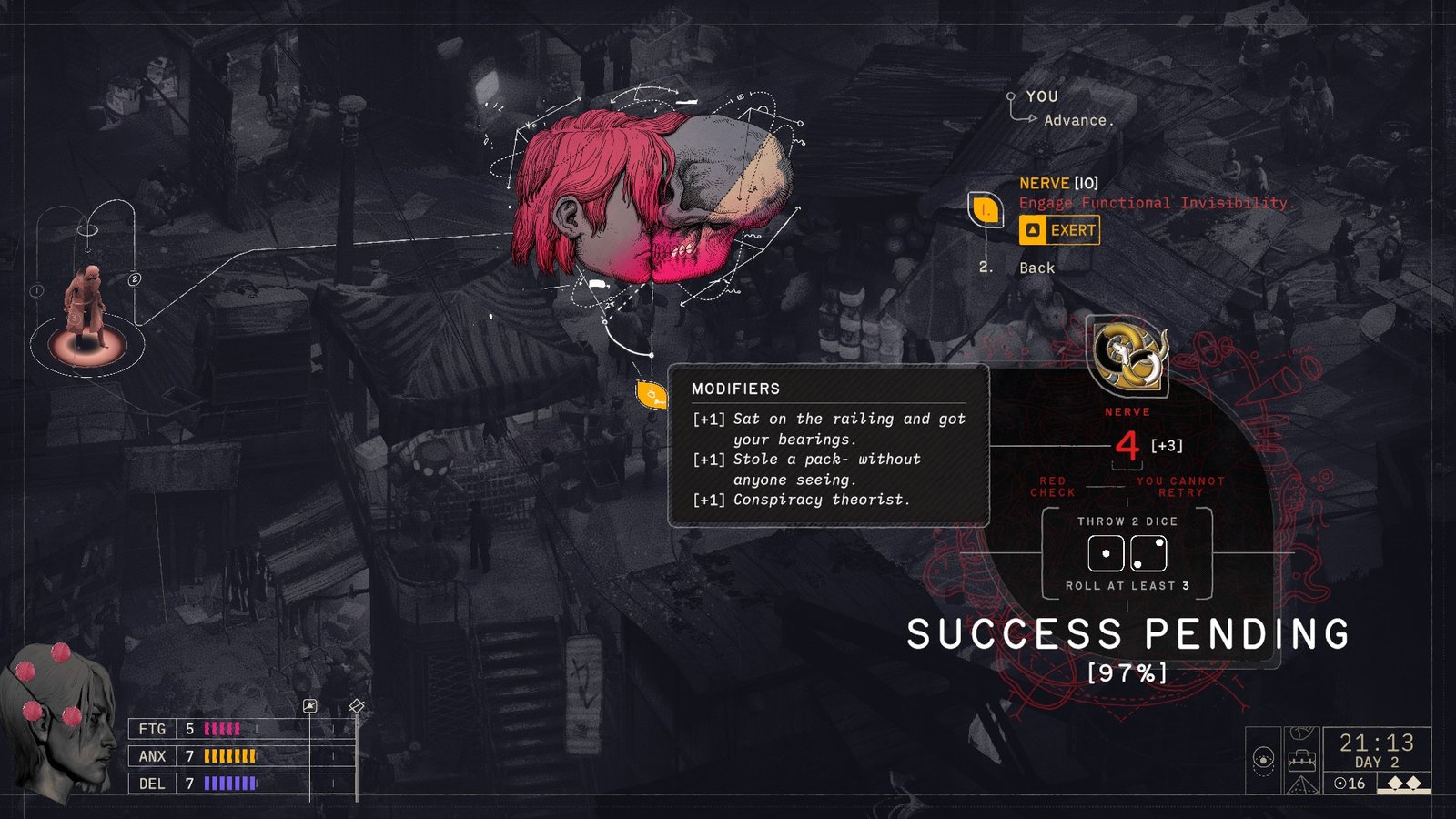
Lastly, one of the biggest changes to the gameplay present in Zero Parades is the inclusion of dramatic encounters, that essentially play out like a chain of events where you need to lean into your strongest skills, or take calculated risks to avoid exposure.
If anyone is familiar, these play out pretty similarly to those present in Citizen Sleeper, where one action will directly affect the branching path you can follow, and several choices in quick succession will paint a picture of a tense, real-time encounter.
These can either make you feel like a true spy or go comically wrong. But either way, they tend to be pretty entertaining.
Bookmark:
