


A lot of video games are power fantasies, placing us in the shoes of a character or avatar more spectacular than we could ever imagine, allowing us to live vicariously through their stories. Sometimes, however, that extra power might not be all it’s cracked up to seem.
This idea is where Sovereign Tower thrives: a text and decision-based indie slated for release in August 2026. Here, you’re placed on the throne of a fantasy/medieval-era castle and tasked with the day-to-day duties of a ruler of that time, as glamorous or mundane as they sometimes may be.
Ahead of the full release of the game later this fall, I was able to go hands-on with the early portion of Sovereign Tower in order to see how this all played out. While I do think Sovereign Tower still needs this extra development time in the oven, I’m walking away extremely interested after what I’ve experienced thus far.
Tending Your Sovereign Duties
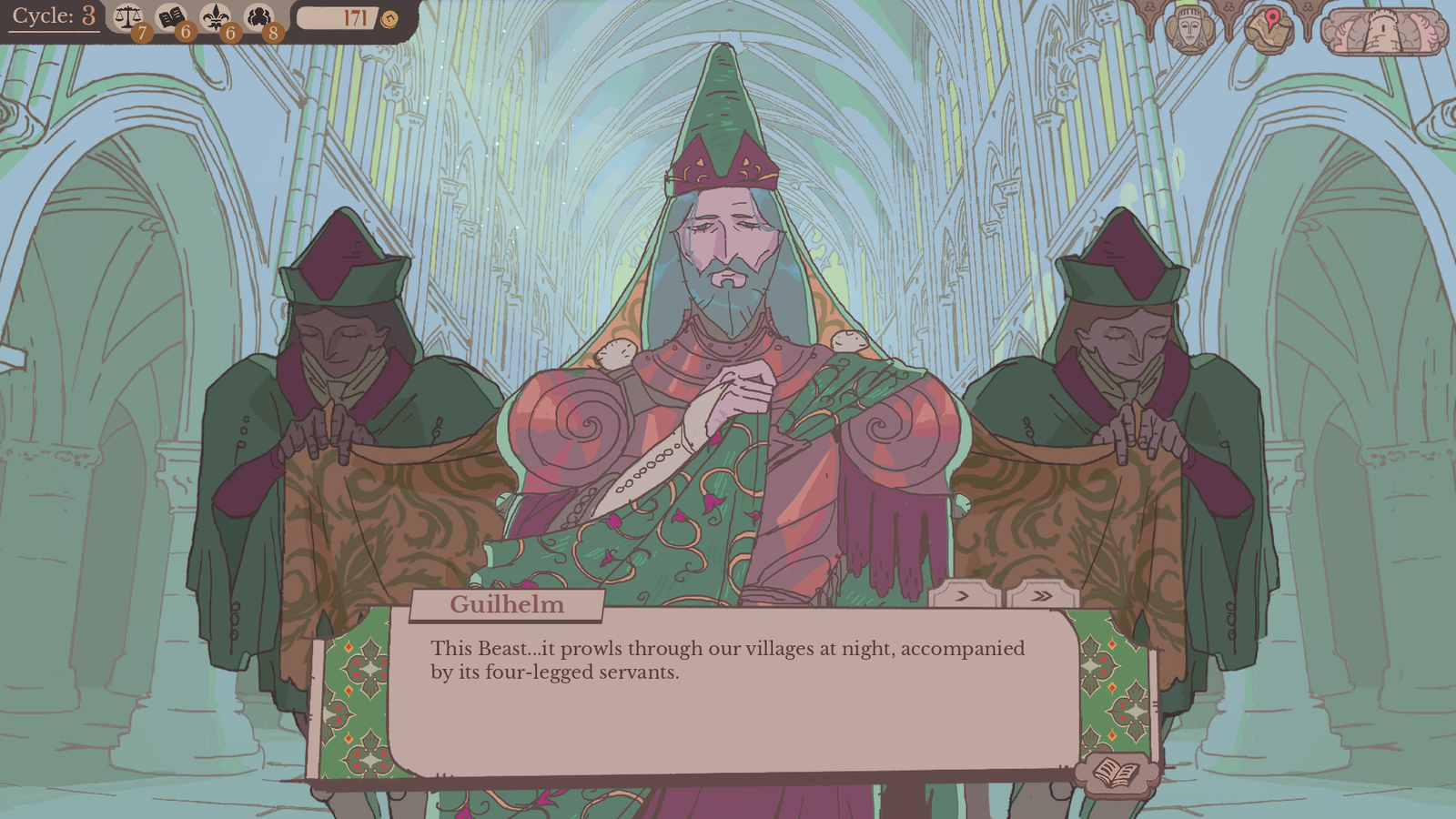
In Sovereign Tower, the game is broken up into cycles (essentially days). Each morning, you’ll hold an audience with the people of your kingdom, hearing out their concerns, needs, and complaints. These range from the totally absurd, like a goose terrorizing a local bathhouse, to the truly horrifying, like bands of pirates launching attacks on your helpless citizens.

It’s up to you to listen to these issues and decide how you’d like to handle them. You’re free to be as compassionate and caring as you’d like, or rule with an iron fist, unwilling to lend a hand to your people in order to keep a tighter grip on your resources. Everything comes with a cost, good or bad.
Choose to ignore your kingdom, and you might be able to hang onto some more gold to use for something else down the road, but the satisfaction of the four stat-tracked categories of your kingdom will plummet. Take on every request, and you’ll quickly find yourself over-extended and broke, despite the people of the land singing your praises.

As all of this occurs, you’ll also occasionally be approached by knights that are desperate to join your round table. This cast of characters (and really, all the characters in the game so far) are written wonderfully, each with a backstory and personality traits that determine the success-level they’ll find within your court.
It’s up to you whether or not you take these protégés on, but in my preview, I operated under a “the more, the merrier” approach. I’m a people pleaser, so I’d accept pretty much any task my subjects asked of me, no matter how big or small it may seem. This meant I’d need as many knights at my disposal as possible to assist with the issues of the realm.
Oh, and for all of you dating sim fans out there, Sovereign Tower also occasionally allowed me to flirt during conversations, and while I never got to see where any of those encounters could ultimately lead, I imagine they can have real consequences further down the line.
Decisions, Decisions

Of course, it’s not as simple as adding knights to your team, flirting with them, and sending them out into the world without a second thought. Each knight also has unique, individual stats to consider, as well as personality traits that you’ll begin to uncover as you chat with them more and take part in some optional, but totally worth it, dialogue encounters in your free time.

For example, I quickly learned that my knight Angelica was an animal lover, so she’d likely have good odds if I assigned her to any sort of animal-related request I had in my current objective log. She also seemed like a bit of a klutz, so it wasn’t always fruitful to send her on journeys that carried a high level of danger.
There are multiple things to consider at all times. Quests will clue you in to which types of knights they’re best suited for, highlighting words in their descriptions to give you a hint as to which member of your team should take the job. It’s then up to you to learn everyone as best you can to make the optimal decisions each and every time.

Choose incorrectly in Sovereign Tower, and you can easily miss out on your quest rewards, which include extra gold, improved standing with your people, and new items, weapons, and mounts that you can then equip to the knight of your choosing in order to buff up their stats and chances at continued success in the future with new quests.
The worst outcome here, of course, is that your knights can actually die on the job, too. Send someone into a situation they’re not suited or equipped for, and the results can make you pay the ultimate price.

There are ways to counteract all of this, as you’ll eventually unlock things like a forge where you can repair damaged knight armor between quests, or purchase new weapons to outfit your court with. You can also add rooms onto your castle, like a tower for a witch, where you’ll then be able to purchase stat-buffing potions for your team as well.
Try Your Best, Fail, Try Again

Ultimately, it’s all going to come down to some trial and error for a little bit, but that doesn’t mean it’s all luck in Sovereign Tower, either. Outcomes of decisions typically make sense, and if you think about a problem or situation logically, you can often times figure out your best (or least dangerous) option/plan of attack.
Of course, failures will happen. When I was faced with the problem in my preview of the hulking Dragon Knight from a nearby county appearing before my throne and challenging my knights and me to a showdown in four days’ time, I quickly learned I was not up to the task. He wiped out everyone on my squad, and my preview ended.
I understood immediately, however, that this was largely my fault. The game gave me objectives/stat thresholds to hit before my battle with the Dragon Knight, and while I hit many of them, I still messed up in one, critical way: when it was time for battle, I had sent two knights out on other quests, and they hadn’t returned home yet to join this ultimate showdown. Whoops.

This run failure had me awaken in a jail cell where the Tower Demon inside of a padlock revealed itself to me. It was here that I learned that Sovereign Tower also has a bit of Roguelite DNA within it, as I could now try the preview once again with all of the knowledge I’d learned from my first failed attempt now fresh in my brain.
Certain things carried over to my next run, like the satisfaction numbers of my kingdom’s people staying at their already elevated level, making certain encounters and requirements play out differently in Attempt #2. This is a cool idea, and I loved learning and applying my knowledge to try to have more success moving forward for another shot at taking down the Dragon Knight.
This is unfortunately where I did then find some cracks in Sovereign Tower’s foundation, however.
Some Holes In The Chainmail

Attempt #2 of the preview felt a little off to me after a while. In my first attempt, I’d ended up with five knights in my roundtable by the time I’d reached the end of this section. In the second attempt, I’d gained only two knights, and I still have no idea why. This could just be run-based RNG, but everything else in the game seemed to follow the same pattern, so I’m not sure what caused this shrinking of my numbers.
Additionally, I had some instances of repeated encounters within the same run, which felt strange. I’d handle one complaint, then have the exact same person show up for audience with me the next morning with the exact same issue once again. I also started to notice that the game didn’t always tell me how much a certain decision would damage a certain stat point, which made some tough choices feel extremely harshly penalized without warning.
The worst thing, however, is that despite only having two knights at my disposal in Attempt #2, I still was told that I’d come out victorious over the Dragon Knight, somehow… Only for the game to tell me in the next dialogue encounter that I’d actually lost the fight, and the preview was over. Perhaps this was just how the preview was supposed to go, but it still felt like a weird oversight.
I’m confident, however, that the team still has plenty of time to iron out some of these kinks, and my impressions of Sovereign Tower were still overwhelmingly positive overall. The game isn’t quite there yet (completely understandably), and I’m rooting for the team to get everything squared away by the full release in August.
In the meantime, if you’d like to learn more about Sovereign Tower, the game’s first trailer dropped today, so be sure to give that a look. You can also follow along on the game’s Steam page for future updates as the impending August release date on PC inches ever closer.
The team at Wild Wits has also revealed that the same preview section I’ve already experienced can now be played by everyone over at itch.io, so head there if you want to try everything out yourself!
